In this guide, we break down how dropshipping works, the different models available, and which approach is best depending on your goals and market.
Overview of the Dropshipping Model
Dropshipping is an ecommerce business model where sellers offer products online without holding inventory. Instead of buying products in advance, the seller lists items from third-party suppliers and purchases them only after a customer places an order.
The supplier handles storage, packaging, and shipping directly to the customer, while the seller focuses on marketing, pricing, and customer support. This model lowers upfront costs and inventory risk, but also comes with challenges such as supplier dependence, lower profit margins, and limited control over fulfillment.
How Does Dropshipping Work? (Step-by-Step Process)
To understand how dropshipping works in practice, it is helpful to break the process into clear steps. Although the model appears simple, each order follows a specific flow from the moment a customer places an order to when the product is delivered and supported after the sale. The following steps explain how a typical dropshipping transaction works in real ecommerce operations.
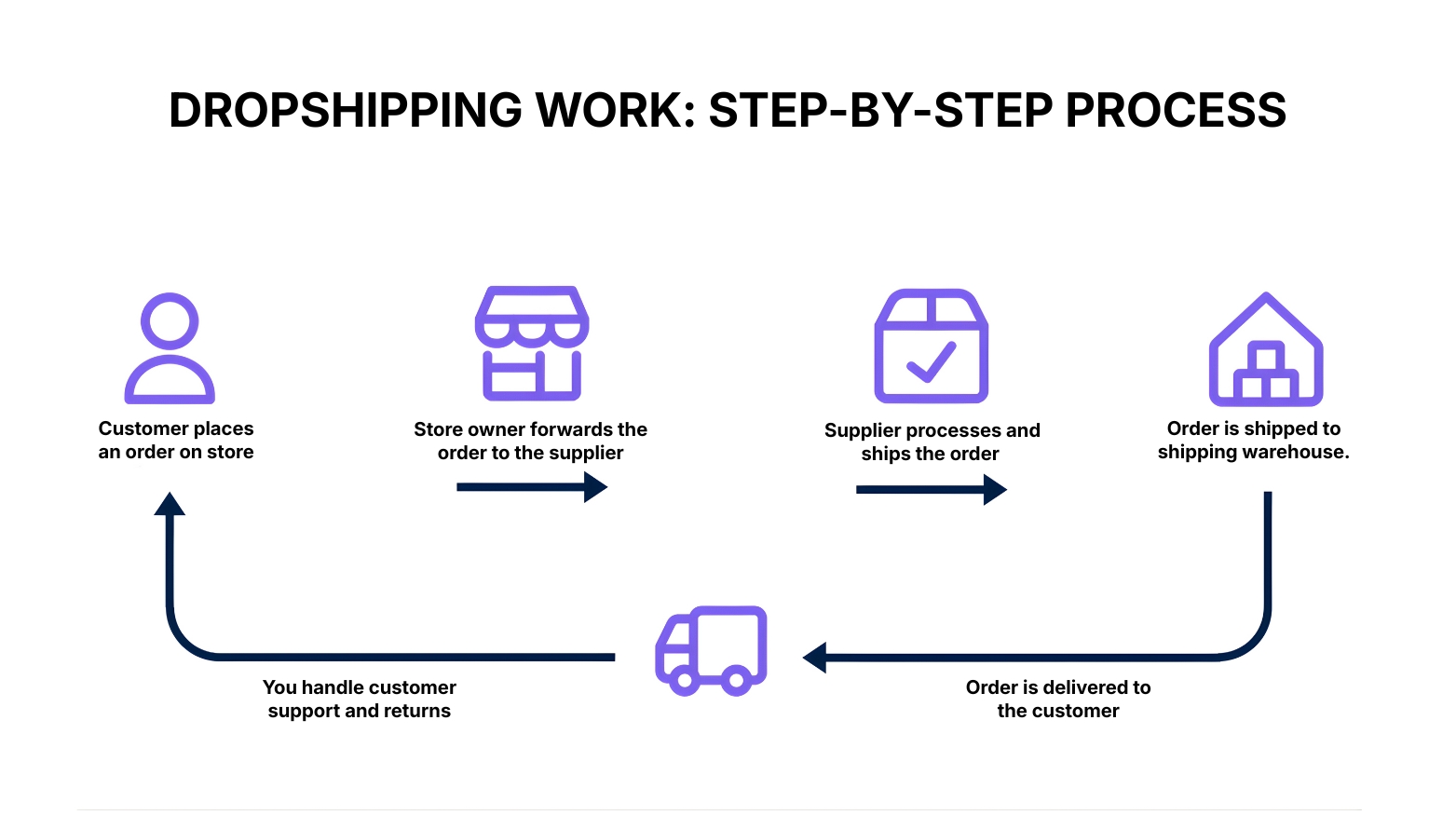
Step 1: Customer places an order on store
The dropshipping process begins when a customer visits your online store and places an order. From the customer’s perspective, this experience is no different from shopping on any other ecommerce website, they browse products, add items to the cart, and complete checkout.
At this stage, you collect the full retail price of the product, including any shipping fees or taxes. The customer sees your store as the seller, which means you are responsible for the entire buying experience, even though you don’t physically hold the product.
Step 2: Store owner forwards the order to the supplier
After a customer completes checkout, the order is recorded in your store’s system. At this stage, you do not ship the product yourself. Instead, your role is to forward the order information to your dropshipping supplier, who will handle fulfillment. This process can be managed in two ways:
- Manual order placement: You manually submit the order on the supplier’s platform by entering the customer’s shipping address and selecting the correct product options, such as size, color, or variant.
- Automated order fulfillment: You use dropshipping apps or system integrations to automatically send order details from your store to the supplier. This method saves time, reduces errors, and becomes essential as order volume increases.
Once the order is forwarded, you pay the supplier the wholesale cost of the product. This cost is typically lower than the price the customer paid on your store. The difference between these two amounts is your gross profit, before accounting for advertising, platform fees, and other operating expenses.

At the same time, the supplier receives all essential fulfillment details, including the customer’s shipping address, product specifications such as size or color, and any special notes related to the order. From this point forward, the supplier takes over the fulfillment process and prepares the order for shipment.
Step 3: Supplier processes and ships the order
After receiving the order, the supplier begins the order fulfillment process. This typically involves picking the product from inventory, packing it according to fulfillment guidelines, and preparing it for shipment. Depending on the setup, this step may be handled by a direct supplier or a 3PL operating through a dedicated fulfillment center.
Once processing starts, the order status in your system is updated to reflect its progress. At this stage, many store owners see different labels in their dashboard, which is why it is important to understand what fulfillment status means and how each status relates to the actual shipping process.
Common order and fulfillment statuses include:
- Awaiting fulfillment
- Processing
- Awaiting shipment
- Shipped
- Delivered
In most dropshipping arrangements, the product is shipped directly to the customer. The supplier or fulfillment center often uses neutral packaging or white-label options, meaning the shipment does not display the supplier’s branding. This allows the order to appear as if it was sent directly from your store, helping maintain a consistent brand experience.
As your business grows, working with professional fulfillment partners becomes more common. Many stores transition from basic suppliers to top ecommerce fulfillment companies that offer faster processing times, better tracking, and more reliable shipping. Choosing the right fulfillment setup at this stage can significantly improve delivery performance and customer satisfaction.
Step 4: Order is delivered to the customer
The shipping carrier delivers the order to the customer’s address. Delivery times vary based on the supplier’s location, shipping method, and destination country.

Once the product arrives, the customer evaluates the entire experience: product quality, packaging, delivery speed, and communication. Even though fulfillment is handled by the supplier, customer satisfaction reflects directly on your brand, not the supplier’s.
Step 5: You handle customer support and returns
Once the order has been delivered, your responsibility does not end. In a dropshipping business, you are the main point of contact for the customer, even though fulfillment is handled by a third party. Any questions or issues after delivery are directed to your store, not the supplier.
Your customer support role typically includes:
- Answering customer inquiries related to the order
- Providing shipping and tracking updates when needed
- Handling complaints about product quality, delivery time, or packaging
- Managing return requests, exchanges, and refunds
When a problem occurs, you act as the intermediary between the customer and the supplier. This may involve requesting a replacement for a damaged or defective product, coordinating a return, or issuing a refund according to your store’s policy. Clear communication with both sides is essential to resolve issues efficiently.
Pros and Cons of Dropshipping
Dropshipping offers a low-risk way to start an ecommerce business, but it also comes with trade-offs. Understanding both the advantages and disadvantages helps you decide whether this model fits your goals, resources, and expectations.
Pros of Dropshipping
- Low startup costs: You do not need to invest in inventory upfront. Products are purchased only after a customer places an order, which significantly reduces financial risk.
- Easy to get started: Without the need for warehousing or logistics, dropshipping has a low barrier to entry. Most stores can be set up quickly using ecommerce platforms and supplier integrations.
- No inventory management: Suppliers handle storage, packing, and shipping. This allows you to focus on marketing, product selection, and customer experience instead of operational logistics.
- Flexibility and location independence: Because the business is managed online, you can run a dropshipping store from anywhere with an internet connection.
- Scalability: As order volume grows, fulfillment responsibilities remain with suppliers or fulfillment partners, making it easier to scale without dramatically increasing operational workload.
Cons of Dropshipping
- Lower profit margins: Because suppliers handle fulfillment and many sellers offer similar products, margins are often thinner compared to private label or wholesale models.
- High competition: The low barrier to entry means many stores sell the same products, leading to intense competition and price pressure.
- Limited control over fulfillment: You rely on suppliers for product quality, packaging, and shipping speed. Any fulfillment issue can impact your brand reputation, even if it is outside your direct control.
- Longer shipping times: When working with overseas suppliers, delivery times can be longer, which may affect customer satisfaction and increase refund requests.
- Supplier reliability issues: Out-of-stock products, delayed shipments, or inconsistent quality can disrupt operations and require constant monitoring.
Different Dropshipping Models Explained
Dropshipping is not a one-size-fits-all business model. In practice, there are multiple ways to structure and operate a dropshipping business, depending on how products are sourced, stored, and fulfilled. Each model comes with its own advantages, limitations, and level of operational complexity. Understanding these different dropshipping models will help you choose the approach that best matches your goals, budget, and long-term strategy.
1. Traditional Dropshipping (Supplier Ships Directly to Customer)
It is also the easiest way for beginners to get started, as it reflects the core mechanics and advantages of the dropshipping business model.
Traditional dropshipping is the most common and widely used dropshipping model.
In this setup, you sell products online without holding inventory. Instead of shipping orders yourself, you forward each order to a supplier, who then ships the product directly to the customer on your behalf. You focus on running the store, marketing products, and managing customer relationships.
This model highlights several key benefits of dropshipping:
- No need to purchase or store inventory upfront
- Low startup costs and reduced financial risk
- Simple operations with minimal logistics management
Because of its simplicity and flexibility, traditional dropshipping is often used to test new products and validate demand before moving on to more advanced models such as 3PL or hybrid fulfillment setups.
2. Dropshipping with a 3PL (Third-Party Logistics)
Dropshipping with a 3PL is a fulfillment-focused model designed for growing ecommerce businesses. Instead of shipping products directly from a supplier, inventory is stored at a third-party logistics provider and shipped to customers as orders come in.
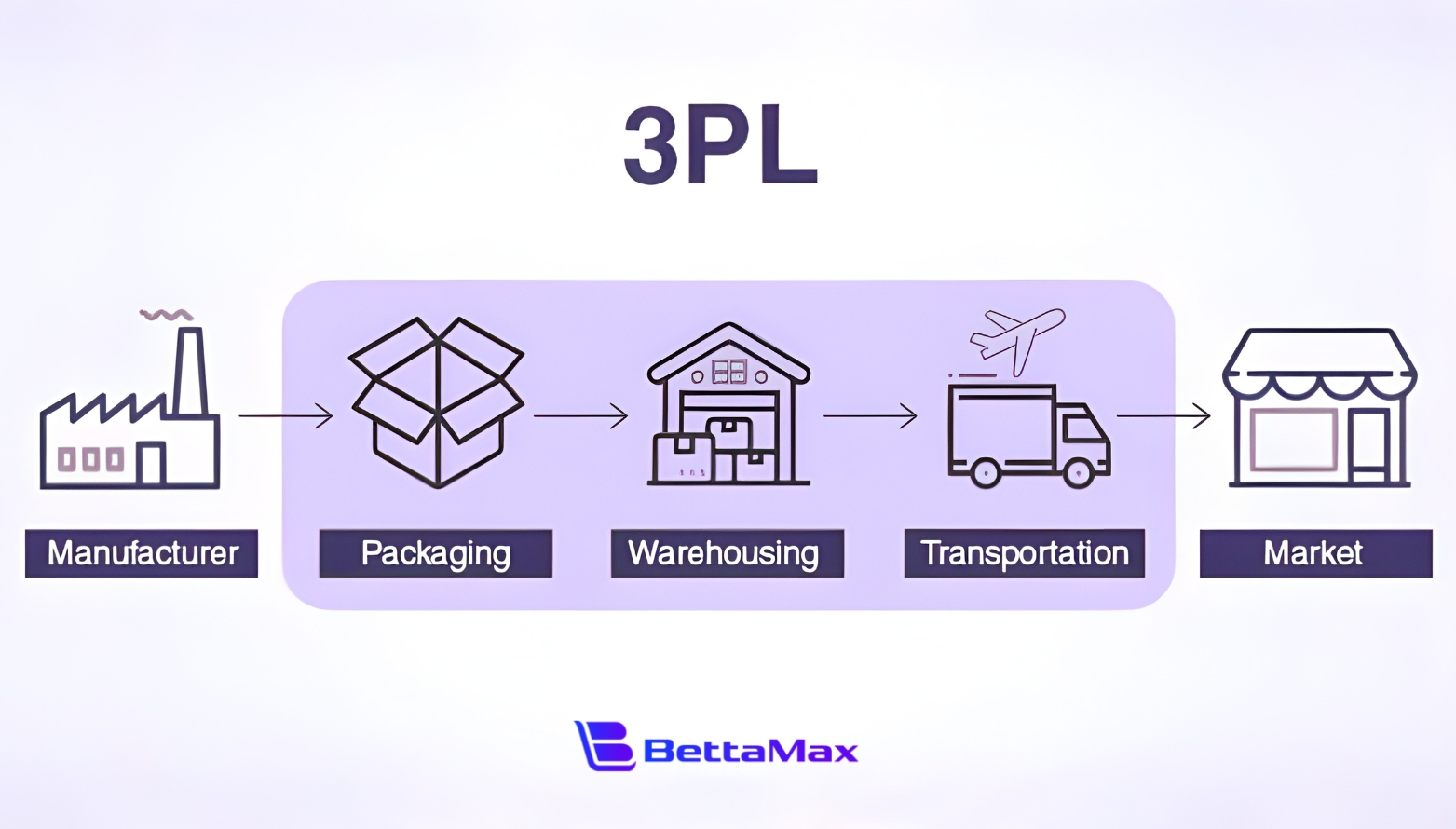
How this model works:
You send your products to a 3PL warehouse. When a customer places an order, the 3PL handles picking, packing, and shipping, while you manage the storefront, marketing, and customer communication.
Key advantages of using a 3PL:
- Faster and more predictable shipping times
- Greater control over packaging and branding
- More consistent fulfillment quality and tracking
Things to consider before choosing this model:
- Upfront inventory investment is required
- Storage and fulfillment fees affect margins
- Accurate inventory forecasting becomes critical
Dropshipping with a 3PL is ideal for businesses that have validated products and want to improve customer experience and scalability without managing logistics in-house.
3. Platform-Based Dropshipping (Selling on Marketplaces)
In this model, sellers list products on established ecommerce marketplaces that already attract millions of buyers. Orders are placed directly on the platform, while suppliers or fulfillment partners handle storage, packing, and shipping.
Platform-based dropshipping helps sellers grow faster by leveraging built-in traffic, trust, and fulfillment systems instead of building everything from scratch.
- You gain instant exposure to high-intent customers
- Platforms provide built-in trust, reviews, and secure checkout
- Operations are simplified through integrated order and fulfillment systems
Many sellers combine this model with platform-based fulfillment solutions. For example, using services like BettaMax, orders from marketplaces can be automatically routed to a fulfillment partner, allowing faster processing, centralized inventory management, and more reliable delivery without managing logistics in-house.
4. Dropshipping via Fulfillment Services (Full-Service Providers)
Dropshipping via fulfillment services is a model where sellers partner with full-service providers to handle most logistics operations. Instead of working with individual suppliers, you rely on a single fulfillment partner to manage inventory, packing, and shipping.
In this setup, products are either sourced or stored at the provider’s fulfillment centers. When an order is placed, the provider processes it automatically and ships it directly to the customer on your behalf.
This model reduces operational complexity and improves delivery consistency. Sellers spend less time coordinating with multiple suppliers and more time focusing on marketing, optimization, and customer experience.
Dropshipping via fulfillment services is best suited for growing businesses that need reliable fulfillment, faster shipping, and scalable operations without investing in their own warehouse or logistics team.
5. Print-on-Demand Dropshipping
Print-on-demand dropshipping focuses on selling personalized or design-based products without producing them in advance. Items are only created after a customer places an order, which removes the need to hold inventory or predict demand.
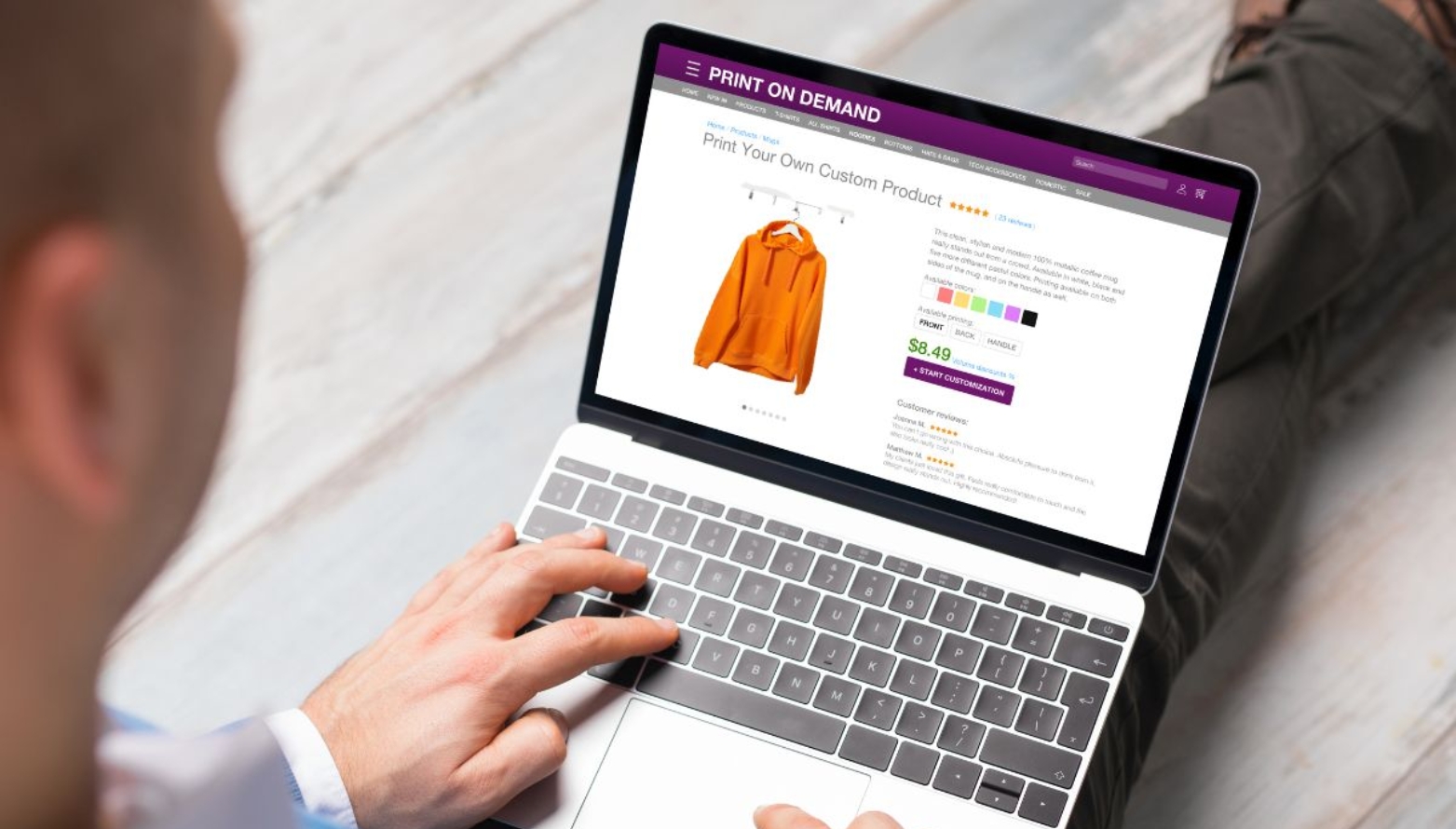
Sellers upload their designs to a print provider, connect the catalog to their sales channel, and handle marketing and branding. Once an order comes in, the provider prints the design, packages the product, and ships it directly to the buyer.
Print-on-demand works best for creators, influencers, and niche-focused brands that value customization and brand identity over speed and volume.
Because each product is made to order, this model offers strong differentiation and branding potential, especially in niches like apparel, accessories, and home decor. The trade-off is longer production times and higher unit costs compared to mass-produced items.
6. B2B Dropshipping
B2B dropshipping works by supplying products directly to other businesses rather than individual consumers. Orders are usually placed in bulk, repeat regularly, and prioritize stable supply over branding or customization. The seller acts as a middle layer, managing pricing agreements and client relationships, while the supplier handles storage and shipping. This approach fits businesses that focus on long-term partnerships and predictable demand instead of one-off retail sales.
Which Dropshipping Model Should You Choose?
Choosing the right dropshipping model depends on your experience level, business goals, and target market. Instead of looking for a one-size-fits-all solution, it’s more effective to match each model with a specific use case.
| Situation | Recommended | Why This Model Works |
|---|---|---|
| New to dropshipping | Traditional Dropshipping | Easy to start, no inventory required, low upfront costs |
| New to dropshipping | Print-on-Demand (POD) | No inventory risk, simple way to sell niche products |
| Looking to scale fast | Hybrid Dropshipping | Combines dropshipping and stocked inventory for faster order processing |
| Looking to scale fast | Private Agent Dropshipping | Better sourcing control and pricing at higher order volumes |
| Building a long-term brand | 3PL-Based Dropshipping | Branded packaging, reliable fulfillment, consistent delivery |
| Building a long-term brand | Print-on-Demand (POD) | Strong customization and brand identity |
| Want minimal operations | Fulfillment Services | Outsourced storage, packing, and shipping |
| Targeting US or UK markets | Local (Domestic) Dropshipping | Faster shipping times and higher customer trust |
Conclusion
In summary, how does dropshipping work comes down to a simple process: you sell products online without holding inventory, forward customer orders to a supplier, and let that supplier handle packing and shipping. While the seller focuses on marketing, pricing, and customer relationships, fulfillment is managed by a third party. Choosing the right dropshipping model and fulfillment setup is what determines how efficiently this process runs and how scalable the business becomes over time.
FAQs About How Dropshipping Works
1. Is dropshipping legal?
Yes, dropshipping is legal in most countries, including the United States, the United Kingdom, and many other major ecommerce markets. However, legality depends on how the business is operated. Factors such as product compliance, consumer protection laws, tax obligations, and platform policies all play a role.
As we have explained in a separate in-depth guide on the legal foundations of dropshipping worldwide, sellers should understand local regulations, invoicing requirements, and liability before scaling their operations.
2. Do I need a business license?
This depends on your location and how far along your business is. Many sellers start dropshipping without a formal license, especially during the testing phase. However, once you begin generating consistent revenue, most countries require business registration for tax reporting, supplier agreements, and payment processor compliance.
3. How much money do I need to start?
One of the main advantages of dropshipping is the low startup cost. You do not need to invest in inventory upfront. Most initial expenses go toward setting up your store, using ecommerce tools, and running marketing campaigns. The required budget largely depends on how aggressively you plan to acquire customers.
4. Can dropshipping be automated?
Yes, modern dropshipping can be highly automated. Order syncing, inventory updates, fulfillment status tracking, and customer notifications can all be handled through integrations and software. Automation becomes especially important as order volume grows and manual processes become inefficient.
5. Is dropshipping dead?
This is one of the most common questions today. Dropshipping is still a viable model, but it is no longer a shortcut to easy profits. Whether dropshipping is worth it depends on factors such as product selection, supplier quality, shipping speed, and branding. We explore this topic in detail in a separate article that examines whether dropshipping is still worth pursuing in today’s market.