In this guide, we’ll break down whether dropshipping is legal, explain the conditions under which it is allowed, and show you how to run a dropshipping business safely and compliantly in different countries.
Is Dropshipping Legal in the World?
Dropshipping is simply a fulfillment method, not an illegal business activity. It describes how products are delivered to customers rather than how a business earns money or operates legally. In a dropshipping model, the seller focuses on marketing, sales, and customer service, while a third-party supplier handles inventory and shipping.
In general, dropshipping is legal in most countries around the world. There is no law that prohibits selling products online without holding inventory.
However, legality does not mean “no rules.” Each country applies its own ecommerce, tax, and consumer protection laws. As a seller, you are responsible for complying with the regulations of both the country where your business is registered and the countries where your customers are located.
In the United States, Canada, the UK, Australia, and most of Europe, starting a dropshipping business is widely used by small businesses and major brands alike. As long as you sell legal products, respect intellectual property rights, and follow tax and consumer protection laws, dropshipping is fully allowed.
Which Regions Don’t Allow Dropshipping?
There are very few places in the world where dropshipping is explicitly prohibited. As a business model, dropshipping is generally legal, and no global list exists that bans it outright. What sellers usually encounter instead are local regulations that add complexity and risk, especially if those rules are ignored.
Dropshipping is usually restricted by regulations, not prohibited by law.
In some regions, governments apply strict oversight to online selling, particularly when businesses operate from abroad. Certain countries in the Middle East, for instance, require foreign sellers to hold local licenses, appoint an in-country representative, or obtain official approval before selling to residents. Without meeting these conditions, payment processing or order fulfillment may be limited or entirely blocked.
1. Regions where taxes limit dropshipping viability
In some countries, dropshipping is legal but financially challenging due to:
- High import duties
- Complex VAT or GST systems
- Strict customs enforcement
For example, in parts of Europe, sellers must comply with VAT registration, distance selling rules, and consumer protection laws. Failure to meet these requirements can lead to fines, shipment delays, or account issues.
2. Platform rules that create “Effective Bans”
Even when dropshipping is legal in a country, restrictions can still come from the platform you sell on. Each marketplace sets its own rules to protect buyers and maintain trust, and these rules often affect how dropshipping can be operated.
Platforms like Amazon place strict requirements on sellers, especially around:
- Seller identity transparency, so customers always know who is responsible for the order
- Fulfillment responsibility, meaning the seller must fully control and stand behind the shipping process
- Customer experience standards, including delivery speed, packaging quality, and return handling
Because of these platform-specific rules, some traditional dropshipping setups may not be allowed. Models that hide the supplier’s identity, rely on inconsistent shipping, or fail to present a clear and consistent brand can violate marketplace policies.
3. Product categories that are restricted worldwide
Some products are considered illegal to sell in most countries, no matter how you run your business. This applies to traditional ecommerce and dropshipping alike. If a product falls into these categories, you are not allowed to sell it at all, even if a supplier claims it is available.
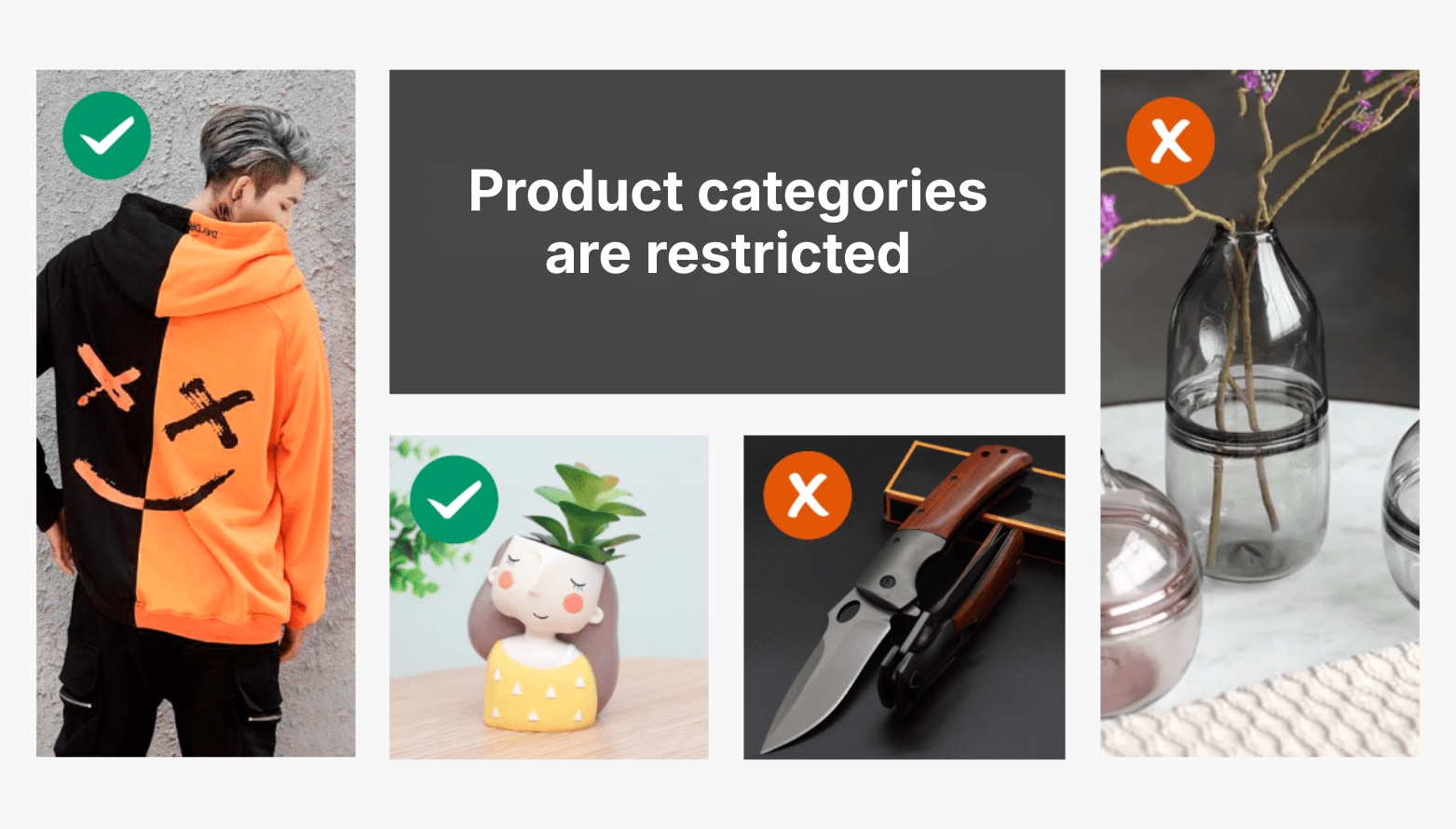
These products include:
- Counterfeit or replica items that copy well-known brands
- Products using brand logos or trademarks without official permission
- Prescription drugs or controlled substances, which can only be sold by licensed entities
- Weapons, firearms, explosives, or related accessories, which are heavily regulated or banned for online retail
- Stolen or illegally sourced goods
The key point is that dropshipping does not remove your legal responsibility. Even if you never touch the dropshipping product or manage the inventory, you are still legally responsible for what you sell. Listing or promoting these products can lead to store bans, frozen payments, fines, or legal action.
Is Dropshipping Legal on E-commerce Platforms?
Dropshipping is generally allowed on most major ecommerce platforms, but each platform applies its own rules and operational standards. In many cases, what sellers perceive as “dropshipping being banned” is actually a result of platform-specific policies, not legal restrictions.
Understanding these differences is critical, because a dropshipping setup that works on one platform may violate the rules of another.
1. Shopify
Shopify is the most dropshipping-friendly platform. It does not restrict dropshipping as a business model and gives sellers full control over branding, checkout, and fulfillment workflows.
As long as you sell legal products and comply with consumer protection laws, Shopify allows you to:
- Use third-party suppliers
- Automate order fulfillment
- Build a branded storefront under your own business name
This flexibility is why many dropshippers use Shopify as their primary platform, especially when building long-term brands.
2. Amazon
Amazon allows dropshipping, but under strict conditions focused on customer trust and transparency.
On Amazon, the seller must:
- Be clearly identified as the seller of record
- Take full responsibility for shipping, returns, and customer service
- Ensure that all packaging and documentation show the seller’s business, not the supplier’s
Dropshipping models that expose third-party suppliers or rely on inconsistent fulfillment often violate Amazon’s policies. As a result, Amazon dropshipping works best for sellers who tightly control their supply chain.
3. eBay
eBay permits dropshipping, but only when the seller maintains clear ownership or supplier relationships.
To stay compliant, sellers must:
- Own the products or have a formal agreement with a wholesale supplier
- Appear as the seller on all customer-facing documents
- Ensure reliable delivery and protect customer data when using third-party fulfillment
Dropshipping directly from another retailer without authorization is not allowed and can result in account suspension.
4. Etsy
Etsy is one of the most restrictive platforms for dropshipping.
The platform focuses on handmade, vintage, and creative goods, which limits traditional dropshipping. Only specific categories are permitted, such as:
- Craft and party supplies
- Vintage items over a certain age
- Gift baskets assembled or curated by the seller
General product reselling and mass-market dropshipping are not supported on Etsy.
5. AliExpress
AliExpress is not a selling platform for most dropshippers, but a supplier marketplace.
It openly supports dropshipping and integrates with popular tools that help sellers:
- Source products
- Import listings into ecommerce stores
- Automate order fulfillment
AliExpress is commonly used alongside platforms like Shopify to power the backend of a dropshipping business.
FAQs About Dropshipping Legality
1. Is dropshipping legal?
Yes, dropshipping is legal in most countries. It is simply a fulfillment method where you sell products without holding inventory. The business model itself is not illegal. However, legality depends on what products you sell, where you sell them, and whether you comply with local consumer protection, tax, and import/export laws. Selling counterfeit goods, restricted items, or violating intellectual property laws is illegal, even in a dropshipping setup.
2. Am I personally liable if a dropshipping product causes harm?
Yes. As the seller of record, you can be held legally responsible if a product you sell injures a customer or causes damage, even if you never physically handled the item. For example, if a cosmetic causes an allergic reaction or an electronic device malfunctions and causes property damage, the seller can be named in legal claims.
How to mitigate risk:
- Partner with reputable suppliers who comply with safety and quality standards
- Include clear product descriptions and disclaimers
- Maintain insurance coverage for product liability
Platforms like Amazon and eBay hold sellers accountable for all customer complaints, returns, and claims, regardless of who shipped the product. This means your legal responsibility is real, not hypothetical.
3. Do I need to collect sales tax or VAT for dropshipping?
Yes. Selling online usually triggers tax obligations, which vary depending on your country, where your customers live, and your business setup.
- United States: If you have a nexus (physical presence or economic threshold) in a state, you must collect state sales tax. For example, selling over $100,000 annually in a state may create tax liability even if your warehouse is elsewhere.
- European Union: VAT applies for cross-border sales. For instance, selling to Germany or France may require registering for VAT and remitting taxes to local authorities.
Ignoring tax obligations can lead to fines, account suspensions on marketplaces, and legal enforcement actions. Using tools like TaxJar or Avalara can help automate compliance and calculate proper tax rates for dropshipping orders.
4. Can I dropship restricted or regulated products internationally?
Selling restricted or regulated products across borders is complex and often illegal without proper authorization. Examples include:
- Firearms, ammunition, and weapons
- Prescription drugs, medical devices, and supplements
- Electronics requiring certifications (CE, FCC)
Even if your supplier ships internationally, you may violate import/export laws in the customer’s country. For instance, shipping a battery-powered device without proper certification to the EU can result in customs seizure, fines, or legal claims.
Best practice: Stick to products that are widely allowed in most countries, or research each market thoroughly before selling. Platforms like Amazon may also block listings for non-compliant products to protect buyers.