This comprehensive guide breaks down both models, compares dropshipping vs ecommerce directly, and helps you determine which approach best suits your business situation.
Dropshipping Overview
What is Dropshipping?
Dropshipping is a supply chain management model where you operate an online store without holding physical inventory. When a customer purchases from your store, you forward the order details to a supplier who manufactures or stocks the product. The supplier then ships the item directly to the customer under your brand name, and you keep the difference between the customer’s purchase price and your wholesale cost as profit.
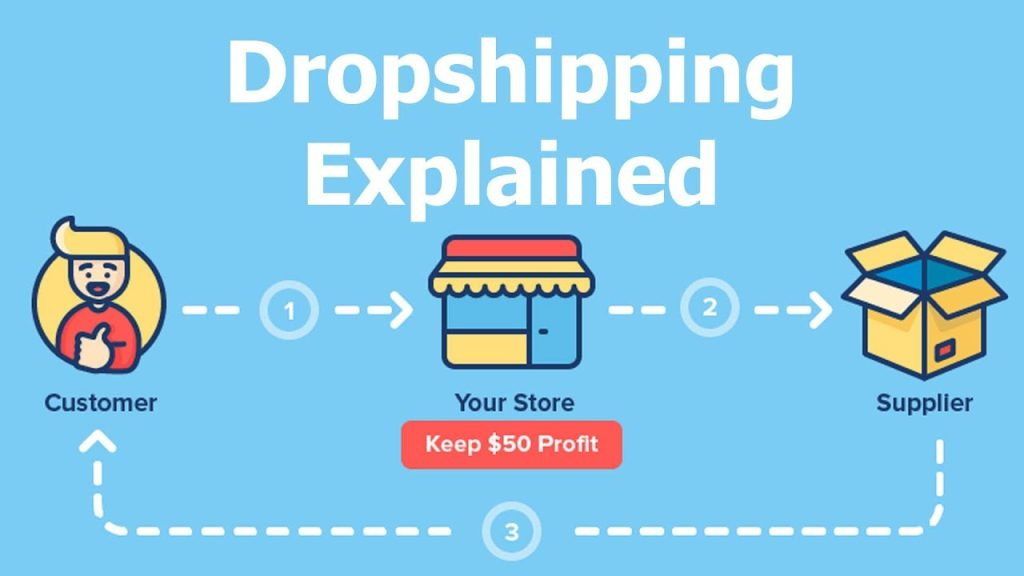
The defining characteristic of dropshipping is that you never physically touch the products you sell. Your supplier handles inventory management, quality control, packing, and shipping while you focus on marketing, customer acquisition, and store management.
5 Key Characteristics of the Dropshipping Model
No Inventory Required: You don’t purchase products in advance or maintain stock. Your supplier maintains inventory and ships items only when customers order, eliminating the risk of unsold merchandise.
Low Startup Costs: Since you don’t invest in inventory, your initial capital requirements are minimal. You primarily invest in store setup, domain, hosting, and marketing, typically requiring $300-1,000 to launch.
Minimal Physical Involvement: You never handle products directly. Your role focuses entirely on online store management, customer communication, and marketing – activities you can perform from anywhere with internet access.
Supplier Dependency: Your business success depends heavily on supplier reliability. Delays, quality issues, or supplier failures directly impact your customers and business reputation, creating significant operational risk.
Passive Business Structure: Once you’ve set up your store and optimized marketing, the business can run with minimal daily involvement. This appeals to entrepreneurs seeking semi-passive income with lower time commitment.
Ecommerce Overview
What is Ecommerce?
Ecommerce (electronic commerce) is the broader business model of selling products or services online. Traditional ecommerce involves purchasing inventory in bulk, holding stock in your warehouse or fulfillment center, and managing the entire fulfillment process yourself. You maintain complete control over product quality, inventory levels, shipping timelines, and customer experience.
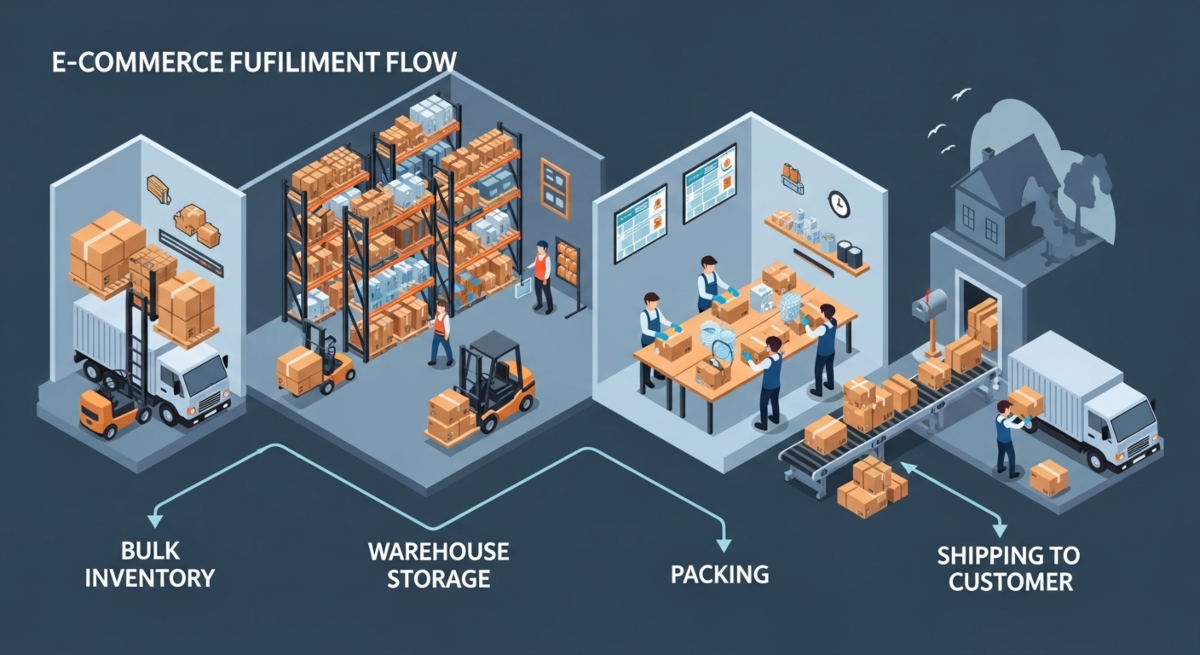
Ecommerce encompasses all online retail models, including dropshipping, but typically refers to the traditional model where the seller maintains inventory and handles fulfillment operations directly.
5 Key Characteristics of Ecommerce Businesses
Inventory Management: You purchase and maintain physical inventory based on demand forecasts. This requires capital investment, storage space, and active inventory management to optimize stock levels.
Higher Startup Investment: Purchasing initial inventory requires significant capital. Depending on the product type, you might invest $2,000-10,000+ to launch a professional ecommerce operation.
Complete Quality Control: You inspect products before purchase and maintain quality standards throughout the customer experience. This control allows you to differentiate through superior quality and consistency.
Direct Fulfillment Operation: You handle packing, shipping, and logistics directly or through a hired team. This operational involvement allows faster shipping times and better customer experience management.
Brand Building Potential: Complete control over the entire customer experience enables stronger brand building. You control product quality, packaging, customer communication, and return policies; all critical brand-building elements.
Difference Between Dropshipping and Ecommerce
Understanding how these models differ across key business dimensions helps you make an informed choice:
Inventory Management
Dropshipping: Your supplier maintains all inventory. You never purchase products upfront or manage stock levels. This eliminates inventory risk but creates dependence on supplier stock availability.
Ecommerce: You purchase and maintain inventory based on demand forecasts. You’re responsible for stock levels, warehouse management, and deciding when to reorder. This requires capital but provides supply control.
Startup Capital Requirements
Dropshipping: Minimal startup costs ($300-1,000). You primarily invest in store platform setup, domain registration, basic apps, and initial marketing. This low barrier makes it accessible to entrepreneurs with limited capital.
Ecommerce: Substantial startup costs ($2,000-10,000+). You invest in inventory, storage space or warehouse rental, packaging materials, shipping infrastructure, and staffing. This higher investment creates a steeper barrier to entry.
Profit Margins and Profitability
Dropshipping: Narrow profit margins (10-20% typically). Suppliers offer single-unit wholesale pricing that’s higher than bulk rates. Intense competition from other dropshippers selling identical products from the same suppliers further compresses margins.
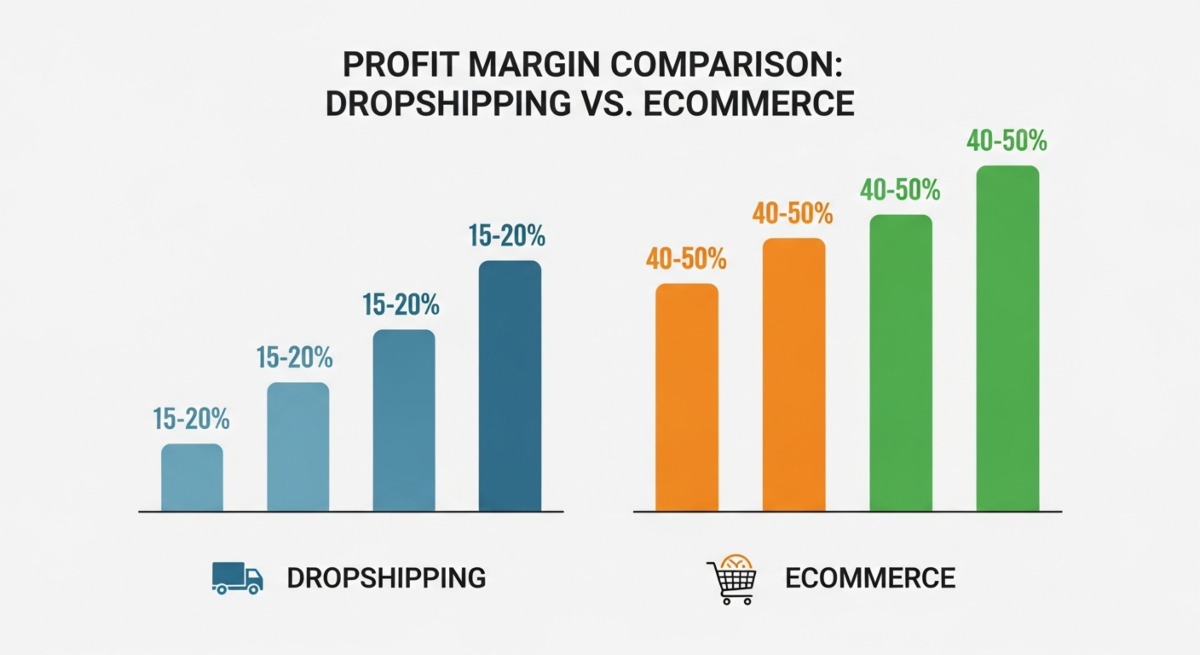
Ecommerce: Higher profit margins (30-50% or more). Bulk inventory purchases at wholesale prices combined with controlled pricing strategies enable substantially better margins. However, higher operational costs offset some margin benefits.
Shipping Control and Speed
Dropshipping: Limited shipping control and typically longer delivery times (7-30 days). Suppliers manage shipping timelines and methods. International dropshipping can involve weeks-long delays that frustrate customers and damage your brand reputation.
Ecommerce: Full shipping control and faster delivery (1-5 days). You manage logistics, choose carriers, and can offer expedited shipping options. This directly improves customer satisfaction and reduces returns.
Automation Potential
Dropshipping: High automation potential. Many tasks can be automated: automatic product imports, order forwarding to suppliers, price updates, and inventory synchronization. This automation minimizes daily operational involvement.
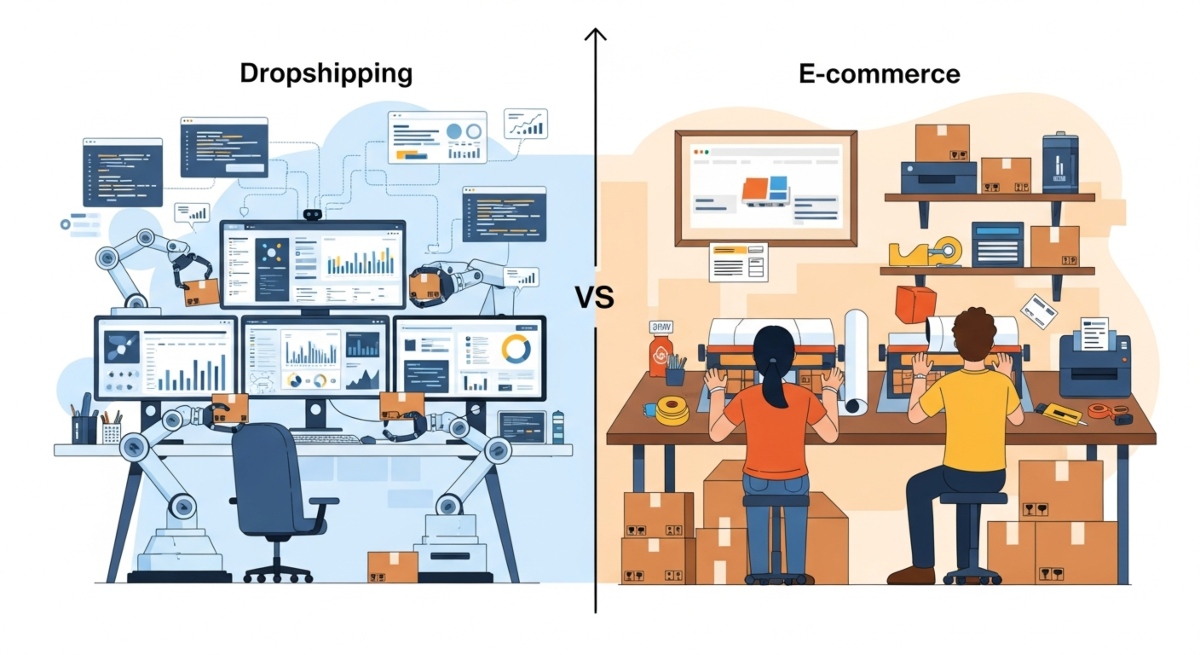
Ecommerce: Lower automation potential. Packing, shipping, and inventory management require hands-on involvement or hiring staff. While some aspects can be automated, the core operations remain labor-intensive.
Quality Control
Dropshipping: Limited quality control. You can’t inspect products before customer delivery. You’re dependent on supplier quality consistency and customer complaints often come after purchase. This risk damages customer satisfaction and increases return rates.
Ecommerce: High quality control. You inspect inventory before sale, maintain quality standards, and can immediately address issues before products reach customers. This proactive quality management builds customer trust.
Inventory Risk
Dropshipping: Zero inventory risk. You never purchase products that don’t sell. If a product underperforms, you simply stop promoting it without financial loss.
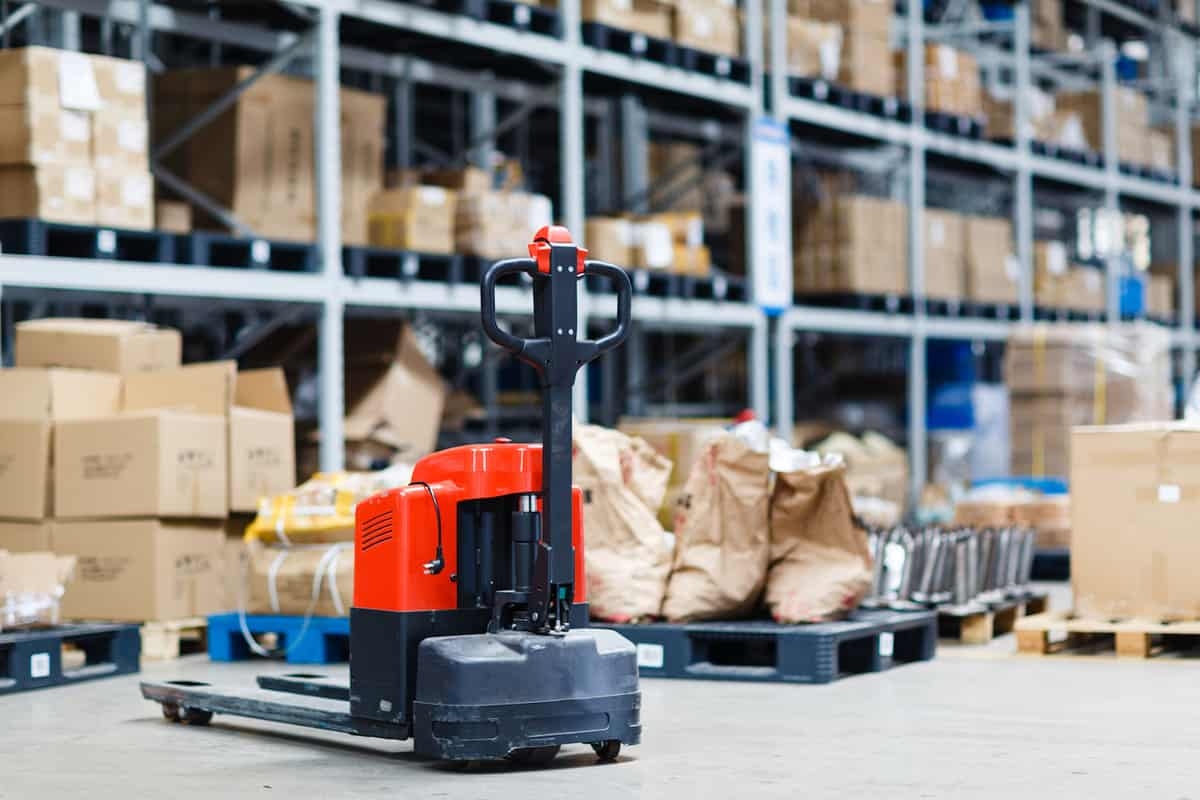
Ecommerce: High inventory risk. Unsold inventory ties up capital and storage space. Poor product selection or market changes can leave you with dead stock, creating financial losses.
Customer Experience
Dropshipping: Potentially compromised customer experience. Long shipping times, inconsistent product quality from different suppliers, and limited control over packaging diminish customer satisfaction. Poor experiences increase returns and negative reviews.
Ecommerce: Superior customer experience. Fast shipping, consistent quality, branded packaging, and direct customer communication create positive experiences. This leads to higher satisfaction, repeat purchases, and brand loyalty.
Business Involvement Required
Dropshipping: Low to moderate business involvement. After initial setup and marketing optimization, daily involvement becomes minimal. Store management, customer communication, and marketing optimization remain ongoing but require limited time.
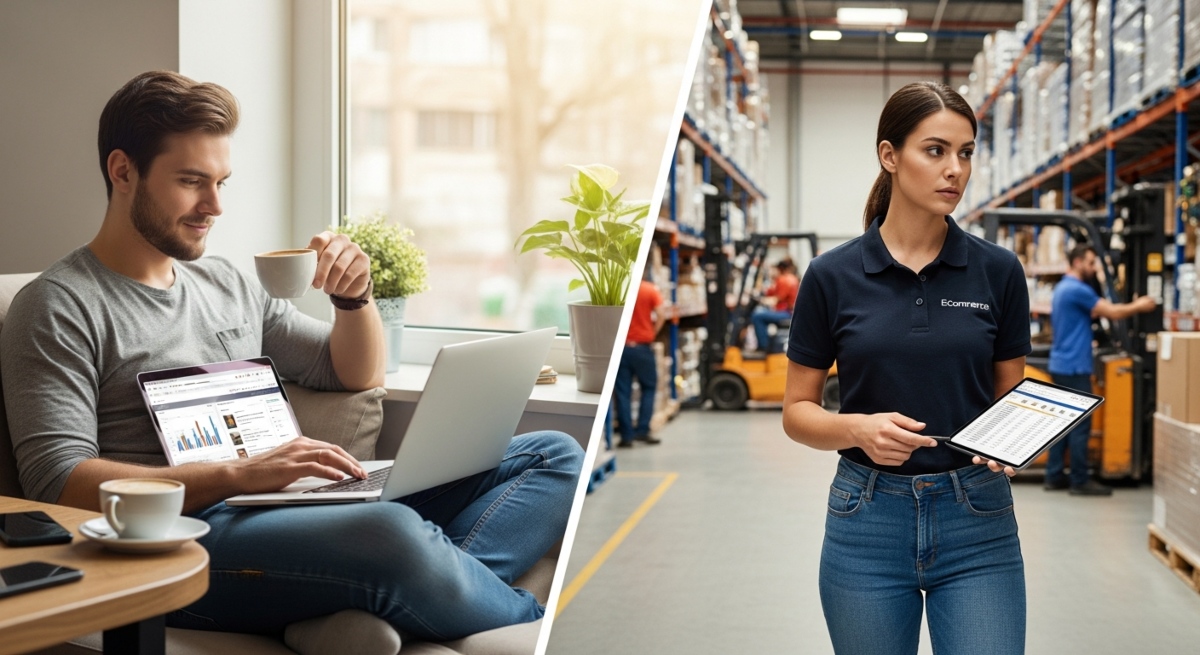
Ecommerce: High business involvement. Daily packing, shipping coordination, inventory management, supplier communication, and customer service require substantial time. This hands-on approach demands active daily management.
Dropshipping vs Ecommerce Comparison Table
| Aspect | Dropshipping | Traditional Ecommerce |
|---|---|---|
| Inventory Management | Supplier holds inventory | Seller holds inventory |
| Startup Cost | Low ($300-1,000) | High ($2,000-10,000+) |
| Profit Margins | Narrow (10-20%) | Higher (30-50%+) |
| Shipping Control | Supplier manages (slow delivery) | Seller manages (faster delivery) |
| Automation Potential | High (extensive automation possible) | Low (manual handling required) |
| Quality Control | Limited (no pre-inspection) | High (inspect before sale) |
| Inventory Risk | None (no upfront investment) | High (capital tied up) |
| Customer Experience | Potentially poor (slow shipping, variable quality) | Better (fast shipping, consistent quality) |
| Business Involvement | Low to moderate | High (daily active management) |
| Shipping Speed | 7-30 days (often longer) | 1-5 days (can be expedited) |
| Brand Control | Limited | Complete |
| Scalability | Easy (no inventory constraints) | More difficult (inventory dependent) |
| Time to Launch | 1-2 weeks | 4-8 weeks |
| Geographic Barriers | Low | Higher |
Which Model Should You Choose?
Choosing between dropshipping and ecommerce depends on your specific situation, resources, goals, and preferences. Here are two contrasting business scenarios to help you determine which model aligns with your circumstances.
Scenario 1: Dropshipping is Right for You
Meet Alex: Alex is a budding entrepreneur with a passion for sustainable living. She’s identified a trending niche – eco-friendly home products that excites her. However, Alex has limited savings of only $2,000 and wants to validate her business idea before committing significant capital.
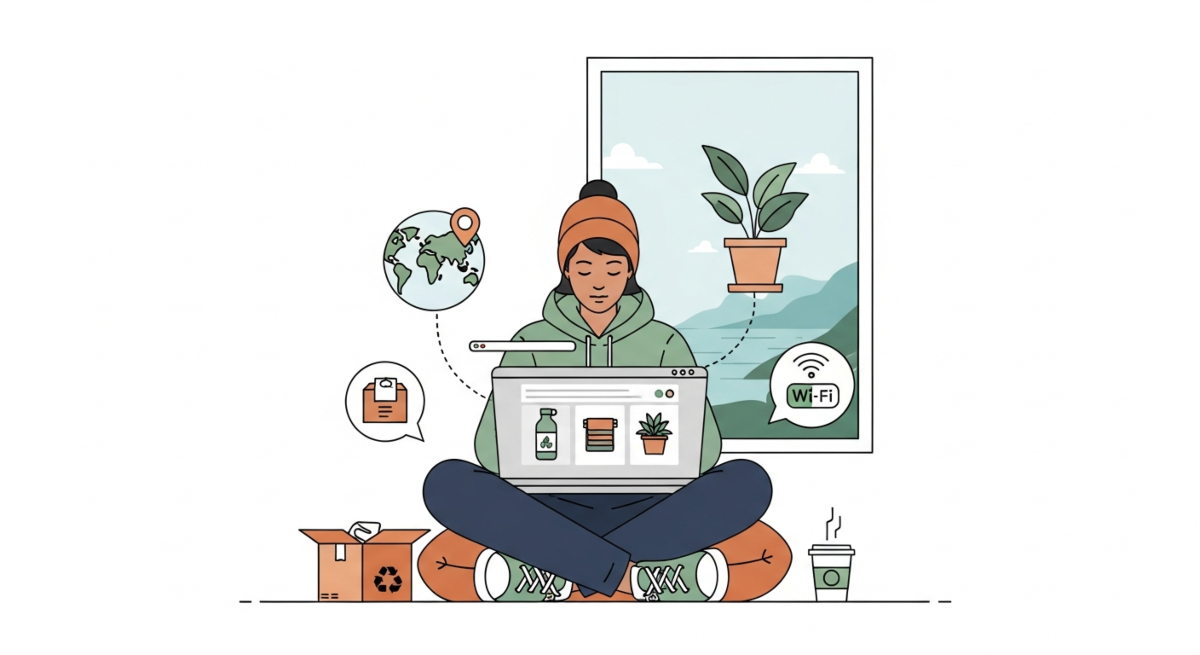
Why Dropshipping Makes Sense for Alex’s Business:
Limited Capital but Big Ambitions: With only $2,000, Alex can’t afford $5,000+ in initial inventory plus storage costs. Dropshipping requires only $800 for store setup, leaving $1,200 for marketing.
Testing Market Demand: Alex isn’t certain which eco-friendly products will resonate with her target market. Dropshipping allows her to test 20+ different products with real customers without inventory risk. If a product doesn’t sell, she simply removes it and tries another.
Flexibility in Product Offerings: Eco-friendly trends evolve rapidly. Dropshipping lets Alex quickly adapt her catalog to emerging trends without being stuck with outdated inventory.
Low-Risk Business Validation: Before investing heavily, Alex can validate her business idea. If the store generates $5,000 monthly revenue, she might invest in inventory. If it generates only $500, she’s minimized financial loss.
Geographic Independence: Alex can manage the business from anywhere; whether traveling, working another job, or handling family responsibilities. The location-independent nature appeals to her lifestyle goals.
Dropshipping Success Timeline for Alex: Month 1-2 (setup and optimization), Month 2-4 (testing products and marketing), Month 4-6 (scaling successful products). If successful, Alex can transition to ecommerce in Year 2 with validated products and customer base.
Scenario 2: Ecommerce is Right for You
Meet Sarah: Sarah has been crafting unique, handmade pottery for five years. She has 500+ loyal customers who actively seek her work, a clear brand vision around sustainable artisanal pottery, and $8,000 in savings. She’s ready to professionalize her business.
Why Ecommerce Makes Sense for Sarah’s Business:
Established Product Line and Customer Base: Sarah doesn’t need to test products; her customers already know and love her work. She’s ready to scale production and professional fulfillment.
Need for Brand and Quality Control: Sarah’s brand identity centers on high-quality, handmade pottery. Dropshipping with mass-produced items would dilute her brand. Ecommerce allows her to control every customer touchpoint.
Long-term Business Vision: Sarah aims to build a sustainable pottery business as her primary income for the next decade. This long-term commitment justifies inventory investment and operational complexity.
Customer Willingness to Pay Premium Prices: Sarah’s customers value quality and sustainability enough to pay premium prices. Ecommerce’s higher margins perfectly match her product positioning.

Control Over Customer Experience: Sarah wants to personally oversee packaging, include handwritten thank-you notes, and manage shipping to ensure customers feel the care behind each piece. Ecommerce enables this hands-on approach.
Ready for Higher Investment and Risk: With $8,000 savings and confident demand, Sarah can invest $5,000 in initial inventory production and $2,000 in store infrastructure. The calculated financial risk aligns with her circumstances.
Ecommerce Growth Path for Sarah: Month 1-3 (store setup, initial production, launch), Month 3-12 (optimize operations, build reputation, reinvest profits in production capacity). Year 2+: Scale production and potentially move to wholesale partnerships while maintaining direct ecommerce sales.
Which Model Should You Choose Between Dropshipping vs Ecommerce?
Choose Dropshipping if you:
- Have limited startup capital ($500-2,000)
- Want to test business ideas with minimal risk
- Prefer location independence and low daily involvement
- Are interested in trending niches and rapid experimentation
- Want to start a business quickly (within 1-2 weeks)
- Lack inventory space or warehouse access
- Want to maintain flexibility in product offerings
Choose Ecommerce if you:
- Have sufficient capital ($3,000-10,000+) for inventory investment
- Have an established, validated product or niche
- Want to build a strong brand with complete control
- Prioritize customer experience and quality consistency
- Are prepared for active daily business involvement
- Want higher profit margins and long-term sustainability
- Have unique products that differentiate from competitors
- Are committed to a long-term business vision
Dropshipping vs Ecommerce FAQs
How Do You Choose Between Ecommerce and Dropshipping?
Consider these four critical factors: your available startup capital, your business experience level, your product readiness, and your time availability. If you have less than $2,000 and want to test ideas, dropshipping makes sense. If you have capital, a validated product, and time for active management, ecommerce is better. Many successful entrepreneurs start with dropshipping to validate ideas, then transition to ecommerce with established products and customer bases.
Is Ecommerce the Same as Dropshipping?
No. Ecommerce is the broader concept of selling online, which includes multiple fulfillment models. Dropshipping is one specific ecommerce model. You can run an ecommerce business using traditional inventory management, print-on-demand, handmade products, or other fulfillment methods. All dropshipping businesses are ecommerce, but not all ecommerce businesses are dropshipping.
Can You Start with Dropshipping and Switch to Ecommerce Later?
Yes, and many successful entrepreneurs follow this path. Start with dropshipping to test products and validate market demand with minimal risk. Once you identify best-sellers and build a customer base, transition to ecommerce by sourcing inventory for your proven products. This approach minimizes financial risk while allowing you to leverage early success into a more scalable model.
What Are the Hidden Costs of Dropshipping?
Beyond startup costs, expect marketing expenses ($200-1,000+ monthly to generate consistent traffic), payment processing fees (2.9% + $0.30 per transaction), platform fees ($29-299 monthly), and potentially expensive tools for automation and analytics. Additionally, factor in time investment for content creation and customer service despite “low involvement” marketing.
What Are the Hidden Costs of Ecommerce?
Inventory investment ties up significant capital. Storage and warehouse costs (even garage storage requires organization). Packing materials, shipping labels, and fulfillment supplies accumulate. Potential employee or contractor costs for packing and shipping. Insurance for inventory. And the opportunity cost of capital tied up in unsold stock.
Which Model Has Better Long-term Profitability?
Ecommerce typically offers better long-term profitability due to higher margins and scalability. Dropshipping struggles with narrow margins and intense competition. However, dropshipping can generate consistent income with lower involvement. The “best” model depends on your definition of profitability; quick returns on minimal investment (dropshipping) or building substantial long-term wealth (ecommerce).
How Long Does It Take to Become Profitable?
Dropshipping: 2-6 months if you execute well (many start generating revenue within weeks, profit within 2-3 months). Ecommerce: 3-12 months (slower initial growth due to inventory constraints, but faster scaling once optimized). Both timelines depend heavily on marketing effectiveness and market fit.
Can You Run Both Dropshipping and Ecommerce Simultaneously?
Yes. Many entrepreneurs run complementary operations: a dropshipping store testing new products and markets while maintaining an ecommerce store with proven products. This hybrid approach uses ecommerce’s profitability and dropshipping’s low-risk testing to create a powerful business combination.
What Happens if Your Dropshipping Supplier Fails?
A failed supplier creates immediate problems: unfulfilled customer orders, negative reviews, and damaged reputation. Your customers blame you, not the supplier. You must find replacement suppliers quickly, possibly losing customers to competitors. This risk highlights dropshipping’s supplier dependence disadvantage.
What Happens if Your Ecommerce Inventory Becomes Obsolete?
Obsolete inventory represents pure financial loss. You’ve invested capital in products that won’t sell. You might need to liquidate at steep discounts or dispose of inventory entirely. This downside risk is why product research, market validation, and demand forecasting are critical for ecommerce success.
Which Model Requires More Customer Service?
Dropshipping often requires more customer service due to slow shipping, quality inconsistencies, and customer frustration. Many dropshipping support issues stem from factors outside your control (supplier delays, quality issues). Ecommerce customer service focuses on positive experiences; faster shipping, quality consistency, and proactive communication reduce service burden.
Can Beginners Successfully Launch Dropshipping or Ecommerce?
Yes, both are accessible to beginners. Dropshipping is easier for complete beginners due to lower complexity and investment. Ecommerce requires more business knowledge but offers better profitability for those willing to learn. Many successful entrepreneurs started in their first year of business with either model.
Conclusion
Dropshipping and ecommerce represent distinct business models with fundamentally different approaches to inventory, profitability, and operational involvement. Dropshipping offers low-risk product testing and location independence, making it ideal for entrepreneurs with limited capital and a desire to validate ideas quickly. Ecommerce provides higher margins, complete control, and better long-term profitability for those with capital, validated products, and willingness to engage in active business management.
The choice isn’t binary, many successful entrepreneurs leverage both models. Starting with dropshipping to validate products and build customer bases, then transitioning to ecommerce with proven winners creates an optimal combination maximizing both risk management and profitability.
Evaluate your financial situation, business experience, product readiness, and time availability honestly. If you score higher on capital, product validation, and available time, choose ecommerce. If you prioritize low risk, quick validation, and flexibility, choose dropshipping. Whichever path you select, commit to it fully, execute consistently, and continuously optimize based on real market feedback.
Your business success depends less on which model you choose and more on how effectively you execute that model. Master your chosen approach, validate assumptions with data, and scale systematically as you build your online business empire.