AliExpress is still a major player in the dropshipping world. But by 2026, relying on a single Chinese supplier just isn’t enough. Shipping expectations are higher, customer loyalty is harder to win, and local fulfillment matters more than ever. That’s where AliExpress alternatives come in.
Today’s best dropshippers mix suppliers strategically to offer faster delivery, higher quality, and better margins. From U.S. retail giants like Walmart and Target to global sourcing platforms like CJ Dropshipping and Alibaba, the supplier landscape is full of new opportunities.
Ready to diversify your suppliers? Below, we’ll explore 15 of the best AliExpress alternatives for 2026: what they offer, who they’re best for, and how to integrate them effortlessly into your store.
Why Do We Need Alternative Suppliers To AliExpress?
Let’s break down why exploring alternative suppliers is a smart move for your dropshipping business:
Long Shipping Times – Standard shipping from China averages 2 to 8 weeks, though U.S./EU warehouses cut that to under a week. This directly impacts customer satisfaction and repeat purchase rates.
Chinese Holidays – China has major holidays like the Chinese New Year, where production and shipping grind to a halt. This can lead to delays that frustrate your customers and disrupt your business flow.
Returns and Refunds – Handling returns with AliExpress can be tricky. Suppliers often have different policies, and navigating them can feel like a maze.
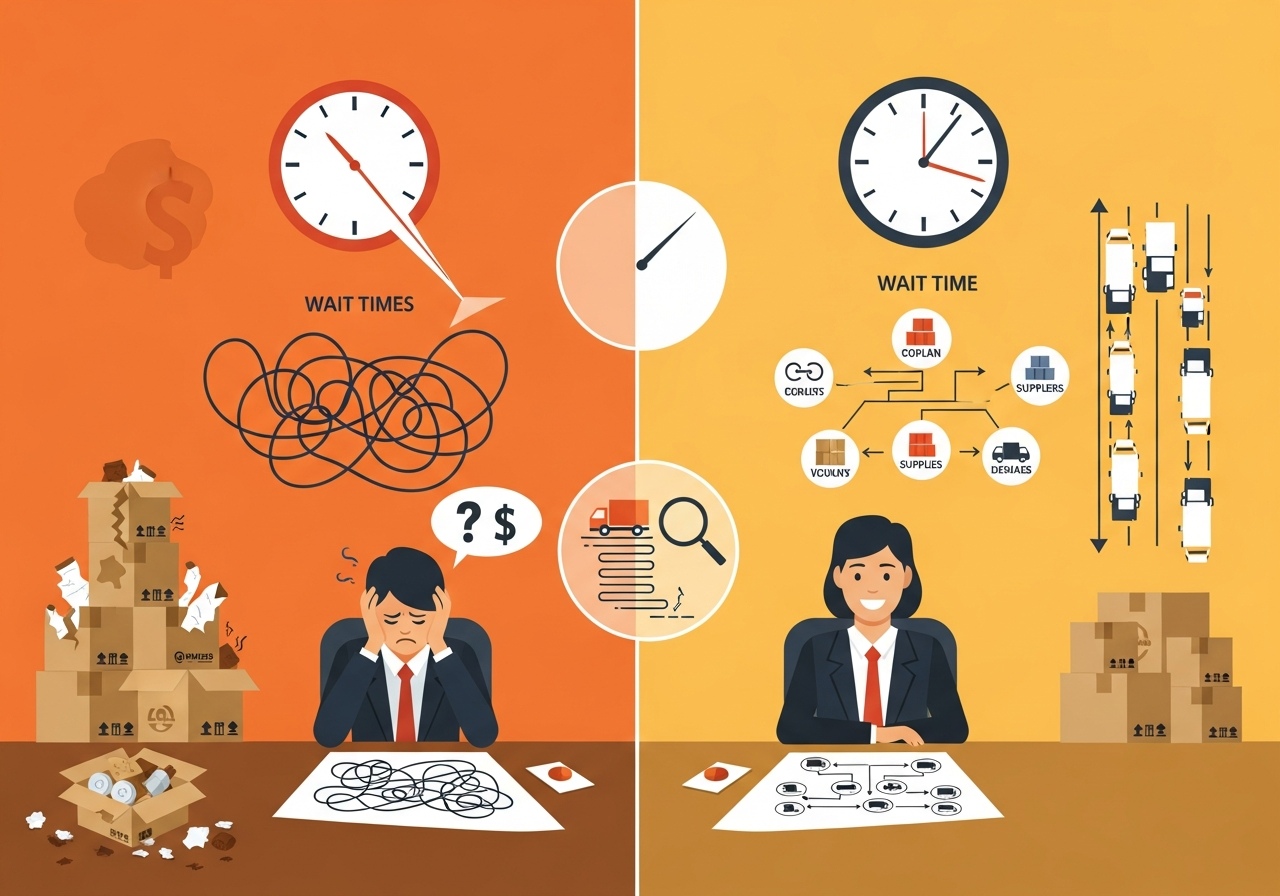
Local Warehouses – Some alternatives have warehouses in regions like the U.S., Europe, or Australia. This means faster shipping and a chance to cater to specific markets without relying on long-distance deliveries.
Scalability – As your dropshipping business grows, you’ll need suppliers that can keep up with your increasing demand. Some alternatives are better equipped to handle bulk orders and scale efficiently.
For AliExpress dropshipping, expanding your horizons with alternative suppliers can solve these challenges and give you a competitive edge. The more diverse and reliable your supply chain, the better equipped you’ll be to handle customer expectations and grow your e-commerce business.
Best AliExpress Alternatives by Use Case
Different business models require different platforms. Here’s how to find the right alternative to AliExpress based on your specific needs.
Best For Low-Cost Chinese Products
If you’re competing on price and volume, these platforms offer rock-bottom costs similar to AliExpress:
- Temu
- Banggood
- DHgate
- Gearbest
- Taobao
Best For Faster Shipping (US & EU Suppliers)
For customers demanding quick delivery, these alternatives provide U.S. and EU-based fulfillment:
- Spocket
- CJ Dropshipping
- Zendrop
- AutoDS
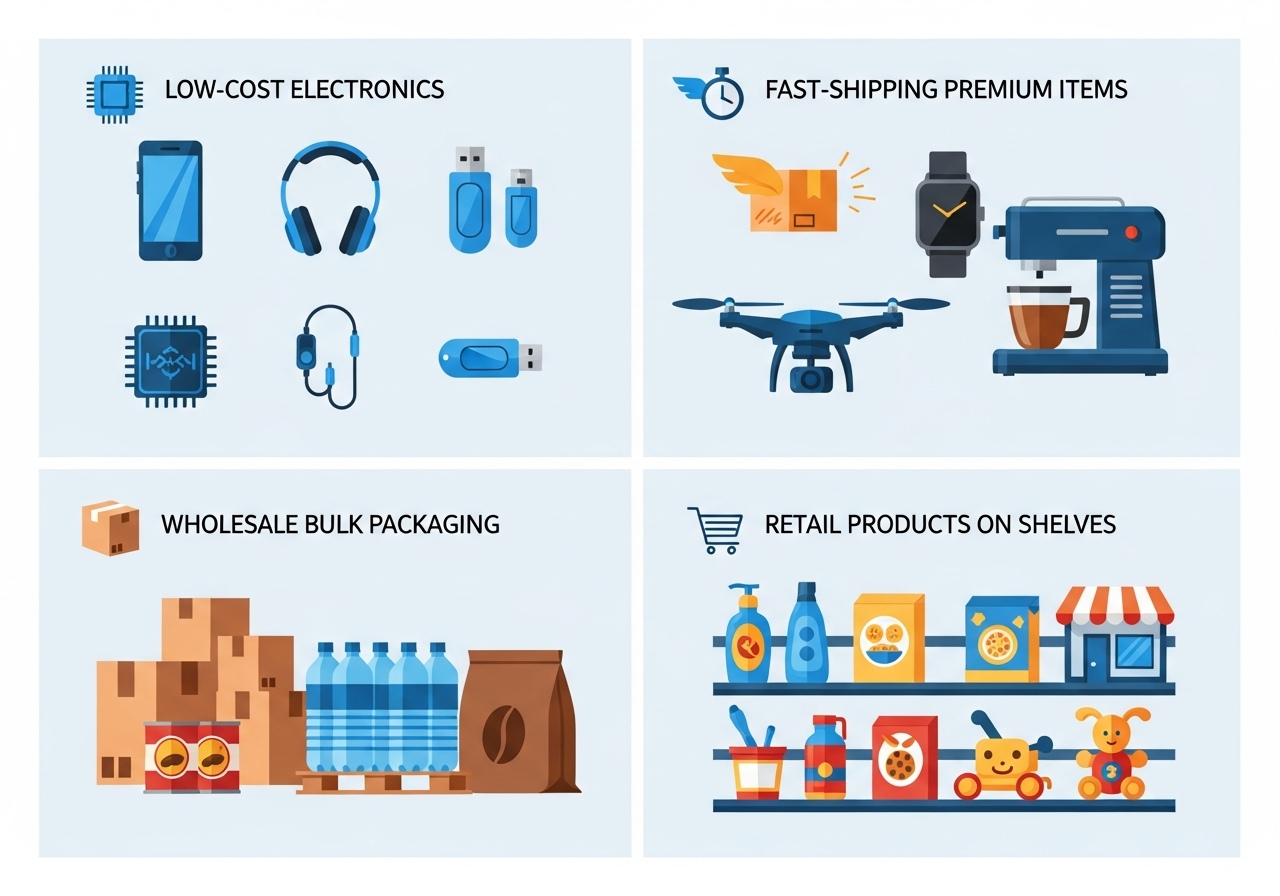
Best For Bulk & Wholesale Sourcing
For wholesale buyers and brand owners ordering large quantities:
- Alibaba
- 1688
- SaleHoo
- Worldwide Brands
Best For Retail & Fast Delivery
For businesses requiring immediate fulfillment and premium customer experience:
- Amazon
- eBay
- Walmart
Top 15 AliExpress Alternatives You Should Know
Here are the best alternatives to AliExpress, detailed with pros, cons, pricing, and shipping information.
1. Spocket
Best For U.S./EU dropshipping, branded stores, fashion, home décor, and businesses targeting Western markets that require fast shipping.
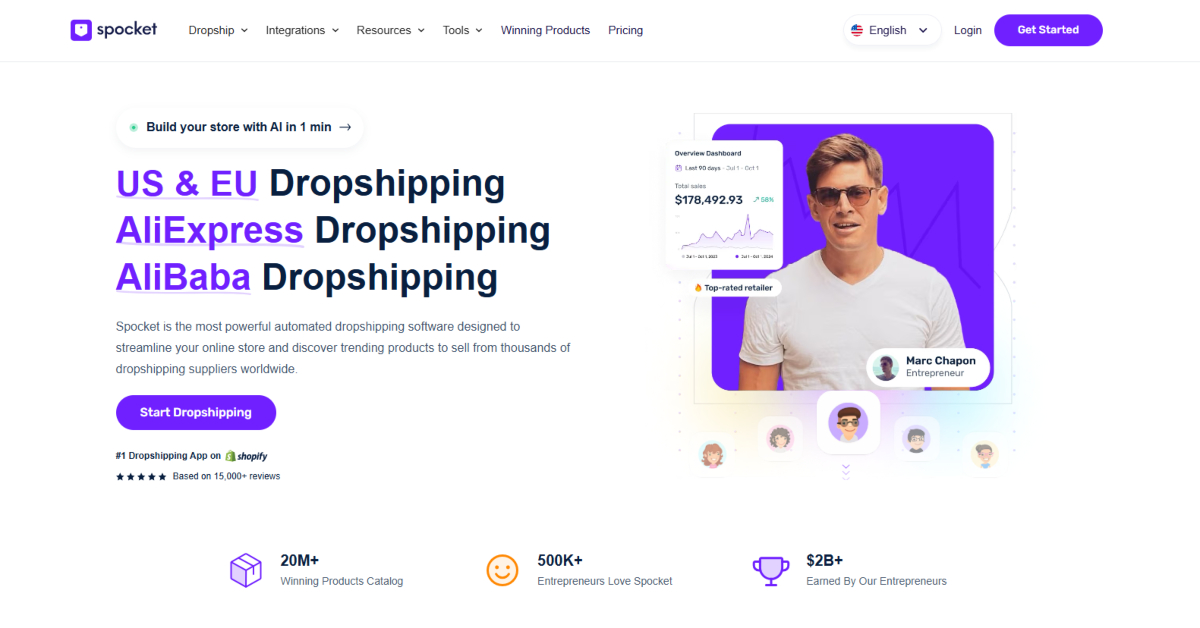
Spocket is a premium dropshipping platform that connects your store directly to verified U.S. and EU suppliers. It’s specifically designed for branded dropshipping and integrates seamlessly with Shopify, WooCommerce, and BigCommerce.
Pros
- Suppliers based in U.S. and EU ensure 3 to 7 day shipping
- Product vetting prevents low-quality items from appearing in your store
- One-click Shopify integration with automated order sync
- Branded fulfillment with your logo on packaging
- No supplier communication needed, completely hands-off
Cons
- Products are more expensive than AliExpress (margins are lower for price-sensitive niches)
- Limited product variety compared to AliExpress or Alibaba
- Requires Shopify Plus for advanced features
- Supplier network is smaller than competitors
Pricing Free plan with limited products; Premium plans start at $99/month for unlimited suppliers and priority support.
Shipping Regions United States, European Union, Canada.
2. CJ Dropshipping
Best For Dropshippers wanting flexibility to mix low-cost Chinese products with fast-shipping inventory; Shopify and WooCommerce stores.
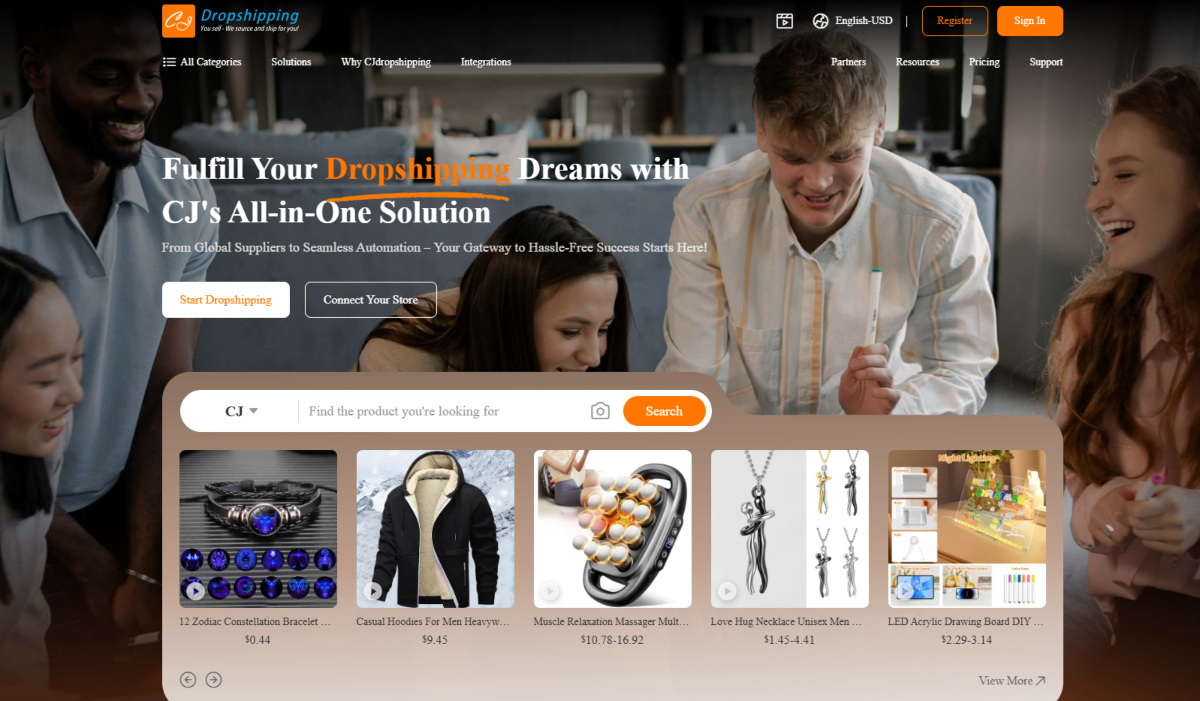
CJ Dropshipping is an all-in-one dropshipping platform offering a hybrid model: access to both Chinese manufacturers (like AliExpress) and U.S./EU warehouses. Their automation tools streamline order processing across multiple suppliers.
Pros
- Hybrid sourcing: combine cheap Chinese products with U.S./EU fast-shipping items
- Excellent automation tools for bulk order processing
- Competitive pricing with transparent fee structures
- 24/7 customer support with multilingual teams
- API integration for advanced store customization
- Supplier protection: money-back guarantee if items don’t arrive
Cons
- Quality control on Chinese products is weaker than premium alternatives
- Interface can feel overwhelming for beginners
- Shipping times for China-based items still reach 2 to 4 weeks
- Reliant on supplier responsiveness for inventory updates
Pricing Free basic plan; advanced plans $19 to $99/month depending on features.
Shipping Regions Worldwide (China + U.S./EU options available).
3. Temu
Best For Dropshippers targeting price-sensitive markets; volume sellers; trend-driven niches.
Temu is a newer ultra-low-cost shopping platform where merchants source directly from Chinese manufacturers. Its explosion in popularity is driven by unbeatable prices on trending items (gadgets, fashion, home goods).
Pros
- Absolute lowest prices on the market (often 50 to 80% cheaper than AliExpress)
- Massive product selection with constant inventory refreshes
- Direct manufacturer access creates arbitrage opportunities
- Growing user base provides trend insights
- No account verification requirements
Cons
- Shipping times are 2 to 6 weeks (often longer)
- Quality is highly inconsistent with significant return rates
- No private label or branding options
- Reputational risk: brand association with ultra-low-cost products
- Limited seller protection and customer service
Pricing Free to use; sellers pay commissions per sale.
Shipping Regions Worldwide, typically 3 to 6 weeks from China.
4. Banggood
Best For Electronics dropshipping, gadgets, smart home products, tech accessories.
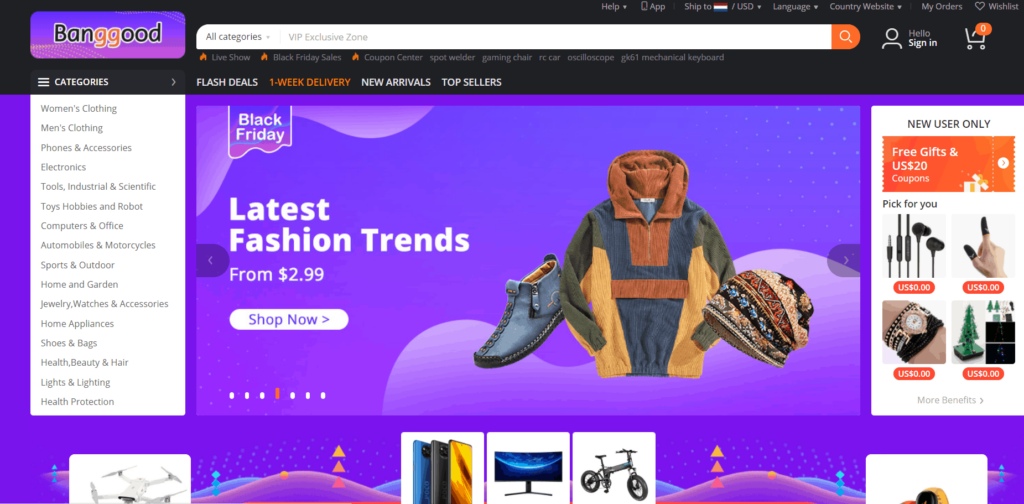
Banggood specializes in electronics, gadgets, and tech products sourced primarily from China. It’s known for better quality control than AliExpress and competitive pricing on tech items.
Pros
- Strong QC on electronics and gadgets
- Competitive pricing with bulk discounts
- Multiple warehouse options (some regional shipping available)
- Verified seller badges and ratings
- Easy integration with dropshipping tools
- Returns and refund policies are clearer than AliExpress
Cons
- Heavy focus on tech limits product variety
- Shipping still primarily from China (2 to 4 weeks standard)
- Seller communication can be inconsistent
- MOQ restrictions on some products
Pricing Variable per product; registration is free.
Shipping Regions Worldwide; faster options available to U.S./EU (extra cost).
5. DHgate
Best For Wholesale buyers, bulk orders, private label projects, dropshippers seeking lower MOQ than Alibaba.
DHgate is one of Asia’s oldest wholesale marketplaces, connecting manufacturers directly with bulk buyers and dropshippers. It’s particularly strong for flexible MOQ and wholesale pricing.
Pros
- Extremely flexible MOQ, often lower than competitors
- Excellent for private label and custom manufacturing
- Strong seller verification system
- Comprehensive product categories
- Buyer protection programs reduce fraud risk
- Good for finding niche suppliers in Asia
Cons
- Interface is dated compared to modern alternatives
- Quality varies more than Alibaba or Spocket
- Shipping times are typically 2 to 4 weeks
- Communication with sellers can be slow
- Limited automation tools for dropshipping
Pricing Free marketplace; registration is complimentary.
Shipping Regions Primarily from China and Asia; worldwide delivery available.
6. Alibaba
Best For Bulk orders (100+ units), private label manufacturing, brand owners, wholesale buyers seeking long-term supplier relationships.
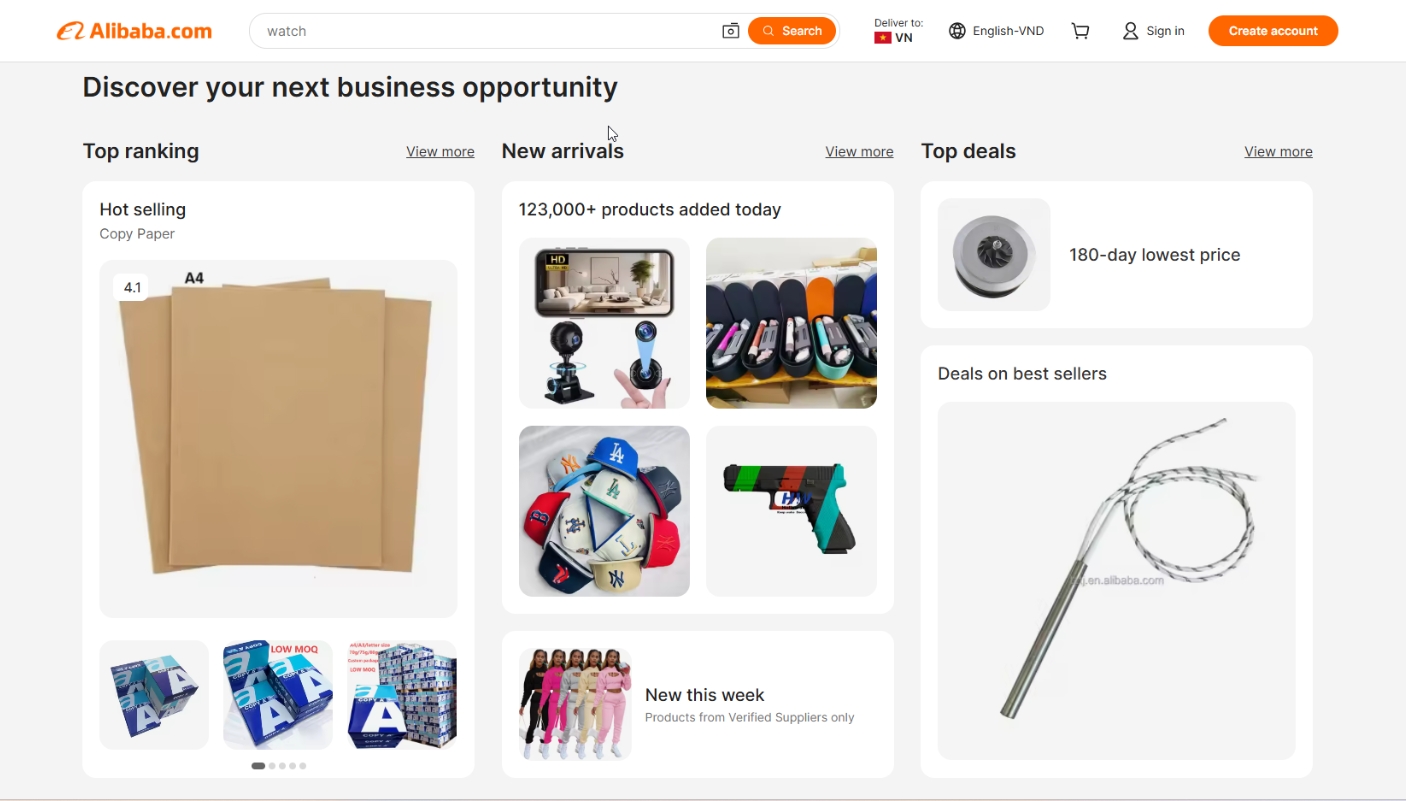
Alibaba is the world’s largest B2B marketplace, connecting wholesale buyers with manufacturers across virtually every product category. It’s the go-to platform for bulk orders, private labeling, and brand development.
Pros
- Factory-direct access with lowest per-unit costs at scale
- Extensive private label and OEM options
- Advanced supplier vetting and Trade Assurance protection
- Customizable product specifications and packaging
- Long-term relationship potential with manufacturers
- Huge product diversity across all categories
Cons
- Minimum order quantities often 100 to 1,000 units (not suitable for dropshipping)
- Requires business registration in most cases
- Setup process is complex and time-consuming
- Supplier communication and language barriers
- Quality control requires third-party inspection services
- Lead times can stretch 4 to 8 weeks or longer
Pricing Free marketplace access; seller fees and transaction charges apply.
Shipping Regions Worldwide from China; negotiable per order.
7. 1688
Best For Advanced dropshippers and brands with China market knowledge; extreme cost optimization for high-volume sellers.
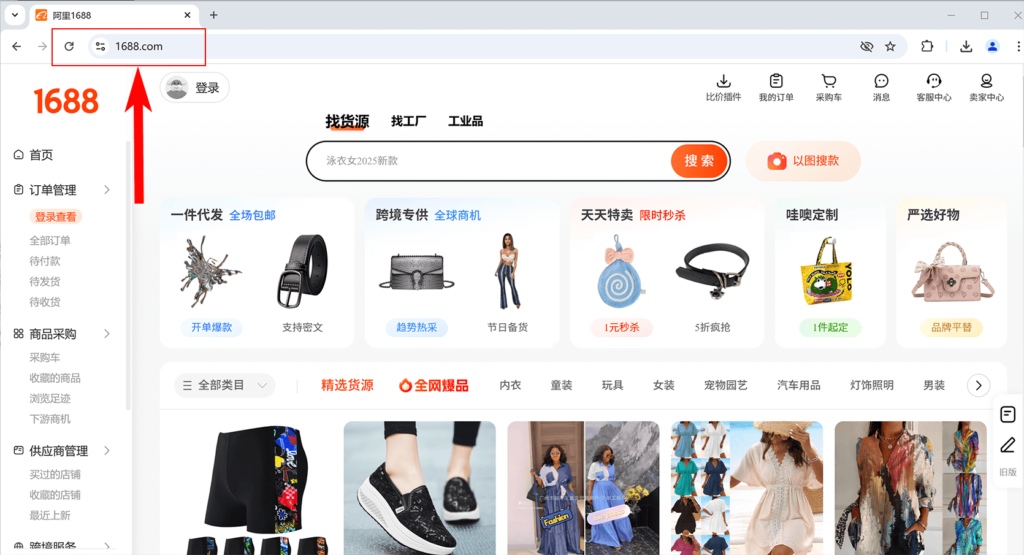
1688 is Alibaba’s domestic China platform where local manufacturers sell at wholesale prices. Prices are 20 to 40% lower than global Alibaba, but it requires Chinese language skills and a Chinese payment method.
Pros
- Lowest manufacturer prices globally (often 50% cheaper than AliExpress)
- Direct access to Chinese factories without middleman markup
- Massive product selection and specialization
- Bulk discounts and flexible MOQ
- Payment methods work with international buyers
Cons
- Website is entirely in Simplified Chinese (requires translation tools)
- Requires Chinese payment methods or agent services
- Complex sourcing process with steep learning curve
- No English customer support
- Language barriers create communication challenges
- Shipping coordination requires additional logistics work
Pricing Free marketplace; competitive wholesale pricing.
Shipping Regions Primarily China; international shipping arranged separately.
8. Zendrop
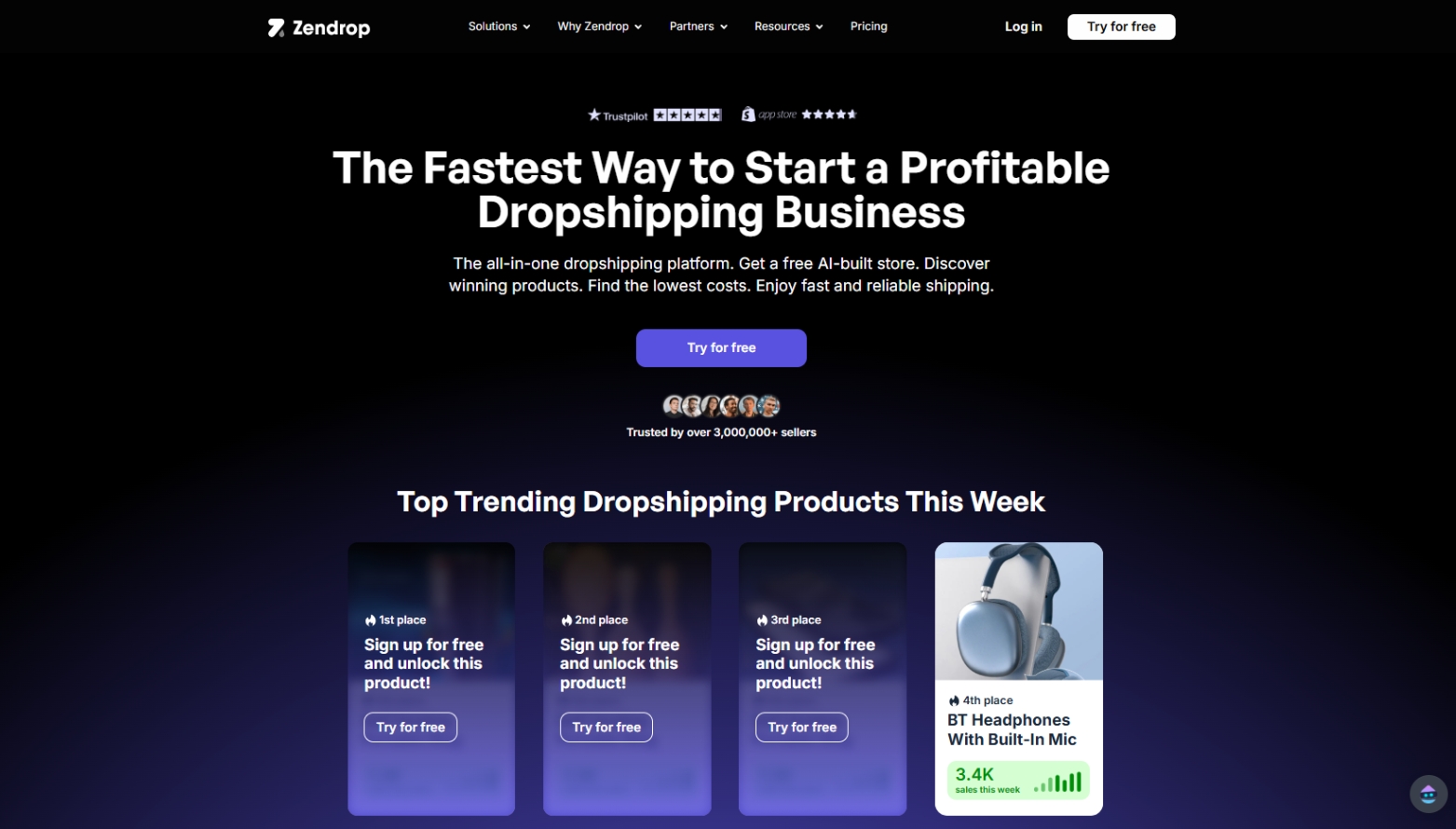
Best For Beginner dropshippers, Shopify stores, entrepreneurs new to e-commerce who want simplicity over customization.
Zendrop is a beginner-friendly dropshipping automation platform offering curated products from vetted suppliers. It emphasizes ease-of-use with one-click product importing and automated order fulfillment.
Pros
- Extremely user-friendly interface perfect for beginners
- Pre-curated product selection reduces research time
- Automatic order and tracking synchronization
- Competitive pricing with transparent fee structure
- Supplier quality is vetted to prevent low-quality items
- 24/7 support with live chat
- Free plan available with no credit card required
Cons
- Less product variety than larger platforms
- Smaller supplier network limits customization options
- Pricing is slightly higher than AliExpress
- Premium plans required for advanced features
- Automation is less powerful than specialized platforms like CJ Dropshipping
Pricing Free plan; Premium plans $29 to $99/month.
Shipping Regions Worldwide; fastest options available to U.S./EU.
9. AutoDS
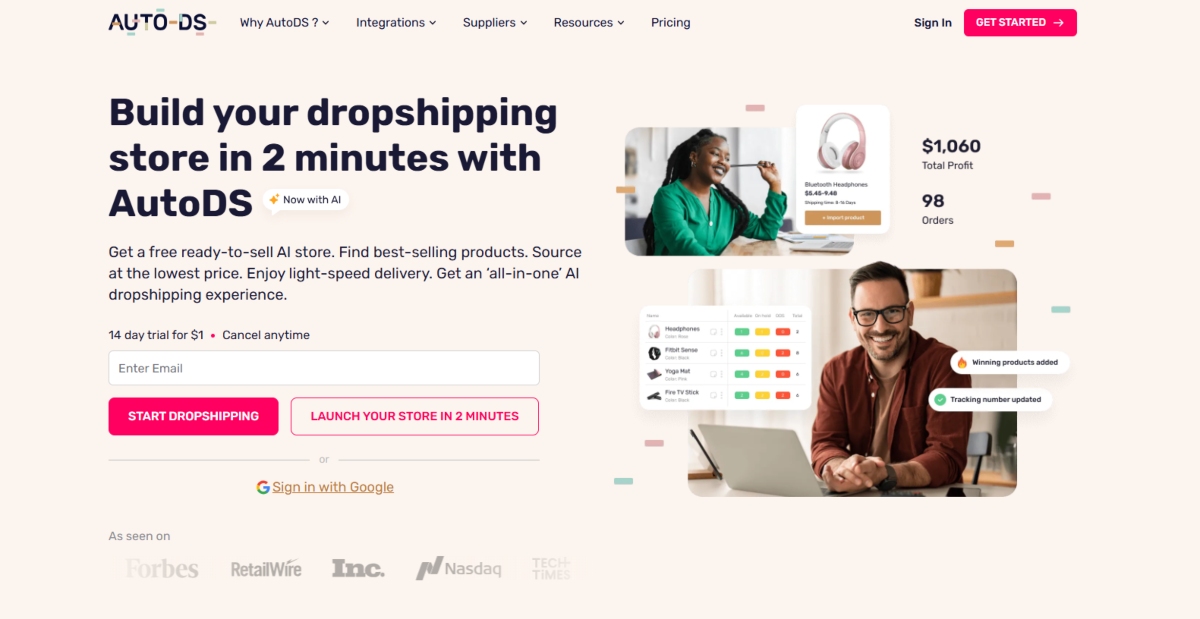
Best For Advanced dropshippers managing multi-supplier networks, Shopify automation, high-volume sellers.
AutoDS is a multi-supplier automation platform designed for dropshippers managing orders across multiple sources. It connects to AliExpress, Alibaba, and other platforms with intelligent routing.
Pros
- Integrates with 600+ suppliers across multiple platforms
- Intelligent supplier selection based on price and speed
- Automated order routing to optimize shipping and cost
- Advanced inventory and price monitoring
- Bulk order processing and customer management
- API integration for custom workflows
- Detailed analytics and performance tracking
Cons
- Steep learning curve for beginners
- Premium pricing compared to basic dropshipping tools
- Quality control depends on connected suppliers (varies)
- Requires technical knowledge for optimization
- Not ideal for single-supplier strategies
Pricing Plans start at $49/month for basic automation; enterprise plans available.
Shipping Regions Depends on connected suppliers; primarily worldwide.
10. SaleHoo
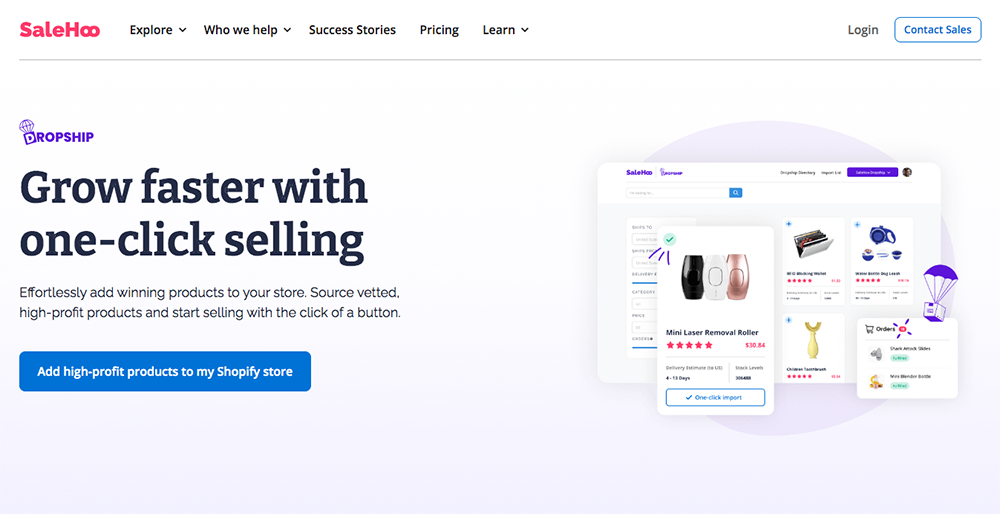
Best For Dropshippers wanting supplier directories with pre-vetted merchants; wholesale buyers researching suppliers; entrepreneurs avoiding scams.
SaleHoo is a verified supplier directory and community platform for dropshippers and wholesalers. Rather than being a marketplace itself, SaleHoo connects you with pre-vetted suppliers across multiple categories.
Pros
- Extensive database of 8,000+ verified suppliers
- Quality vetting reduces risk of supplier fraud
- Community forums provide insights and best practices
- Niche supplier categories help find specialized products
- Money-back guarantee if suppliers disappoint
- Training resources and education included
Cons
- Doesn’t provide direct product sourcing (you contact suppliers independently)
- Membership fee required to access database
- Suppliers may require wholesale minimum orders
- Not a marketplace, no product integration features
- Database requires continuous updates and validation
Pricing Annual membership around $147 to $197 depending on tier.
Shipping Regions Depends on suppliers in database; primarily worldwide.
11. Worldwide Brands
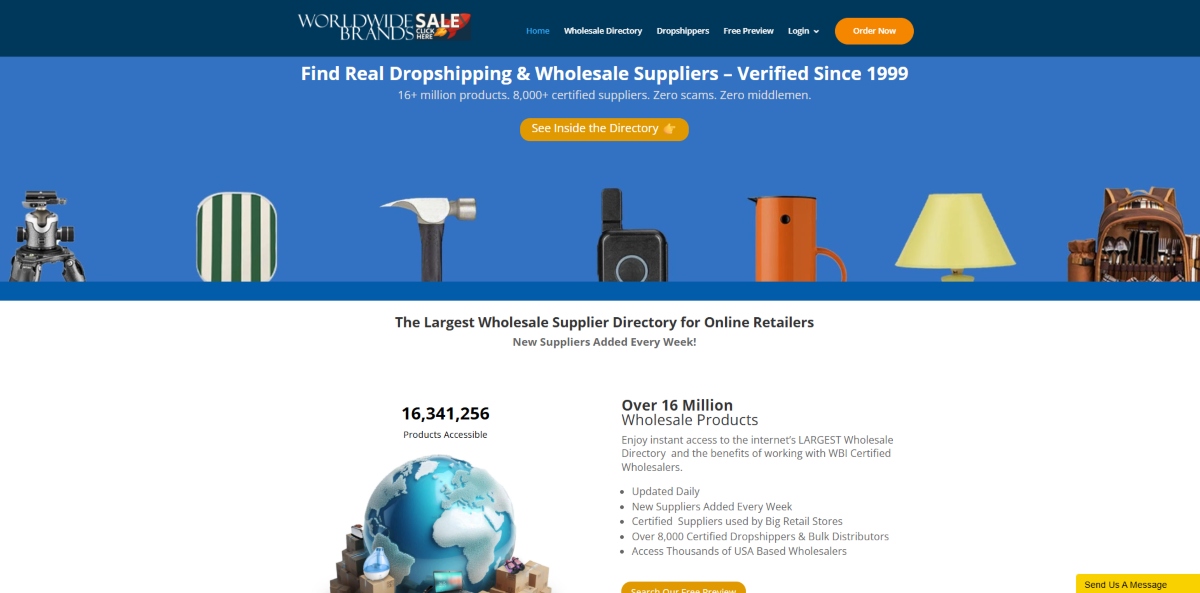
Best For Serious wholesalers, brand builders, entrepreneurs seeking long-term supplier relationships, those prioritizing supplier credibility.
Worldwide Brands is a long-established supplier directory offering lifetime access to a vetted database of wholesalers, manufacturers, and dropshippers. It emphasizes supplier legitimacy and fraud prevention.
Pros
- Lifetime access to supplier database (one-time fee)
- Strict verification process eliminates scam suppliers
- Detailed supplier profiles with historical track records
- Organized by product category and region
- Fraud protection and buyer confidence
- Educational resources and training included
- No monthly recurring fees after initial purchase
Cons
- High upfront cost (one-time payment around $400 to $600)
- Doesn’t provide product integration or automation
- Requires manual outreach to suppliers
- Database may not include newest suppliers
- Suited for serious entrepreneurs, not casual sellers
Pricing One-time fee around $400 to $600 for lifetime access.
Shipping Regions Varies by supplier; primarily U.S. and international.
12. Gearbest
Best For Electronics dropshipping, gadget retailers, tech accessory niche, smart home product sellers.
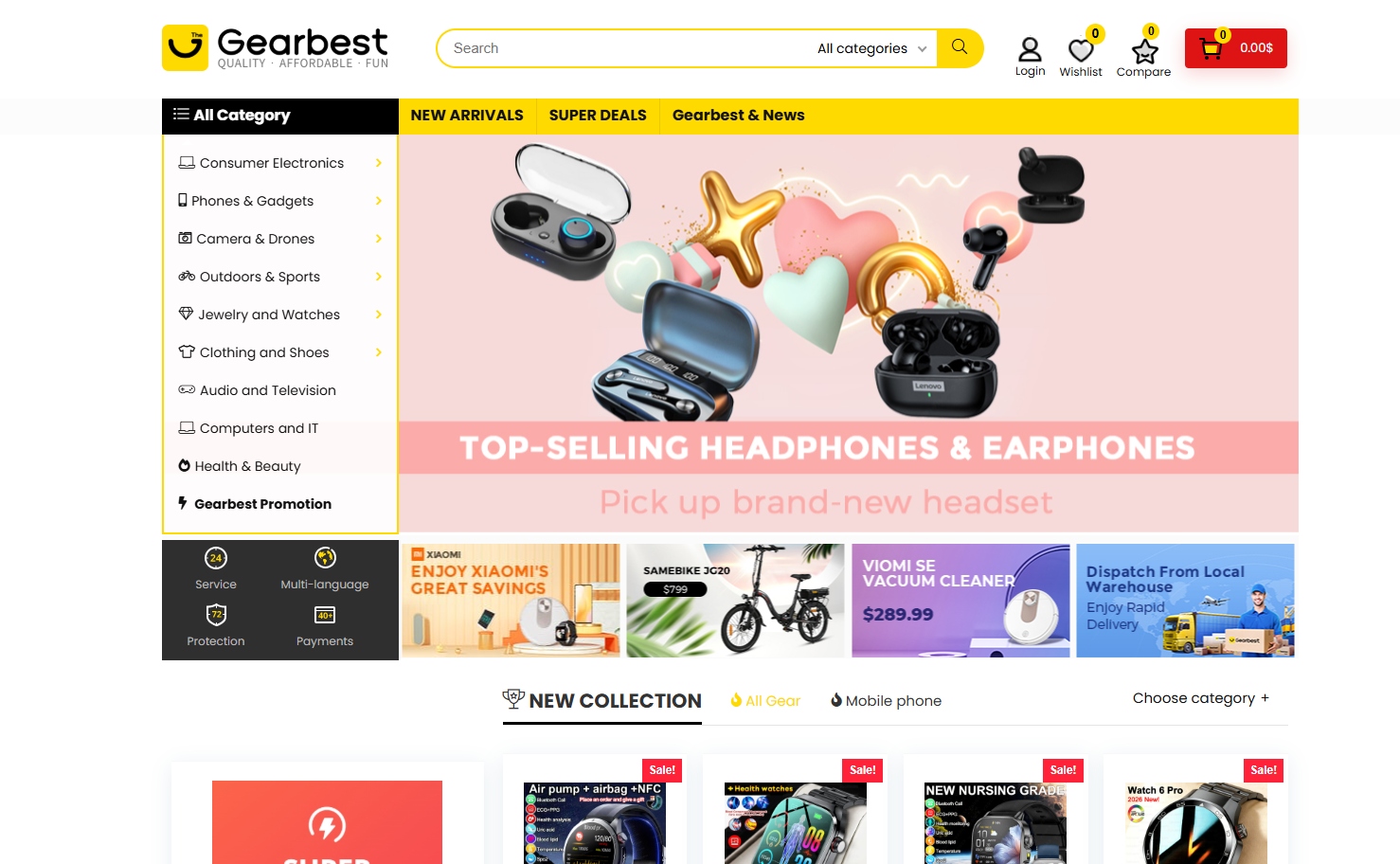
Gearbest is a tech-focused marketplace similar to Banggood, specializing in electronics, gadgets, smart home products, and tech accessories sourced from Chinese manufacturers.
Pros
- Strong focus on quality electronics and gadgets
- Better QC than general AliExpress
- Multiple warehouse locations for faster shipping
- Competitive pricing with bulk discounts
- Product categories are well-organized
- Good return and refund policies
- Seller ratings are transparent
Cons
- Limited to tech and gadget categories
- Shipping still primarily from China (2 to 4 weeks)
- Smaller product variety than AliExpress
- Seller support can be inconsistent
- No advanced automation tools
Pricing Free marketplace access; product pricing varies.
Shipping Regions Worldwide; regional warehouses available.
13. Amazon
Best For Sellers requiring fast Prime shipping, premium customer experience, bulk sales, established brands, high-trust buying environments.
Amazon is the world’s largest e-commerce marketplace, offering both retail fulfillment (FBA) and merchant-fulfilled options. While typically associated with retail, Amazon increasingly serves as a supplier platform for business-to-business sales.
Pros
- Amazon Prime ensures 2-day shipping (builds customer confidence)
- Highest customer trust among any marketplace
- FBA (Fulfillment by Amazon) automates warehousing and shipping
- Large buyer base generates significant sales volume
- Advanced tools for inventory and order management
- Strong buyer protection creates consumer confidence
- International expansion available through Amazon Global
Cons
- Highest fees in the industry (15 to 45% depending on category)
- Requires inventory investment upfront (not pure dropshipping)
- Strict product and seller approval requirements
- Complex account management and compliance
- Price competition is intense
- FBA fees are higher than independent fulfillment
Pricing Professional seller account $39.99/month + commission fees (15 to 45% by category).
Shipping Regions United States and 16 international marketplaces.
14. eBay
Best For Multi-source dropshipping, vintage/collectible items, auction-based sales, small sellers testing market demand, international selling.
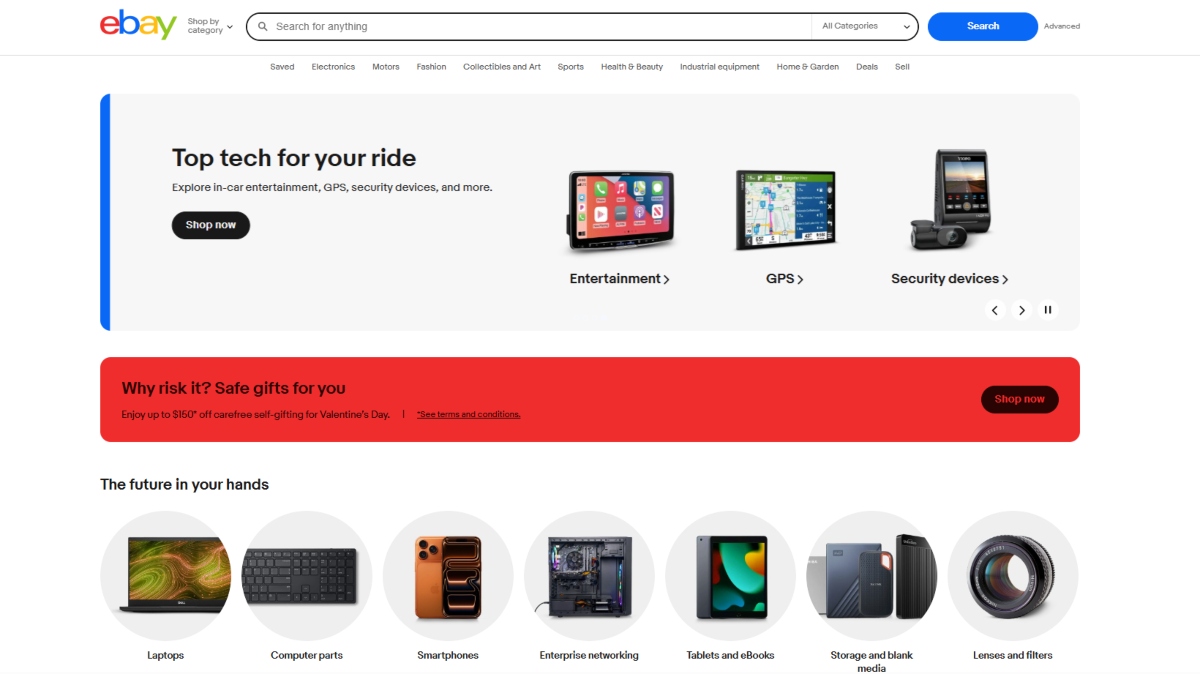
eBay is a global marketplace supporting multiple business models: auction-based selling, fixed-price listings, and wholesale. It accommodates dropshipping, reselling, and small business operations at any scale.
Pros
- Flexible selling model supports dropshipping, reselling, and wholesale
- Lower fees than Amazon (3 to 12% depending on category)
- Global buyer base across 190+ countries
- Multiple sourcing options available
- Auction format generates excitement and higher prices
- eBay shipping labels offer discounted rates
- Seller tools are robust for inventory management
Cons
- Audience skews toward bargain hunters (price-sensitive)
- Brand building is more difficult than owned storefronts
- Seller reputation system can hurt new accounts
- Lower average order values than other platforms
- Customer service disputes are time-consuming
- Auction-based listings require constant refreshing
Pricing $27.95/month for eBay store; commission fees 12 to 15% per sale.
Shipping Regions Worldwide; most active in U.S., UK, Australia.
15. Walmart
Best For U.S.-based sellers, premium customer experience, fast domestic shipping, brands seeking alternative to Amazon, high-volume sellers.
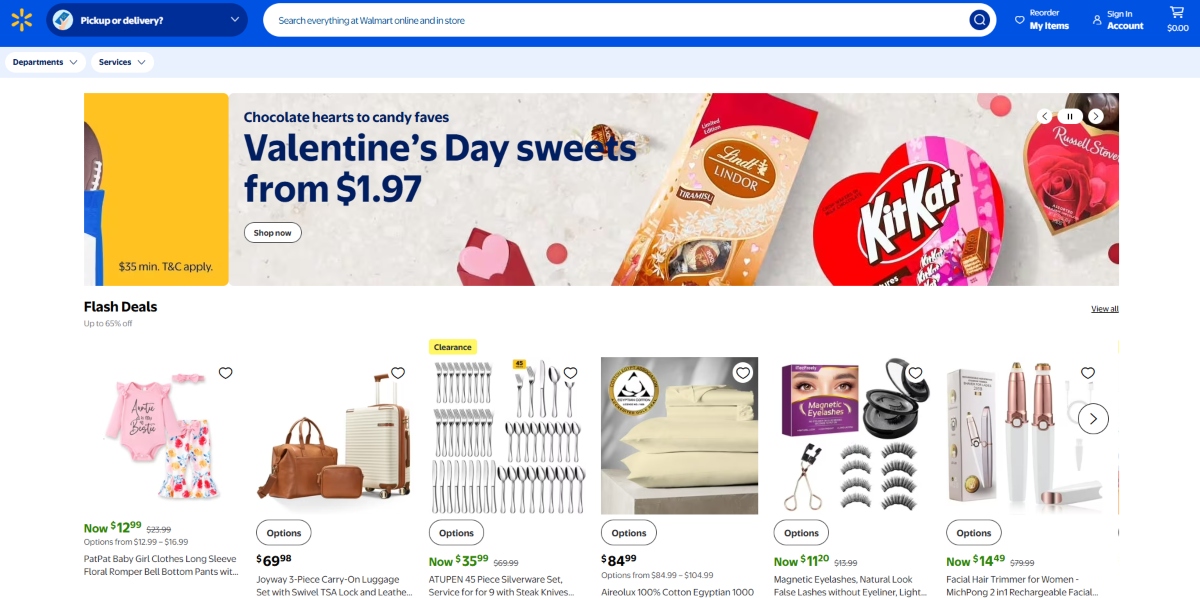
Walmart is America’s largest retailer, and its marketplace has recently emerged as a serious competitor to Amazon. Walmart Seller Center allows third-party sellers to list products and use Walmart’s fulfillment network.
Pros
- Fast fulfillment and reliable U.S. logistics
- Growing customer base and strong market position
- Lower fees than Amazon in many categories
- Integration with Walmart+ prime equivalent
- High trust brand provides customer confidence
- Strong for household and consumer products
- International potential through Walmart Global Commerce
Cons
- Smaller buyer audience than Amazon
- Supplier approval requirements are strict
- Fulfillment costs can be high
- Less brand visibility than Amazon marketplace
- Requires product research to meet Walmart standards
- International shipping options are limited
Pricing Seller account varies; commission 6 to 20% depending on category.
Shipping Regions Primarily United States; limited international options.
AliExpress vs Alternatives: Quick Comparison Table
| Platform | Price Level | Shipping Speed | MOQ | Best for Beginners | Best for Scaling |
|---|---|---|---|---|---|
| Spocket | Medium | Fast (3-7 days) | 1 | Yes | Premium brands |
| CJ Dropshipping | Low-Medium | 2-4 weeks (China) / 3-7 days (US) | 1 | Yes | Multi-supplier |
| Temu | Ultra-Low | 2-6 weeks | 1 | Yes | Price wars only |
| Banggood | Low | 2-4 weeks | 1 | Yes (Tech focus) | Electronics |
| DHgate | Low-Medium | 2-4 weeks | Low | Yes (Flexible) | Wholesale |
| Alibaba | Very Low (bulk) | 4-8 weeks | 100-1000+ | No | Brands/bulk |
| 1688 | Ultra-Low | 4-8 weeks | Variable | No (Complex) | Extreme cost |
| Zendrop | Medium | 3-7 days | 1 | Very easy | Automation |
| AutoDS | Low-Medium | Varies | 1 | Intermediate | Multi-supplier |
| SaleHoo | Variable | Varies | Varies | Yes (Directory) | Vetted suppliers |
| Worldwide Brands | Variable | Varies | Varies | Yes (Directory) | Legitimate suppliers |
| Gearbest | Low | 2-4 weeks | 1 | Yes (Tech only) | Electronics |
| Amazon | High | Fast (1-2 days) | FBA required | No (Fees high) | Premium |
| eBay | Medium | Varies | 1 | Yes | Multi-source |
| Walmart | Medium-High | Fast (2-4 days) | 1 | Limited | Scale US |
How to Choose the Right AliExpress Alternative for Your Business
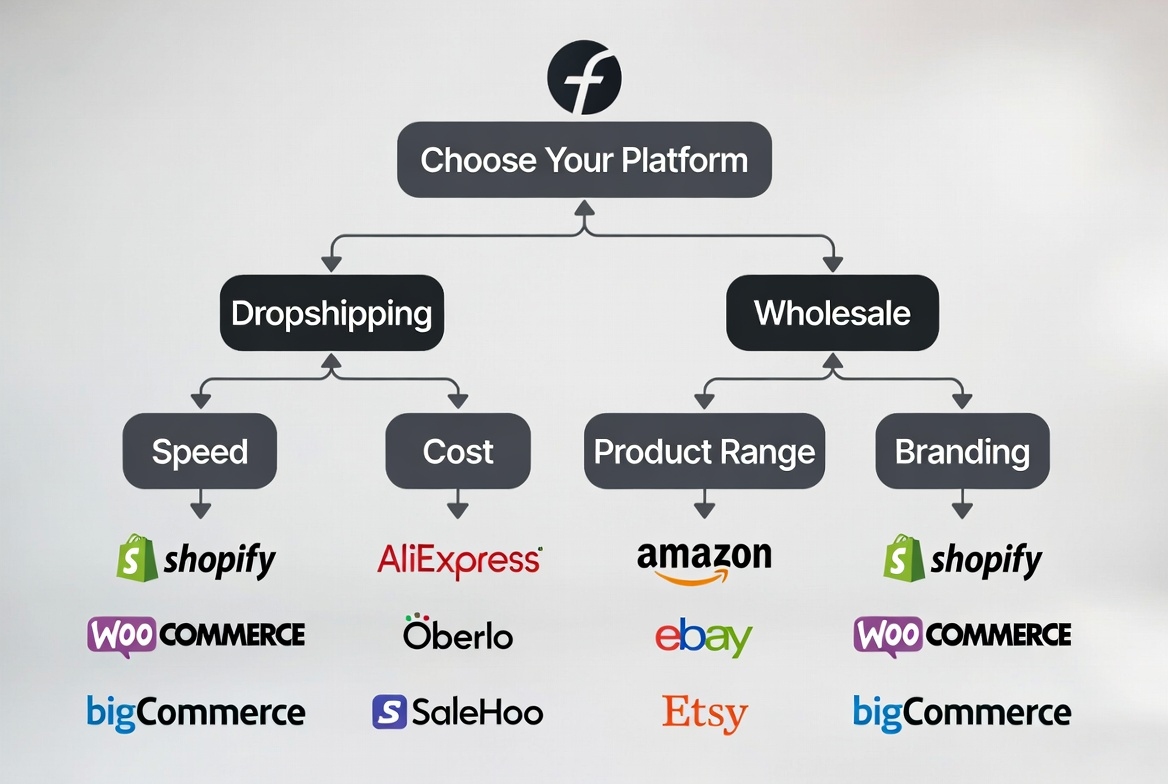
Selecting the optimal platform depends on your specific business model, product category, and growth stage. Here’s a decision framework to guide you.
Dropshipping vs Wholesale
Dropshipping means you sell products without holding inventory. Your supplier ships directly to customers. It’s ideal for testing market demand with low upfront risk.
Best platforms for dropshipping: Spocket, CJ Dropshipping, Zendrop, AutoDS.
Read more: Dropshipping vs Wholesale: How to determine which one to choose
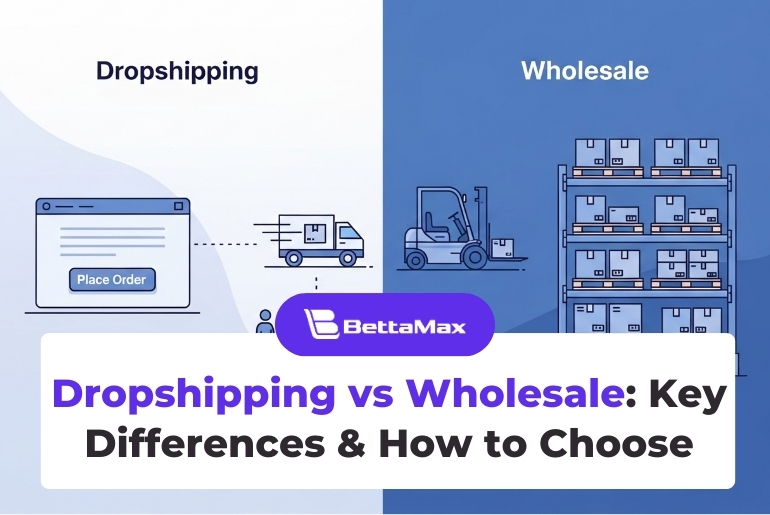
Wholesale means you purchase inventory in bulk, store it, and ship to customers. It requires capital investment but offers better margins and brand control.
Best platforms for wholesale: Alibaba, DHgate, 1688, SaleHoo, Worldwide Brands.
Speed vs Cost Trade-Off
If customers expect 2 to 5 day delivery, use U.S./EU-based suppliers (Spocket, Zendrop, CJ Dropshipping U.S. warehouses). You’ll accept lower margins but gain competitive advantage.
If you’re competing on price and customers accept 2 to 4 week shipping, use Chinese suppliers (Temu, Banggood, DHgate, AliExpress alternatives with lower pricing).
Product Niche Compatibility
Tech and electronics work best on Banggood, Gearbest, Alibaba. Fashion and home décor shine on Spocket, Temu, DHgate. Wholesale and bulk orders belong on Alibaba, 1688, DHgate. U.S.-based products thrive on Amazon, eBay, Walmart. Trending and viral items perform well on Temu, DHgate, Banggood.
Branding & Private Label Needs
If you’re building a premium brand with custom packaging and OEM manufacturing, your best choice is Alibaba (factory direct) or DHgate (flexible custom orders). CJ Dropshipping offers white-label options on some products. Avoid Temu and Amazon for branded dropshipping due to marketplace constraints.
Risk Management & Testing Strategy
Start by testing with low-cost platforms like Zendrop, Temu, or CJ Dropshipping to validate demand. Once you’ve identified winning products, scale with reliable automation using AutoDS, CJ Dropshipping, or Spocket. Move to wholesale suppliers like Alibaba or DHgate once you’ve validated a winning niche. Most importantly, diversify suppliers to avoid supply chain disruption.
Work With Multiple Suppliers
Here’s a game-changing truth: you don’t have to move away from AliExpress to succeed completely. Instead, you can expand your horizons by working with multiple dropshipping suppliers. This approach makes your business more resilient and offers serious perks that set you apart from competitors.
Diversify Your Product Range
With multiple suppliers, you’re not limited to a single product catalog. You can source trending fashion from Temu, electronics from Banggood, furniture from Wayfair, and premium items from Spocket. Having multiple options means offering a more diverse range of products at varying price points. This flexibility attracts a broader audience, catering to customers with different interests, preferences, and budgets.
Build in Backup Plans
Relying on a single supplier can leave you scrambling if a product runs out of stock or shipping delays arise. By partnering with multiple suppliers, you’ll always have a plan B (or plan C). Plus, if one supplier faces challenges like quality issues or delivery hiccups, you can seamlessly shift to others without disrupting your business flow.
Risk Diversification
Working with multiple suppliers isn’t just a strategy; it’s a safety net and a growth tool rolled into one. By diversifying your supply chain, you’ll be better prepared for challenges while keeping your customers happy and your store thriving.
AliExpress Alternatives Frequently Asked Questions
Is there a better supplier than AliExpress?
Yes. Platforms like Amazon, SHEIN, Alibaba, Walmart, and Spocket all offer great alternatives depending on your niche and priorities. Some focus on faster shipping or higher-quality products, while others provide bulk pricing or unique catalogs. The key is matching the platform to your business model.
Can I use AliExpress and other suppliers for dropshipping at the same time?
Absolutely. Combining suppliers is the best way to diversify your product range, reduce stock-out risks, and reach wider audiences. Many successful dropshippers source trending items from different platforms to match customer expectations and optimize margins.
Are there good AliExpress dropshipping alternatives?
Yes. In 2026, Walmart, CJ Dropshipping, Wayfair, and Spocket are among the best options for faster delivery and localized sourcing. Zendrop is excellent for beginners, while AutoDS works well for advanced sellers managing multiple suppliers.
What are the benefits of using multiple suppliers?
Working with multiple suppliers helps you diversify inventory, prevent shipping delays, and reach new markets. It also gives you backup options if one supplier runs out of stock. You gain flexibility to compete on speed or price depending on your target market.
How do I compare suppliers before choosing one?
Compare shipping times, pricing, product quality, and return policies. Review sample orders and supplier ratings for consistency. Test ordering small quantities before committing to large volumes. This approach helps you find the best performers for your specific niche.
Which suppliers offer the fastest shipping?
Suppliers with local warehouses like Walmart, Target, and Wayfair usually deliver within 3 to 7 business days. Amazon Prime offers 1 to 2 day shipping. Some global suppliers like CJ Dropshipping also offer express options from U.S. and EU hubs.
What’s the best way to start with multiple suppliers?
Begin with one or two reliable suppliers while you’re still testing. Once you identify winning products, add suppliers that complement your existing catalog. Build your network gradually based on performance data and customer feedback.
Why Smart Dropshippers Use Multiple Suppliers in 2026
In 2026, the most successful dropshippers aren’t tied to one supplier. They’re managing networks of many. Whether you’re sourcing trendy apparel from SHEIN, furniture from Wayfair, or tech gadgets from Banggood, efficiency comes down to the right tools and strategy.
The best approach combines supplier diversity with smart automation. This means offering faster shipping to customers who value speed, lower prices for price-conscious buyers, and consistent quality across your entire catalog.
By leveraging the AliExpress alternatives in this guide, you can build a resilient supply chain that grows with your business. Test systematically, optimize continuously, and scale confidently.
Your success in 2026 depends not on finding the perfect single supplier, but on building the perfect supplier ecosystem for your customers.
Next Steps
Ready to start sourcing from one of these platforms?
Consider these actions: pick one or two platforms matching your current stage, set up your store integration, test 5 to 10 products over 2 to 4 weeks, analyze performance data, and expand into winning niches. Start small, test aggressively, and scale into profitability.
Remember, the best AliExpress alternative for you is the one that matches your business model, customer expectations, and growth goals.