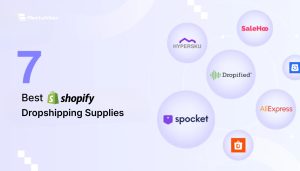
With a variety of choices available, from general dropshipping platforms to niche print-on-demand and supplier-network options, Shopify merchants now possess a wealth of resources to accommodate various business strategies. This article examines the top 10 dropshipping apps for Shopify in 2026, highlighting their key features and how they can facilitate daily store management.
What to Look for in a Shopify Dropshipping App
Selecting the appropriate Shopify dropshipping application in 2026 involves more than simply discovering products to market. With rising competition and elevated customer expectations, retailers require tools that enhance efficiency, mitigate operational risks, and promote sustained growth. Below are the essential elements to contemplate when assessing a dropshipping app for your Shopify shop.
1. Automation & Order Processing
Automation stands out as a crucial feature in contemporary dropshipping applications. The most effective tools can automatically import products, synchronize inventory, adjust pricing, and handle orders without the need for manual intervention. Advanced systems also facilitate bulk order processing, tracking number updates, and direct communication with suppliers within the Shopify dashboard. This minimizes errors, conserves time, and empowers store owners to concentrate on marketing and expansion.
2. Supplier Network & Product Acquisition
A robust supplier network is essential for maintaining consistent product quality and reliable order fulfillment. In 2026, the best Shopify dropshipping apps go beyond basic product access by offering transparency, flexibility, and supplier validation. When evaluating an app’s supplier ecosystem, merchants should consider the following factors:
- Supplier coverage by region
- Vetted and verified suppliers
- Supplier ratings and performance data
- Processing and handling times
- Warehouse and fulfillment locations
- Product catalog depth and updates
A well-structured supplier network not only improves operational stability but also gives merchants greater control over pricing strategies, delivery timelines, and overall customer experience.
3. Shipping Efficiency & Fulfillment Locations
Rapid shipping is essential in 2026. Customers have come to expect transparent delivery timelines, particularly in competitive markets such as the US and EU. Dropshipping applications with local or regional warehouses can significantly shorten shipping durations and enhance customer satisfaction.
Some platforms also offer various shipping alternatives, enabling sellers to balance cost and speed according to their target demographic.
4. Inventory Synchronization & Pricing Management
Real-time inventory synchronization is crucial in preventing overselling and order cancellations. The top Shopify dropshipping applications automatically refresh stock levels and product availability as suppliers update their inventory.
5. Brand Identity, Customization & Private Labeling
As an increasing number of stores transition beyond generic dropshipping, branding has emerged as a vital differentiator. Many leading applications now offer support for private labeling, custom packaging, branded invoices, and print-on-demand services.
These features assist merchants in building trust, enhancing brand recognition, and providing a more polished customer experience.
6. User-Friendliness & Shopify Compatibility
A user-friendly interface and native Shopify compatibility can significantly lessen the learning curve, particularly for novice sellers. The finest applications integrate smoothly with Shopify, requiring minimal setup and presenting intuitive workflows for product management, order tracking, and fulfillment.
Comprehensive documentation and responsive support are also critical factors when assessing usability.
7. Cost, Scalability & Long-Term Benefit
When comparing Shopify dropshipping apps, pricing should be evaluated alongside scalability. Key factors to consider include:
- Pricing plans: Free vs. paid plans and what features are included
- Order limits: Monthly caps that may restrict growth
- Extra fees: Per-order or usage-based charges
- Automation at scale: Bulk fulfillment and pricing rules
- Advanced features: Analytics, reporting, and optimization tools
- Support levels: Priority or dedicated support for larger stores
Choosing an app that scales with your order volume helps maintain efficiency and control costs as your business grows.
10 Best Shopify Dropshipping Apps in 2026
With hundreds of dropshipping tools available on the Shopify App Store, choosing the right app can be challenging. Each platform is built to serve different business needs from fast shipping and automation to print-on-demand and branded fulfillment.
The apps listed below stand out in 2026 based on their features, reliability, supplier networks, and overall value for Shopify merchants.
1. Zendrop – Best for Fast Shipping & Branded Products
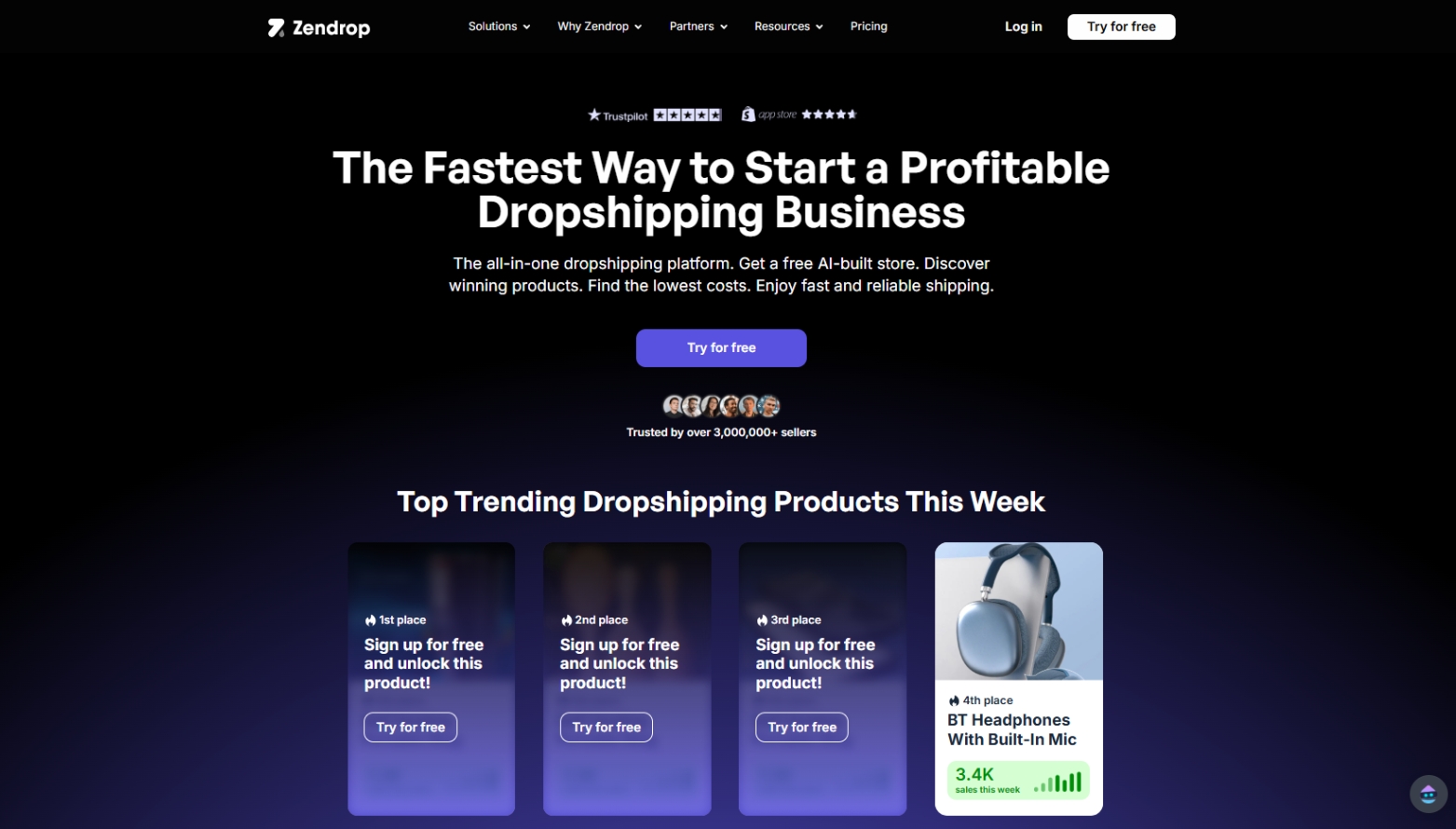
Zendrop is a dropshipping platform for Shopify that focuses on simplifying product sourcing and fulfillment while improving delivery times and product quality. It connects merchants with a large catalog of vetted products and includes tools that automate order processing and tracking updates.
A major advantage of Zendrop is its emphasis on faster shipping. Many products can be fulfilled from US-based warehouses, which helps reduce delivery times for customers in the United States and other Western markets. This can lead to higher customer satisfaction compared to sellers relying solely on overseas suppliers.
Zendrop also places a strong focus on product quality. The platform works with suppliers that have been reviewed and vetted, helping merchants avoid issues with defective products or inconsistent fulfillment. This focus on quality can reduce returns and negative reviews.
Best for:
Sellers who want to improve delivery speed, maintain consistent product quality, and build a stronger brand experience. Zendrop is particularly suited for merchants targeting customers in the US and Western markets and for stores transitioning from traditional dropshipping to a more premium fulfillment strategy.
2. CJdropshipping – Best for Product Variety & Global Fulfillment
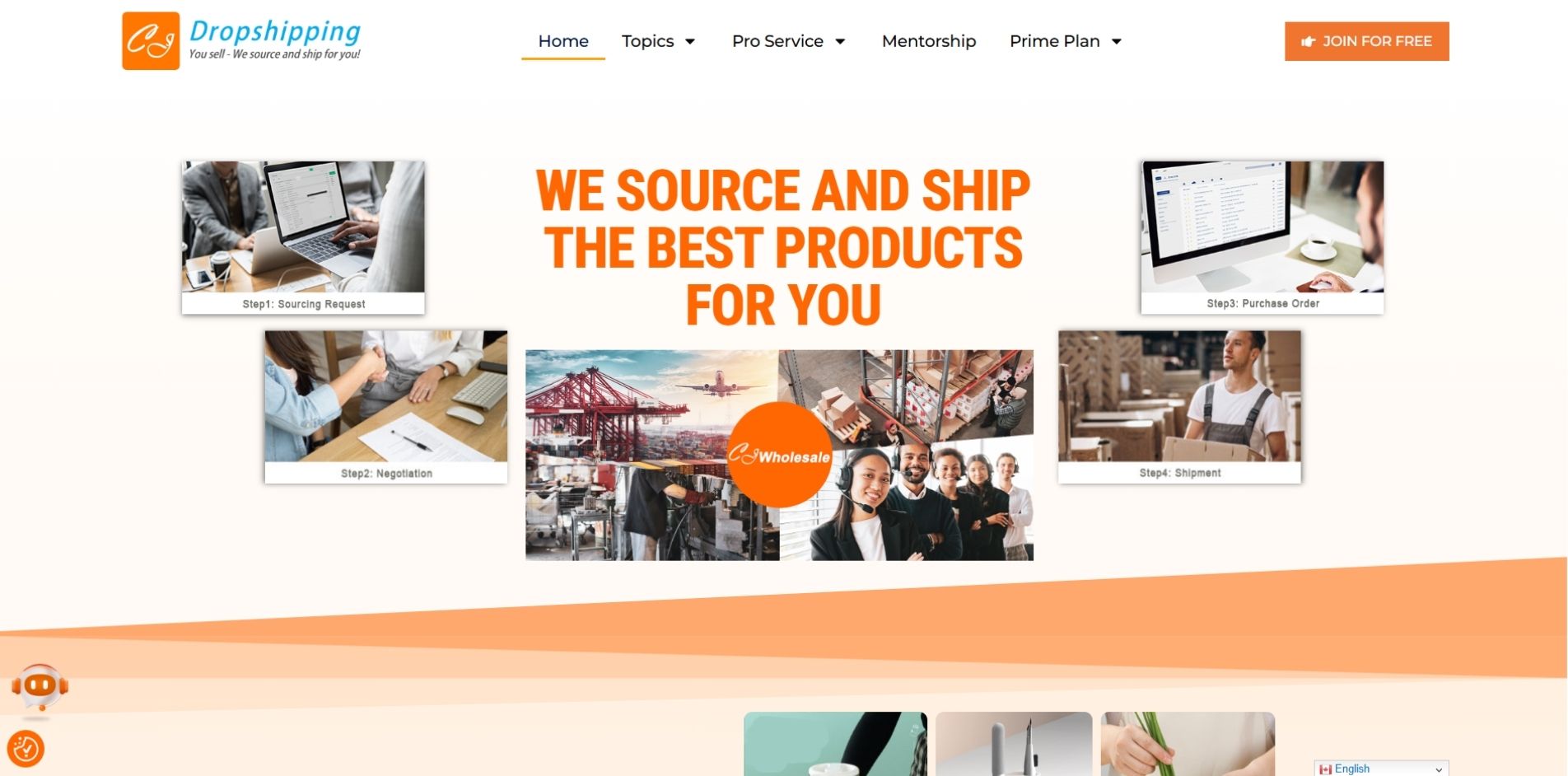
CJdropshipping is a dropshipping platform built around scale and flexibility rather than curation. It is commonly used by Shopify sellers who need access to a large product range and multiple fulfillment options across different markets.
From an operational standpoint, CJdropshipping integrates with Shopify and supports bulk order processing and tracking synchronization. These tools are designed to handle higher order volumes, though they may require more hands-on management compared to fully automated solutions.
Best for:
CJdropshipping is best suited for sellers who prioritize product variety, global fulfillment flexibility, and sourcing options. It is often chosen by merchants who are comfortable managing more complexity in exchange for broader control over products and supply chains.
3. AutoDS – Best All-in-One Dropshipping Automation
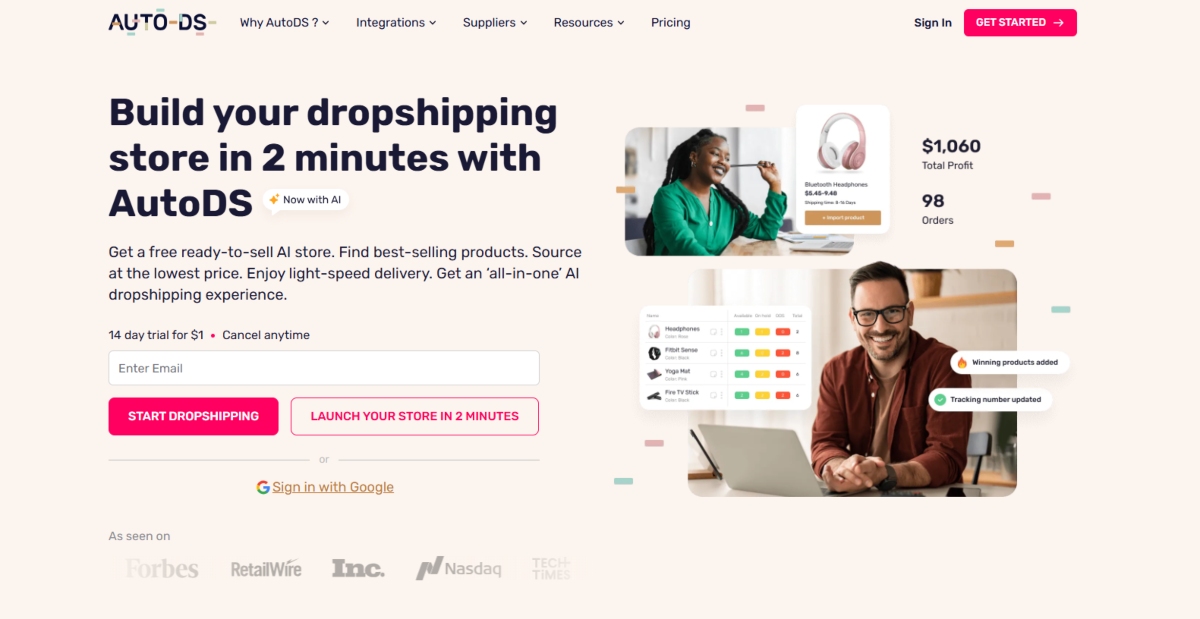
AutoDS is built for Shopify sellers who want to automate as much of the dropshipping workflow as possible. The platform focuses on reducing manual work across product importing, pricing updates, order fulfillment, and tracking management.
The core strength of AutoDS lies in automation. Sellers can import products in bulk, apply automated pricing rules, and sync inventory changes without constant monitoring. When an order is placed, AutoDS can automatically process fulfillment and update tracking information, which significantly reduces operational overhead for stores handling large order volumes.
Best for:
AutoDS is best for sellers who prioritize automation, bulk operations, and scalable workflows. It is commonly used by experienced dropshippers and stores managing large catalogs or high daily order counts.
4. Spocket – Best for US & EU Suppliers
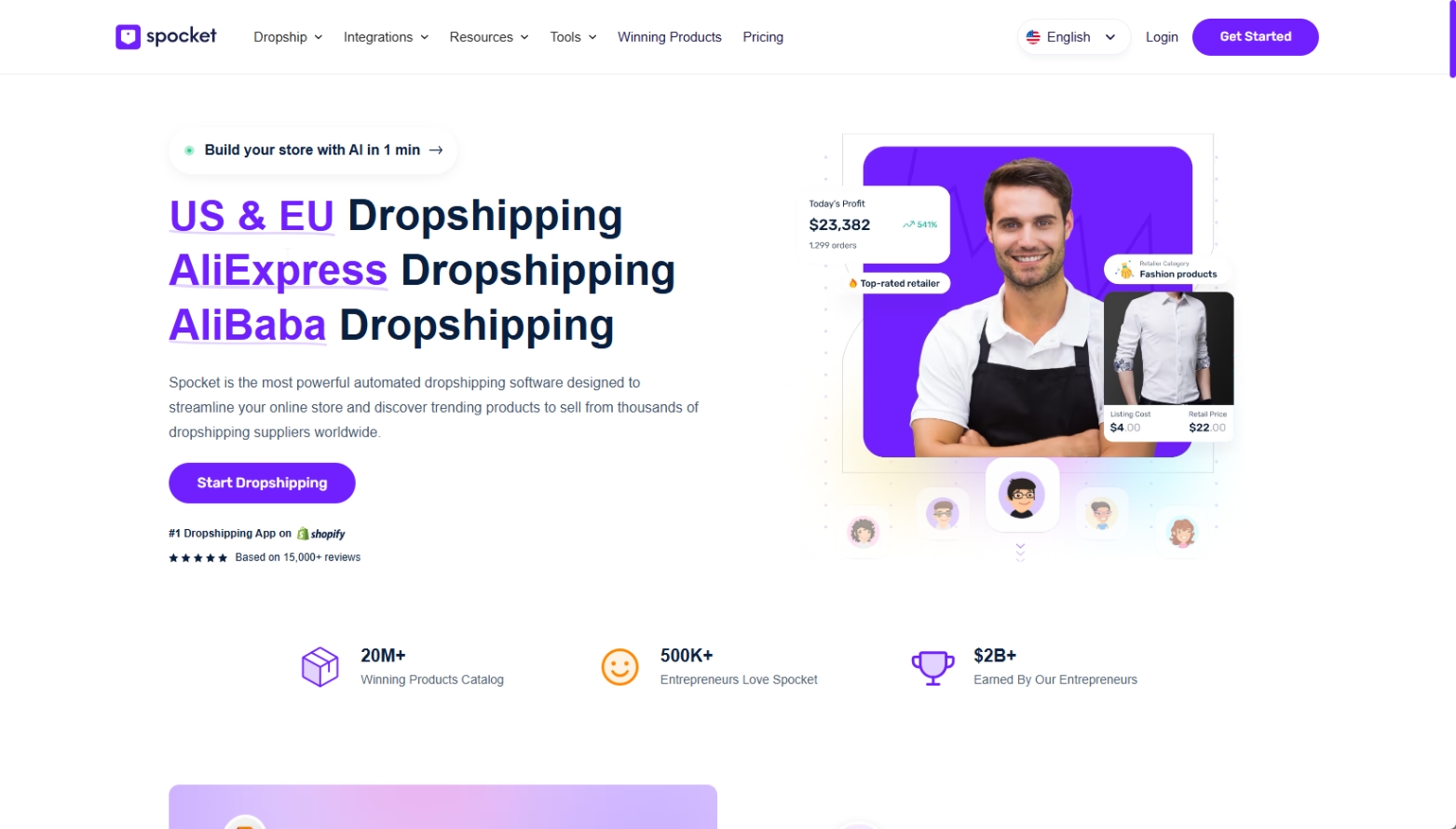
Most products on Spocket come from US and EU suppliers, which allows merchants to offer faster delivery compared to traditional overseas dropshipping.
This is especially relevant for stores targeting customers in North America and Europe, where long shipping times often lead to abandoned carts or refund requests.
From a workflow perspective, Spocket integrates smoothly with Shopify. Product importing, inventory updates, and order fulfillment are handled within the app, allowing sellers to manage operations without switching between multiple platforms. While automation features are solid, the platform is generally more focused on quality and speed than high-volume bulk operations.
Best for:
Spocket is best for Shopify sellers who prioritize fast shipping to the US and EU, consistent supplier quality, and a straightforward dropshipping setup. It is commonly used by merchants targeting Western markets and by stores that value reliability over large product catalogs.
5. Syncee – Best B2B Supplier Marketplace
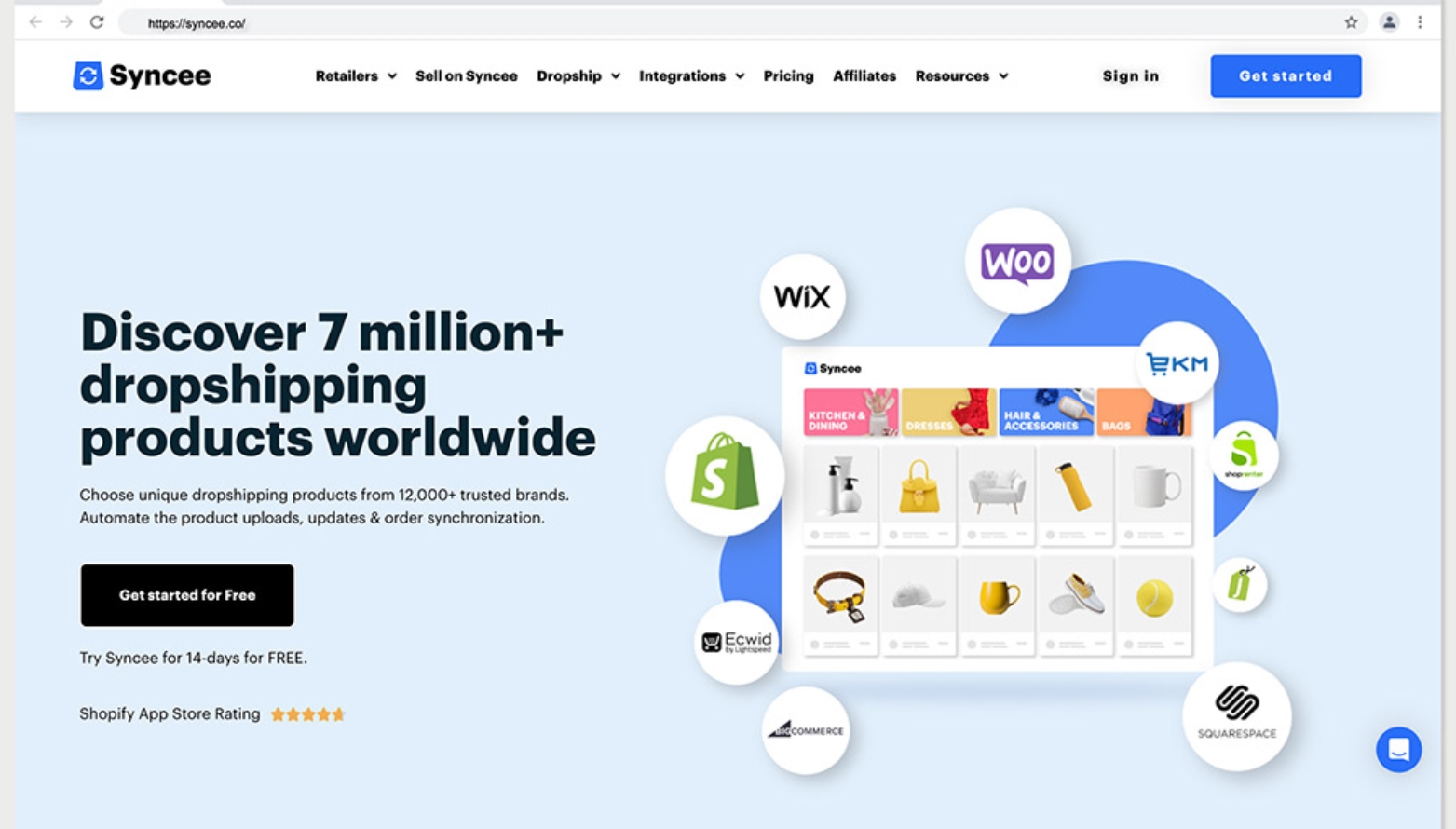
Syncee operates more like a B2B supplier marketplace than a traditional dropshipping app. Instead of focusing on trending consumer products, the platform connects Shopify merchants with established brands, wholesalers, and manufacturers that already operate structured supply chains.
The main value of Syncee is supplier credibility. Many suppliers on the platform are legitimate businesses offering ready-to-sell catalogs, which reduces common dropshipping risks such as inconsistent product quality or unreliable fulfillment. This makes Syncee appealing to sellers who want more predictable operations rather than rapid product testing.
Syncee supports suppliers across multiple regions, including the US, Europe, and other global markets. Product data usually includes clear information about pricing, minimum order requirements, shipping locations, and lead times, helping merchants evaluate whether a supplier fits their business model before importing products.
Best for:
Syncee is best for Shopify sellers who want access to verified B2B suppliers, stable product catalogs, and long-term sourcing relationships. It is particularly suitable for merchants building niche stores, wholesale-style shops, or businesses that prioritize consistency and supplier trust over speed and mass automation.
6. Printful – Best for Print-on-Demand Apparel & Accessories
The platform is known for consistent print quality and reliable production standards. Products are printed on demand using in-house or closely managed facilities, which helps maintain uniform results across orders. This makes Printful a common choice for sellers who prioritize product consistency and brand presentation.
Printful operates fulfillment centers in multiple regions, including the US and Europe. This allows sellers to reduce delivery times and shipping costs for customers in Western markets. Shipping estimates are generally predictable, which helps merchants set accurate expectations during checkout.
Best for:
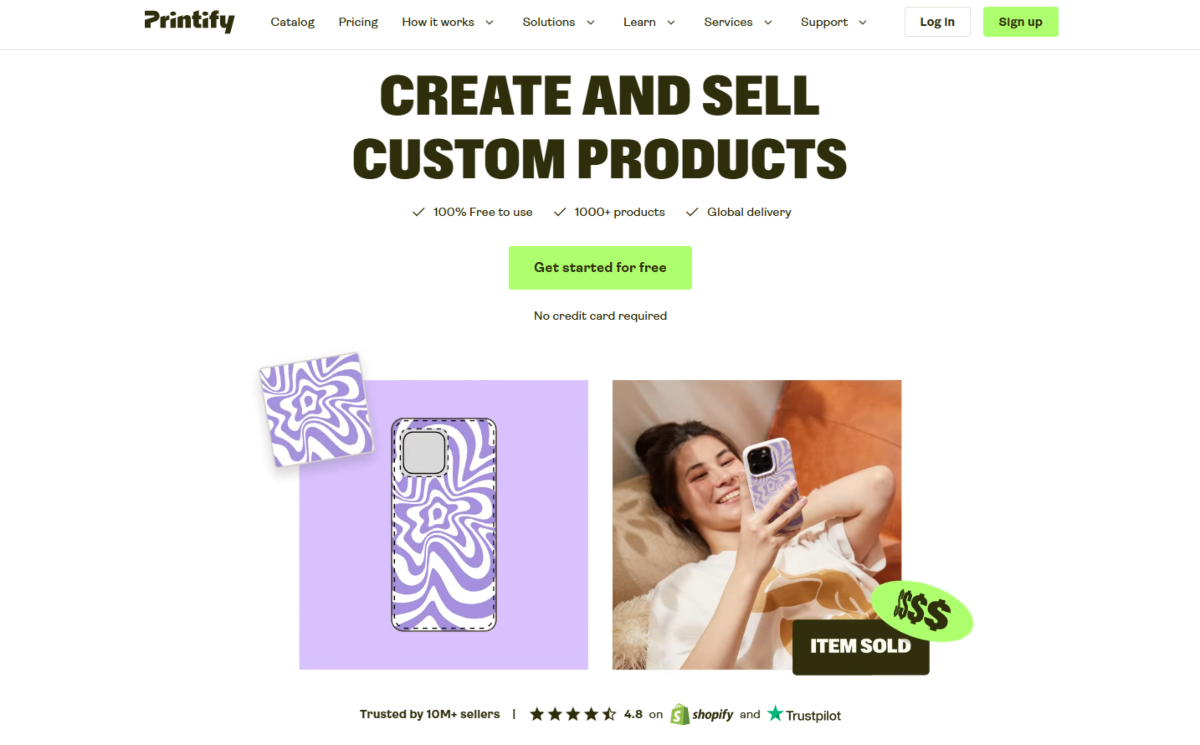
The main advantage of Printify is flexibility. Sellers can select from multiple print providers for the same product, compare base costs, and switch suppliers if pricing or fulfillment performance changes. This makes Printify appealing to merchants who want more control over margins and sourcing decisions.
Printify supports a wide range of print on demand products, including apparel, accessories, home goods, and custom merchandise. The product catalog is extensive, which suits sellers running design-heavy stores or testing multiple product types.
Best for:
Printify is best for Shopify sellers who want pricing flexibility, a broad print on demand catalog, and the ability to choose between multiple print providers. It is commonly used by merchants focused on cost optimization, product testing, or running multiple POD brands at scale.
8. Shopify Collective – Best for Partnering with Shopify Brands
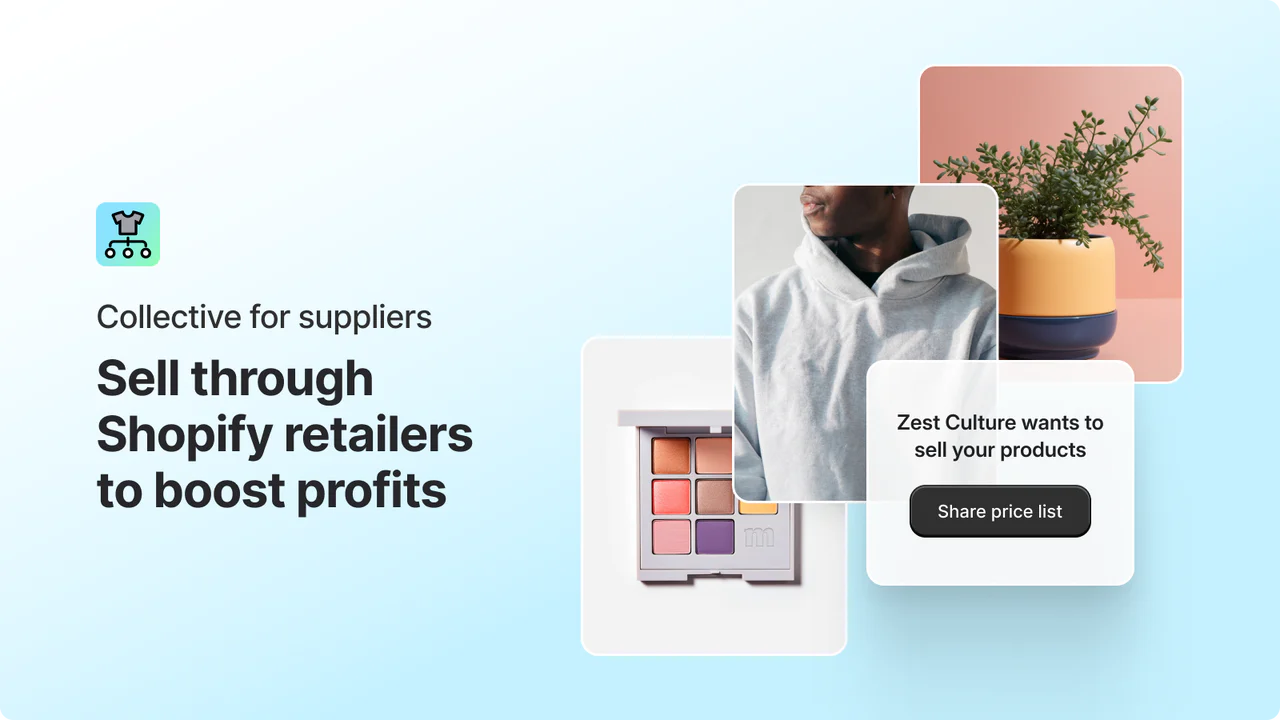
Shopify Collective is a sourcing solution built directly into the Shopify ecosystem, allowing merchants to sell products from other Shopify brands without managing inventory. Instead of working with traditional dropshipping suppliers, sellers partner with established brands that already operate on Shopify.
The core idea behind Shopify Collective is brand-to-brand collaboration. Merchants can import approved products from partner stores and sell them at retail prices, while the original brand handles fulfillment and shipping. This setup reduces operational complexity and ensures product quality is aligned with existing brand standards.
Best for:
Shopify Collective is best for Shopify sellers who want to expand their catalog with trusted, high-quality products from established brands. It is particularly suitable for merchants focused on brand credibility, curated product selections, and long-term partnerships rather than mass product testing.
9. DropCommerce – Best for High-Quality US Products
DropCommerce is a dropshipping platform focused on high-quality products sourced primarily from suppliers in the United States. The platform is built for Shopify sellers who want more reliable fulfillment and better product standards than typical mass-market dropshipping solutions.
Unlike open marketplaces, DropCommerce works with a curated network of suppliers. Many of these suppliers are independent brands or manufacturers that offer consistent product quality and clearer fulfillment processes. This approach helps reduce issues related to damaged goods, inconsistent packaging, or unreliable shipping.
Shipping speed is a key strength of DropCommerce. Because most suppliers are US-based, delivery times are generally shorter and more predictable for customers in North America. This can improve customer satisfaction and make it easier to compete with domestic ecommerce brands.
Best for:
DropCommerce is best for Shopify sellers who value product quality, US-based fulfillment, and dependable supplier relationships. It is particularly suitable for merchants building niche brands or stores that compete on trust and customer experience rather than price alone.
10. Zopi / Dropshipman – Best for Beginner Automation