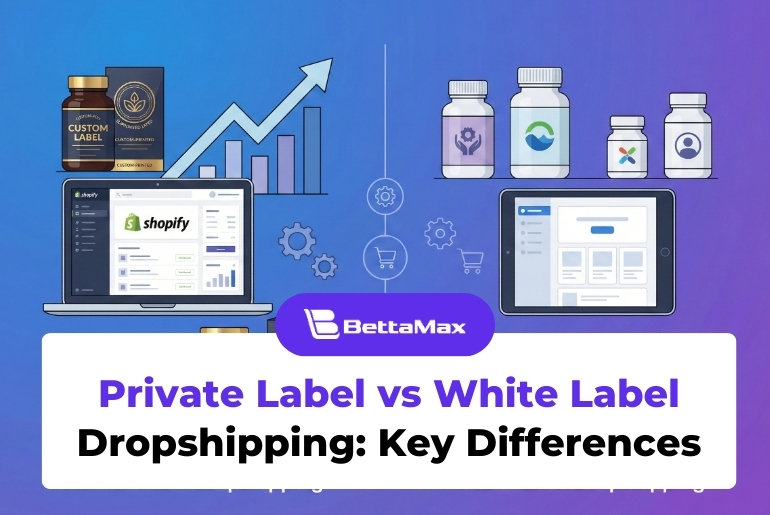
Choosing between private label dropshipping and white label dropshipping is one of the most critical decisions aspiring entrepreneurs face. Both models allow you to build brands without holding inventory, but they differ fundamentally in ownership, customization, margins, and long-term business value.
This comprehensive guide breaks down every critical difference to help you choose the model that aligns with your goals, budget, and timeline.
Key Takeaways: Private Label vs White Label Dropshipping
Private label dropshipping gives you complete brand ownership including custom logo, packaging, labels, and product formulation. You own the brand fully, can resell independently across channels, and build a defensible, sellable business asset. Minimum orders are 500-5,000 units, initial investment is $2,000-10,000, and profit margins reach 150-300%. Timeline to profitability is 3-6 months.
White label dropshipping allows you to rebrand generic supplier products with your logo and labels only. The supplier retains product naming and core branding rights. You cannot resell the brand independently, limiting long-term asset value. Minimum orders are 100-500 units, initial investment is $500-2,000, and profit margins are 100-150%. Timeline to profitability is 2-4 months.
The choice depends on your goals. Choose white label if you want to test business ideas quickly with minimal capital or prefer lower startup risk. Choose private label if you’re committed to building a long-term brand, want premium positioning, and can invest more upfront capital.
What Is White Label Dropshipping?
White label dropshipping is a business model where manufacturers produce generic products and you add your branding to packaging and labels only. The supplier retains ownership of the product, formulation, and product name. You essentially purchase wholesale products and rebrand them with your logo and company name.
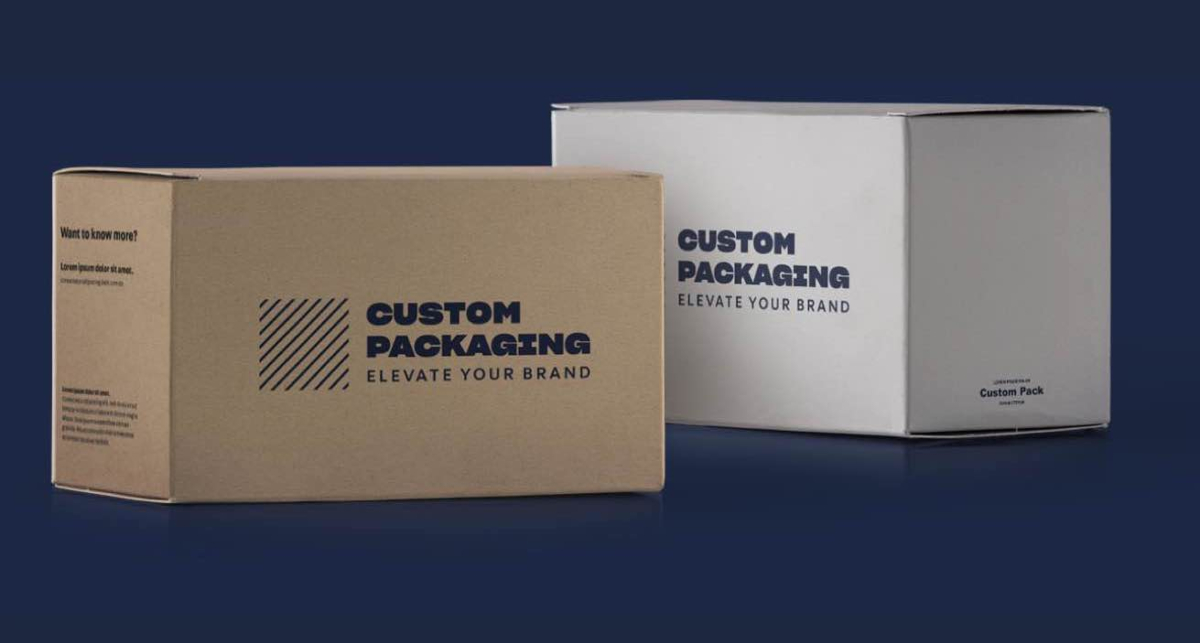
The process works like this: You find a manufacturer producing generic products, you add your logo and branding to the packaging, you list these products on your e-commerce store or marketplace, and when customers purchase, the manufacturer ships the product with your custom packaging directly to the customer. You keep the profit margin.
Key distinction: The supplier can also sell the exact same product to your competitors with their branding. The underlying product is not unique to your brand. This limits your competitive advantage compared to private label.
What Is Private Label Dropshipping?
Private label dropshipping is a business model where you partner with manufacturers to produce products exclusively for your brand with your custom branding, packaging, and often custom formulations. You own the brand completely and can resell it independently across any sales channel.
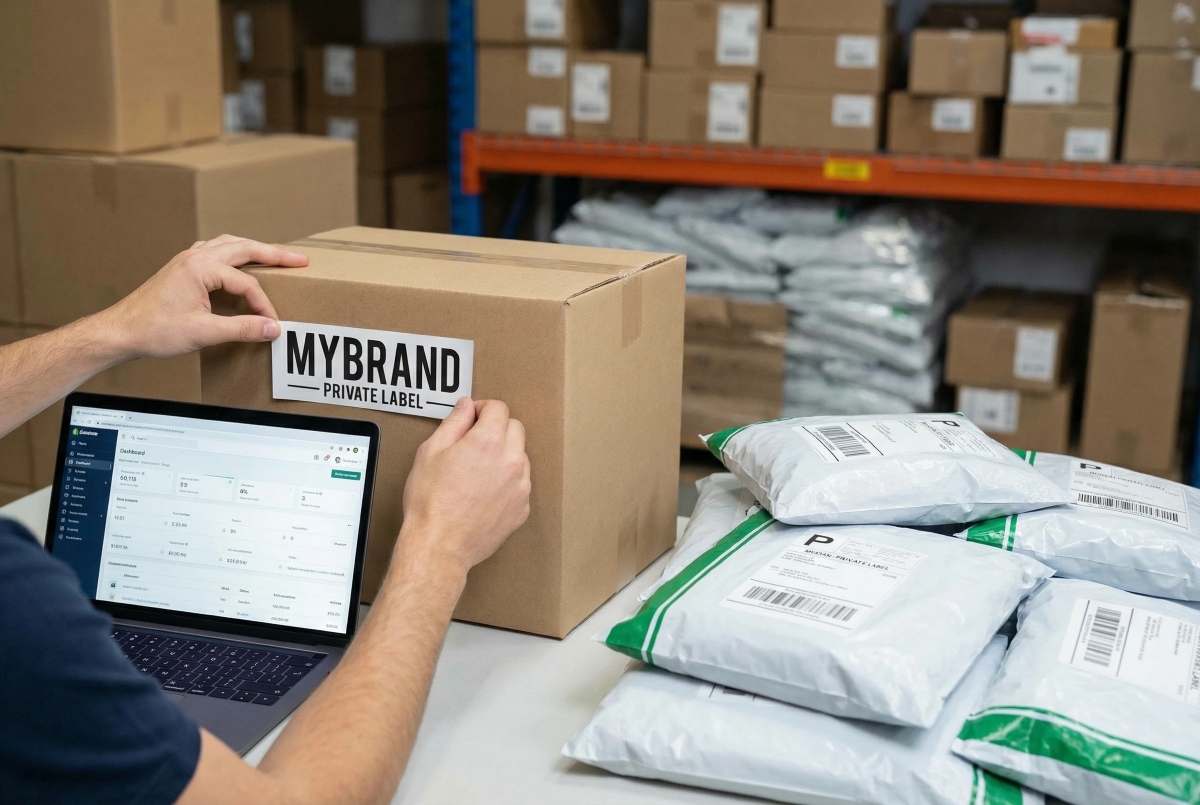
The process involves: You identify a product niche, work with a manufacturer to develop or customize products specifically for your brand, design custom packaging reflecting your brand identity, list products on your e-commerce store with your exclusive branding, and when customers purchase, the manufacturer ships the product bearing your custom branding directly to the customer. You keep the profit margin.
Key distinction: Your product is unique to your brand. Competitors cannot sell the exact same product with their branding. This creates a defensible competitive advantage and builds genuine brand equity.
Detailed Comparison: Private Label vs White Label
Understanding the nuanced differences between these models is essential for making the right choice.
Brand Ownership and Control
White label gives you zero true brand ownership. You own your company name and branding assets, but the underlying product is generic. The supplier can license the same product to competitors. Your brand exists only through your marketing efforts, not through exclusive products.
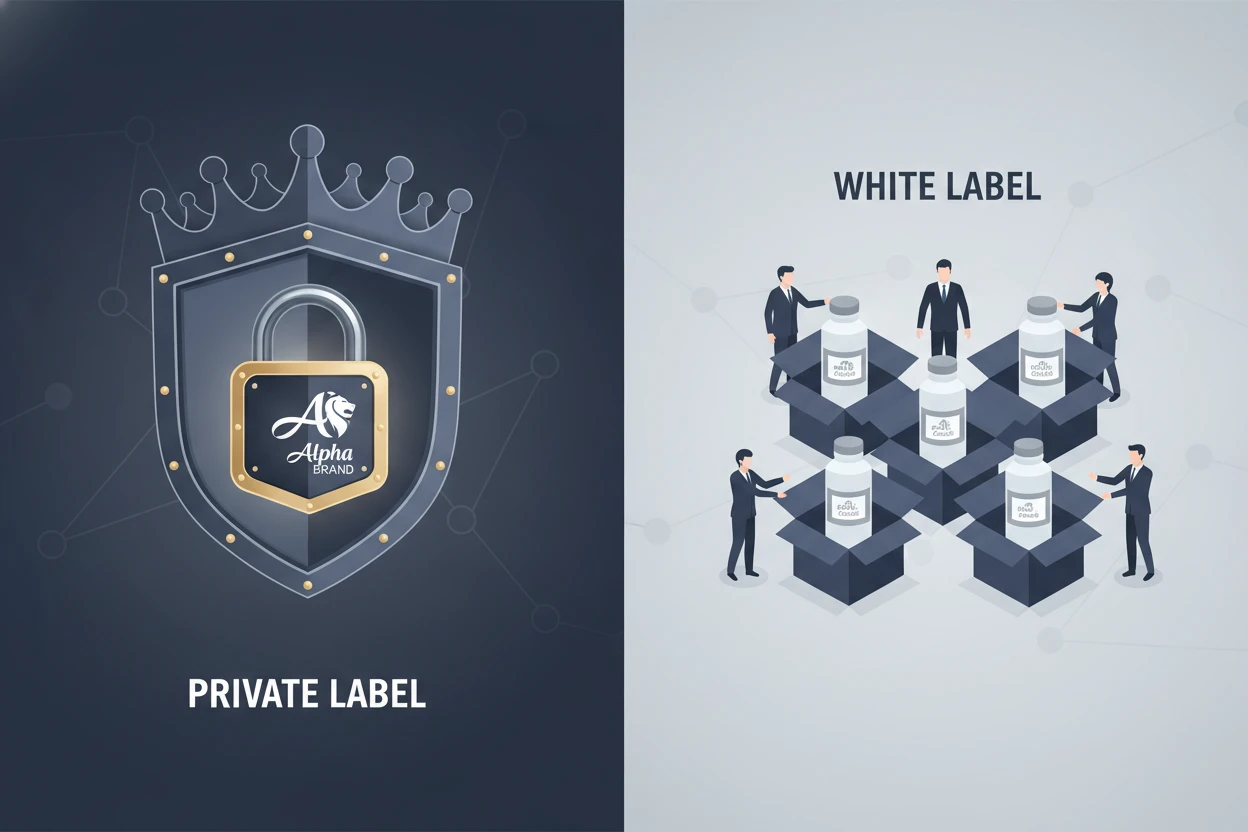
Private label gives you complete brand ownership. You own the product formulation, exclusive branding rights, and full control over positioning. Competitors cannot offer identical products under different branding. Your brand represents a unique product proposition.
Advantage: Private label for long-term brand equity and defensibility.
Product Customization Capability
White label allows logo and label customization only. You cannot modify the product formulation, ingredients, packaging shape, or core product specifications. The supplier determines what you can offer. This limits your ability to differentiate products based on unique features or formulations.
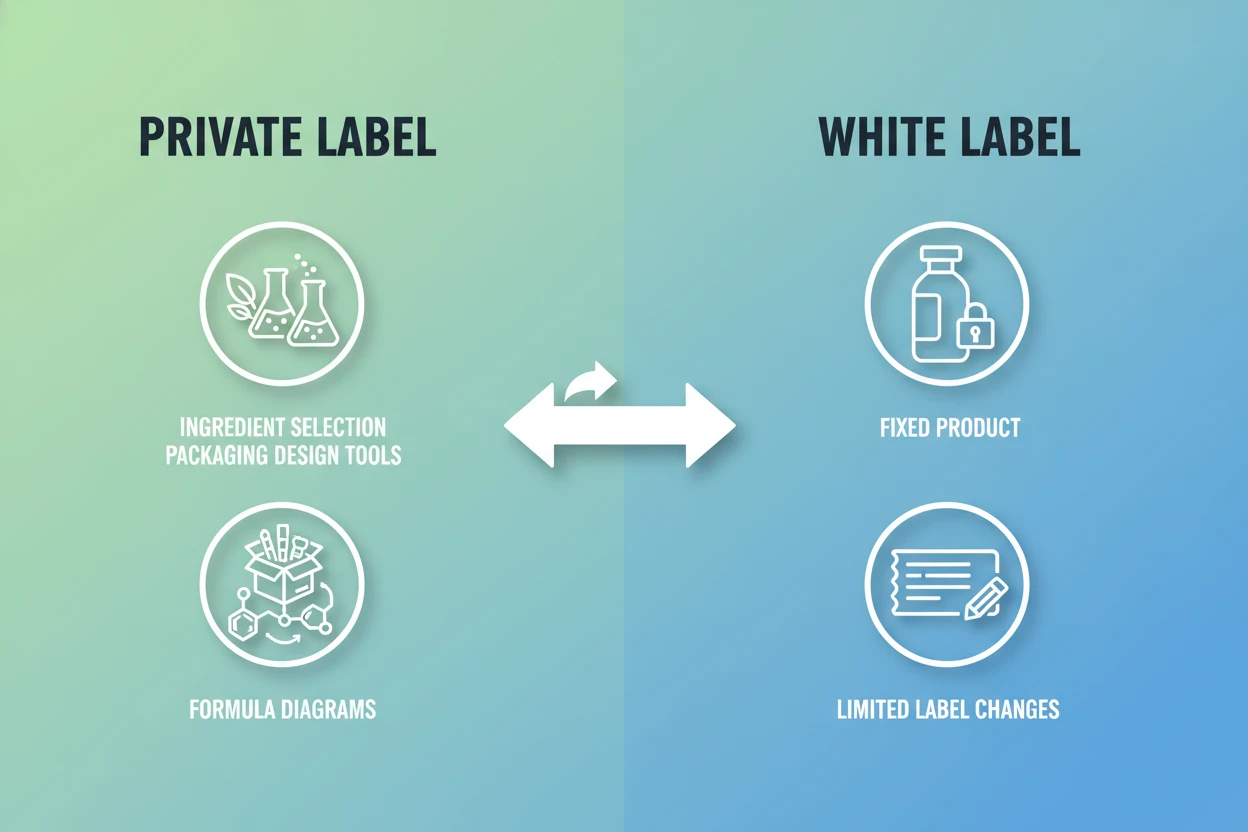
Private label allows complete customization. You can modify formulations, ingredients, packaging design, product specifications, and exclusive features. This enables product differentiation that commands premium pricing. You can develop products addressing specific customer needs rather than accepting generic solutions.
Advantage: Private label for product differentiation and premium positioning.
Minimum Order Quantities
White label typically requires 100-500 unit minimum orders. This lower barrier to entry means less capital required upfront and lower risk if the product fails to sell. You can test multiple products across multiple suppliers without massive investment.
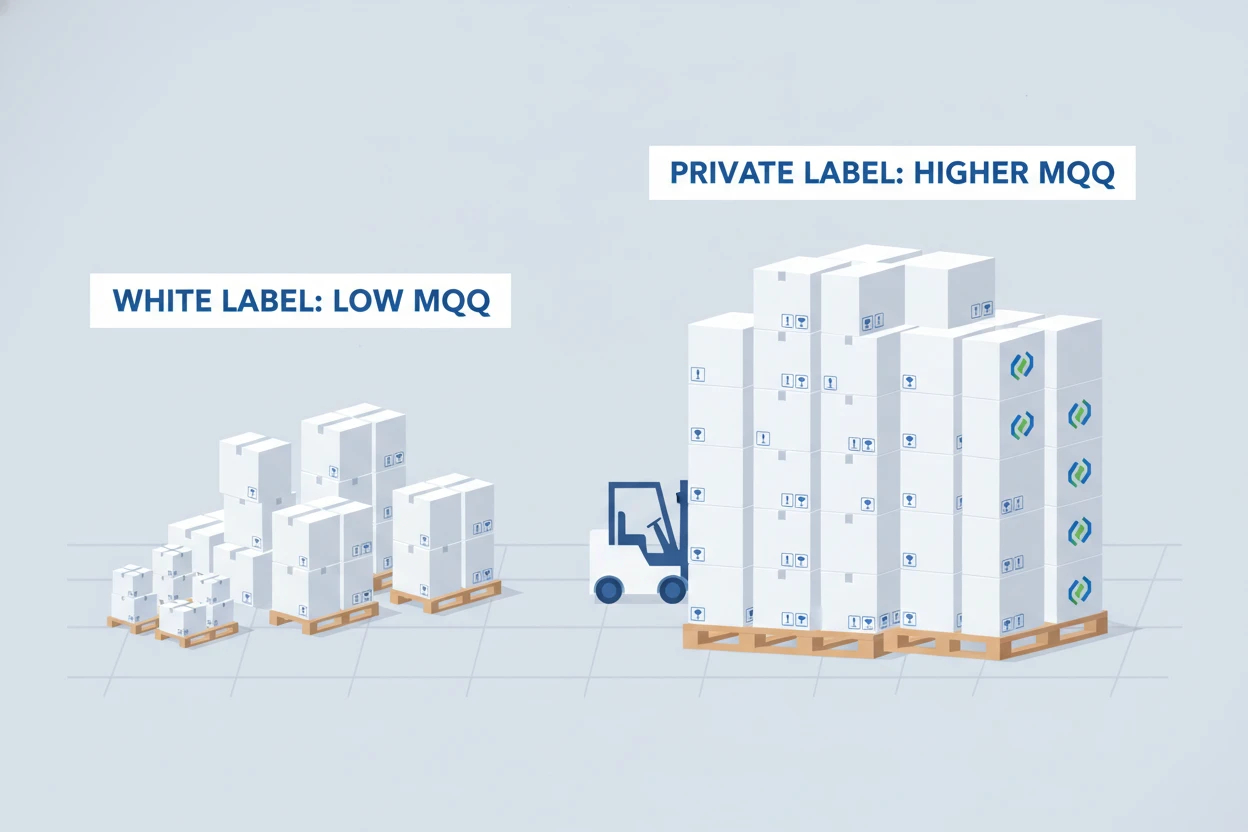
Private label typically requires 500-5,000 unit minimum orders. Higher minimums mean you must commit to larger orders, requiring more confidence in product demand. However, this commitment encourages deeper research and validation before launch.
Advantage: White label for testing with lower risk and capital requirements.
Startup Investment and Capital Requirements
White label startup costs are $500-2,000 covering supplier samples, basic branding design, website setup, and initial marketing budget. This low barrier to entry makes white label accessible to entrepreneurs with limited capital. You can launch for the cost of a nice vacation.
Private label startup costs are $2,000-10,000 covering supplier samples, professional branding design, custom formulation development, initial inventory order for 500-5,000 units, store setup, and marketing budget. Higher investment requires more financial commitment but reflects the professional nature of the business.
Advantage: White label for entrepreneurs with limited startup capital.
Profit Margins and Revenue Potential
White label offers 100-150% profit margins. A product costing you $5 wholesale can retail for $10-12.50. These decent margins support sustainable business profitability but limit revenue acceleration. Margins remain moderate because competitors undersell you on price.
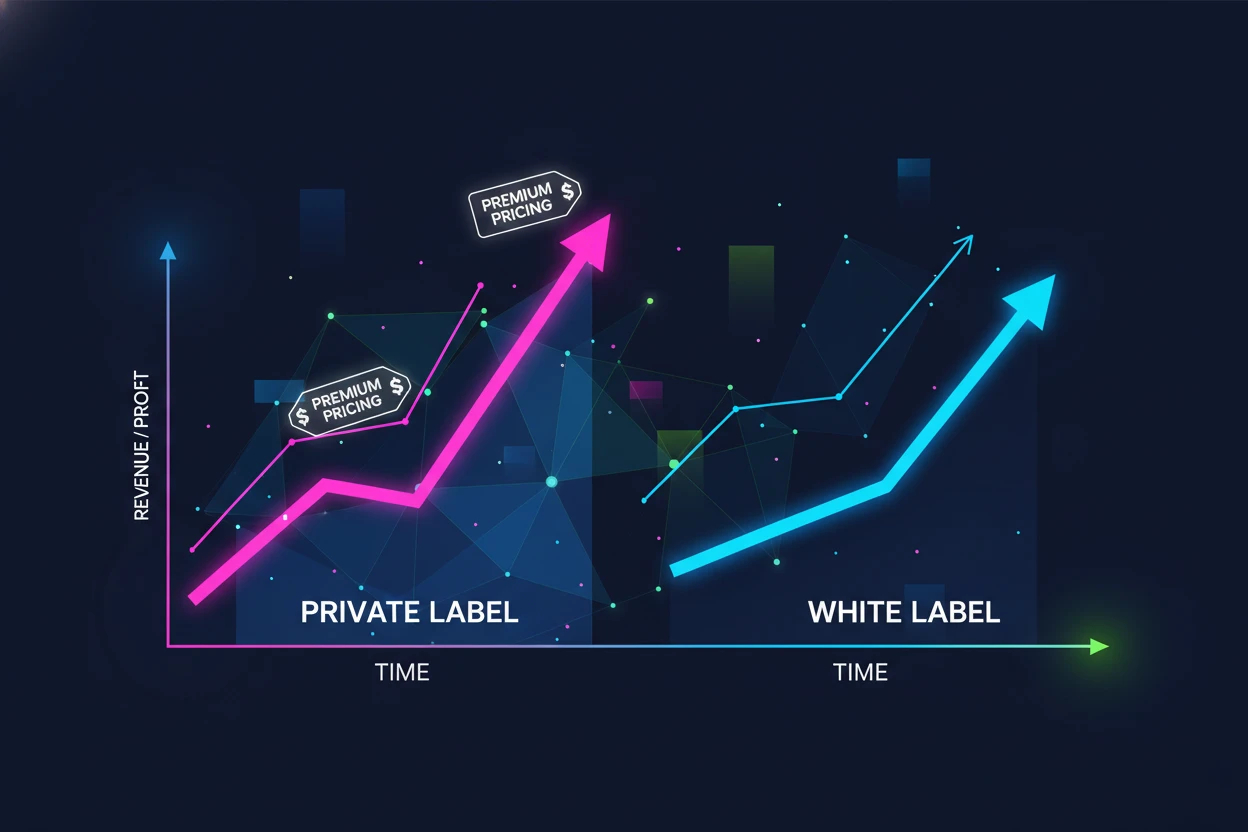
Private label offers 150-300% profit margins. A product costing you $5 wholesale can retail for $17.50-20. These higher margins reflect your brand premium. A white label competitor cannot undercut you significantly because they offer a different product.
Advantage: Private label for maximizing profit per sale and enabling faster growth.
Time to Profitability
White label typically reaches first sales within 2-3 weeks with proper marketing. Profitability arrives in 2-4 months because lower startup costs mean you break even faster. However, sustainable high profitability takes longer because margins are capped.
Private label typically reaches first sales within 3-4 weeks despite higher setup time. Profitability arrives in 3-6 months because higher upfront investment requires more sales to break even. However, sustainable profitability accelerates faster than white label because margins are exponentially higher.
Advantage: White label for fastest initial profitability, private label for faster sustainable growth.
Brand Equity and Long-term Value
White label builds minimal brand equity. You own your company name and customer relationships, but the underlying products are interchangeable with competitor offerings. Switching customers to your products requires constant marketing. Your business value stays low because anyone can replicate your operation.
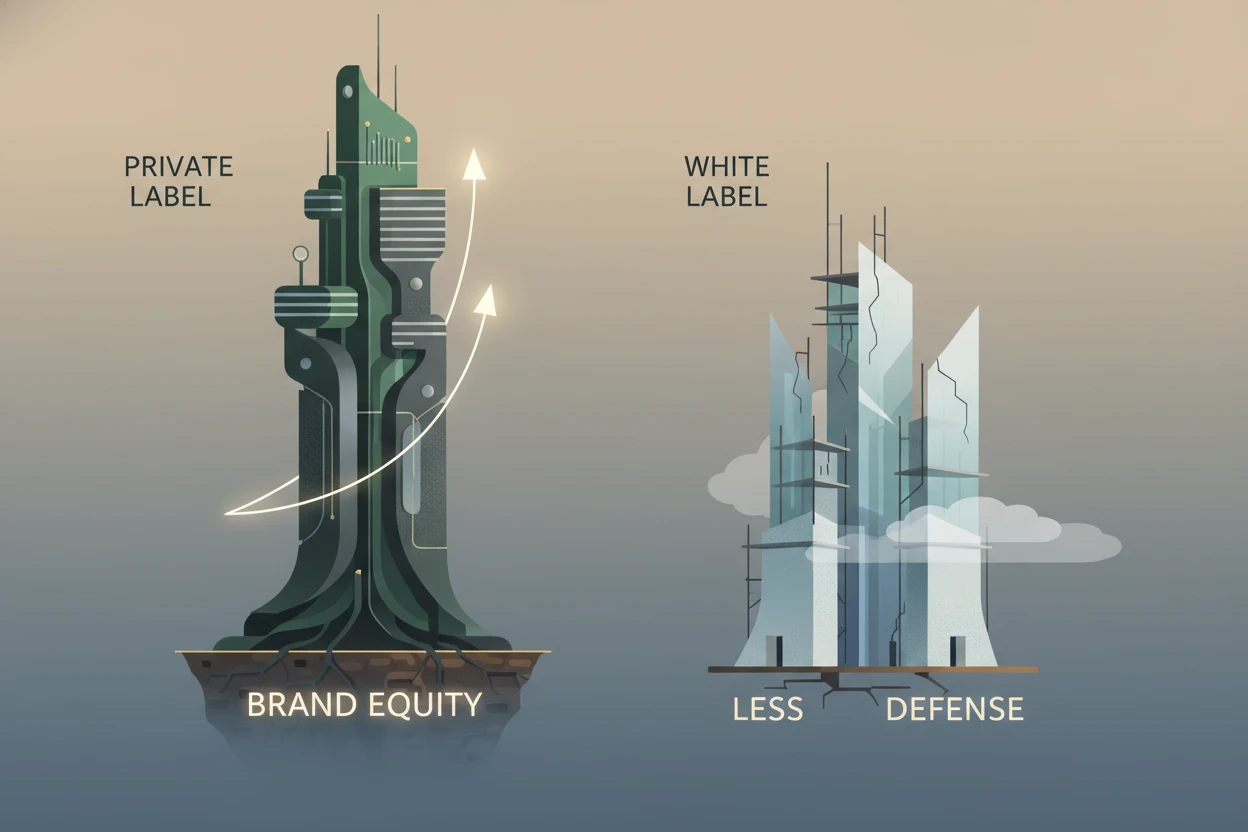
Private label builds significant brand equity. You own exclusive products customers perceive as unique. Repeat customers purchase specifically because of your brand. Your business becomes a valuable asset other entrepreneurs would pay for. Some successful private label brands sell for six or seven figures.
Advantage: Private label for building a sellable business asset.
Resale Rights and Multi-Channel Expansion
White label offers limited resale rights. You cannot resell the brand to other retailers or entrepreneurs. You’re restricted to your personal sales channels. Expanding to Amazon, Shopify, and other platforms requires your personal operation across each channel.
Private label offers complete resale rights. You can sell the brand wholesale to other retailers, expand to unlimited sales channels, license the brand to other entrepreneurs, or sell the brand entirely. This flexibility enables exponential scaling opportunities.
Advantage: Private label for scaling and expanding to multiple channels.
Market Competition and Price Competition
White label operates in intensely competitive markets. Multiple sellers offer similar generic products under different branding. Competition drives price wars where sellers constantly undercut each other. You compete primarily on marketing and customer service, not product differentiation.
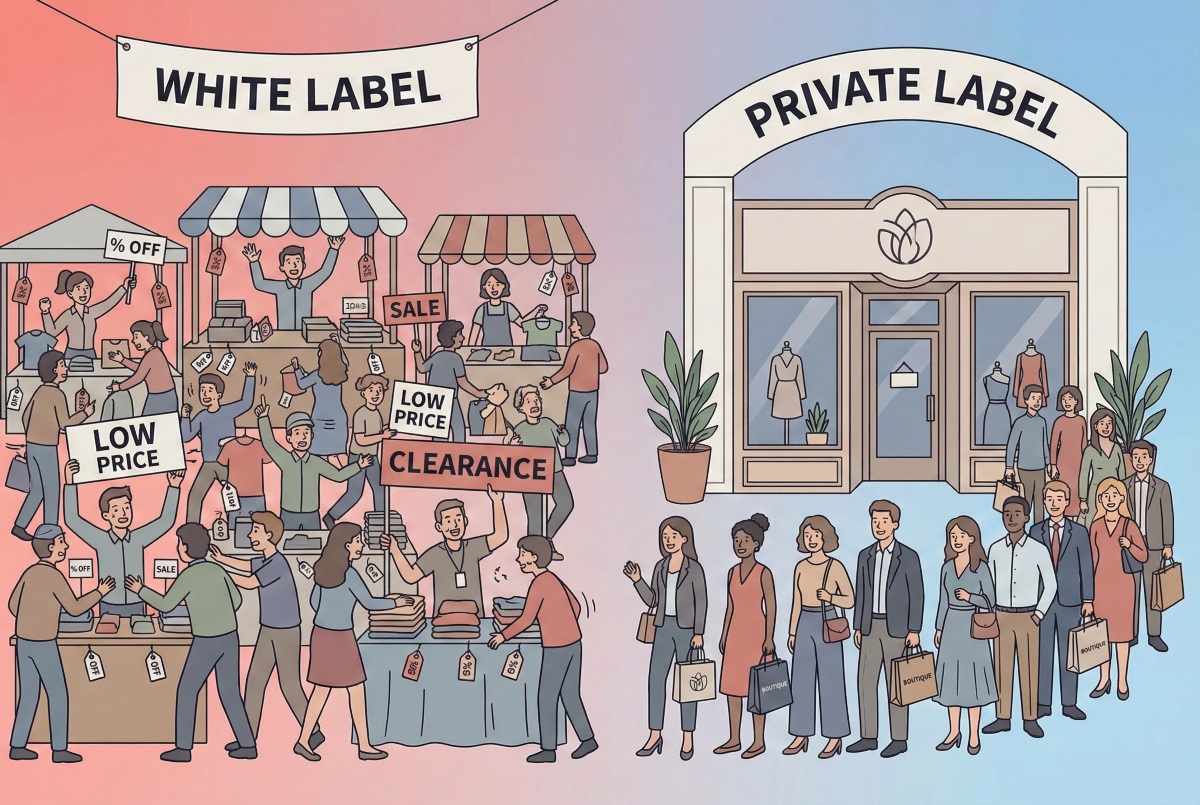
Private label operates in moderately competitive markets. You offer unique products competitors cannot replicate directly. Competition focuses on marketing and customer loyalty rather than price. Your brand protection creates natural pricing power.
Advantage: Private label for avoiding race-to-the-bottom price competition.
Supplier Dependence and Risk
White label creates high supplier dependence. The supplier controls product quality, production capacity, and product availability. If the supplier discontinues a product, your sales vanish. You’re entirely dependent on supplier reliability. Changing suppliers requires starting over.
Private label reduces supplier dependence. While you depend on your primary supplier, you can often source similar products from multiple manufacturers. Custom formulations may limit supplier switching, but you maintain more control over the supply chain. Multiple suppliers provide backup options.
Advantage: Private label for reducing supplier risk.
Comparison Table: White Label vs Private Label
| Factor | White Label Dropshipping | Private Label Dropshipping |
|---|---|---|
| Brand Ownership | Limited to branding only | Complete ownership |
| Product Ownership | Supplier owns product | You own product |
| Customization Level | Logo and label only | Complete customization |
| Minimum Order Quantity | 100-500 units | 500-5,000 units |
| Initial Investment | $500-2,000 | $2,000-10,000 |
| Profit Margins | 100-150% | 150-300% |
| Time to First Sale | 2-3 weeks | 3-4 weeks |
| Time to Profitability | 2-4 months | 3-6 months |
| Brand Equity Building | Minimal | High |
| Resale Rights | Limited | Complete |
| Multi-Channel Expansion | Difficult | Fully supported |
| Supplier Dependence | High | Moderate |
| Price Competition | Intense | Moderate |
| Business Asset Value | Low | High |
| Customer Lifetime Value | $100-300 | $500-2,000+ |
| Scalability | Limited | High |
| Lead Time | 3-6 weeks | 4-12 weeks |
Pros of White Label Dropshipping
Lower Startup Cost and Capital Requirements
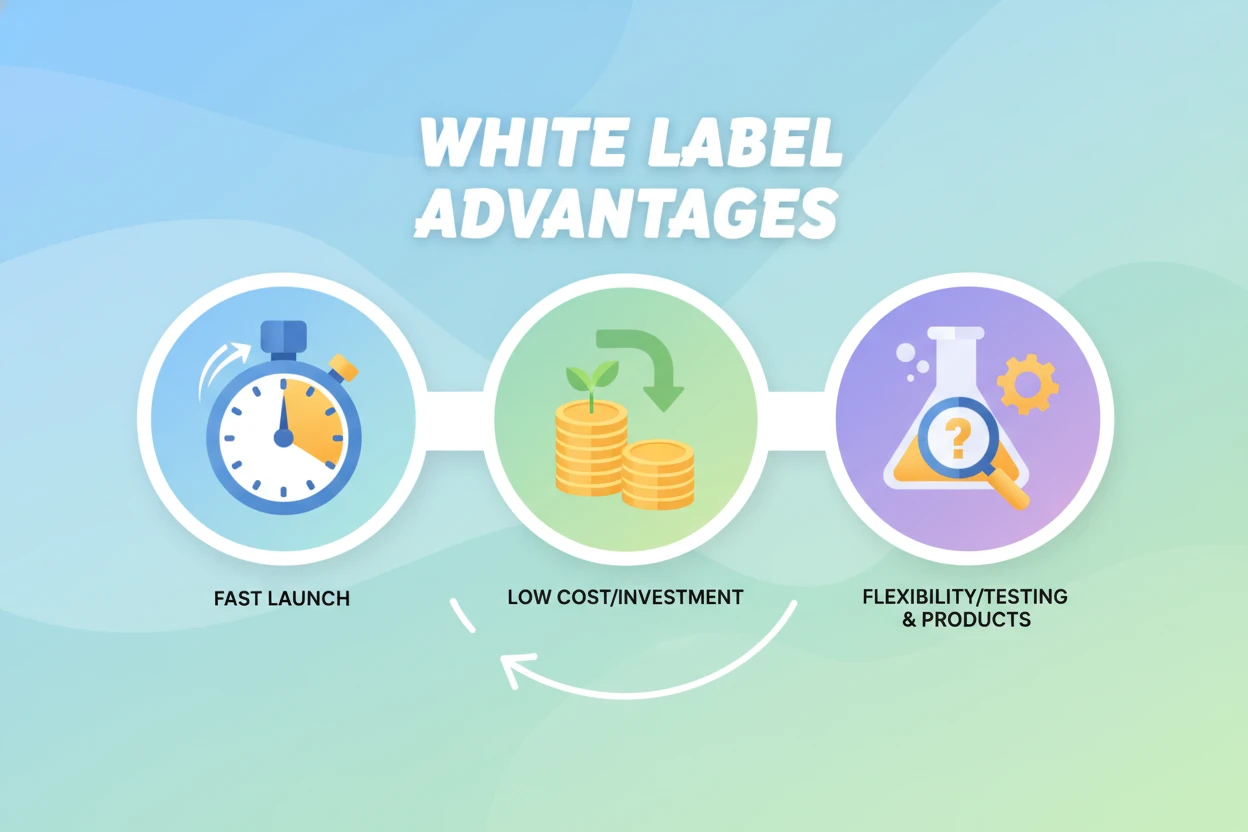
White label requires minimal capital investment of $500-2,000, making it accessible to entrepreneurs with limited funds. You can launch a business with savings rather than requiring loans or investment. This low barrier to entry enables rapid business testing.
Faster Initial Profitability
White label reaches profitability quickly, typically within 2-4 months. Lower startup costs mean you need fewer sales to break even. Entrepreneurs seeking quick income gains favor white label for this reason.
Lower Risk for Testing Business Ideas
White label allows testing multiple products with minimal risk. If a product fails to sell, your loss is limited. You can test ten different products across different suppliers without massive financial exposure. This experimentation enables rapid learning.
Easier Supplier Switching
White label enables easy supplier changes. If your current supplier has quality issues, you can switch suppliers and source the same generic product from someone else. Supplier problems are less catastrophic than in private label.
Faster Time to Market
White label enables faster launches because you skip custom formulation development and long lead times. You source existing products and rebrand them. Many white label businesses launch within weeks rather than months.
Cons of White Label Dropshipping
Limited Brand Equity and Ownership
White label creates zero true brand equity. You cannot build a defensible brand because competitors offer identical products under different names. Your business is built on marketing rather than product differentiation.
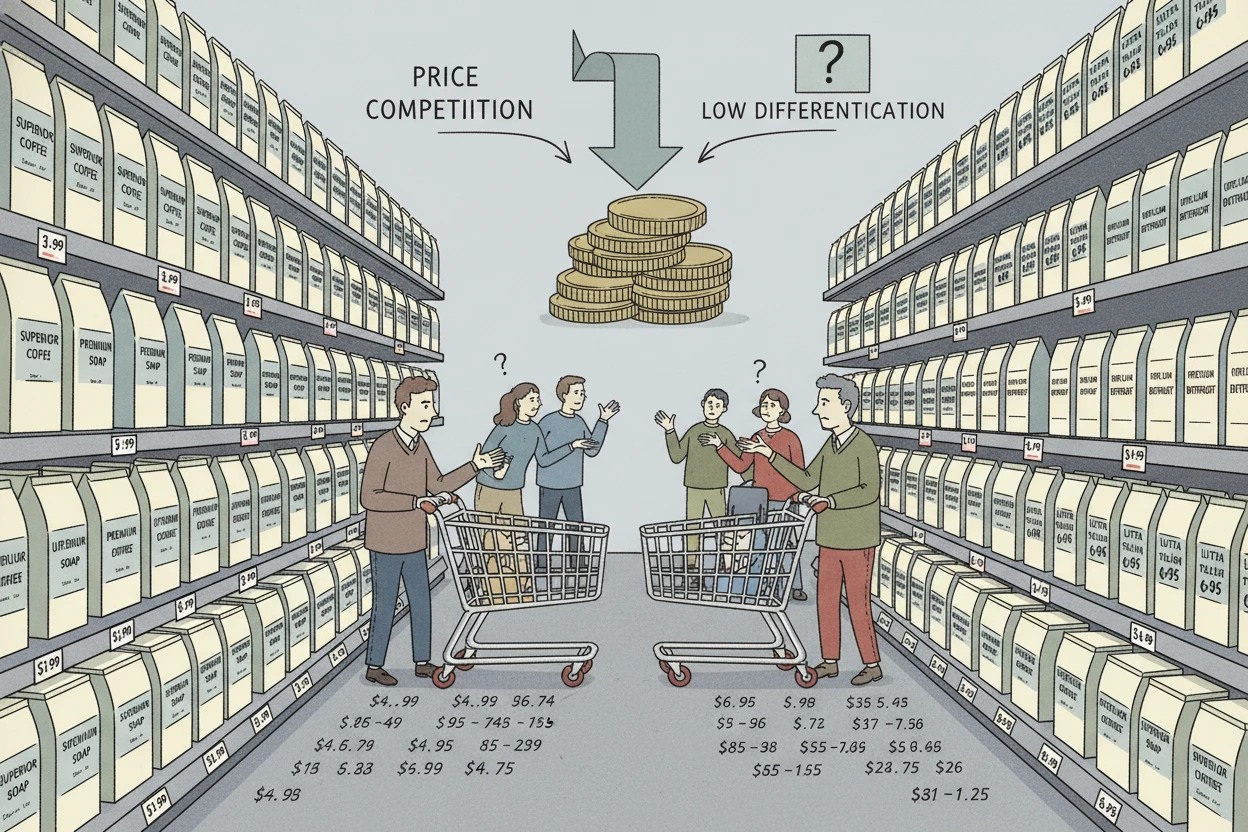
Intense Price Competition
White label operates in cutthroat competition. Multiple sellers offer the same products under different branding. This drives constant price wars. You compete on price rather than product quality or uniqueness. Margins get compressed over time.
Lower Profit Margins
White label offers only 100-150% margins compared to private label’s 150-300%. This caps your revenue growth potential. Reaching $10,000 monthly profit requires significantly more sales volume than private label.
Capped Resale and Scaling Options
White label limits scaling opportunities. You cannot resell the brand to other retailers. You cannot license the brand. You’re restricted to your personal sales channels. Expansion options remain limited compared to private label.
Supplier Dependence and Risk
White label creates significant supplier risk. If your supplier discontinues a product, your sales vanish. If quality issues arise, you cannot switch easily without rebuilding customer bases. You have limited control over product development and quality.
Low Business Asset Value
White label builds minimal business value. Your company’s value relies on customer lists and marketing assets, not on exclusive products. Potential buyers see limited value in acquiring white label businesses. Selling your business yields modest returns.
Pros of Private Label Dropshipping
Complete Brand Ownership and Control
Private label gives you full brand ownership and exclusive product rights. You own the formulation, packaging, and brand identity. Competitors cannot offer identical products. This creates genuine brand equity.
Higher Profit Margins
Private label delivers 150-300% profit margins, significantly higher than white label. These higher margins enable faster revenue growth. You reach six-figure annual profits with lower sales volume than white label.
Strong Brand Differentiation
Private label enables unique product positioning. You develop products addressing specific customer needs rather than selling generic commodities. Product uniqueness justifies premium pricing and builds genuine customer loyalty.
Reduced Price Competition
Private label operates in less competitive environments. Unique products prevent direct price comparison with competitors. You compete on brand and quality rather than price. Margins remain stable.
Higher Customer Lifetime Value
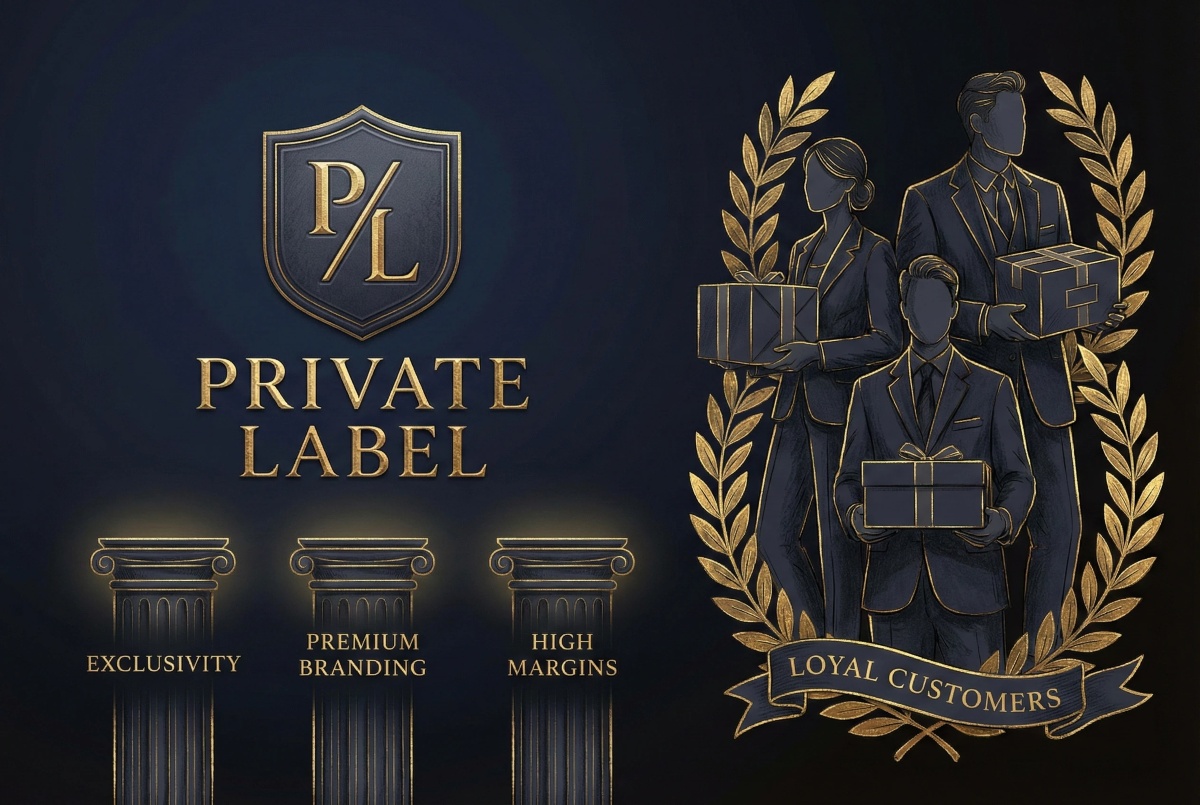
Private label builds loyal repeat customers who purchase specifically because of your brand. Customer lifetime value reaches $500-2,000+ compared to white label’s $100-300. Repeat customers drive exponential revenue growth.
Unlimited Resale and Scaling Rights
Private label enables unlimited expansion opportunities. You can sell wholesale to retailers, expand to unlimited sales channels, license your brand, or sell your brand entirely. These options dramatically increase growth potential.
High Business Asset Value
Private label builds a valuable business asset. Exclusive products and brand loyalty make your business attractive to potential buyers. Successful private label businesses sell for significant multiples of annual revenue.
Cons of Private Label Dropshipping
Higher Startup Investment and Capital Requirements
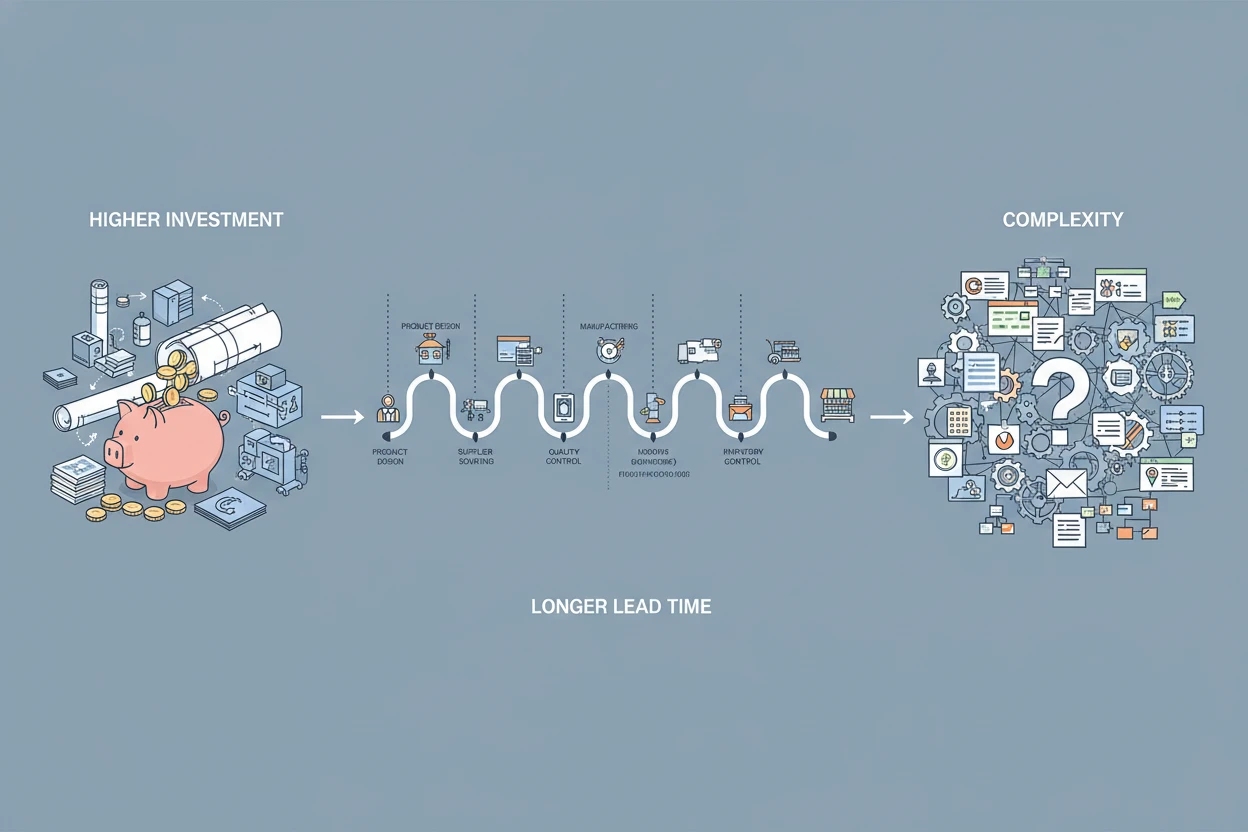
Private label requires $2,000-10,000 upfront investment. This significant capital commitment creates barriers to entry. You need substantial savings or outside funding to launch. The higher investment increases financial risk.
Longer Lead Times and Development Cycles
Private label involves 4-12 week lead times for product development and manufacturing. You cannot launch as quickly as white label. Custom formulation development takes additional time. Patience is required before generating first sales.
Higher Minimum Order Quantities
Private label requires 500-5,000 unit minimum orders. This forces significant capital commitment to inventory. If products fail to sell, you’re stuck with excess inventory. Higher minimums require greater confidence in product demand.
Greater Supplier Dependence for Custom Products
Private label creates dependence on specific suppliers for custom formulations. If your supplier has quality issues, you cannot easily switch because your product is unique to that supplier. Changing suppliers requires developing new formulations.
More Complex Setup and Management
Private label involves more complex business processes. You manage custom formulation development, regulatory compliance, complex packaging design, and more sophisticated supplier relationships. Greater complexity requires stronger business management skills.
Longer Path to Initial Profitability
Private label takes 3-6 months to reach profitability because higher startup costs require more sales to break even. You must maintain operational discipline longer than white label entrepreneurs.
Which Model Should You Choose?
Choose White Label If You Have:
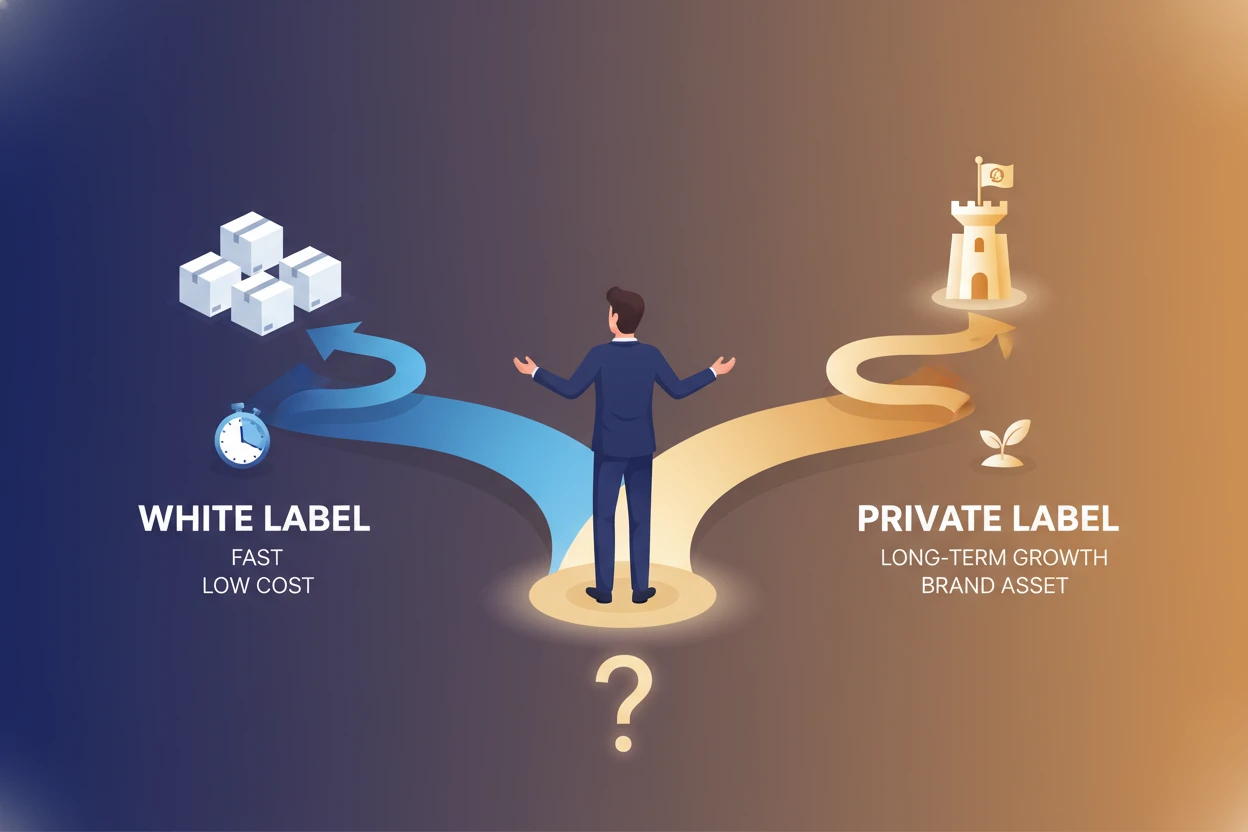
You should choose white label dropshipping if you have limited startup capital (under $1,000), want fastest path to profitability, prioritize lower risk and faster learning, prefer testing multiple products before committing heavily to one, or want to establish quick proof of concept before scaling.
White label suits beginners exploring entrepreneurship, cash-strapped entrepreneurs, product testers, and marketers who excel at selling generic products.
Choose Private Label If You Have:
You should choose private label dropshipping if you have adequate startup capital ($2,000+), are committed to building a long-term brand, want to own a valuable business asset, prefer defensible competitive advantages, or seek exponential revenue growth rather than steady income.
Private label suits brand builders, niche experts, visionary entrepreneurs, and business builders seeking to create multi-seven-figure companies.
The Bridge Strategy: Start White Label, Move to Private Label
Many successful entrepreneurs use a hybrid approach. They launch with white label to validate product-market fit with minimal risk, build initial customer base and email list, generate revenue funding private label transition, establish brand and marketing systems, then transition to private label once they’ve proven demand and built capital reserves.
This strategy combines white label’s low-risk testing benefits with private label’s long-term profit potential. Validation through white label makes private label investment decisions much more confident and data-driven.
2026 Market Outlook: Which Model is Growing?
The dropshipping market in 2026 shows interesting trends. White label is maturing with increasing competition and shrinking margins. Success requires exceptional marketing and customer service excellence.
Private label is accelerating as entrepreneurs recognize that sustainable profit requires brand differentiation. The brands dominating e-commerce increasingly emphasize proprietary products and exclusive formulations.
Long-term opportunity favors private label for ambitious entrepreneurs, but white label remains viable for those prioritizing quick profitability and low risk.
Conclusion: Making Your Decision
The choice between private label and white label dropshipping ultimately depends on your personal situation, goals, and timeline. Neither model is inherently better, they simply serve different purposes.
White label is best if you’re testing business viability, have limited capital, or want fastest time to initial profitability. It’s an excellent stepping stone business.
Private label is best if you’re committed to long-term success, have adequate capital, want to build a defensible brand, or seek to create a valuable business asset.
The most successful entrepreneurs understand both models and strategically transition from white label testing to private label scaling. Start where you are, with what you have, but build toward the more valuable business model. Your future self will thank you for the strategic thinking you invest today.