Private label dropshipping has evolved from a niche e-commerce opportunity into a legitimate business model for building sustainable brands with minimal capital. Unlike traditional dropshipping which competes on price with generic products, private label allows you to own your brand, command premium pricing, and build customer loyalty that spans years. This comprehensive guide reveals everything you need to launch and scale a profitable private label brand in 2026.
What Is Private Label Dropshipping?
Private label dropshipping is a hybrid business model combining dropshipping’s operational efficiency with brand building’s long-term value. You partner with manufacturers who produce products under your custom branding, then fulfill orders directly to customers without you holding inventory.
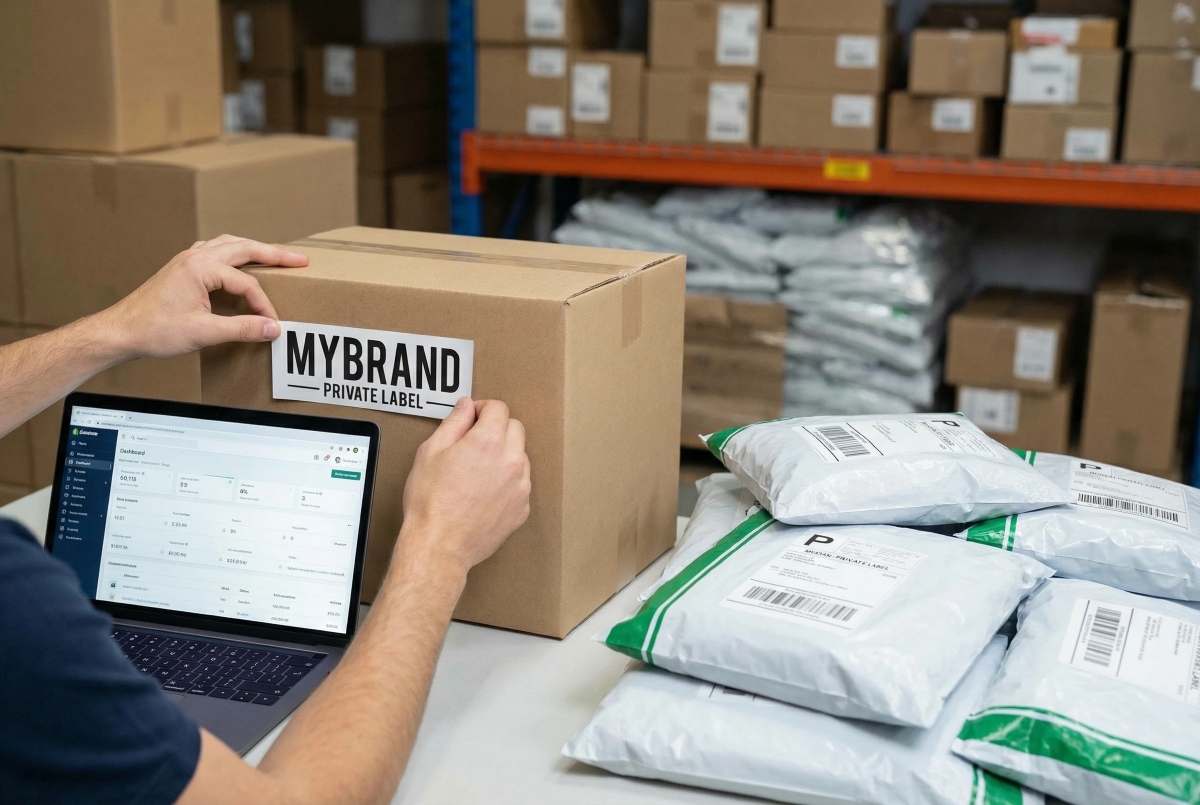
The process works like this: You identify a product category and niche market, find a manufacturer willing to private label their product under your brand, design custom packaging and labeling reflecting your brand identity, create product listings on your e-commerce store, and when customers purchase, the manufacturer fulfills and ships the product bearing your custom packaging directly to the customer. You keep the margin as profit.
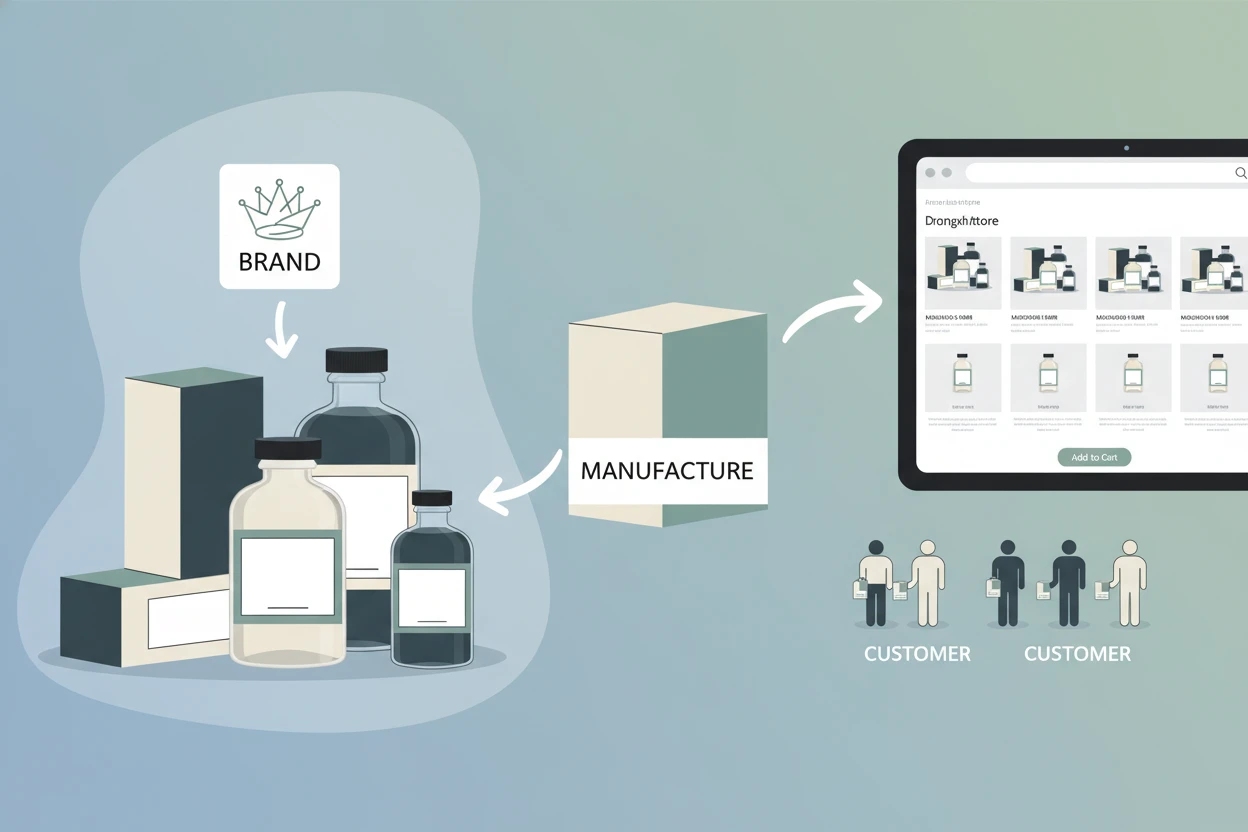
This differs fundamentally from regular dropshipping where you list generic products from suppliers like AliExpress without any custom branding. Customers perceive you as an actual brand rather than another online reseller. This perception justifies premium pricing and builds customer loyalty that sustains long-term business success.
Key Differences: Private Label vs. White Label vs. Regular Dropshipping
Understanding these distinctions is crucial for selecting the right business model for your goals and budget.
Regular dropshipping involves listing generic products as-is from suppliers with no custom branding. You compete purely on price, margins are 50-100%, and building genuine brand equity is nearly impossible. Customer lifetime value stays low because switching between similar sellers costs them nothing.
White label dropshipping allows suppliers to produce generic products that you rebrand with your logo and labels only. The supplier retains product naming and original branding options. You cannot resell the brand independently, limiting your long-term business asset. Margins are 100-150%, better than regular dropshipping but lower than private label. Brand building is moderate since customers recognize your branding on packaging but the underlying product remains generic.
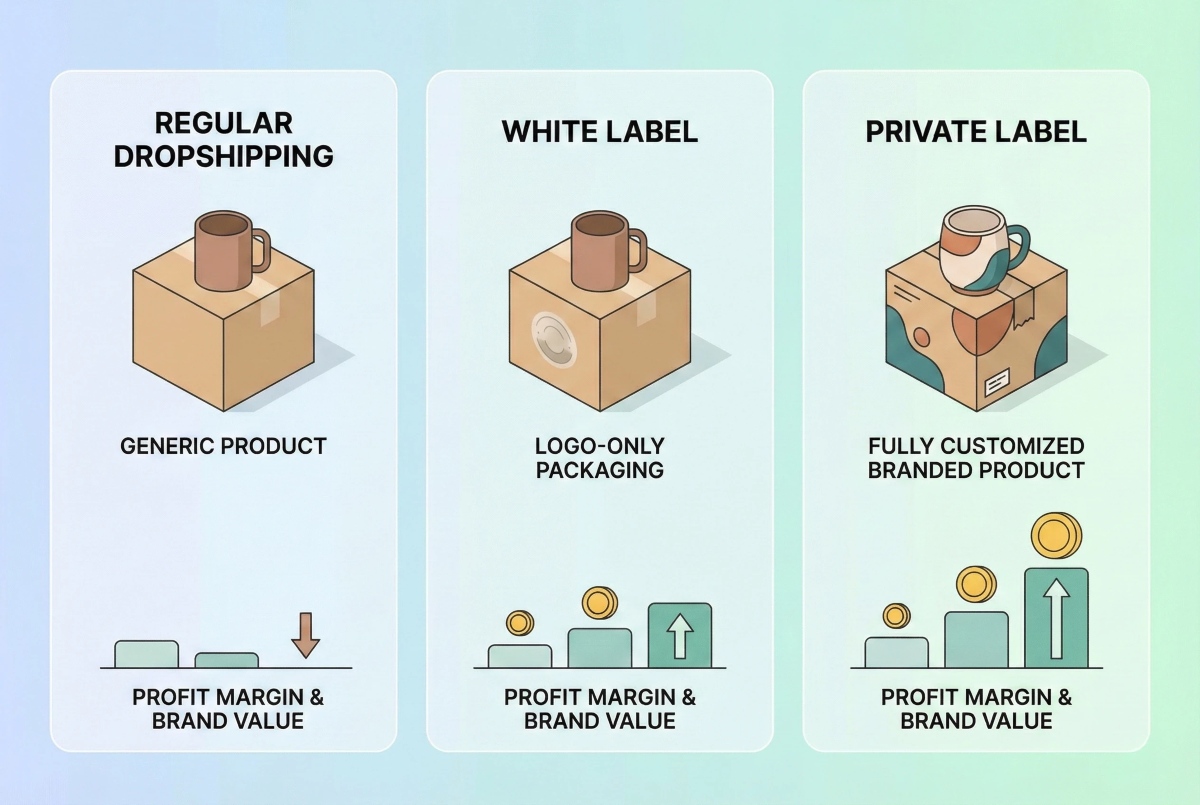
Private label dropshipping gives you complete brand ownership including custom logo, packaging, labels, and often product formulation or exclusive specifications. You own the brand fully and can resell it independently across channels, license it to other sellers, or build it into a multi-million dollar asset over time. Margins reach 150-300% because your brand commands premium pricing. Customer lifetime value increases substantially because switching brands costs them loyalty and perceived quality.
The startup cost for regular dropshipping is $100-500. White label requires $500-2,000. Private label demands $2,000-10,000 upfront investment in samples, branding, manufacturing setup, and initial inventory.
The timeline to profitability follows a similar pattern. Regular dropshipping sees first sales in 1-3 months but reaches sustainable profitability slowly. White label takes 2-4 months. Private label requires 3-6 months but builds exponentially faster revenue growth afterward because brand loyalty drives higher lifetime values.
For businesses seeking long-term sustainability and sellable assets, private label clearly dominates. For testing business viability with minimal capital, regular dropshipping or white label makes sense initially.
Comparison table showing detailed differences across all key factors:
| Factor | Regular Dropshipping | White Label Dropshipping | Private Label Dropshipping |
|---|---|---|---|
| Inventory Holding | None (supplier holds) | None (supplier holds) | None (supplier holds) |
| Branding Control | Generic/supplier branding | Your logo on packaging | Complete custom branding |
| Product Ownership | None | Limited | Full ownership |
| Customization Level | None | Logo/label only | Complete (formula, packaging, design) |
| Minimum Order Quantity | 1 unit | 100-500 units | 500-5,000 units |
| Profit Margins | 50-100% | 100-150% | 150-300% |
| Initial Investment | $100-500 | $500-2,000 | $2,000-10,000 |
| Brand Equity Building | None | Moderate | High |
| Time to First Sale | 1-2 weeks | 2-4 weeks | 3-4 weeks |
| Time to Profitability | 1-3 months | 2-4 months | 3-6 months |
| Price Competition | Intense | Moderate | Minimal |
| Customer Lifetime Value | $50-100 | $200-500 | $500-2,000+ |
| Resale Rights | Limited to your store | Limited; supplier approval | Complete ownership |
| Scalability | Limited | Moderate | High |
| Multi-Channel Expansion | Difficult | Possible but limited | Fully supported |
| Business Asset Value | Near zero | Moderate | High |
| Lead Time | 15-45 days | 3-8 weeks | 4-12 weeks |
Top 15+ Trending Private Label Dropshipping Products for 2026
Product selection determines your business success more than any other factor. The best products combine high margins, repeat purchase frequency, influencer-friendly positioning, and clear brand differentiation potential.
Private Label Skincare and Beauty Products
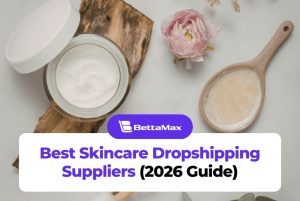
Skincare and beauty products command premium pricing and excellent margins. Face serums, masks, eye creams, and sunscreens retail for $20-50 with wholesale costs of $2-4, enabling 300-800% markups. The skincare industry benefits from influencer marketing, authentic customer reviews, and the personal nature of beauty products drives brand loyalty.
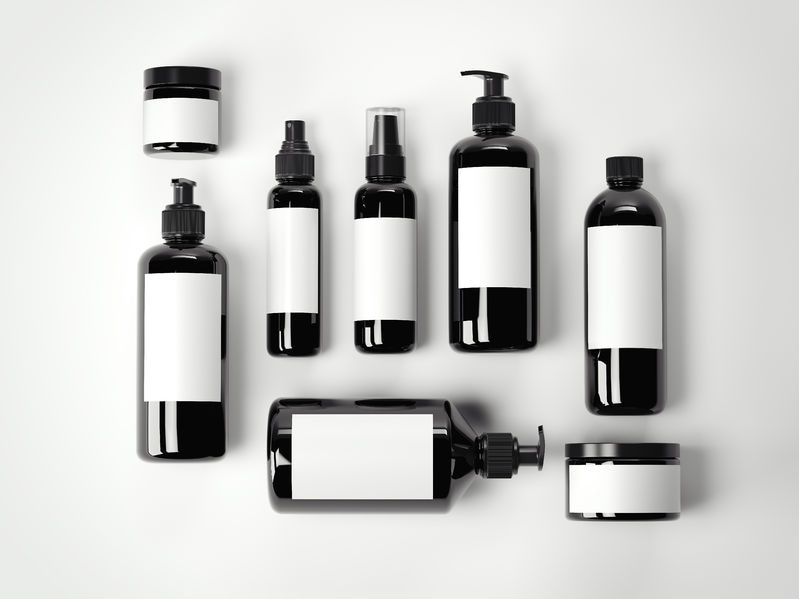
Gray Poplar specializes specifically in skincare private label with custom formulation options. Products in this category show strong repeat purchase rates and build authentic brand loyalty quickly through word-of-mouth and user-generated content on social media platforms.
Private Label Supplements and Vitamins
Supplements and vitamins represent one of the most profitable categories in private label dropshipping. Multivitamins, protein powders, collagen supplements, and specialized formulations like sleep aids or pre-workout compounds deliver 200-400% margins with recurring customer purchases. The health-conscious demographic shows willingness to pay premium prices for quality and perceived efficacy.
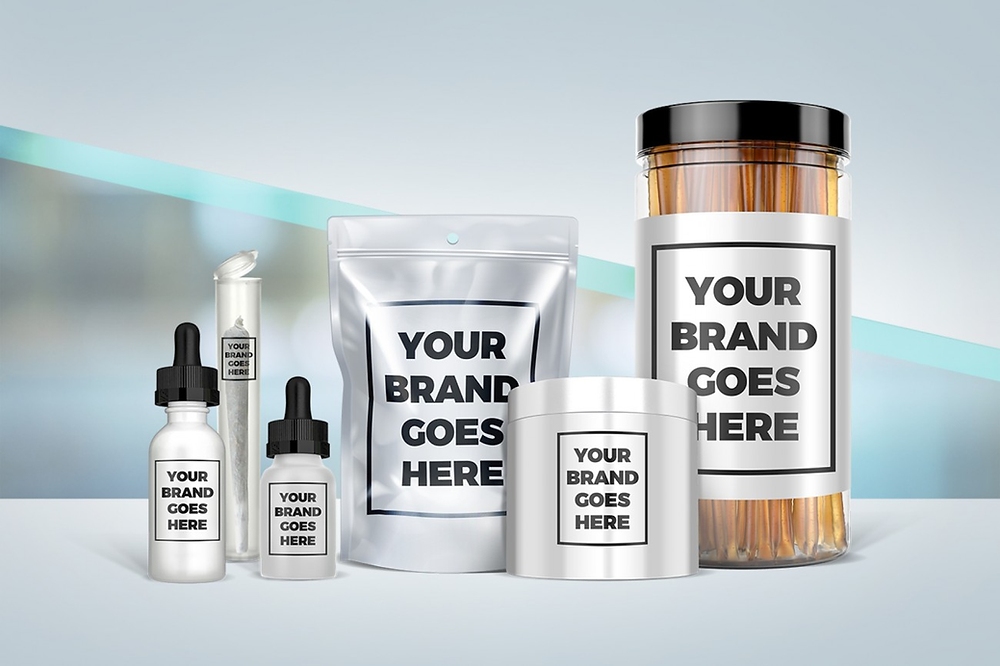
Regulatory compliance through FDA registration is required but manageable with proper suppliers like Supliful and Nutribl. The supplement category particularly benefits from email marketing and subscription models that dramatically increase customer lifetime value compared to one-time purchases.
Private Label Coffee and Specialty Beverages
Private label coffee dropshipping drives strong repeat purchases through daily consumption patterns. Specialty coffee retails for $10-20 per pound with wholesale costs of $2-5, enabling 150-300% margins. Subscription models maximize customer lifetime value, and coffee enables authentic brand building through quality storytelling.
Niche positioning around single-origin, organic, or specialty roasts justifies premium pricing. This category uniquely allows for community building around the brand, with customers forming genuine loyalty to specific blends and roasts.
Private Label Cosmetics
Private label cosmetics including lipsticks, foundations, eyeshadow palettes, and mascaras deliver 300-700% margins. Beauty influencer marketing drives trends, and TikTok and Instagram create powerful demand generation opportunities. International suppliers offer cost-effective production while US suppliers provide superior quality.
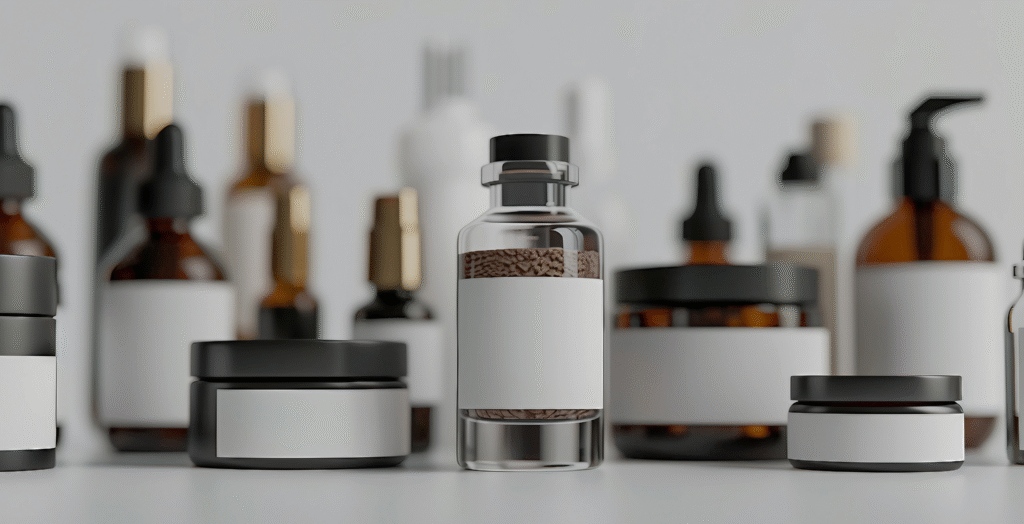
This category particularly benefits from influencer partnerships and unboxing content on social media, making it highly shareable and trend-driven for younger demographics.
Private Label Hair Extensions and Beauty Accessories
Hair extensions and beauty accessories including clip-in extensions, false lashes, and hair care products deliver 200-500% margins on extensions specifically. The beauty supply niche shows extreme customer loyalty, and beauty creators on TikTok and YouTube drive powerful demand signals. Quality varies significantly among suppliers, making supplier selection critical. This category builds strong repeat customer bases because quality directly impacts customer satisfaction and brand perception.
Top 15 Best Private Label Dropshipping Suppliers
Supplier selection directly impacts your brand success. The wrong manufacturer ruins your reputation before you truly begin. Working with quality suppliers who understand your brand vision and deliver consistently makes the difference between thriving and struggling businesses.
Supliful: Premium US-Based Supplement Supplier
Supliful specializes in private label supplements and health products with US-based manufacturing and fulfillment. They offer complete custom formulation options, private label packaging, GMP and FDA-compliant facilities, and Shopify integration. Minimum orders start at 100-500 units with pricing between $3-8 per unit wholesale.
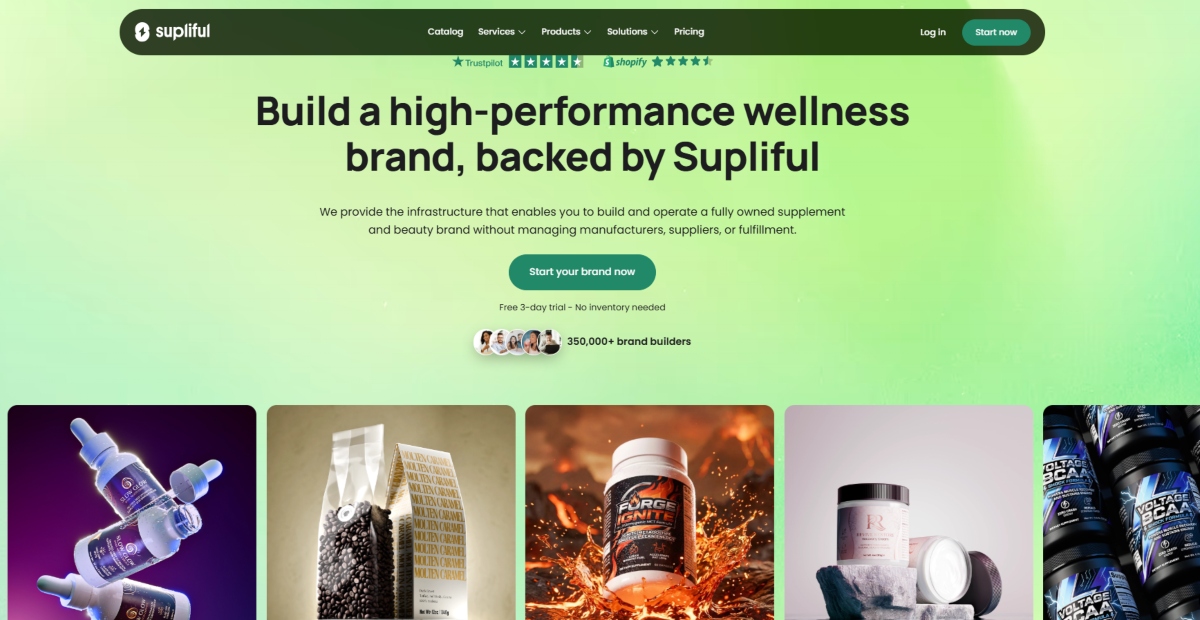
Lead time ranges from 1-4 weeks depending on customization level. They rate 4.7 out of 5 stars with customers praising fast shipping and quality compliance. This supplier is ideal for entrepreneurs serious about supplement brands with US-based production ensuring faster delivery and regulatory certainty.
Nutribl: Low-Minimum Supplement Manufacturing
Nutribl provides private label supplement manufacturing with UK-based production and GMP certification. Their key advantage is low minimum order quantities starting at just 100 units, the lowest in the industry. Pricing ranges from $2-6 per unit with 4-6 week lead times.
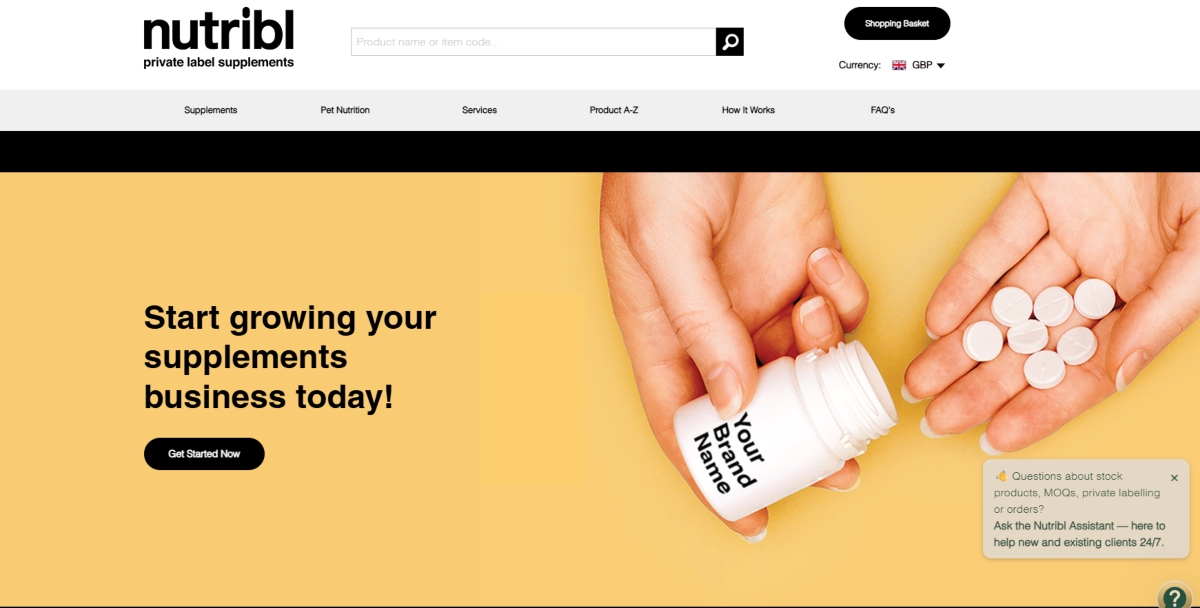
They offer custom formulation support, full regulatory compliance assistance, and in-house quality testing. Ratings of 4.6 out of 5 stars reflect excellent customer service and suitability for beginners. Nutribl is perfect for new entrepreneurs validating supplement ideas without massive upfront inventory commitments.
Gray Poplar: Specialty Premium Supplier
Gray Poplar represents a specialty private label supplier focusing on curated, quality products across beauty, wellness, and niche categories. They emphasize quality over volume, offer customizable product lines, design and branding support, smaller minimum orders than many competitors, and focus on sustainability.
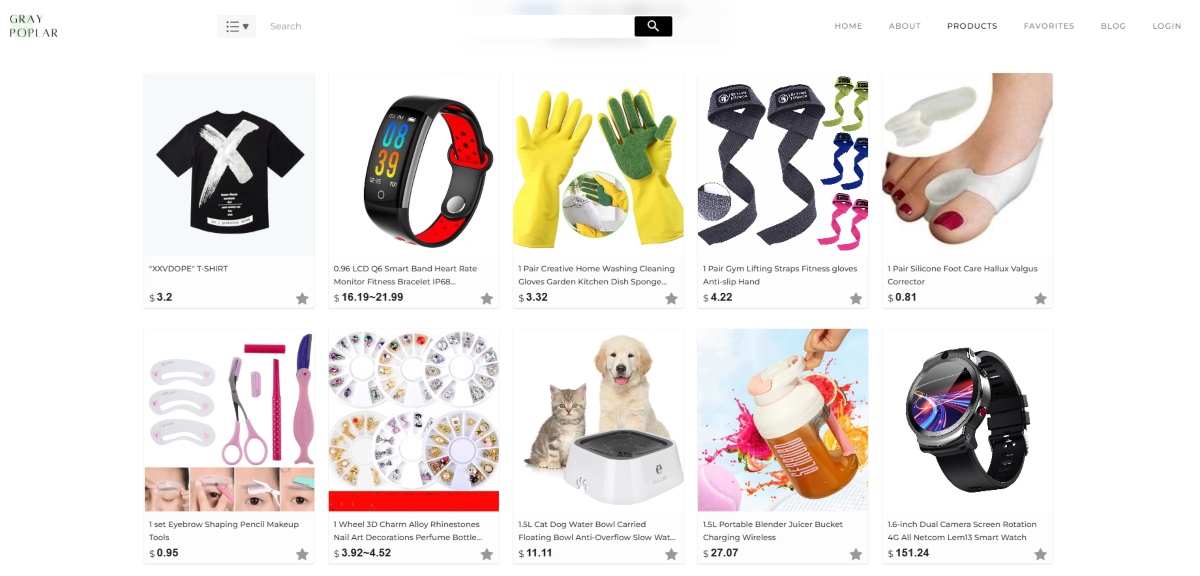
Minimum orders fall between 200-500 units with pricing from $3-7 per unit, positioning them as a premium option with strong quality reputation. Gray Poplar suits entrepreneurs building upscale brands where quality and differentiation matter more than lowest costs.
Formulabs: Beauty and Skincare Customization
Formulabs specializes in beauty and skincare private label manufacturing with complete customization capabilities. They develop custom skincare formulations including serums, masks, and creams, offer private label packaging options, provide regulatory compliance support, and include design and formulation consulting. Custom formulations require 500-unit minimums while pre-made products have lower thresholds. Pricing ranges from $3-8 per unit with 4-8 week lead times for custom products. Formulabs serves beauty entrepreneurs wanting proprietary formulations unavailable elsewhere.
Minado: Cost-Effective International Cosmetics
Minado from China specializes in private label cosmetics with a massive product catalog covering 500+ SKUs, competitive wholesale pricing, custom labeling, and design support.
Minimum orders range from 100-1,000 units with pricing between $1-4 per unit, significantly lower than US suppliers. Minado suits budget-conscious beauty brands scaling aggressively where cost efficiency matters most.
Shenzhen Hongli: Massive Selection at Lowest Cost
Shenzhen Hongli serves as a large-scale manufacturer across multiple product categories with 1,000+ product templates, custom formulation options, competitive volume pricing, and international experience. Minimum orders fall between 500-2,000 units with very competitive pricing of $1-3 per unit, making them the lowest-cost option for committed sellers. Shenzhen Hongli is ideal for established businesses with clear product vision and capital to commit to larger initial orders.
Printful: Print-on-Demand Testing Platform
Printful provides print-on-demand service with private label integration for clothing, accessories, and promotional items. They require no minimum order quantities, offer unlimited design options, provide mockup generation, include fulfillment and shipping, and integrate with Shopify, WooCommerce, and Etsy.
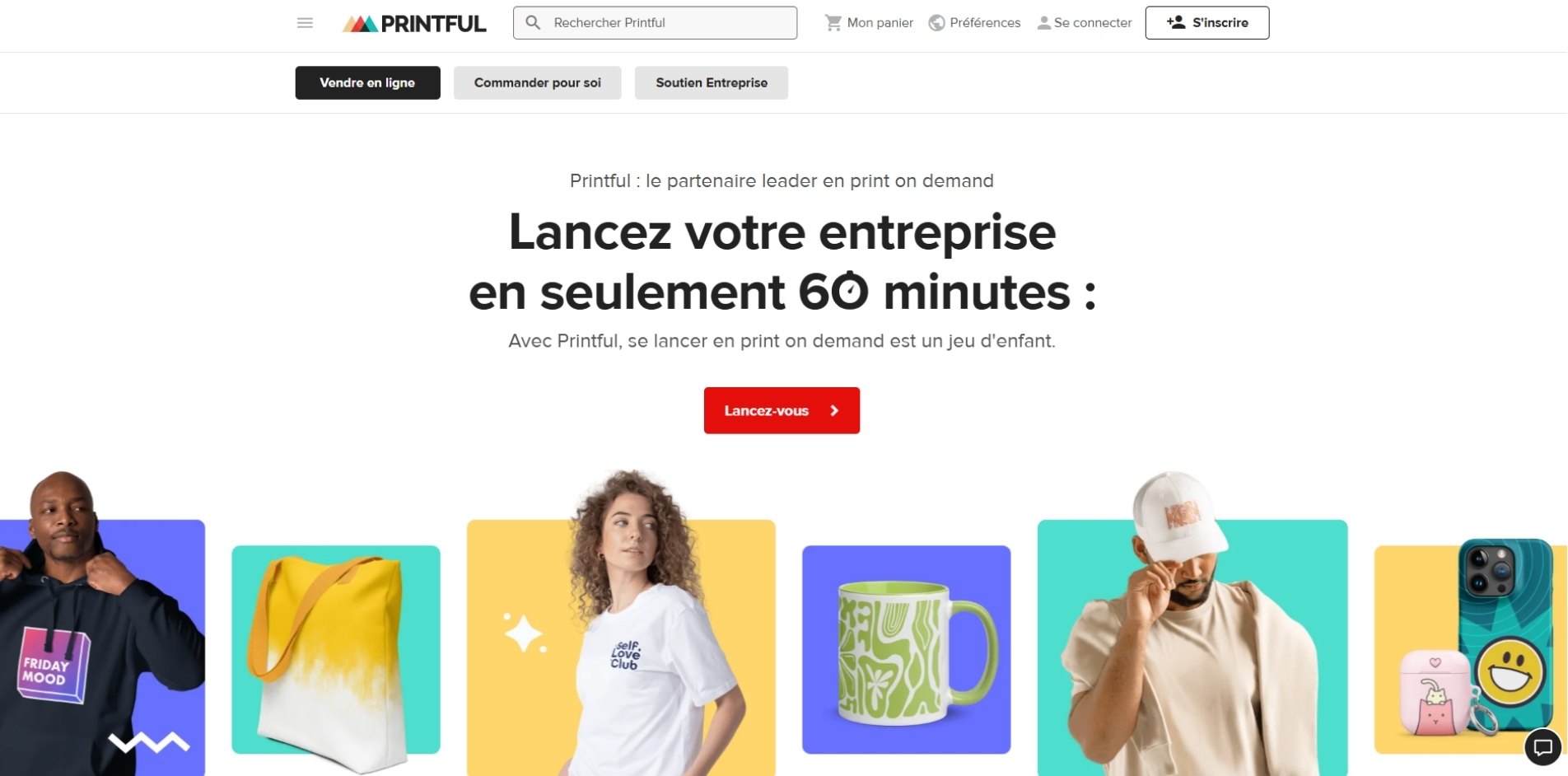
Pricing ranges from $8-15 per base item, allowing you to test designs before committing to bulk orders. Printful is perfect for entrepreneurs testing apparel designs with zero inventory risk before ordering bulk quantities.
Printify: Multi-Partner POD Flexibility
Printify aggregates multiple fulfillment partners with 100+ production options, enabling competitive pricing comparison. They offer design upload and management, multi-channel selling integration, and flexible partner selection.
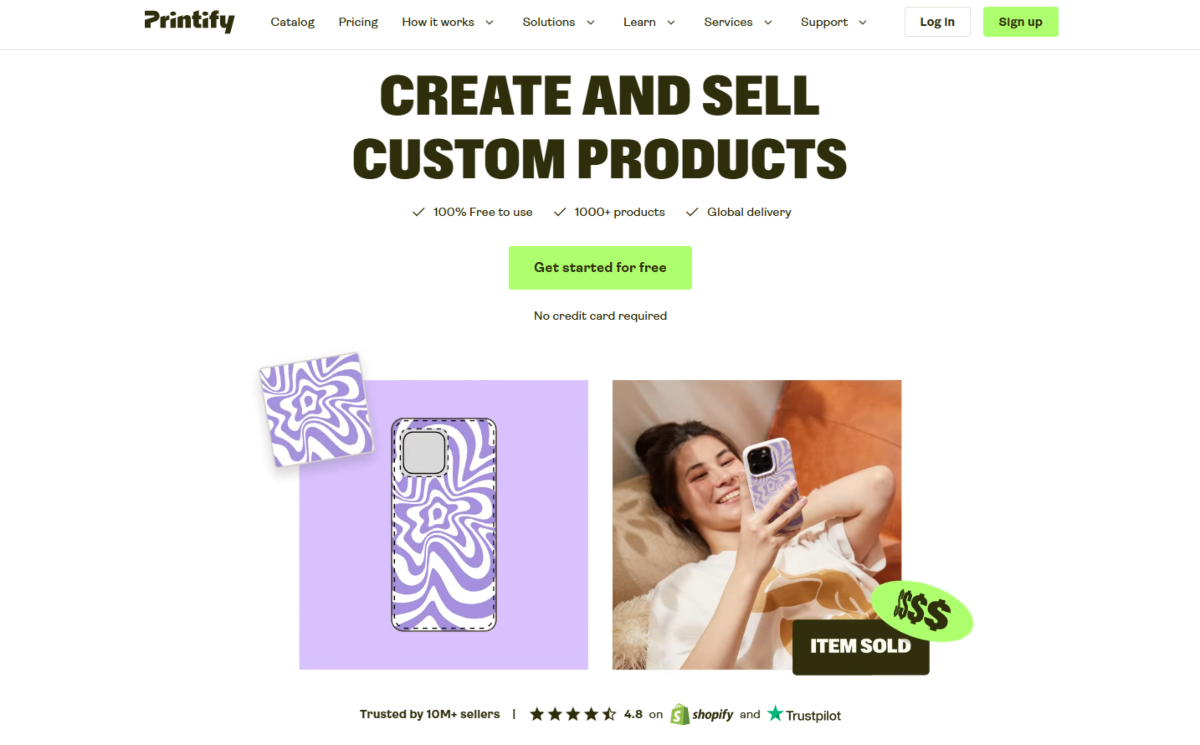
Pricing varies by partner and product from $5-20 per item. Printify suits entrepreneurs wanting flexibility to switch between production partners based on price, quality, and speed considerations.
Steps to Make Money With Private Label Dropshipping in 2026
Success follows a proven seven-step process from niche selection through scaling optimization. Each step builds upon the previous one to create a strong foundation for your private label brand.
Step 1: Define Your Niche and Product Category
Your first step involves defining your niche and product category. Rather than competing broadly, successful brands dominate specific subcategories addressing clear customer pain points. Your niche should address a specific customer pain or desire, allow 150%+ profit margins, have 100+ monthly searches, show growth trends on Google or TikTok, enable meaningful brand differentiation, and allow influencer marketing.

Examples of strong niches include luxury plant-based skincare for sensitive skin, performance supplements for female athletes, sustainable coffee for eco-conscious consumers, premium hair extensions for natural hair textures, and non-toxic beauty tools. Research potential niches using Google Trends, competitor analysis, and customer surveys. A well-chosen niche dramatically increases your chances of success compared to entering saturated, broad markets.
Step 2: Source and Vet Potential Suppliers
Your second step requires sourcing and vetting potential suppliers. Finding the right manufacturer is critical to brand success. Request product samples, assess quality honestly, verify samples match specifications exactly, evaluate packaging quality and presentation, check supplier responsiveness, request references from other brands, verify compliance certifications, confirm payment terms, and negotiate better pricing for larger orders.
Red flags include unresponsive communication, quality issues in samples, unwillingness to customize, unrealistic pricing, lack of certifications, and unwillingness to sign agreements. This vetting process might take 2-3 weeks but is essential because a poor supplier choice damages your brand reputation before you truly launch. Once you identify quality suppliers, build strong relationships with them.
Step 3: Create Your Brand Assets
Your third step involves creating your brand assets including logo design, color palette, typography, packaging design, brand story, and digital presence. Your brand identity differentiates you from competitors and justifies premium pricing. Invest in professional design using services like Fiverr or local designers rather than relying on generic templates.
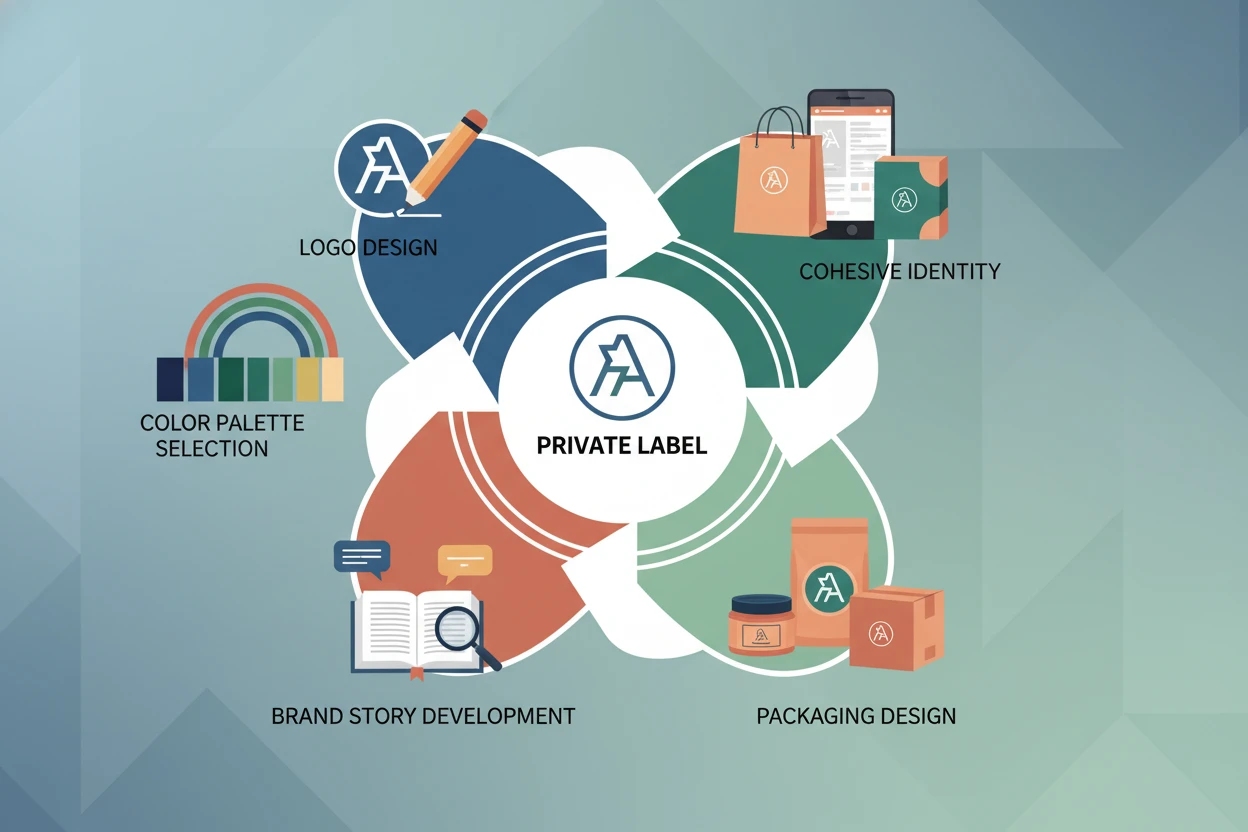
Your brand assets should tell a compelling story about why you started this brand, what problems you solve, and what values define your company. Ensure consistency across all touchpoints from packaging to social media to website. A cohesive brand identity signals legitimacy and builds customer trust from first interaction.
Step 4: Set Up Your E-Commerce Store
Your fourth step entails setting up your e-commerce store. Choose between Shopify ($29-299 monthly), WooCommerce (free core, $3-100 monthly for hosting), or hybrid approaches combining multiple platforms. Optimize your product listings with compelling titles, professional photography, detailed benefit-focused descriptions, clear pricing, scarcity messaging, customer testimonials, and clear return policies.
Your store represents your brand to customers, so invest in professional design and user experience. Ensure mobile optimization since most e-commerce traffic comes from mobile devices. Set up email capture mechanisms and integrate with email marketing tools for building your customer list.
Step 5: Configure Order Routing and Fulfillment Workflows
Your fifth step configures order routing and fulfillment workflows. Connect your e-commerce store to supplier systems for real-time inventory syncing and automated order forwarding. Implement manual quality control by auditing 10-20% of orders from suppliers. Maintain inventory spreadsheets tracking supplier levels and establish reorder minimums for peak seasons.
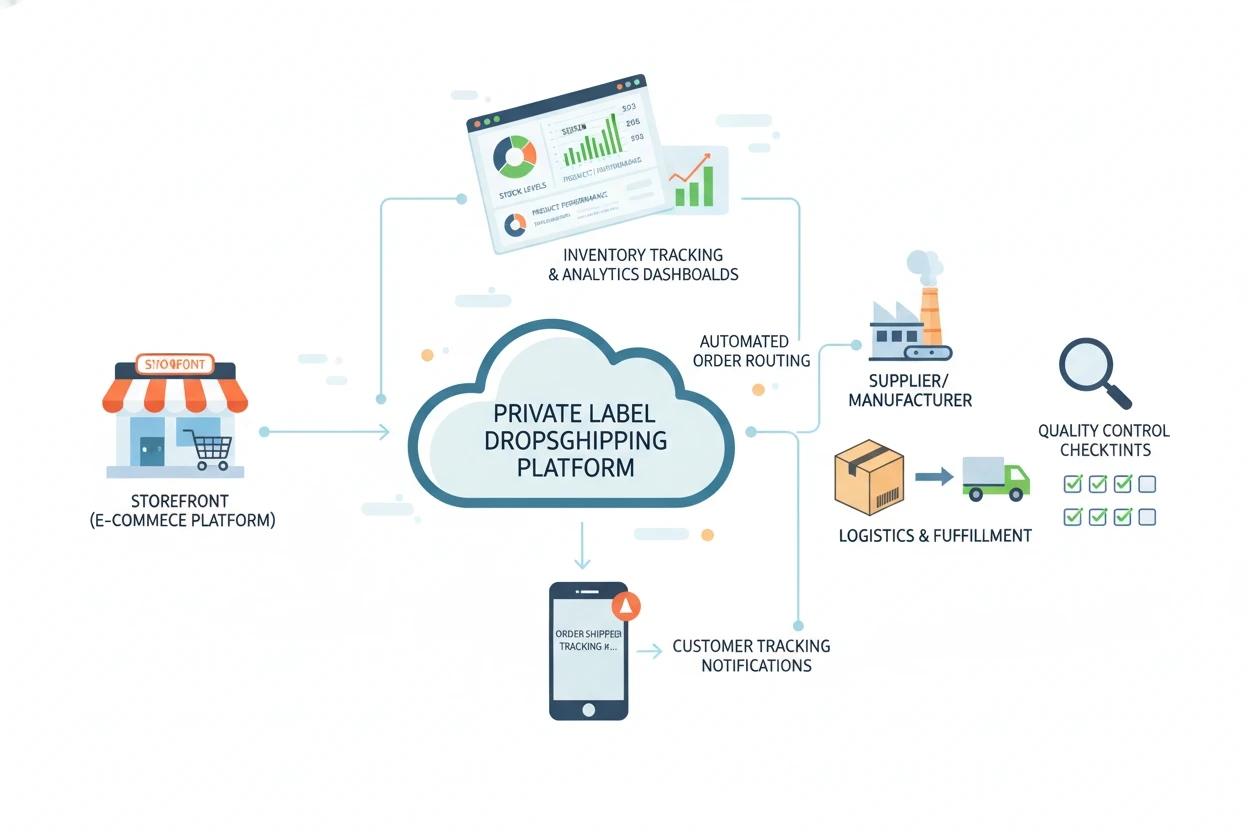
Automate what you can on the backend, but maintain personal communication with customers. When customers receive tracking information, follow up personally once items arrive. This human touch builds loyalty that generic automation cannot replicate.
Step 6: Launch Initial Marketing Campaigns
Your sixth step launches initial marketing campaigns. Build email lists before launch by offering early access incentives, set up professional social media profiles focused on brand storytelling and educational content, create blog content addressing customer pain points, reach out to micro-influencers for seeding, and launch coordinated social and email campaigns at launch.
Pre-launch marketing should create anticipation and build your initial customer base. Consider offering launch discounts to incentivize early adopters and generate reviews. Early reviews are critical for establishing credibility and improving conversion rates.
Step 7: Monitor Performance and Optimize Pricing
Your seventh step monitors performance and optimizes pricing. Track revenue and profit per product, customer acquisition cost, average order value, conversion rates, return rates, and supplier performance. Test price increases monthly, identify top 20% of products driving 80% of revenue, increase inventory and marketing for winners, sunset underperformers, and develop strategic partnerships.
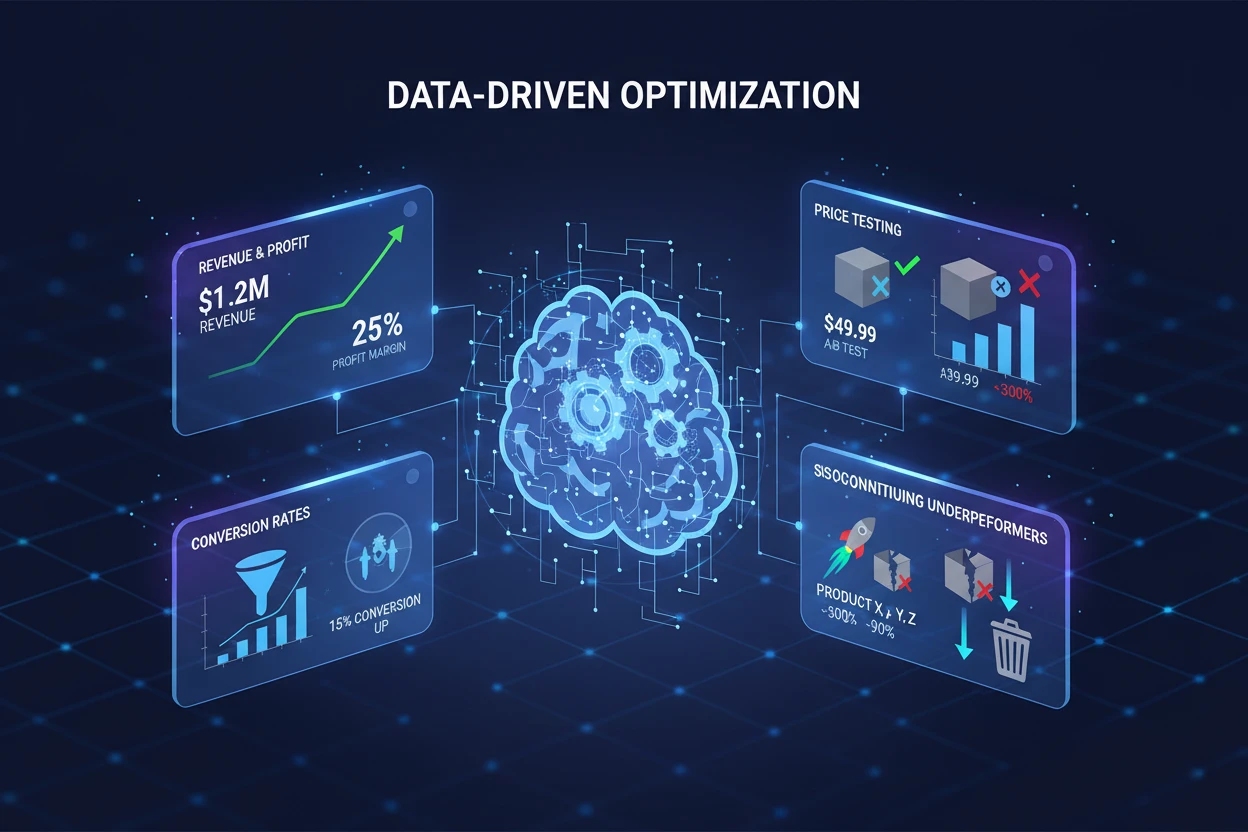
This optimization process becomes your ongoing business management system. Successful sellers review metrics weekly and make adjustments monthly. Data-driven decision making separates thriving brands from struggling ones in private label dropshipping.
Private Label Dropshipping FAQ
Is private label dropshipping truly allowed as a business model?
Yes, absolutely. You own the brand completely, control pricing, manage customer relationships directly, and build brand equity over time. The key is operating with integrity, maintaining quality, and delivering exceptional customer service.
What separates private label from white label dropshipping?
Private label means you own the brand completely with full customization rights, custom packaging, exclusive product specifications, and the ability to resell independently. White label limits you to logo and label customization only, with supplier retaining core product ownership. Private label costs more upfront but delivers exponentially higher long-term value.
How much capital do you need to launch?
Typical startup investments range from $2,500-8,000 covering product samples ($200-500), branding and design ($300-1,000), initial inventory order ($1,000-3,000), store setup ($100-300), and initial marketing ($500-2,000). Start lean and scale after validating demand.
When will you see your first sales?
Most sellers make their first sale within 2-4 weeks with proper marketing. Profitability typically arrives within 3-6 months. Sustainable income of $2,000+ monthly usually takes 6-12 months.
Which suppliers should you choose?
For fast shipping and quality, select US-based suppliers like Supliful, Nutribl, and Formulabs. For cost efficiency, choose international suppliers like Gray Poplar, Minado, or Shenzhen Hongli. For testing without minimums, use print-on-demand providers like Printful or Printify. Start with 2-3 vetted suppliers and scale as performance proves reliable.
What income is realistic in private label dropshipping?
Conservative estimates suggest $600 monthly profit from 50 sales at $30 average order value with 40% margins. Realistic estimates after six months show $3,150 monthly profit from 200 sales. Aggressive targets after twelve months with scaling reach $10,000 monthly profit from 500+ sales.
What are the biggest challenges?
High initial investment requires careful budgeting and supplier vetting. Supplier reliability demands thorough testing. Inventory management needs spreadsheet tracking. Market saturation requires niche selection and unique positioning. Customer acquisition costs drive marketing optimization. Regulatory compliance requires upfront research. Time intensity necessitates automation and delegation.
Is private label dropshipping profitable in 2026?
Yes, absolutely, when executed strategically. High margins of 150-300%, brand equity building, customer loyalty driving repeat purchases, niche domination rather than broad competition, premium pricing, and multi-channel scaling potential all support strong profitability. Success rates of 40-50% for serious entrepreneurs achieving $2,000+ monthly within twelve months far exceed regular dropshipping rates of 10-15%.
Conclusion: Your Private Label Dropshipping Roadmap for 2026
Private label dropshipping has matured from unproven concept to legitimate business model for building sustainable brands. Unlike regular dropshipping locked in commodity competition, private label enables premium positioning and brand loyalty that sustains long-term success.
Your immediate action steps: Choose a specific niche addressing real customer pain points, research and vet 3-5 manufacturers by ordering samples, create your brand identity through professional logo and packaging design, launch your store with optimized product listings, configure automated fulfillment workflows, execute coordinated marketing campaigns across email and social channels, and establish monthly optimization processes reviewing metrics and testing improvements.
The brands dominating private label dropshipping in 2026 share common characteristics: strategic niche focus, quality products that exceed expectations, authentic brand stories resonating with customers, responsive customer service building loyalty, and consistent marketing efforts. You can build one of these brands. Start today by selecting your niche and your journey toward profitable private label success begins.