Understanding how this metric works, how to calculate it accurately, and how to improve it can help you fix operational gaps, reduce lost sales and consistently deliver on customer expectations.
What is order fulfillment rate?
Order fulfillment rate definition refers to the percentage of customer orders that are delivered completely, accurately, and on time within a specific period. This metric is a core performance indicator used by ecommerce brands, warehouses, and logistics teams to evaluate how reliably orders are being processed and delivered.
Also read: What is Order Fulfillment? Types, Key Processes & Tips
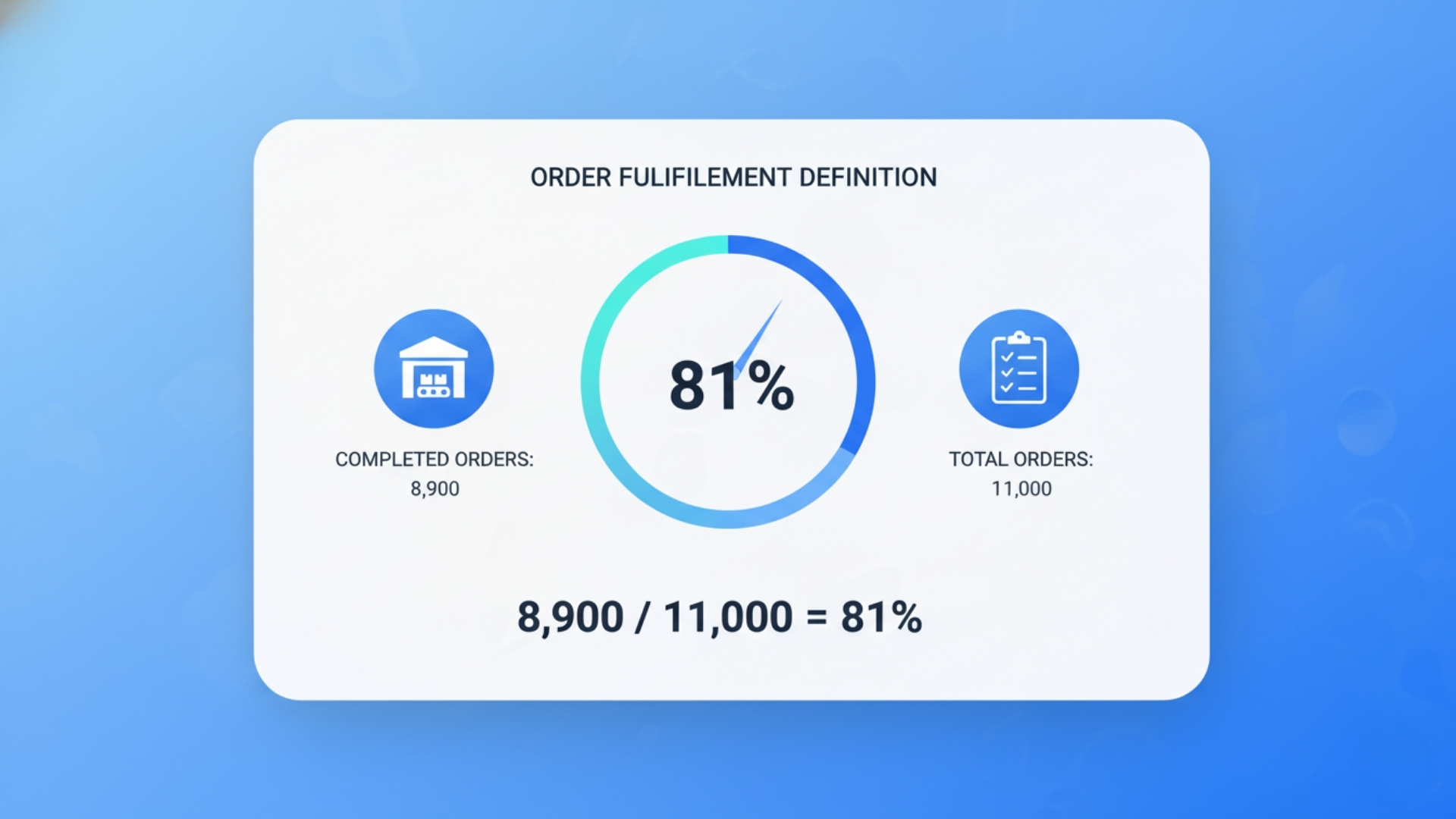
A high fulfillment rate indicates that your inventory planning, warehouse operations, and shipping processes are working in sync. Orders are shipped without backorders, delays, or errors, which reflects strong operational discipline and supply chain stability.
A low fulfillment rate indicates operational gaps such as inventory shortages, forecasting errors, picking and packing mistakes or delivery delays. Over time, this directly affects customer trust, revenue retention and brand reputation.
For ecommerce businesses, this metric goes beyond logistics. It measures your ability to consistently deliver on customer promises.
Why order fulfillment rate matter to ecommerce business?
The order fulfillment rate plays a critical role in both operational performance and customer perception. It connects supply chain execution with real business outcomes.
Reflects supply chain reliability and execution accuracy
A strong fulfillment performance shows that suppliers, warehouses, and carriers are aligned. When orders are fulfilled correctly and on schedule, it signals that upstream planning and downstream execution are functioning reliably.
Reduces missed sales and improves retailer trust
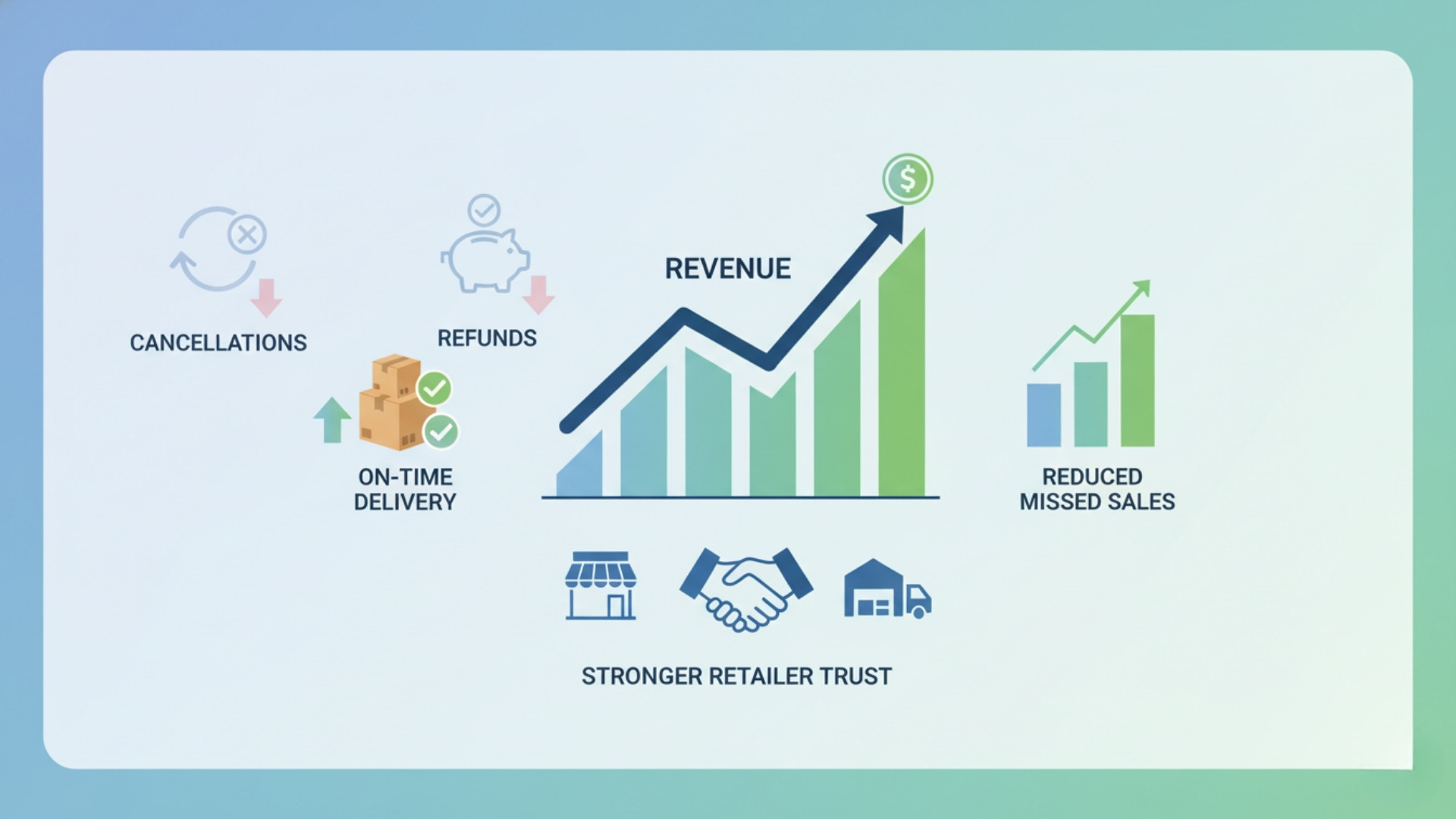
Unfulfilled or delayed orders often result in cancellations, refunds, or lost repeat purchases. Maintaining a high fulfillment performance reduces missed revenue opportunities and strengthens trust with both direct customers and marketplace partners.
Enhances service levels that drive long-term loyalty
Customers remember delivery experiences. When orders arrive on time and as expected, satisfaction increases. Over time, this consistency drives repeat purchases, higher lifetime value, and positive reviews.
Improves inventory management and forecasting accuracy
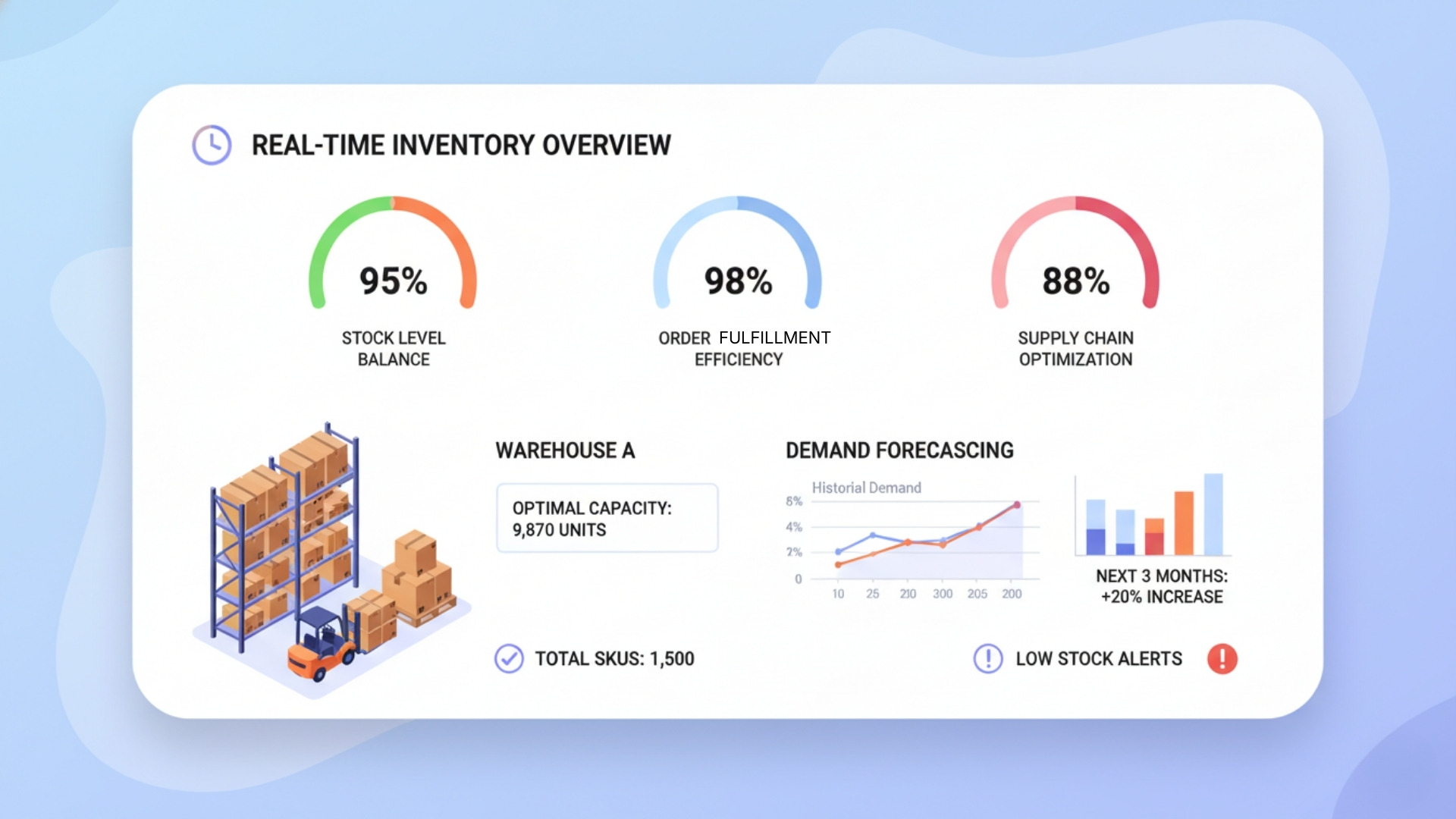
Fulfillment performance highlights gaps between demand forecasting and actual stock levels. Frequent fulfillment failures often point to inventory planning issues, while strong performance suggests a healthy balance between availability and efficiency.
Strengthens shipping and delivery coordination
A reliable fulfillment operation depends on smooth coordination with carriers and logistics partners. Consistently meeting delivery timelines reflects effective shipping workflows and proactive issue resolution.
In competitive ecommerce markets where delivery speed is a key differentiator, fulfillment performance directly influences whether customers return or churn.
4 steps to calculate order fulfillment rate
Understanding how to measure fulfillment performance accurately is essential for improving it. This section explains the order fulfillment rate formula and walks through the calculation process.
Order fulfillment rate formula
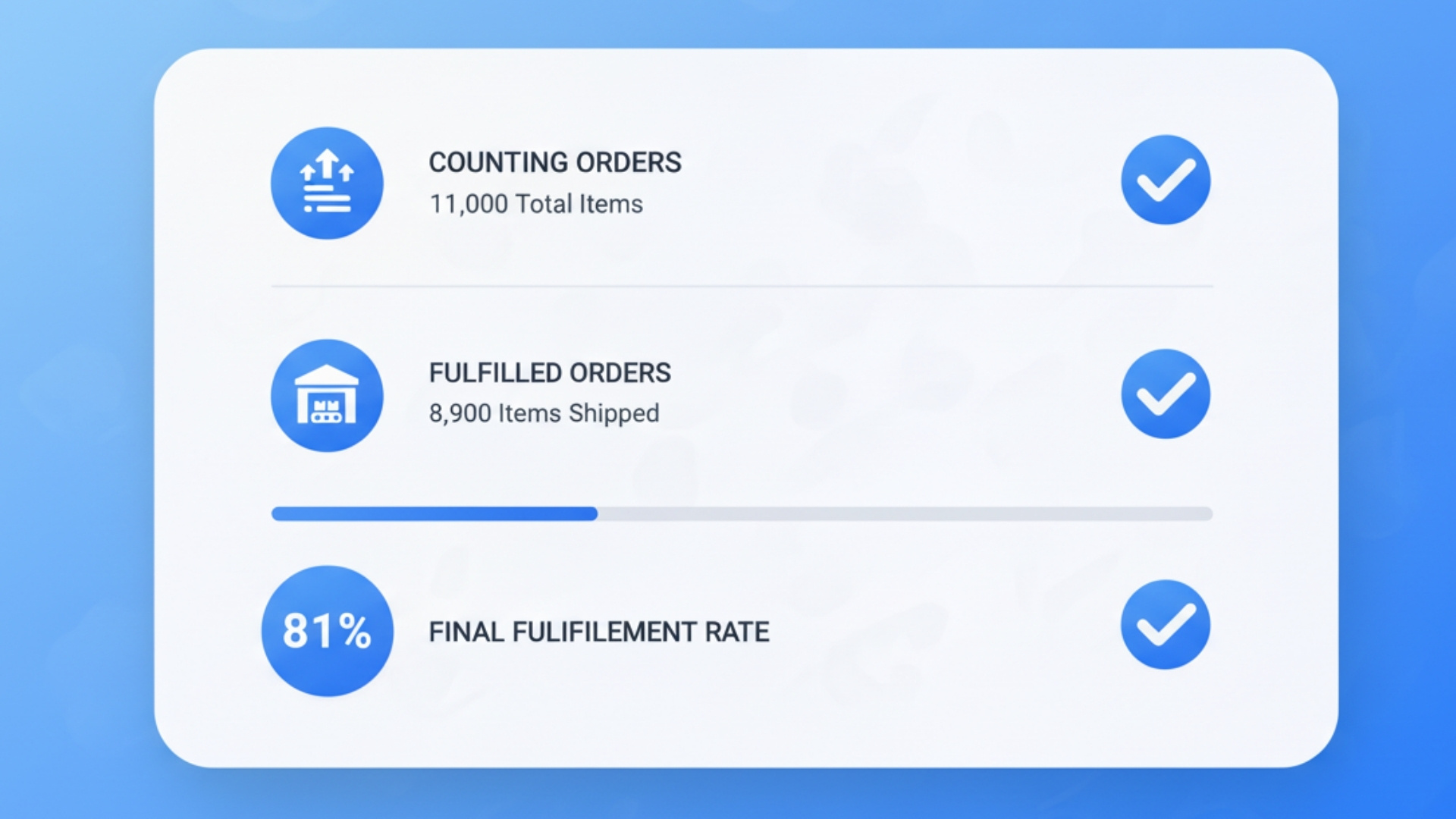
Order Fulfillment Rate (%) = (Number of orders fulfilled completely and on time / Total number of orders received) × 100
This calculation only counts orders that are delivered in full, without substitutions, delays, or backorders.
Step-by-step calculation
Step 1: Identify your measurement period
Choose a consistent timeframe such as daily, weekly, or monthly to ensure comparable results.
Step 2: Count total orders received
Include all customer orders placed during the selected period, regardless of fulfillment outcome.
Step 3: Count fulfilled orders
Only include orders that were shipped in full and delivered within the promised timeframe.
Step 4: Apply the formula
Divide the fulfilled order count by the total orders received, then multiply by 100.
Example calculation
Total orders received: 100
Orders fulfilled on time and in full: 95
Calculation: (95 / 100) × 100 = 95%
This example demonstrates how to calculate perfect order fulfillment rate and interpret the result in a practical ecommerce context.
8 tips to increase order fulfillment rate
Improving fulfillment performance requires a combination of process optimization, technology adoption, and coordination across teams.
Streamline the ordering and fulfillment workflow
Eliminate manual handoffs and redundant steps between order capture, inventory allocation, and shipping. Clear workflows reduce delays and processing errors.
Implement real-time inventory management
Accurate stock visibility prevents overselling and last-minute cancellations. Real-time inventory systems synchronize sales channels with warehouse availability, ensuring orders can be fulfilled as promised.
Speed up product delivery processes
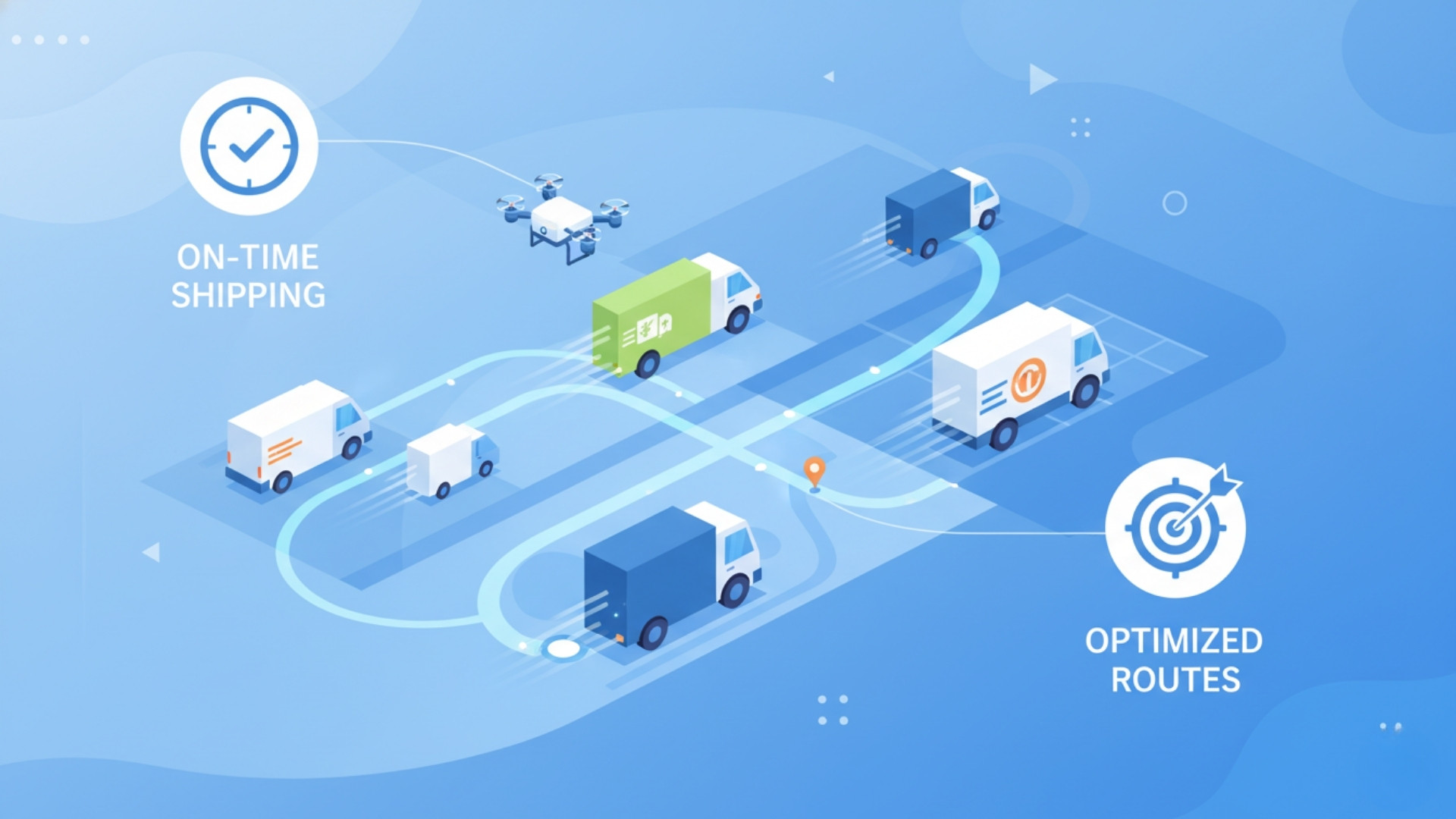
Optimize picking routes, packing stations, and carrier handoffs. Faster internal processing gives you more flexibility to meet delivery commitments, even during peak demand.
Improve product return processing
Returns impact fulfillment performance more than many brands realize. Efficient return workflows allow restocked items to re-enter available inventory quickly, reducing future stockouts.
Leverage technology and data analytics
Use real-time tracking, automated alerts, and performance dashboards to identify bottlenecks early. Data-driven insights enable faster corrective actions before fulfillment issues escalate.

Optimize inventory planning and forecasting
Balance safety stock levels with demand trends to avoid both shortages and overstocking. Accurate forecasting supports consistent fulfillment outcomes.
Strengthen supplier and logistics partnerships
Reliable suppliers and carriers are essential for maintaining fulfillment consistency. Strong relationships improve responsiveness during disruptions.
Enhance system integration across operations
Seamless integration between ERP, warehouse management, and order systems improves visibility and coordination throughout the supply chain.
Each of these strategies directly supports a higher order fulfillment rate by reducing friction and increasing operational predictability.
Order fulfillment rate FAQs
What is a good order fulfillment rate for ecommerce?
For most ecommerce businesses, a good fulfillment rate typically falls between 95% and 99%. Brands operating in highly competitive markets or offering fast delivery promises often aim for 98% or higher. Anything consistently below 95% usually signals inventory, warehouse, or shipping issues that need immediate attention.
How often should order fulfillment rate be measured?
Order fulfillment performance should be tracked regularly, depending on order volume. High-volume ecommerce stores often monitor it daily or weekly, while smaller businesses may review it monthly. Consistent tracking helps identify trends early rather than reacting after customer complaints increase.
Is order fulfillment rate the same as perfect order rate?
No, they are related but not identical. The order fulfillment rate focuses on whether orders are delivered completely and on time. The perfect order rate is broader and also includes accuracy factors such as correct documentation, damage-free delivery, and accurate invoicing.
What causes a low order fulfillment rate?
Common causes include inaccurate inventory data, poor demand forecasting, warehouse picking errors, carrier delays, and weak coordination between sales channels and fulfillment operations. In many cases, multiple small inefficiencies compound into fulfillment failures.
Can automation improve order fulfillment rate?
Yes. Automation significantly improves fulfillment performance by reducing manual errors, speeding up order processing, and providing real-time inventory visibility. Warehouse management systems, order routing tools, and shipping integrations all contribute to a more consistent fulfillment outcome.
How does fulfillment rate affect customer retention?
A strong fulfillment record builds trust. Customers who receive orders on time and in full are more likely to repurchase and recommend the brand. A declining fulfillment rate, on the other hand, often leads to negative reviews, higher return rates, and lost long-term revenue.
Does outsourcing fulfillment guarantee a higher fulfillment rate?
Outsourcing alone does not guarantee improvement. However, working with experienced fulfillment partners and aligning processes, systems, and service-level agreements often results in a higher and more stable fulfillment performance when managed correctly.
Conclusion
The order fulfillment rate is more than a logistics metric. It is a reflection of how well an ecommerce business delivers on its promises to customers. From inventory accuracy to shipping coordination, fulfillment performance connects internal operations with customer experience and long-term growth.
By understanding the definition, calculation, and strategic drivers behind fulfillment performance, ecommerce brands can identify weaknesses, implement targeted improvements, and build more resilient operations. Consistently strong fulfillment execution leads to higher customer satisfaction, improved loyalty, and a sustainable competitive advantage in an increasingly delivery-driven market.