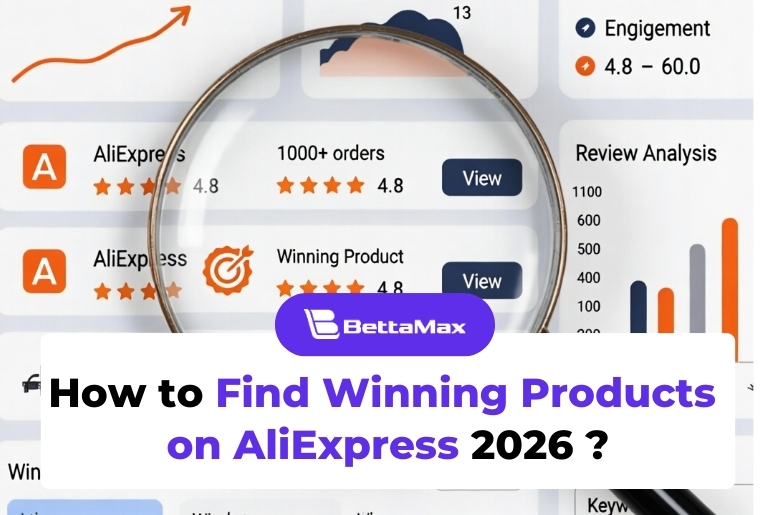
Discover how to find winning products on AliExpress using proven research strategies. Learn to identify high-demand items, validate seller reliability, and scale your dropshipping business faster.
The difference between a successful dropshipping store and a struggling one often comes down to one thing: the products you choose to sell.
This guide walks you through the exact process successful dropshippers use to identify winning products on AliExpress in 2026. We’ll cover tools, criteria, validation methods, and common mistakes to avoid. By the end, you’ll have a repeatable workflow to find products worth scaling.
Why Finding Winning Products on AliExpress Still Matters in 2026
AliExpress remains the largest single source of products for dropshipping worldwide. But the platform’s size is both an advantage and a challenge.
The Advantage + Access to millions of products sourced directly from manufacturers, with low minimum order quantities and competitive pricing that allows healthy margins.
The Challenge + Wading through endless listings to find products that actually convert requires skill, data analysis, and systematic testing.
The Real Impact of Product Selection
Choosing a winning product directly influences your core business metrics.
Customer Acquisition Cost (CAC) + Depends heavily on product appeal. A genuinely useful product attracts customers at $0.50 to $2.00 per acquisition. A mediocre product? You’re looking at $5 to $15 CAC just to get someone to click your ad. The better the product, the lower your advertising costs.
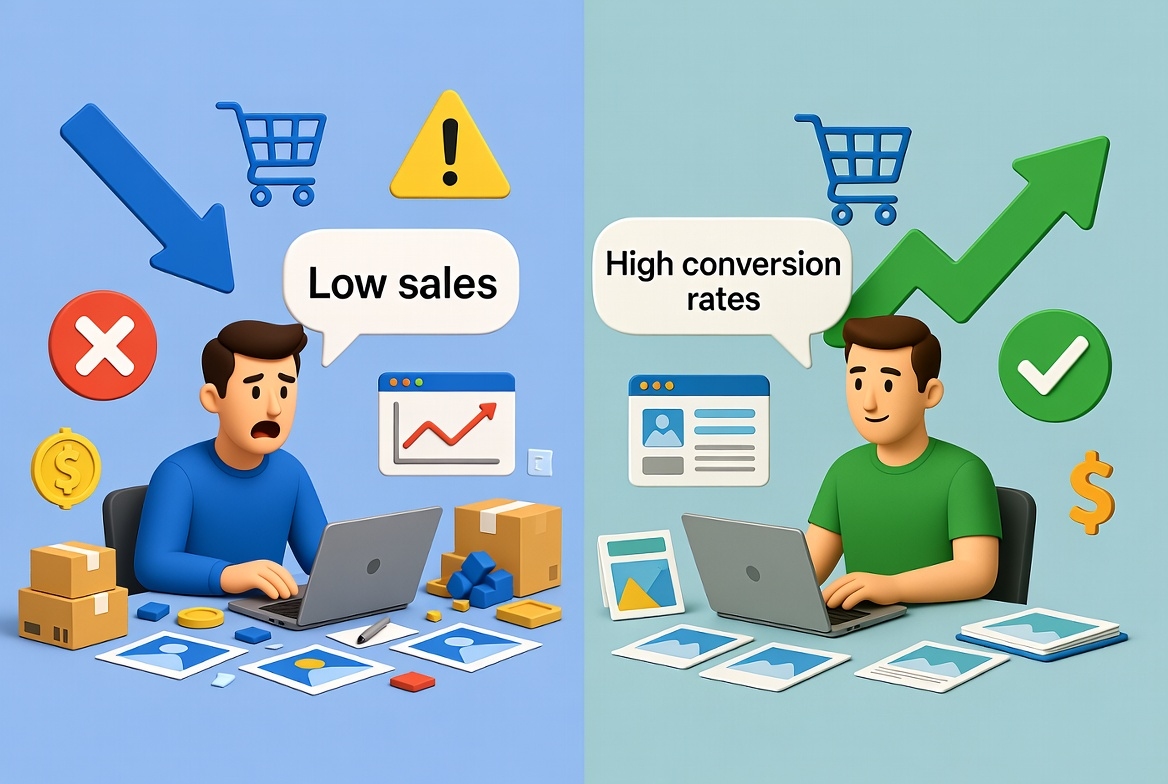
Refund Rates + Tell the story of product satisfaction. Winning products maintain 5 to 10% refund rates. Poor choices? 25 to 40% of orders come back. Each refund eats into margins, damages seller rating, and requires customer service time.
Scaling Potential + Separates one-off sales from sustainable businesses. Products with broad appeal, strong demand signals, and proven supplier reliability can scale from $1,000/month to $10,000+/month with proper advertising. Weak products plateau quickly or collapse.
This is why finding winning products isn’t just important. It’s the foundation of everything that follows.
What Is a Winning Product on AliExpress?
Before we explore how to find winning products, we need clarity on what defines a winning product. This section matters because Google rewards content that clearly defines key terms upfront.
Core Characteristics of a Winning Product
A winning product on AliExpress typically exhibits these traits.
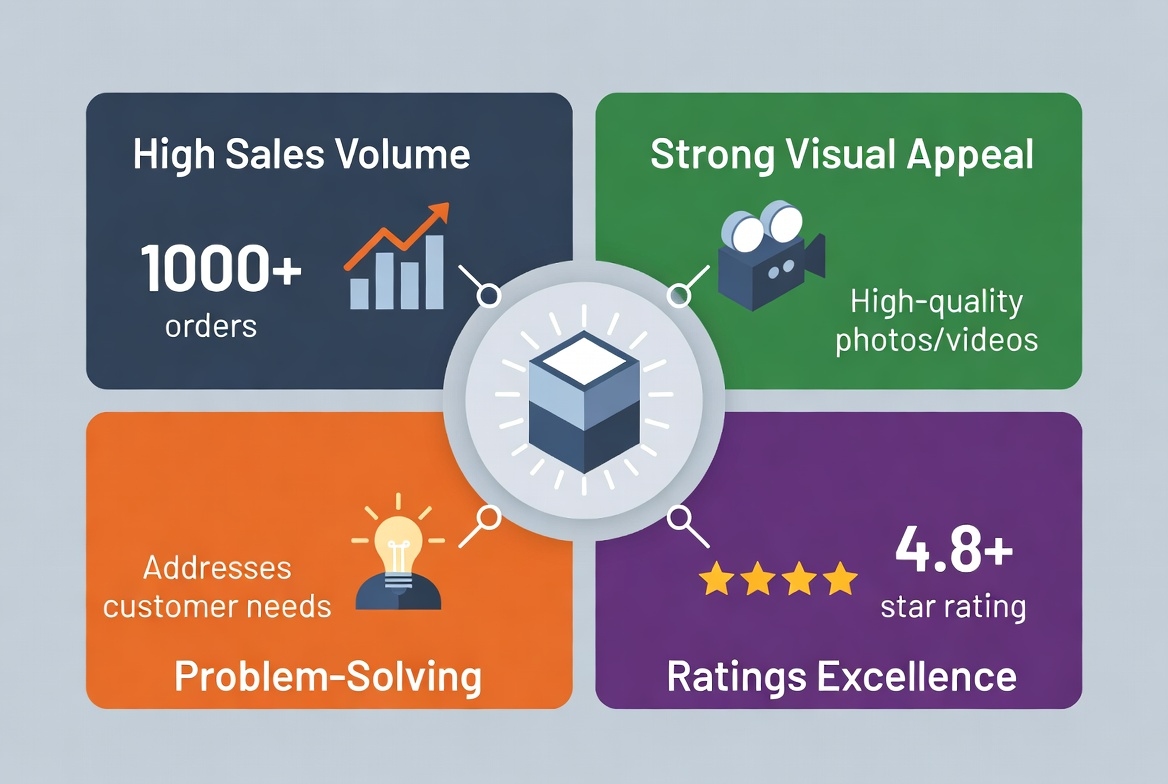
High Order Volume
Products with 1,000+ orders demonstrate that real customers want them. Order volume is the strongest signal of genuine demand. It’s harder to fake than ratings, though some sellers try.
Problem-Solving Utility
The best products solve a specific, relatable problem. “Makes my kitchen more organized.” “Helps me charge my phone faster.” “Solves back pain during work.” Specific problems translate to effective ad copy and higher conversion rates.
Strong Visual Appeal
Winning products are naturally video-friendly. They have movement, color, or satisfying transformations that work in 3-5 second ad clips. Think unboxing excitement, instant satisfaction, or clear before-and-after moments.
Low Perceived Competition, High Actual Demand
These are products where demand exists but competition hasn’t fully saturated the market. You’re not competing against 50 sellers offering identical versions but rather serving customers who recognize the value proposition.
What a Winning Product Is NOT
Equally important: understanding what doesn’t work.
Saturated Viral Products
If a product went viral on TikTok two months ago, it’s past its peak. The market is flooded with sellers, customers already have their copies, and advertising costs have skyrocketed. Avoid chasing yesterday’s trends.
Trademarked or Copyrighted Items
Products using brands or intellectual property without permission expose you to cease-and-desist letters, account suspension, and legal liability. Not worth the risk, regardless of demand.
High Refund Risk Items
Products with inherent quality issues, misleading descriptions, or fragile shipping characteristics create refund nightmares. Example: cheap phone cases that don’t protect phones, or dropshipped nutritional supplements with quality concerns.
Criteria to Identify Winning Products on AliExpress
Now let’s break down the specific criteria successful product researchers use when evaluating AliExpress listings.
High Sales Volume and Order Velocity
When evaluating a product, one of your first filters is sales volume.
Why Order Volume Matters
More orders equal more data points proving genuine demand. A product with 50 orders might be popular by chance. A product with 5,000 orders? That’s market validation. Customers voted with their wallets.
AliExpress displays “Bought in last 30 days” prominently on listings. Sort by “Most Orders” to surface high-volume items quickly. Look for products with at least 1,000 orders in the past month. Lower than that, and you’re testing relatively unproven demand.
But here’s the important distinction: volume tells you demand exists, but it doesn’t tell you why. A product might have 5,000 orders because it’s genuinely useful, or because the price is so low that buyers are testing it without real intent to use it. This is why volume is a starting filter, not a final decision.
Product Ratings and Review Quality
A 4.8-star rating with 200 reviews provides more confidence than a 4.9-star rating with 10 reviews.
The Safe Threshold
Products rated 4.8 stars or higher across 100+ reviews signal strong quality and customer satisfaction. Below 4.5 stars, quality control issues become more likely.
Reading Negative Reviews Effectively
Here’s what most people miss: five-star reviews are less informative than 1-3 star reviews. Everyone says “Great product!” in a 5-star review. But negative reviews reveal actual issues. Look for patterns in the 1-3 star reviews.
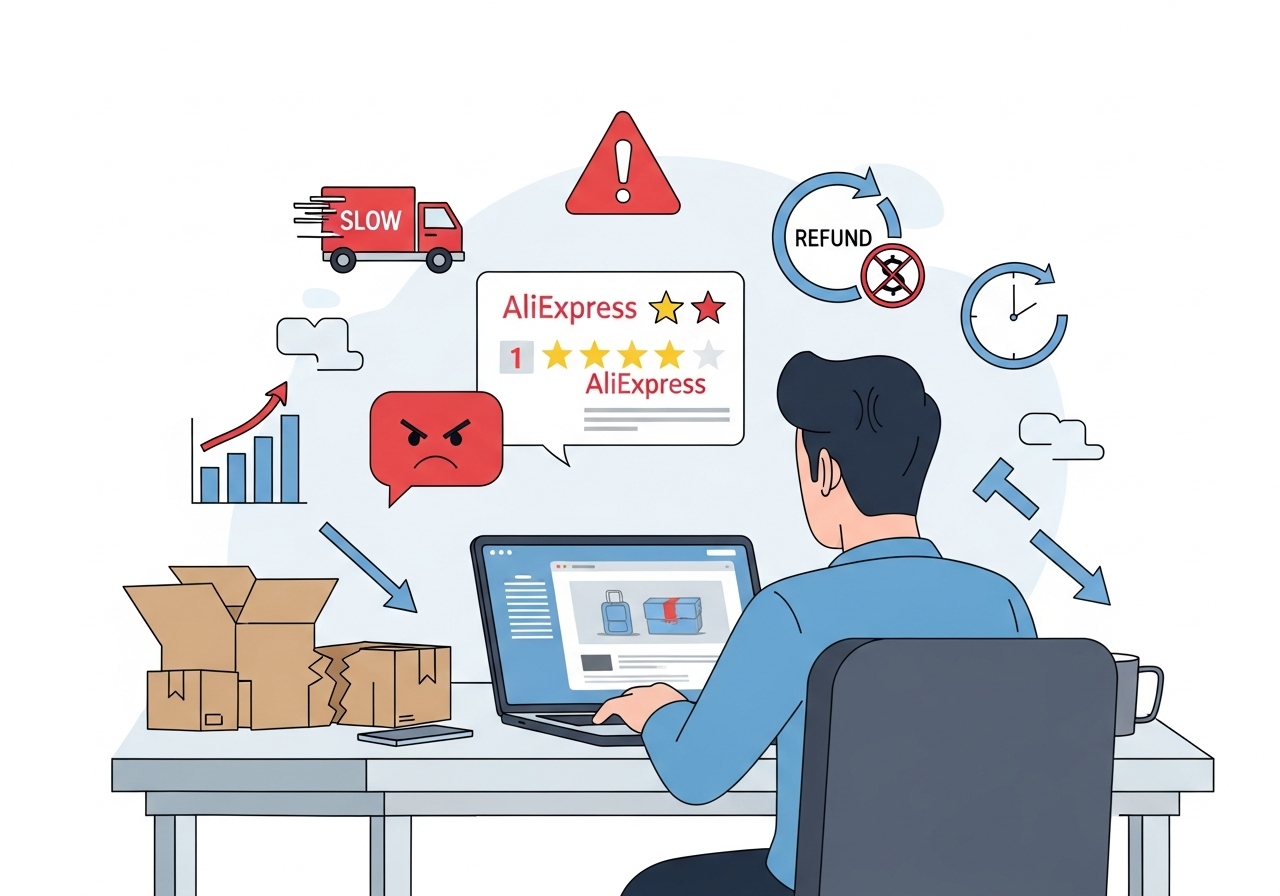
Common red flags in negative reviews include:
- Shipping delays beyond stated timeframes (logistics issue)
- Product arrives damaged or defective (quality control problem)
- Misleading product photos (the real thing is smaller or lower quality)
- Poor communication from seller after purchase
If you see 5+ reviews complaining about the same issue, skip that product.
Check “Additional Reviews”
Most people only read the top reviews. Click “Additional Reviews” to see unfiltered feedback. This is where honest criticism appears.
Problem-Solving and Market Fit
The best winning products solve a specific problem clearly.
Not “this is a cool gadget.” But “this solves the problem of tangled charging cables” or “this helps people with limited desk space organize electronics.”
When you can articulate the specific problem a product solves, creating ad copy becomes straightforward. You lead with the pain point, then show the solution. Customers click because they relate to the problem.
Products that solve vague benefits (“makes life easier”) are harder to market than products with concrete problem-solving (“prevents back pain from poor office chair posture”).
Wow Factor and Social Media Potential
In 2026, a product’s ability to perform on social media is a critical success factor.
Products that work best on TikTok and Instagram Reels have these traits:
- Movement or transformation you can show in 3-5 seconds
- Visual satisfaction (satisfying to watch)
- Relatability (viewers see themselves using it)
- Shareability (friends want to share it)
Test this personally: search the product name on TikTok or Instagram. If multiple creators are already posting about it organically, that’s a positive sign. People naturally film and share winning products.
Products that are boring to watch in video format are much harder to scale through paid social. Consider how you’d film a 6-second ad for the product. If you’re struggling to imagine it, the product likely has lower social media potential.
Pricing, Shipping Time, and Margin
The price you pay to AliExpress matters less than the margin you create.
Don’t Choose the Cheapest Supplier
Beginners often pick the lowest-cost AliExpress supplier, thinking it maximizes margin. This is a trap. The cheapest suppliers often have slower shipping, quality issues, or poor communication. A slightly more expensive, reliable supplier that ships faster is worth the cost.
Shipping Method and Handling Time
Check the shipping method. Standard shipping from China takes 2-4 weeks. ePacket or expedited options might take 7-14 days (still acceptable for some niches). Check the seller’s “Handling time.” If it’s 5-10 days before they even ship, you’re looking at 3-5 week total delivery.
Minimum Margin Target
A healthy margin for dropshipping is 100-200% of your AliExpress cost. If a product costs you $5 on AliExpress, you should sell it for $12-15 minimum. If the market price is lower, the product isn’t a winner for dropshipping.
Calculate like this: (Selling Price – Cost – Shipping – Refunds – Ads) / Cost = Profit Margin. If this number is below 50%, the product is too competitive or low-margin.
How to Find Winning Products Using AliExpress Dropshipping Center
The AliExpress Dropshipping Center is the most powerful (and free) tool available for product research. Yet most dropshippers ignore it.
What Is AliExpress Dropshipping Center?
The AliExpress Dropshipping Center is AliExpress’s official data tool specifically designed for dropshippers. It’s free to use and built on real transaction data from millions of orders.
Unlike speculation, this data reflects actual customer purchases, returns, and feedback. It shows you which products people buy, how many refunds they generate, and how fast they ship.
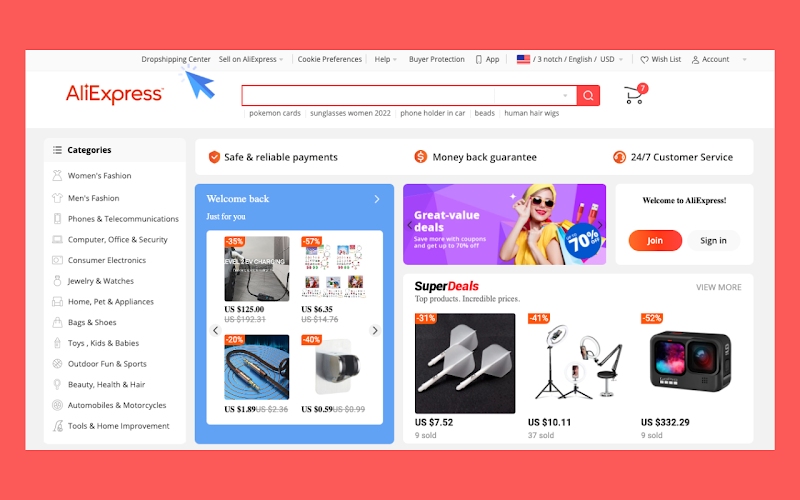
Accessing it is straightforward: log into your AliExpress seller account, navigate to “Services,” and find “Dropshipping Center.” From there, you have access to product discovery, analytics, and supplier ratings.
Using the “Find Products to Sell” Tool
The “Find Products to Sell” section presents products categorized as Hot, Trending, or showing Growth Indicators.
Hot Products
These are currently high-volume sellers with proven demand. They’re safe choices for validation testing. The downside: competition is higher, and margins might be compressed.
Trending Products
These are rising in popularity but haven’t peaked. Trending products are often the sweet spot for dropshippers. They have demand momentum without full market saturation yet.
Growth Indicators
The Dropshipping Center shows growth percentage. A product with 50% growth month-over-month is moving faster than the market. This suggests early-stage opportunity before saturation.
Filter by your interested category. A good workflow is to scan Hot + Trending sections first, then deep-dive into the top 10 candidates.
Using Product Analysis Data
Each product in the Dropshipping Center includes data on order trends, logistics performance, and price ranges.
Order Trends
You can see order volume over the past 30, 60, and 90 days. A product with rising order trends is gaining traction. Flat or declining trends suggest fading interest.
Logistics Performance
This shows average delivery times, return rates, and seller communication scores. Products with fast logistics (under 14 days) and low return rates (under 5%) are less risky.
Price Range Analysis
The tool shows the price distribution. If 80% of suppliers are selling in the $8-12 range, that’s your pricing reality. Trying to undercut at $6 might signal quality concerns. Pricing at $15+ puts you against established competition.
How to Filter for Potential Winners
Use these filters to narrow your search strategically.
Growth Score
Filter for products with 30%+ monthly growth. These have momentum.
Order Threshold
Set minimum 1,000 orders in the past 30 days to ensure real demand.
Ship-From Location
Filter for China-based sellers initially (they’re cheaper), but note shipping times. If you want faster fulfillment, some AliExpress sellers ship from U.S. warehouses.
This filtering process should reduce a potential 1,000 product category down to 20-30 candidates worth evaluating further.
Using AliExpress Categories and Top Ranking Pages
Beyond the Dropshipping Center, AliExpress’s organic ranking system provides valuable signals.
Navigating AliExpress Top Ranking
Every AliExpress category has a “Top Ranking” section showing best-sellers within that category. These rankings are based on orders, ratings, and sales velocity.
Why Category-Level Trends Matter + A single top-ranking product tells you demand exists. But category-level trends reveal where demand is moving. If the “Home Organization” category’s top products are all storage solutions, that niche is hot. If one random product spikes but the category trends are flat, it’s an anomaly.
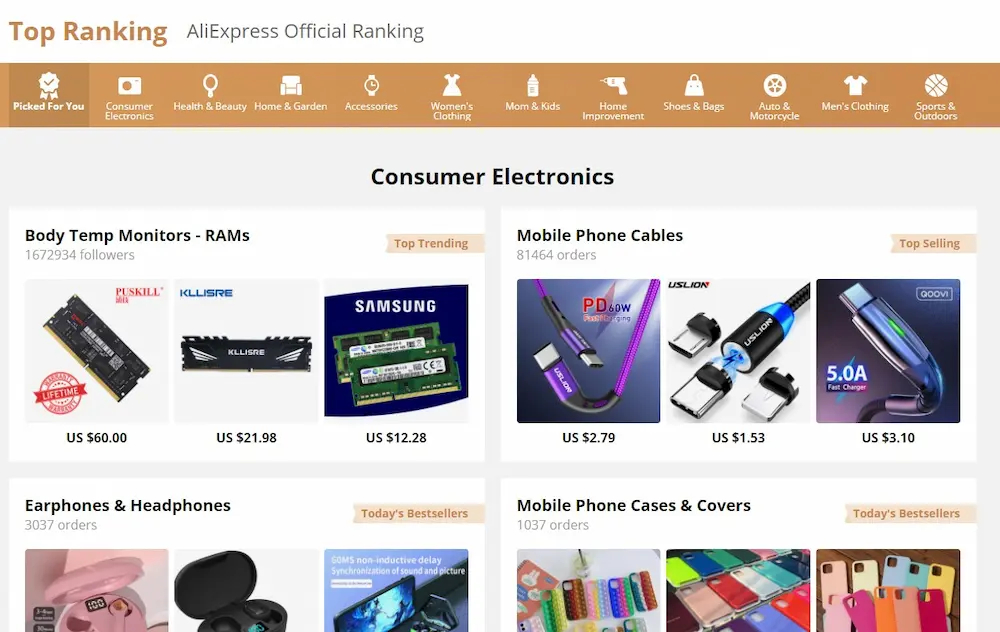
Browse the top 50 products in your target category. Look for products that appear multiple times from different suppliers. When five different sellers are selling essentially the same product and they’re all in the top 50, that’s market confirmation.
Browsing Categories for Emerging Products
Sort by “Popularity” and look at positions 20-50, not the top 10.
Why? The top 10 are saturated. Established sellers, multiple supplier clones, price wars. Positions 20-50 often contain emerging winners not yet flooded with competition. These are products with real demand but still room for new sellers to capture market share.
Emerging products often have:
- Strong reviews (4.8+ stars)
- 500-2,000 orders (proven demand without saturation)
- Prices varying 20-40% between sellers (room for margin)
- 2-3 total suppliers (not 50)
Validate Demand with Google Trends
After finding a candidate on AliExpress, validate that demand actually exists in your target market.
Google Trends is free and critical for this validation step.
Checking Short-Term vs Long-Term Trends
Search your product keyword on Google Trends. You’ll see a graph of search volume over time.
Avoid products showing a sudden spike and sharp decline. That’s viral trend behavior. The spike happened three months ago, and demand has collapsed. You’re chasing dead trends.
Look for products with steady or rising search volume over 12 months. Consistency signals sustainable demand. Ideally, search volume is either flat (stable interest) or rising (growing interest).
Comparing Product Keywords and Niches
Don’t research just the specific product. Also research the broader niche.
If you’re evaluating “magnetic phone mounts for cars,” also check trends for “phone car mounts,” “car phone holders,” and “car organization.” If the broader niche is declining even though one specific product is trending, the opportunity is narrowing.
Conversely, if the niche shows 20% year-over-year growth but this specific product is flat, the product might be outdated while related solutions are winning.
Using Social Media to Spot Winning Products Early
Social media is where products prove their market appeal before reaching mainstream adoption.
TikTok Product Research
TikTok shows you what’s resonating with the exact audience that shops on Shopify stores: Gen Z and millennials.
Search for product keywords on TikTok. Look for:
- Organic reach: Creator videos with 500K+ views discussing the product (not paid ads, genuine engagement)
- Hashtag trends: Hashtags related to the product gaining followers
- Duet/Stitch usage: Creators reacting to or riffing on the product idea
If you find 20+ organic videos about a product concept, it has social proof beyond AliExpress order numbers. Real people want to create content with it.
Facebook Ads and Ad Libraries
Use Facebook’s Ad Library to research which products competitors are actively scaling.
Search for your product or niche. The Ad Library shows ads currently running. If you see 15+ different businesses running ads for similar products, it’s not coincidence. The product is being scaled successfully.
Important nuance: seeing ads doesn’t mean those sellers are profitable. Some ads are being tested and failing. But volume of ads signals competitive interest, which usually correlates with underlying product demand.
Cross-Checking with AliExpress Listings
Finally, return to AliExpress. Count how many different sellers are offering essentially the same product.
1-2 sellers = Niche product with low competition (risky, might mean low demand) 3-8 sellers = Healthy competition, proven demand without saturation 10+ sellers = Saturated, likely price wars and margin compression
When multiple sellers compete, it signals genuine demand. Competition isn’t always bad if there’s still room for another seller with better marketing.
How to Select Reliable Sellers on AliExpress
Finding a winning product means nothing if your supplier is unreliable.
Store Rating and Seller History
The 95% Threshold + Look for AliExpress sellers with 95%+ positive ratings. This is the minimum safe threshold. Below 95%, quality issues or communication problems are more likely.
Store Age + Favor sellers with 1-2+ years of history. New stores (under 6 months) are higher risk. They might disappear, change product quality, or apply different standards than established sellers.
The “Rating Minus 90” Rule + AliExpress shows both percentage rating and number of reviews. Here’s a useful calculation: 97% rating with 500 reviews is roughly equivalent to 7 out of 10 customers being satisfied (after you account for the variance). This helps you contextualize percentage ratings.
Analyzing Store Feedback History
Click on the seller’s profile and read their recent feedback.
Specifically, search their negative reviews (1-3 stars) for patterns.
Red flags include:
- Multiple “item not as described” complaints
- Shipping delays beyond stated timeframes
- Poor communication after purchase (unanswered messages)
- Fake tracking information
- Quality degradation over time (recent reviews worse than old reviews)
Green flags include:
- Responsive seller replies to negative reviews
- Rare complaints (you’d expect some in 500+ orders)
- Consistent positive feedback for months
- Customers praising specific attributes (durability, shipping speed)
Checking Product-Level Reviews
Beyond seller ratings, examine reviews specific to your target product.
Packaging Quality + Does packaging protect the product during shipping? Read comments about condition on arrival.
Product Durability + Will it survive customer use? Look for comments about longevity.
Quality Consistency + Are recent orders matching product description? Or are customers complaining that “this isn’t like the photos”? Quality drift is common as suppliers reduce costs.
Spend 10 minutes reading 20 reviews of your chosen product from your chosen seller. This gives you confidence that what you’re ordering will match expectations.
Common AliExpress Product Research Mistakes to Avoid
Let me highlight mistakes that consistently derail new dropshippers.
Choosing the Cheapest Supplier + Lowest cost does not equal best margin. A supplier charging $3 with 30% refunds and 4-week shipping is worse than one charging $5 with 5% refunds and 10-day shipping.
Ignoring Shipping Method + There’s a massive difference between ePacket (7-14 days) and standard registered mail (3-4 weeks). Shipping time affects customer satisfaction and ads testing speed.
Skipping Bad Reviews + Beginners read 5-star reviews and assume quality is fine. Read the 1-2 star reviews. That’s where you learn about defects, misleading descriptions, and quality issues.
Not Ordering Samples + Theory is useless. Order samples from your top 3 product candidates. Actually use the products. Feel the quality. Test the functionality. You’ll discover issues no review will tell you.
Running Ads Before Validation + Jumping straight to paid ads without manual validation is expensive and wasteful. First, manually test the product on your own site with $50-100 spent. Get customer feedback. Refine. Only then scale to $500+ daily budgets.
Tunnel Vision on One Niche + Researching “phone accessories” is smart. But if you find only three viable products in that entire niche, you’re overconcentrating risk. Look for niches with 8-12 viable products so you can test multiple winners.
Using Third-Party Tools to Find Winning Products Faster
While manual research is essential, tools can accelerate product discovery significantly.
AliExpress Automation and Research Tools
Several platforms integrate with AliExpress data to surface winning products faster:
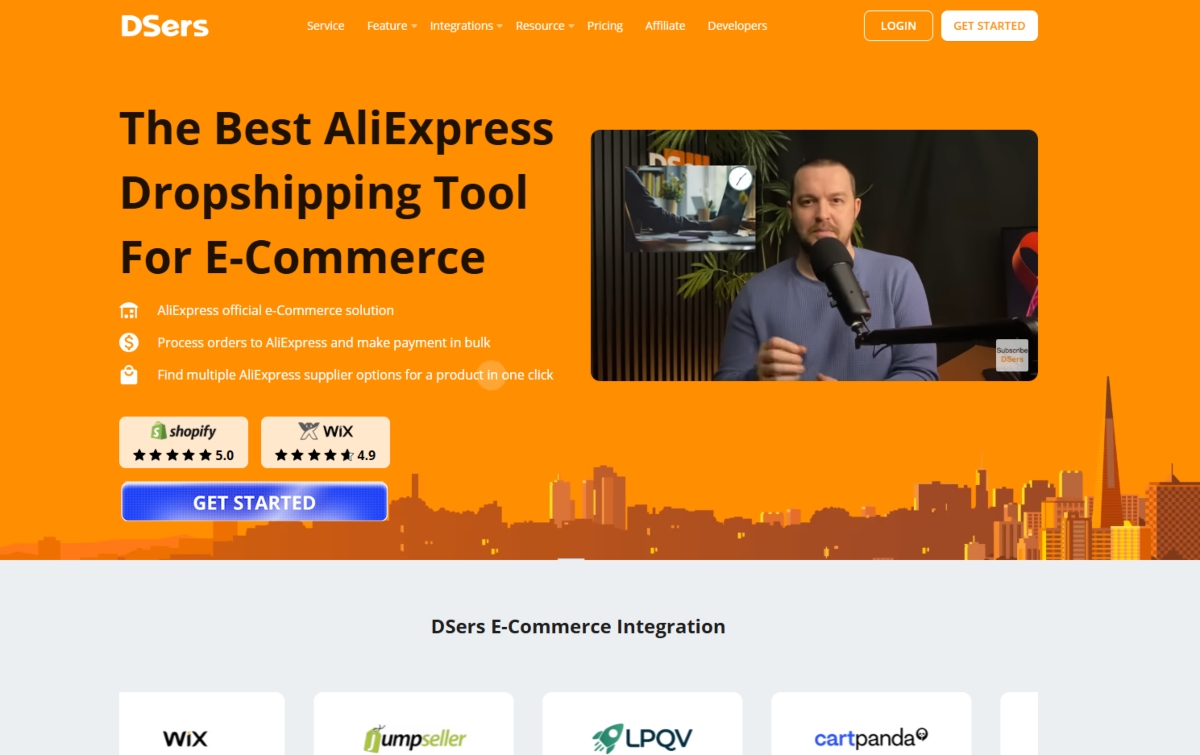
DSers + Integrates directly with AliExpress and tracks supplier data. Shows sales volume, supplier reliability, and trending items. Good for automation but requires some setup.
FindNiche + Focuses on TikTok trend identification. Shows trending hashtags and creator engagement, helping you find products before they peak on AliExpress.
Minea + Provides data on supplier performance and product profitability. Shows estimated margins and logistics metrics.
These tools save time on manual research. Often condensing what would take 5 hours into 1 hour. However, they cost $29-99/month.
When Tools Make Sense (and When They Don’t)
Use tools when + You’re a seasoned dropshipper managing multiple products, your time is valuable, or you’re scaling across multiple niches. The time saved justifies the cost.
Manual research is better when + You’re a beginner learning the criteria (tools hide the thinking process), your budget is minimal, or you’re testing a single niche before investing.
Optimal approach + Start with manual research to learn criteria. Once you understand what makes a winning product, supplement with tools to accelerate discovery.
Step-by-Step Workflow to Find Winning Products on AliExpress
Here’s the exact workflow successful dropshippers use. This is highly suitable for featured snippets and quick reference.
Step 1: Research via Dropshipping Center + Access the AliExpress Dropshipping Center. Filter for Hot + Trending products in your target category. Look for 30%+ monthly growth, 1,000+ orders, and 4.8+ star ratings. Create a shortlist of 20-30 candidates.
Step 2: Validate Order Volume and Reviews + Manually review each candidate on AliExpress. Read 1-3 star reviews for quality issues. Look for patterns. Eliminate products with consistent complaints about quality, shipping delays, or misleading descriptions.
Step 3: Check Google Trends + Search each remaining product keyword on Google Trends. Look for flat or rising trends. Avoid products showing sharp spikes and declines. Validate that the niche has sustained interest.

Step 4: Scan Social Media + Search the product on TikTok, Instagram, and Facebook Ads Library. Look for organic content and competitor ads. If competitors are scaling ads, demand is likely real.
Step 5: Vet Seller Reliability + For your top 5 products, check the supplier’s store rating (95%+), history (1+ year), and product-specific feedback. Read recent reviews. Look for quality consistency.
Step 6: Order Samples + Order samples from your top 2-3 candidates. Actually use the products. Assess quality, durability, and packaging. Confirm they match product descriptions.

Step 7: Test Ads with Controlled Budget + Create simple landing pages for your top 2 products. Run ads at $20-50/day initially. Track conversion rates, add-to-cart rates, and customer feedback. Identify your winner based on real data.
Only after a product proves viability in testing do you scale the budget.
FAQs About Finding Winning Products on AliExpress
How many orders should a winning product have?
At minimum, 1,000 orders in the past 30 days. This provides sufficient data proving demand. Products with 5,000+ orders are even safer. Below 500 orders, you’re testing relatively unproven demand.
Is AliExpress still good for finding winning products?
Absolutely. AliExpress hosts millions of products and remains the primary sourcing platform for dropshippers. The challenge isn’t finding products. It’s developing the research skills to identify winners. The process has evolved, but AliExpress is still central to winning product research.
How often should I research new products?
Ideally, dedicate 2-3 hours per week to product research. This lets you identify 3-5 promising candidates monthly. Test 1-2 weekly through paid ads. This pace allows continuous discovery without overwhelming your testing capacity.
Can beginners find winning products without paid tools?
Completely. AliExpress Dropshipping Center is free and excellent. Google Trends is free. Manual research takes longer but costs nothing and teaches you the underlying criteria better than any tool. Tools are accelerators for experienced researchers, not requirements for beginners.
Should I focus on one niche or multiple niches?
Start with one niche to develop expertise. Once you understand that market deeply and are scaling multiple products profitably, explore adjacent niches. Depth before breadth prevents scattered efforts and increases mastery.
How do I avoid scams when sourcing from AliExpress?
Use established sellers (1+ years, 95%+ ratings). Order samples before committing to larger purchases. Check negative reviews for scam indicators. Verify product descriptions match photos. Use AliExpress’s buyer protection (cases can be filed if items don’t arrive or differ from description). Never pay outside the AliExpress platform.
What if I can’t find winning products in my target niche?
Expand your niche definition slightly, or pivot to an adjacent niche. Not every niche supports dropshipping equally. Some niches have better product-market fit than others. It’s better to find a hot niche with multiple winners than force a struggling niche.
Final Thoughts: How to Find Winning Products on AliExpress Consistently
The honest truth: there’s no “perfect product.”
Every product has limitations, competition, and a lifecycle. The product that dominates today loses relevance within 6-12 months as trends shift and saturation increases.
But here’s what matters: you don’t need the perfect product. You need a process.
The dropshippers building sustainable six-figure businesses aren’t genius product predictors. They’re systematically researching, testing, analyzing data, and iterating. They fail frequently. Most products don’t convert. But they test enough candidates and scale the winners fast enough that one hit product pays for five failures.
Your competitive advantage is how to find winning products on AliExpress systematically, not finding the one magical product nobody else knows about.
Implement this workflow:
- Research dozens of candidates weekly
- Validate top prospects with real data
- Test 1-2 weekly through paid ads
- Scale winners aggressively
- Repeat continuously
In three months, you’ll have tested 12 products. One or two will show promise. In six months, you’ll have identified winners worth scaling to $5,000+/month. In one year, you’ll have a portfolio of proven winners generating consistent revenue.
The process compounds. Each product you test teaches you more about what works. Your research skills sharpen. You spot winning products faster.
Start finding winning products on AliExpress this week. Pick one category. Spend one hour in the Dropshipping Center. Shortlist 10 products. Validate three. Order samples. Test one.
The best time to start was yesterday. The second-best time is today.