Most dropshippers rely too heavily on paid ads while ignoring one of the most profitable channels available: dropshipping email marketing. Without it, abandoned carts go unrecovered, repeat purchases decline, and customer acquisition costs keep rising.
This guide shows how to turn email into a consistent revenue engine.
Why Email Marketing Is Essential For Dropshipping
Superior ROI Compared To Paid Advertising
Email marketing generates forty to one dollar return per dollar spent – the highest ROI of any marketing channel. Compare this to Facebook advertising averaging two to five dollar ROI and Google Shopping averaging five to ten dollar ROI. Email’s efficiency stems from reaching warm audiences (opted-in subscribers) with high purchase intent.
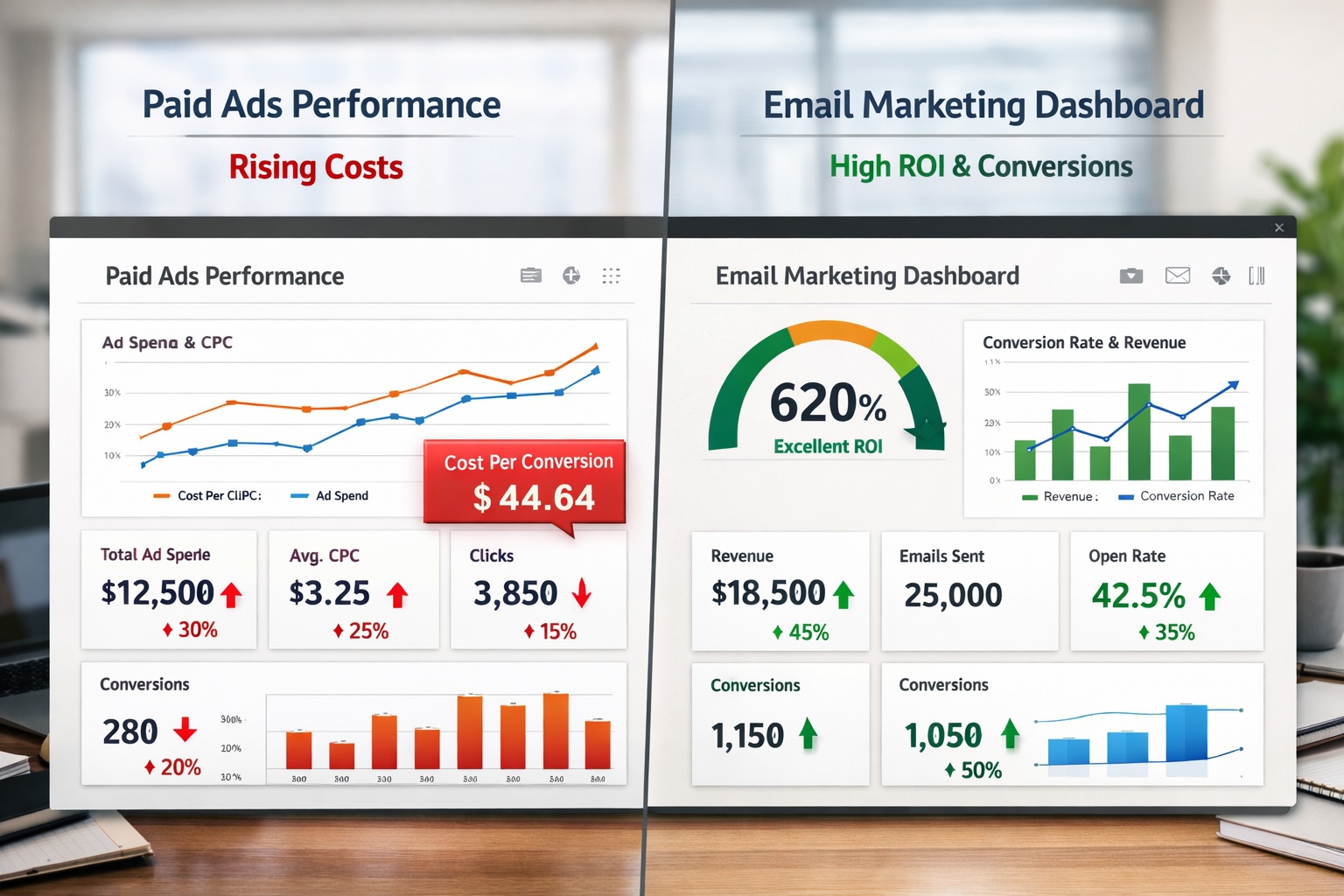
Email costs decrease as your list grows. First email to fifty subscribers costs essentially nothing but reaches engaged audience. Five thousand subscriber email campaign reaches one hundred times larger audience at minimal additional cost. This scalability advantage grows year-over-year as your list expands.
Paid advertising costs escalate continuously. CPC increases, CPM increases, and competition intensifies. Email marketing costs remain flat regardless of list size, making it increasingly cost-efficient as your business scales.
Permission-Based, Owned Audience
Paid advertising algorithms constantly change. Platform policy shifts, CPCs spike, or account suspensions occur without warning. Email marketing provides owned communication channel independent of platform changes or algorithm updates.
Your email list represents valuable business asset. Subscribers opted in to receive messages from you. This implicit permission and demonstrated interest creates substantially higher engagement and conversion rates compared to cold audiences.
Building email lists takes time but generates compounding value. A one thousand subscriber list earning two percent conversion rate and fifty dollar average order value generates ten thousand dollars monthly revenue. By year two, that same list grows to five thousand subscribers generating fifty thousand dollars monthly—all from same underlying asset.
Perfect Integration With Dropshipping Model
Dropshipping’s variable inventory creates challenges traditional marketing struggles addressing. Long shipping times frustrate customers. Inventory fluctuations prevent predictable fulfillment. Email marketing solves both challenges through transparent communication.
Strategic email sequences set proper expectations, provide tracking information, deliver usage tips, and build excitement. Customers understanding shipping realities and receiving proactive communication experience higher satisfaction despite longer delivery times.
Abandoned carts represent dropshipping-specific opportunity. Customers add items then hesitate due to shipping costs or timeline concerns. Abandoned cart emails address hesitations directly, often recovering otherwise lost sales.
5 Most Effective Email Campaigns For Dropshipping
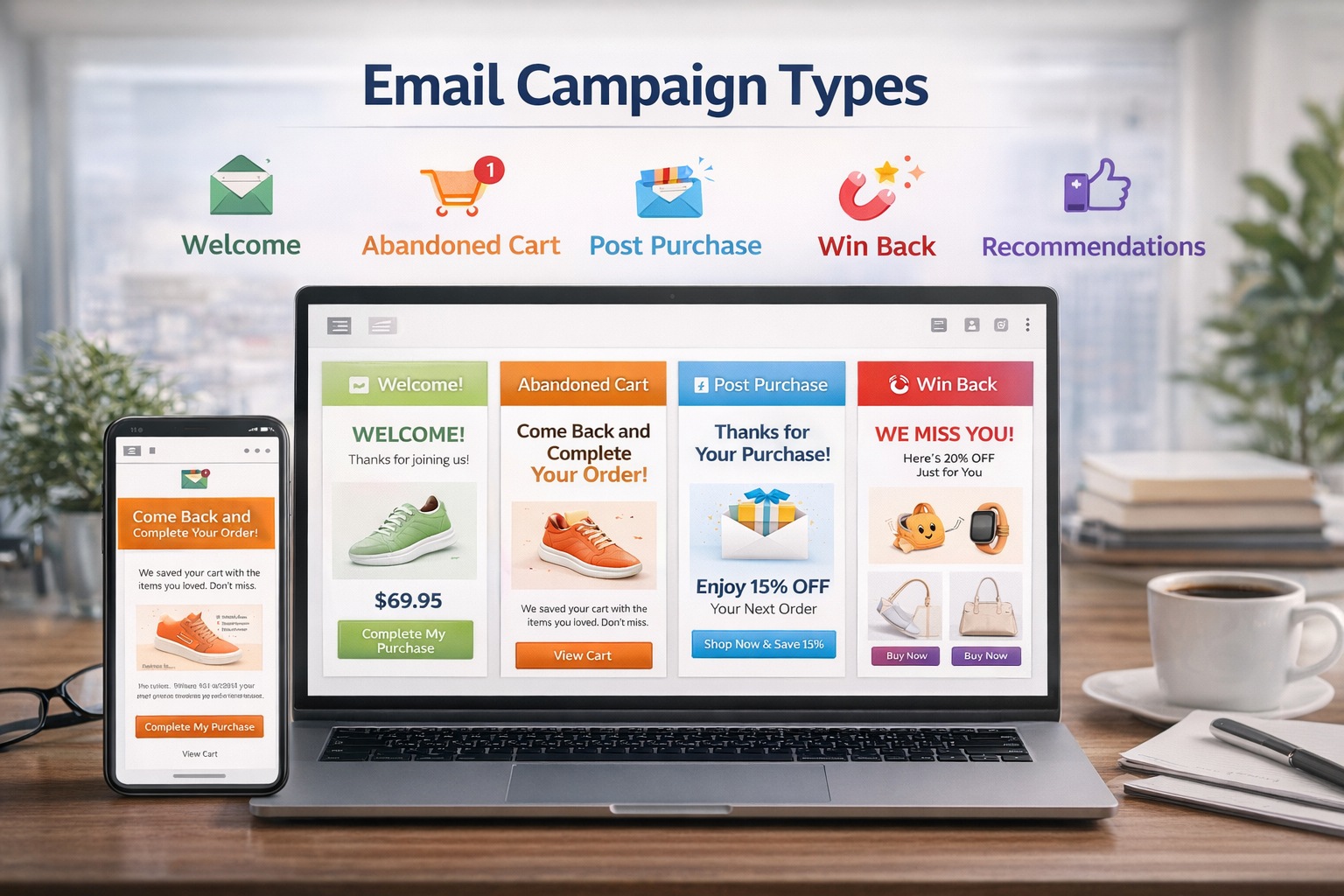
Welcome Series: Building Immediate Connection
Welcome emails achieve highest open rates—sixty-eight percent on average. First impressions determine subscription longevity. Effective welcome series introduces brand values, establishes expectations, and delivers promised value immediately.
Ideal welcome sequence spans five to seven emails over two weeks. First email confirms subscription and thanks customer. Second email delivers promised incentive (discount code, free guide, exclusive content). Third email tells brand story establishing credibility and values. Fourth email showcases best-selling products. Fifth email introduces email frequency expectations and encourages replies. Subsequent emails showcase additional products and value.
Welcome sequences set tone for relationship. Valuable content builds trust. Clear communication establishes expectations. Personalization creates connection. Together, these elements position your brand differently from generic retailers.
Implementation: Create welcome sequence of five to seven emails. First email (immediate): confirmation and thank you. Second email (day one): promised incentive. Third email (day two): brand story. Fourth email (day three): product showcase. Fifth email (day four): additional value. Sixth email (day five): feature and offer. Seventh email (day six): gentle call-to-action.
Abandoned Cart: Recovering Lost Revenue
Abandoned cart emails recover fifteen to twenty-five percent of lost sales – exceptionally high conversion rate. Cart abandoners already demonstrated purchase intent. Strategic follow-up frequently converts hesitators to buyers.
Effective abandoned cart sequence includes three emails over 72 hours. First email (four hours after abandonment): gentle reminder of abandoned items with product images and prices. Second email (24 hours): address common objections with shipping information, return policy, and testimonials. Third email (72 hours): special discount offer (five to fifteen percent typically) with urgency messaging.
Timing matters significantly. Too-aggressive follow-up annoys subscribers. Spaced appropriately (4 hours, 24 hours, 72 hours), reminders feel helpful rather than pushy.
Implementation: Set up automated abandoned cart sequence through email marketing platform. Email one (4 hours): abandoned items reminder. Email two (24 hours): testimonials and shipping info. Email three (72 hours): special discount incentive. Monitor conversion rates and adjust messaging based on performance.
Post-Purchase: Building Long-Term Relationships
Post-purchase emails extend customer lifetime value beyond single transaction. Following up with shipping updates, care instructions, and usage tips builds confidence in purchases while establishing relationships.
Effective post-purchase sequence begins immediately upon order completion. First email confirms order with tracking information. Second email (day two) thanks customer and provides care instructions. Third email (day five) includes lifestyle imagery showing product in use. Fourth email (day seven) requests review and testimonial. Fifth email (day ten) recommends complementary products based on purchase.
Post-purchase sequences reduce returns while increasing repeat purchases. Satisfied customers with proper usage instructions repurchase confidently. Testimonial requests generate social proof improving conversion for future customers.
Implementation: Create post-purchase sequence triggered automatically at order completion. Email one: order confirmation with tracking. Email two: care guide and usage tips. Email three: lifestyle imagery and benefits. Email four: review request. Email five: complementary product recommendations.
Win-Back: Re-Engaging Inactive Subscribers
Email lists naturally include inactive subscribers who haven’t opened emails recently. Re-engagement campaigns target these inactive subscribers with special offers and compelling content, often recovering formerly lost revenue.
Win-back campaigns typically include three emails over one week offering increasing incentives. First email asks why they’ve disengaged with honest, friendly tone. Second email reminds them of brand benefits and best-selling products. Third email offers special incentive (significant discount or exclusive content) with deadline creating urgency.
Re-engagement campaigns often achieve surprisingly strong results. Subscribers who previously engaged demonstrate purchase history and brand familiarity. Strategic re-engagement recovers substantial revenue from seemingly lost audiences.
Implementation: Segment inactive subscribers (haven’t opened emails in 90+ days). Send re-engagement sequence: Email one: “we miss you” with friendly tone. Email two: brand reminder. Email three: special incentive with deadline.
Product Recommendations: Cross-Selling And Upselling
Personalized product recommendations based on previous purchases increase average order value substantially. Customers appreciate relevant suggestions aligned with prior purchases.
Effective recommendation emails feature complementary products, higher-margin versions, or category expansions matching customer purchase history. A customer who purchased running shoes receives recommendations for socks, performance clothing, or premium shoe styles. Relevance drives engagement and conversion.
Product recommendation campaigns include both triggered automations (recommended emails sent after specific purchases) and periodic campaigns featuring seasonal products or new arrivals.
Implementation: Implement product recommendation automations based on purchase history. Show three to five complementary products with images and descriptions. Include social proof (reviews, bestseller badges). Track performance by category and product type.
Building And Segmenting Your Email List
Lead Generation Strategies
Email list growth requires deliberate lead generation. Pop-ups, signup forms, and lead magnets capture interested prospects converting them into subscribers.
Effective pop-ups appear at strategic moments: on entry (exit-intent pop-ups), after time spent (15-30 second delay), or when users engage with specific content. Pop-ups offering clear value (discount codes, free guides, exclusive content) achieve higher conversion.
Lead magnets incentivize subscriptions by offering something valuable for free: comprehensive guides, exclusive discounts, templates, checklists, or sample products. Effective lead magnets align with customer interests and require minimal effort to consume.
Signup forms should minimize friction. Single-field forms (email only) outperform multi-field forms requesting extensive information. You can collect additional data later through surveys or follow-up emails.
Implementation: Add exit-intent pop-up offering ten to twenty percent discount for email signup. Create landing page with lead magnet (free guide or sample). Embed signup forms on homepage, blog posts, and collection pages. Offer single-field signup collecting email only.
Strategic List Segmentation
Segmentation divides your email list into groups based on shared characteristics, behaviors, or interests. Segmented emails generate dramatically higher engagement and conversion.
Effective segments include: new subscribers (first thirty days), engaged subscribers (consistent openers), dormant subscribers (haven’t engaged in 90+ days), customers by purchase history (first-time buyers vs. repeat customers), customers by product category purchased, and customers by spending level.
Segmentation enables targeted messaging. New subscribers receive welcome series establishing brand values. Repeat customers receive VIP offers and advanced products. Engaged subscribers receive regular content. Dormant subscribers receive win-back campaigns. This tailored approach resonates substantially better than one-size-fits-all broadcasts.
Implementation: Segment list by: new vs. existing subscribers, engagement level (open history), product categories purchased, purchase frequency, and monetary value. Send targeted campaigns to each segment emphasizing relevance.
Crafting High-Converting Email Content
Subject Line Mastery
Subject lines determine open rates. Forty percent of email recipients decide whether to open based solely on subject line. Effective subject lines create curiosity, personalize when possible, indicate clear value, and test A/B variants for optimization.
High-performing subject lines include personalization (using recipient’s name), urgency (“Limited Time Offer”), curiosity (“You Won’t Believe What We Found”), specificity (“25% Off Running Shoes This Weekend”), and clear benefit (“Exclusive Access for VIP Members”).
Avoid spam triggers: excessive punctuation, ALL CAPS (except sparingly for emphasis), misleading claims, or sensational language seeming deceptive. Gmail’s spam filters identify problematic subject lines and deliver email to spam folders.
Implementation: Test subject lines using A/B testing. Create two versions for each campaign. Measure open rates identifying winning patterns. Continuously refine based on performance data.
Email Body Structure And Copywriting
Email body should balance promotional content with genuine value. Follow the “80/20 rule”: eighty percent valuable content (tips, guides, educational information, entertainment) and twenty percent promotional (product recommendations, special offers, calls-to-action).
Structure emails for skimming. Use short paragraphs, subheadings, bullet points, and whitespace making content easily scannable. Most subscribers scan rather than read thoroughly. Clear structure increases comprehension and engagement.
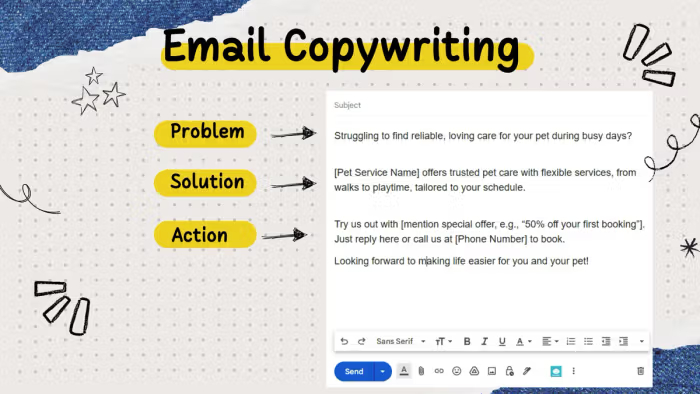
Include clear calls-to-action (CTAs) directing subscribers toward desired action: visiting product page, applying discount code, reading blog post, or making purchase. CTA buttons should contrast visually and use action-oriented language (“Shop Now,” “Learn More,” “Claim Discount”).
Personalization increases engagement substantially. Use subscriber’s first name, reference previous purchases, recommend products based on browsing history, or mention relevant interests.
Implementation: Structure emails with clear subject, brief introduction, main content, social proof, product recommendations or offer, clear CTA, and footer. Use 50-60 word paragraphs maximum. Include 2-3 visuals. Personalize when possible.
Visual Design And Product Photography
High-quality product photography drives email engagement and conversion. Seventy-five percent of subscribers rely on images when deciding to engage. Professional photography demonstrates product quality and builds trust.
Include 2-4 product images per email minimum. Show products from multiple angles, in lifestyle contexts (product in use), with size comparisons, and with detail close-ups. Consistent visual style maintains brand coherence across all emails.
Mobile optimization proves critical. Sixty-five percent of email opens occur on mobile devices. Responsive design adapts seamlessly to small screens. Large buttons, readable text without zooming, and fast-loading images optimize mobile experience.
Implementation: Include minimum 3-4 product images per email. Use professional photography or high-quality mockups. Ensure responsive mobile design. Test emails on various devices. Use alt text for images for accessibility.
Email Automation For Scaling Operations
Benefits Of Automation
Email automation sends triggered emails based on subscriber actions without manual intervention. Automation scales operations dramatically – one setup delivers thousands of personalized emails automatically.
Automation increases revenue through: triggered messages reaching customers at optimal moments, personalized experiences based on behavior, consistent follow-up preventing overlooked opportunities, and reduced manual workload allowing focus on strategy.
Well-designed automation generates more revenue than manual campaigns while requiring less effort. Subscribers receive consistent, personalized follow-up automatically.
Essential Automated Workflows
Critical automated flows include: welcome series (triggered upon signup), abandoned cart (triggered when checkout abandoned), post-purchase (triggered upon order completion), browse abandonment (triggered when product viewed but not purchased), and win-back (triggered after inactivity period).
Each workflow should include multiple emails over several days. Timing varies by workflow: welcome series spans one-two weeks, abandoned cart spans three days, post-purchase spans two weeks, browse abandonment spans one week, win-back spans one week.
Implementation: Set up automated workflows in email platform (Klaviyo, Omnisend, Mailchimp). Map customer journey identifying trigger points for each workflow. Create emails for each workflow. Test thoroughly before activating.
Best Tools For Dropshipping Email Marketing
Klaviyo
Klaviyo specializes in ecommerce email marketing with powerful automation and segmentation capabilities. Deep Shopify integration enables automatic data syncing. Comprehensive analytics reveal campaign performance and revenue attribution.
Strengths: Advanced segmentation, powerful automation, excellent Shopify integration, strong reporting. Weakness: Higher cost than competitors ($45-300+/month depending on list size).
Best for: Growing dropshipping stores prioritizing email revenue. Cost justified for stores generating significant email revenue.
Omnisend
Omnisend combines email and SMS marketing from single platform. SMS adds another communication channel increasing campaign effectiveness. Excellent Shopify integration with pre-built automation templates.
Strengths: Email + SMS integration, pre-built templates, affordable pricing, good customer support. Weakness: Less advanced than Klaviyo for complex automation.
Best for: Dropshippers wanting email + SMS from single platform. Smaller to mid-size stores.
Mailchimp
Mailchimp offers free tier and affordable paid plans appealing to budget-conscious businesses. Simple interface welcomes beginners. Adequate automation and segmentation for basic needs.
Strengths: Free tier, affordable pricing, simple interface, adequate features. Weakness: Limited advanced features and automation compared to competitors.
Best for: Beginners starting email marketing. Small stores with modest email needs.
Systeme.io
All-in-one platform combining email marketing, sales pages, webinar hosting, and affiliate management. Affordable all-inclusive pricing appeals to budget-conscious entrepreneurs.
Strengths: All-in-one solution, affordable pricing, decent automation. Weakness: Less specialized than dedicated email platforms.
Best for: Beginners wanting all-in-one solution. Small stores.
Measuring And Optimizing Performance
Key Metrics To Track
Open Rate: Percentage of recipients opening emails. Average open rates range 15-25% depending on industry. Indicator of subject line effectiveness and list quality.
Click-Through Rate (CTR): Percentage of recipients clicking links within emails. Indicates content relevance and call-to-action effectiveness. Typical CTR ranges 1-5%.
Conversion Rate: Percentage of email recipients making purchases. Most important metric for profitability. Typical ecommerce conversion rates from email range 1-3%.
Unsubscribe Rate: Percentage of recipients unsubscribing. Keep below 0.5%. Indicates content quality and frequency appropriateness.
Revenue Attribution: Revenue generated from email campaigns. Track which workflows and campaigns generate most revenue. Critical for ROI calculation.
List Growth Rate: New subscribers added monthly. Critical for long-term sustainability. Target 5-10% monthly growth.
Implementation: Monitor metrics through email platform dashboards. Create monthly reports tracking performance trends. Identify underperforming campaigns requiring optimization.
Optimization Strategies
A/B testing identifies high-performing approaches. Test subject lines, sender names, email send times, CTAs, product recommendations, and incentive levels. Small improvements compound into significant revenue increases.
Monitor engagement metrics identifying underperforming campaigns. Inactive subscribers drain list quality. Implement re-engagement campaigns recovering inactive users. Remove permanently inactive subscribers maintaining list health.
Segment based on engagement level. Send engaged subscribers more frequently. Send less-engaged subscribers valuable content without promotional pressure. This tailored frequency improves long-term retention.
Implementation: A/B test subject lines monthly. Monitor unsubscribe rates identifying problematic campaigns. Re-engage inactive subscribers quarterly. Adjust send frequency based on engagement level.
4 common Email Marketing Mistakes
Excessive Promotional Content
Sending only promotional emails trains subscribers to ignore messages. Following 80/20 rule (eighty percent value, twenty percent promotion) maintains engagement.
Balance product recommendations with genuine value: tips, guides, news, educational content, entertainment, and community building. Subscribers who receive consistent value remain engaged and receptive to promotions.
Solution: Audit current email calendar. Increase valuable content ratio to eighty percent. Reduce promotional content to twenty percent. Track engagement metrics monitoring improvement.
Poor Segmentation
Sending identical emails to entire list wastes audience diversity. Segmented emails significantly outperform generic broadcasts.
Segment by: subscriber stage (new, engaged, dormant), purchase history, product category interest, spending level, and engagement level. Tailor messaging to each segment emphasizing relevance.
Solution: Implement list segmentation immediately. Create separate campaigns for each segment. Measure performance improvements.
Inconsistent Schedule
Sporadic emails frustrate subscribers creating unsubscribe spikes. Consistent schedule builds anticipation and habit.
Establish realistic sending schedule (2-4 times weekly) you can sustain indefinitely. Consistency matters more than volume. Missing scheduled sends signals unreliability damaging trust.
Solution: Commit to sending schedule (e.g., Tuesday and Friday at 2 PM). Add to calendar as recurring commitment. Use scheduling features ensuring timely delivery regardless of your availability.
Neglecting Mobile Optimization
Sixty-five percent of email opens occur on mobile devices. Non-optimized emails on mobile create poor experience reducing engagement.
Test emails on iPhone, Android, and tablet. Ensure responsive design adapts to small screens. Use large tap-friendly buttons. Keep subject lines under 50 characters. Optimize images for fast loading.
Solution: Test each email on multiple mobile devices before sending. Use responsive email templates. Optimize images aggressively.
Implementation Roadmap
Month One: Foundation
Build email list establishing signup mechanisms (pop-ups, forms, lead magnets). Implement email platform (Mailchimp, Omnisend, or Klaviyo). Create welcome sequence of 5-7 emails. Establish sending schedule.
Month Two-Three: Core Workflows
Implement abandoned cart sequence. Create post-purchase workflow. Develop win-back campaign for inactive subscribers. Test subject lines identifying high performers.
Month Four-Six: Optimization
Analyze performance data identifying top-performing campaigns. Expand to product recommendation automations. Implement browse abandonment workflow. Scale successful campaigns to larger segments.
Month Six-Twelve: Scaling
Increase sending frequency based on engagement metrics. Expand segmentation sophistication. Test advanced automations and sequences. Build toward 20-40% of revenue from email marketing.
Frequently Asked Questions
How Often Should I Send Emails?
Optimal frequency depends on list engagement. Start with 2-3 emails weekly. Monitor unsubscribe and engagement rates adjusting based on performance. High-engagement lists sustain 4-5 weekly emails. Low-engagement lists should reduce to 1-2 weekly.
What Should Email Subject Lines Include?
Effective subject lines personalize, create curiosity, indicate value, use urgency, or tell story. Test variations identifying patterns earning highest opens. Avoid spam triggers and misleading claims.
How Do I Reduce Unsubscribe Rates?
Unsubscribe rates should stay below 0.5%. Reduce unsubscribes through: following 80/20 value-to-promotion ratio, sending consistent valuable content, respecting optimal frequency, segmenting appropriately, and making unsubscribe process easy (prevents spam complaints).
Is Email List Segmentation Necessary?
Segmentation significantly improves open rates, click rates, and conversions. Even basic segmentation (new vs. existing subscribers, engaged vs. dormant) dramatically improves performance compared to unsegmented broadcasts.
What ROI Should I Expect From Email Marketing?
Email marketing typically generates 40-50 dollars return per dollar spent. This superior ROI justifies substantial effort investment. Most profitable dropshippers achieve 20-40% of total revenue from email marketing within 12-18 months.
Conclusion
Dropshipping email marketing represents highest-ROI marketing channel available. Strategic campaigns recover lost revenue, increase average order value, build customer loyalty, and establish sustainable revenue streams independent of paid advertising costs.
Success requires consistent execution across multiple areas: building substantial list, segmenting strategically, creating valuable content, implementing automation, and optimizing based on performance data. The most profitable dropshippers treat email marketing not as optional tactic but as fundamental business strategy.
Begin immediately building your email list through signup mechanisms and lead magnets. Implement core workflows: welcome series, abandoned cart recovery, and post-purchase sequences. Monitor performance metrics refining campaigns continuously. Within 12-18 months of focused effort, email marketing will likely represent 20-40% of total revenue—all from owned asset generating extraordinary returns.
Your email list is your most valuable business asset. Treat it accordingly through consistent delivery of genuine value, strategic segmentation, and patient optimization. The long-term rewards justify effort investment substantially.