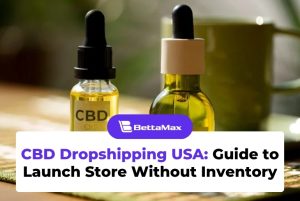
On this comprehensive guide, BettaMax will help you explore everything you need to know about starting a successful CBD dropshipping business in the USA, including legal compliance, supplier selection, operational setup, and proven marketing strategies that generate real customer acquisition.
What Is CBD Dropshipping? Understanding the Business Model
CBD dropshipping is a retail business model where you sell cannabidiol products without holding physical inventory. Here’s how it works: customers order products through your online store, you forward those orders to a third-party supplier, and the supplier ships products directly to your customers’ doors. You profit from the difference between the wholesale price you pay and the retail price customers pay.
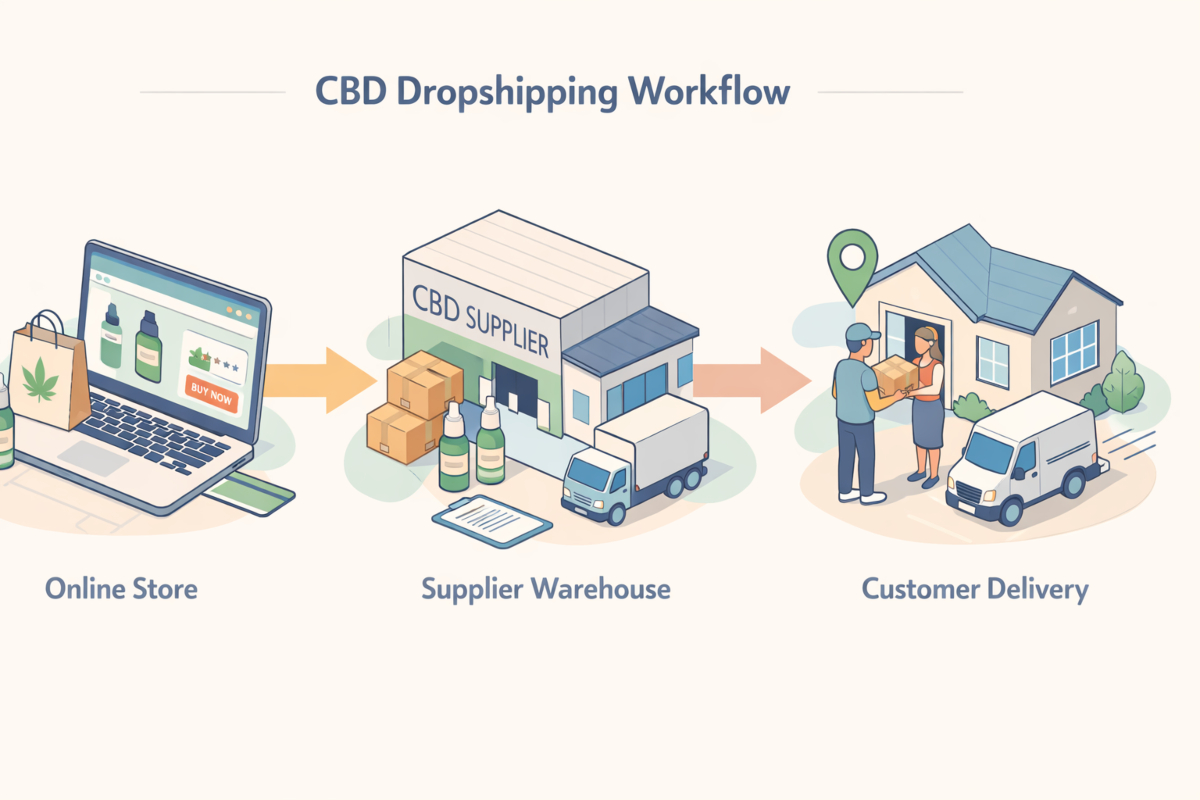
This model eliminates traditional retail obstacles including expensive warehouse space, inventory management complexity, and capital requirements for product purchases. Instead of investing tens of thousands in inventory that might not sell, you pay suppliers only for products customers actually purchase.
The CBD dropshipping model has three core components: your online storefront (typically Shopify or WordPress), your supplier (specialized CBD dropshipping companies), and your customers. When configured correctly, this supply chain operates almost entirely on autopilot through automation platforms.
Why CBD Dropshipping Offers Massive Profit Potential in 2026
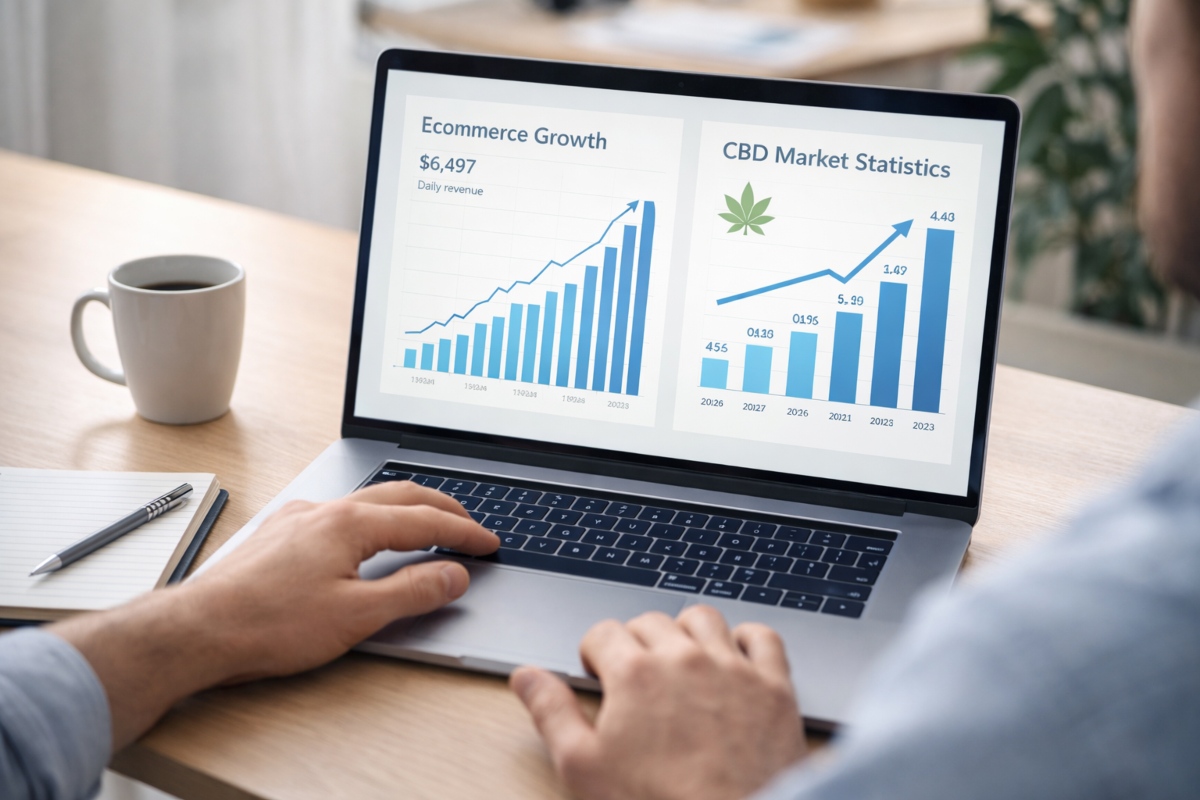
The CBD Market Size Growing at Record Rates
The American CBD market generated $4.6 billion in 2021 and continues accelerating toward $20 billion by 2025. This growth trajectory represents a 300+ percent increase in just four years. Unlike saturated retail markets, CBD remains relatively underserved with new consumers discovering benefits constantly.
Market research indicates that 64 million Americans have tried CBD products, yet penetration remains below 25 percent of the total population. This massive untapped audience creates unprecedented opportunity for early-stage entrepreneurs entering the market today.
Low Barrier To Entry Compared to Traditional Retail
Traditional retail businesses require $50,000 to $250,000 in startup capital for inventory, store fixtures, and working capital. CBD dropshipping requires less than $1,000 to launch including Shopify store setup ($30/month), domain name ($12/year), initial marketing budget ($500), and business formation costs ($100).
This dramatic cost reduction democratizes entrepreneurship, enabling anyone with internet connection and marketing discipline to launch a legitimate business. Capital efficiency means you can test products and markets without risking significant personal funds.
Superior Profit Margins Compared to Saturated Industries
CBD products typically maintain 40-60 percent profit margins before advertising costs. Dropshippers purchase CBD oil, gummies, tinctures, and topicals at wholesale prices ($15-40) and resell for retail prices ($40-100). This markup range far exceeds most e-commerce niches.
A single customer purchasing $50 in CBD products generates $20-30 in gross profit. Scale this to 100 customers monthly and you’re generating $2,000-3,000 in profit before advertising costs. This attractive margin structure supports aggressive customer acquisition spending while maintaining profitability.
Authority and Trust Building Opportunities
CBD remains a relatively new industry without entrenched brand dominance like pharmaceutical markets. Early entrants can establish themselves as category authorities through educational content, customer testimonials, and transparent sourcing. This authority translates directly into customer loyalty and higher repeat purchase rates.
5 Critical Legal Considerations Before Launching Your CBD Dropshipping Business
1. Federal vs. State Regulations Create a Complex Compliance Landscape
The Farm Bill legalized hemp-derived CBD containing less than 0.3 percent THC at the federal level in 2018. However, individual states maintain authority to restrict or prohibit CBD sales within their borders. States including Texas, New York, and California have implemented additional regulations beyond federal requirements.
Before launching, research the CBD legal status in every state where you plan to market products. Some states prohibit online CBD sales entirely. Others require specific licensing or testing certificates. Ignoring these regulations exposes you to fines, product seizure, and account suspension.
2. FDA Guidelines on CBD Marketing Claims Carry Serious Penalties
The FDA prohibits marketing CBD as a treatment, cure, or preventive for any disease including anxiety, pain, or insomnia. Violating these restrictions triggers Warning Letters, product seizures, and potential criminal prosecution.
Audit your product descriptions and marketing content removing any therapeutic claims. Instead of “relieves anxiety,” use “promotes relaxation.” Instead of “treats pain,” use “supports wellness.” This distinction seems minor but carries legal significance separating compliant businesses from those facing regulatory action.
3. Third-Party Testing and Certificate of Analysis Requirements
Legitimate CBD suppliers maintain third-party lab testing verifying THC content and product purity. These Certificate of Analysis documents prove compliance with federal regulations. Reputable suppliers like SmokeDrop provide testing documentation for all products.
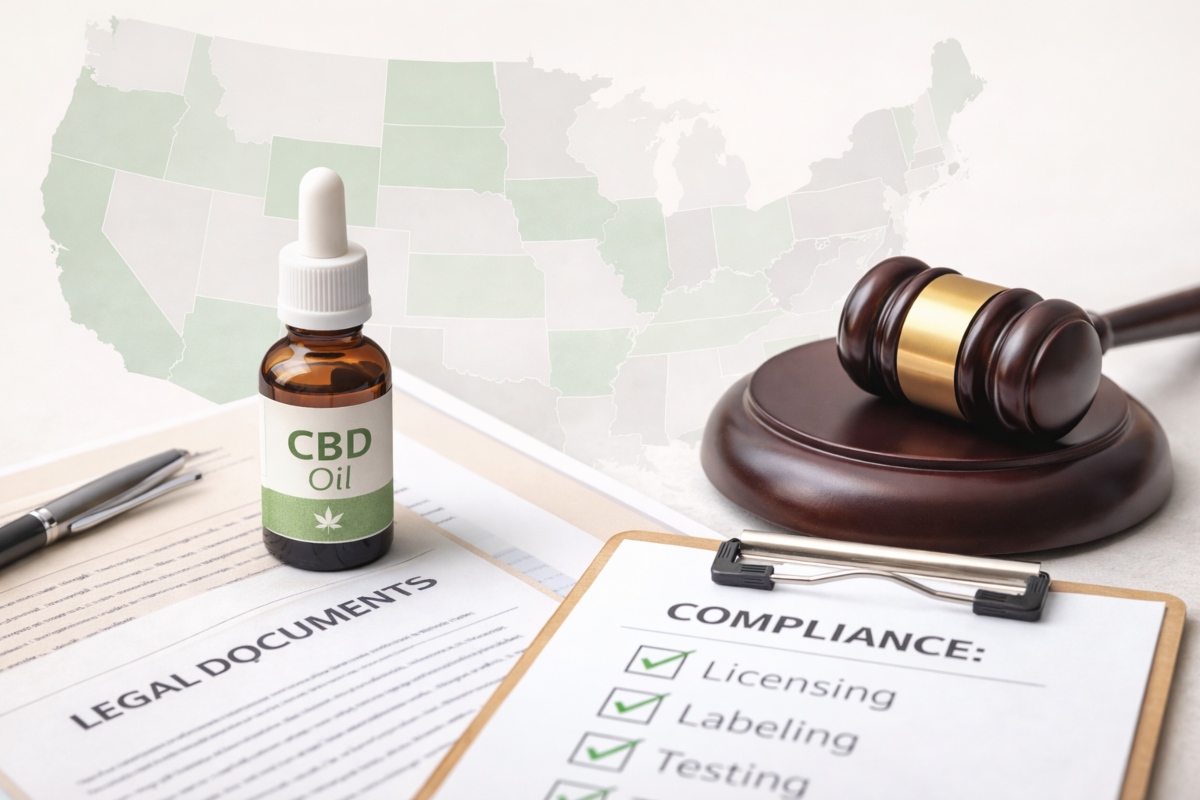
Ensure your supplier provides testing certificates. Customers increasingly demand proof of product quality and legal compliance. Missing documentation signals unreliable sourcing and damages brand credibility.
4. Payment Processing Challenges Due to Banking Industry Caution
Major payment processors (Stripe, PayPal, Square) restrict CBD merchants due to federal banking regulations treating hemp as controlled substances. This banking caution creates significant challenges processing customer payments.
Solutions include specialized payment processors catering to CBD merchants (such as High Risk Merchant Services), accepting cryptocurrency, or structuring your business as a complementary product retailer. Plan for payment processing challenges before launch rather than discovering them mid-campaign.
5. Intellectual Property and Trademark Considerations
Many CBD brands use similar naming conventions and packaging designs. Verify your brand name isn’t trademarked by larger competitors. Additionally, ensure supplier products don’t violate intellectual property rights.
Conduct trademark searches through the USPTO database before finalizing brand names. Protect your brand through proper trademark registration. This foundational work prevents costly legal disputes later.
How to Find Reliable CBD Dropshipping Suppliers: 3-Step Process
Step 1: Research Supplier Track Records and Certifications
Not all CBD suppliers offer equal quality or reliability. Evaluate potential suppliers using these criteria:
Years in business (minimum 3+ years indicates stability), third-party lab testing for all products, real-time inventory management systems, proven order fulfillment speed (same or next-day processing), responsive customer support availability, and transparent pricing without hidden fees.
Request references from other dropshippers using their service. Ask specific questions about order accuracy, shipping timelines, and product quality consistency. Established suppliers like SmokeDrop maintain excellent references from hundreds of active retailers.
Step 2: Evaluate Inventory Range and Product Quality
Successful CBD dropshipping requires diverse product selection matching customer preferences. Evaluate supplier inventory across these product categories:
CBD tinctures and oils (most popular, highest margins), CBD gummies and edibles (impulse purchase friendly), topicals and creams (specific use applications), vape products (rapidly growing segment), and pet CBD products (emerging high-growth category).
Request samples of products you plan selling. Evaluate flavor, packaging quality, and efficacy. Poor quality products damage brand reputation and generate returns regardless of your marketing excellence.
SmokeDrop offers access to over 1,000 CBD products stocked in USA warehouses, providing inventory diversity that eliminates stock-outs and customer disappointment.
Step 3: Confirm Automation Capabilities and System Integration
Modern CBD dropshipping requires seamless integration between your store and supplier systems. Evaluate whether suppliers offer:
Real-time inventory synchronization preventing overselling, automated order submission to supplier systems, batch order processing capabilities, automatic tracking number updates to customers, and API integration with popular e-commerce platforms.
Manual order processing creates operational bottlenecks and increases error rates. Prioritize suppliers offering full automation through established platforms. SmokeDrop’s integration with Crowdship.io App provides real-time inventory sync and automatic order fulfillment.
Setting Up Your CBD Dropshipping Store: 7-Step Launch Framework
Step 1: Choose Your E-Commerce Platform
Shopify dominates CBD e-commerce due to robust app ecosystem and merchant-friendly policies. WordPress with WooCommerce offers flexibility for advanced customization. BigCommerce provides enterprise features at lower costs than Shopify at scale.
For most beginners, Shopify’s 14-day free trial enables testing before committing to paid plans. Monthly costs range from $30-300 depending on feature needs. Don’t over-engineer early; start with basic plans and upgrade as revenue grows.
Step 2: Register Your Business and Obtain Licenses
Register your business as LLC or corporation depending on state requirements and tax considerations. Obtain Employer Identification Number (EIN) from the IRS for tax purposes.
Research state-specific CBD business licenses. Some states require specific hemp retailer licenses. Confirm local zoning allows home-based e-commerce businesses. Maintain detailed records of compliance documentation.
Step 3: Develop Your Brand Identity and Store Design
Your store design communicates professionalism and trustworthiness to first-time customers. Invest in professional logo design ($200-500), consistent color scheme, and clean navigation structure.
Product photography dramatically impacts conversion rates. Use professional photography or high-quality mockups showcasing CBD products in lifestyle contexts. Poor photography suggests low quality regardless of actual product excellence.
Step 4: Build Compelling Product Descriptions
Product descriptions drive conversion more than price alone. Include specific information: CBD concentration (in mg), serving size, ingredient list, flavor profile, and customer benefits without therapeutic claims.
Example compliant description: “Our full-spectrum CBD tincture contains 1000mg of premium CBD extracted from organic Colorado hemp. Promote natural wellness with our third-party tested formula featuring coconut MCT oil carrier.”
Step 5: Implement Payment Processing and Security
Set up payment processing through merchant-friendly providers. Configure SSL certificates and security protocols protecting customer data. Display trust badges and security certifications reassuring customers their information is protected.
Clearly communicate your refund and return policies. CBD customers expect generous return policies due to product effectiveness uncertainty. Offering 30-day money-back guarantees builds trust and reduces purchase hesitation.
Step 6: Configure Conversion Tracking and Analytics
Install Google Analytics and Facebook Pixel tracking conversion sources. This data reveals which marketing channels generate the highest ROI. Without this tracking, you waste marketing budget on underperforming channels.
Set up email capture systems (opt-in forms, exit popups) building your email list. Email marketing drives 40+ percent of repeat sales for successful CBD retailers.
Step 7: Launch With Soft Opening Marketing
Before full-scale advertising, test with small marketing campaigns ($100-200) identifying your best-performing audiences and messaging. Gather customer feedback on product selection and pricing. Make adjustments before scaling.
6 Proven Marketing Strategies That Drive CBD Customer Acquisition
Strategy 1: Educational Content Marketing on Blog and YouTube
CBD customers seek information about benefits, usage, and quality indicators. Create educational content addressing common questions: “How Much CBD Should I Take?” “What’s the Difference Between Isolate and Full-Spectrum?” “CBD for Sleep: Scientific Evidence.”
Post blog articles on your website optimizing for long-tail keywords. YouTube videos demonstrating CBD products and customer testimonials reach broader audiences. This content marketing builds authority while generating organic traffic.
Strategy 2: Email Marketing Captures High-Value Repeat Customers
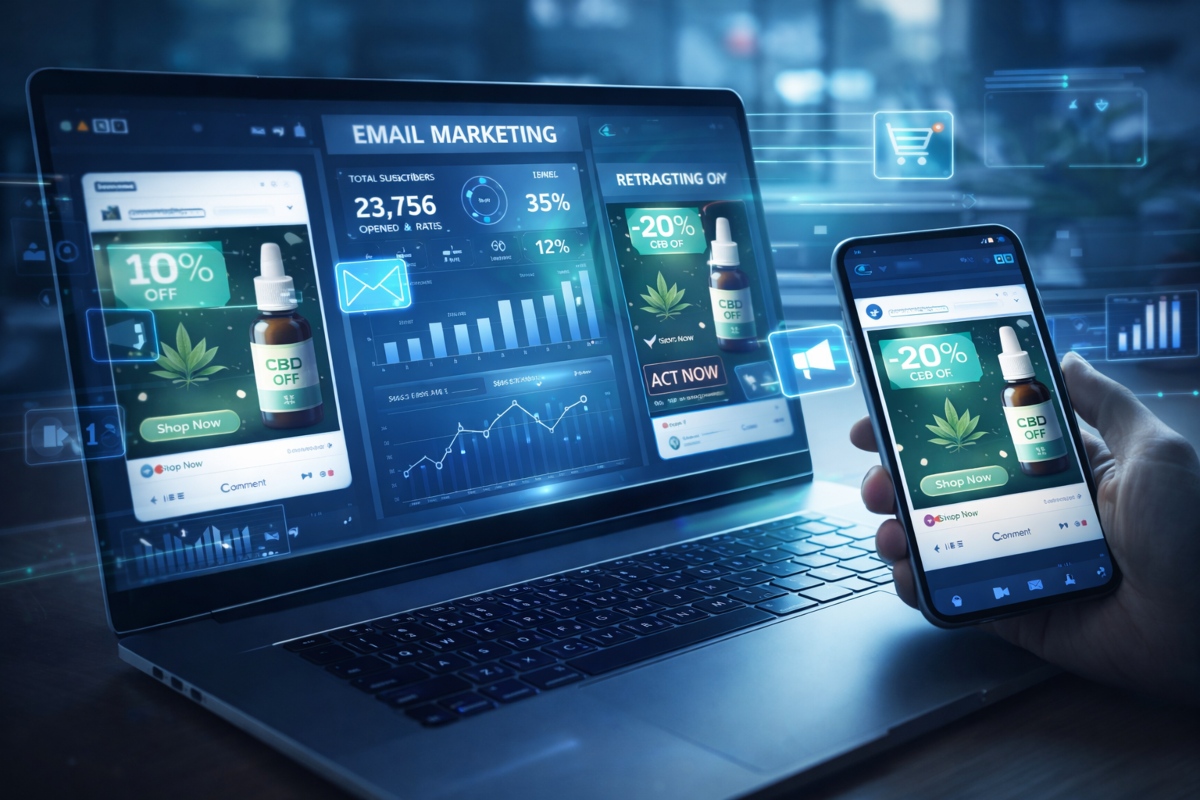
Offer 15-20 percent discounts for email signup capturing customer contact information. Send weekly educational emails about CBD benefits, product recommendations, and special promotions.
Email marketing drives 40+ percent of repeat sales. Most customers require 5-7 touchpoints before purchasing. Email nurtures these relationships at scale.
Strategy 3: Social Media Advertising Reaches Targeted Audiences
Facebook and Instagram advertising enables precise targeting of CBD-interested audiences. Target users interested in “CBD,” “hemp,” “wellness,” “health,” and related interests.
Start with $10-20 daily budgets testing different audiences, creatives, and messaging. Scale successful campaigns to $50-100 daily budgets once you identify profitable customer acquisition costs.
Strategy 4: Customer Reviews and Social Proof Build Trust Rapidly
Request reviews from every customer through follow-up emails. Display reviews prominently on product pages. User-generated content increases conversion by 25-50 percent compared to product descriptions alone.
Offer small incentives (discount codes, free samples) encouraging detailed reviews. Authentic customer testimonials outperform professional marketing copy.
Strategy 5: Influencer Partnerships Expand Reach Into New Audiences
Partner with CBD-focused influencers offering free products in exchange for reviews. Micro-influencers (10,000-100,000 followers) often provide better ROI than large creators.
Negotiate affiliate commissions paying influencers percentage of referred sales. This aligns incentives ensuring influencers promote your products genuinely.
Strategy 6: Retargeting Campaigns Recover Abandoned Customers
75 percent of online shoppers abandon carts before completing purchases. Retargeting ads remind abandoned customers of products they viewed, often with discount incentives encouraging completion.
Implement retargeting pixels on your website capturing abandoned visitors. Show them targeted ads across social platforms reminding them of products they viewed.
Optimizing Operations: Automation and Efficiency Best Practices
Real-Time Inventory Synchronization Prevents Overselling
Overselling creates catastrophic customer experience damaging brand reputation. Real-time inventory syncing between your store and supplier ensures you never accept orders for out-of-stock products.
SmokeDrop’s Crowdship.io integration automatically synchronizes inventory hourly preventing overselling. This automation requires no manual intervention.
Automated Order Submission Reduces Processing Time
Manual order submission creates bottlenecks and error opportunities. Automated systems submit orders to suppliers instantly when customers purchase, beginning fulfillment within hours.
This speed matters significantly. Customers expect shipment notifications within 24 hours. Automation delivers this consistently.
Batch Processing for Cost Optimization
Some suppliers offer bulk discounts for orders placed during specific times. Accumulating orders and submitting batches reduces per-unit costs improving profit margins.
Balance batch savings against customer expectations for fast shipping. Most successful dropshippers process orders twice daily maximizing both savings and customer satisfaction.
Pricing Strategy for Competitive Advantage: 4 Considerations
Research Competitor Pricing Without Race-to-Bottom Pricing
Analyze competitor pricing on similar products. Price within 10-20 percent of market averages. Dramatically underpricing signals low quality. Overpricing loses customers to competitors.
Remember that price isn’t the only decision factor. Superior customer service, faster shipping, and better product selection justify premium pricing.
Build Perceived Value Through Packaging and Presentation
Premium packaging increases perceived value enabling higher pricing. Invest in branded boxes, custom tissue paper, and thank-you cards. Unboxing experience creates social media buzz driving word-of-mouth marketing.
Offer Tiered Pricing With Bundle Options
Bundles increase average order value and customer perceived value. Offer starter bundles (3-4 complementary products at slight discount), best-seller bundles, and monthly subscription boxes.
Dynamic Pricing Based on Demand and Inventory Levels
Adjust pricing based on inventory levels and demand. When inventory runs low, increase prices maximizing revenue on remaining units. When inventory builds, offer promotions accelerating sales velocity.
Scaling From First Sales to $10,000 Monthly Revenue
Most successful CBD dropshippers reach $5,000-10,000 monthly revenue within 6-12 months through consistent execution. This timeline assumes:
$500-1,000 monthly marketing spend, daily attention to analytics and optimization, regular product additions based on customer feedback, and responsive customer service averaging sub-24-hour response times.
At $50 average order value and 25 percent profit margins, reaching $10,000 monthly profit requires approximately 800 orders monthly, or 26 orders daily. This volume is achievable through multi-channel marketing.
Common CBD Dropshipping Mistakes That Kill Businesses
Mistake 1: Choosing Unreliable Suppliers
Selecting suppliers based solely on lowest prices causes orders to arrive late, arrive damaged, or never arrive. Customer dissatisfaction and refunds destroy profitability.
Prioritize reliability over lowest costs. Paying 5-10 percent more for consistent delivery protects your reputation.
Mistake 2: Ignoring Legal Compliance Until Too Late
Launching without verifying CBD legality in your target states creates legal exposure. Regulatory enforcement results in account suspension and fines.
Invest time in legal research upfront. Costs are minimal compared to remediation costs of violations.
Mistake 3: Weak Customer Service and Unrealistic Expectations
CBD customers have legitimate concerns about quality and effectiveness. Poor customer service generates negative reviews damaging acquisition.
Respond to all customer inquiries within 12 hours. Offer hassle-free refunds. Treat customer service as competitive advantage, not cost center.
Mistake 4: Underfunding Marketing and Expecting Organic Growth
Many beginners launch stores expecting customers to discover them organically. Organic search is glacially slow without existing authority.
Budget $500-1,000 monthly for paid marketing during launch phase. Marketing ROI improves as you optimize based on performance data.
Frequently Asked Questions About CBD Dropshipping
Is CBD Dropshipping Legal in All States?
CBD legality varies by state. While federal law permits hemp-derived CBD with less than 0.3 percent THC, individual states impose restrictions. Research your target states’ regulations before launching.
What Profit Margins Can I Expect?
CBD products typically offer 40-60 percent gross profit margins before advertising costs. After advertising, most dropshippers achieve 15-25 percent net profit margins.
How Much Does It Cost to Start?
Initial investment ranges from $500-2,000 covering store setup, initial marketing, and business formation. This minimal cost enables rapid testing.
How Long Until I See Sales?
Most dropshippers receive first sales within 2-4 weeks of launching paid marketing campaigns. Profitability typically arrives at 60-90 days as you optimize campaigns.
Can I Use Multiple Suppliers?
Yes. Many successful dropshippers use 2-3 suppliers preventing over-reliance on single supplier and diversifying product offerings.
Conclusion: Your CBD Dropshipping Success Starts Today
The CBD dropshipping opportunity is real, accessible, and highly profitable for entrepreneurs willing to execute disciplined operations. The market is young, demand is strong, and barriers to entry remain remarkably low.
Success requires: careful legal compliance, reliable supplier partnerships, professional brand development, consistent marketing execution, and exceptional customer service. Master these fundamentals and you’ll build a sustainable business generating $10,000+ monthly revenue within 12 months.
The entrepreneurs winning in CBD dropshipping today started yesterday. Begin your journey now with thorough research, careful planning, and committed execution. Your first customer is closer than you think.