
Finding reliable dropshipping suppliers for Amazon feels impossible when you’re starting. Most suppliers don’t understand Amazon’s strict policies, causing account suspensions and lost inventory. You need vendors offering fast US shipping, proper invoice documentation, consistent quality, and full Amazon compliance.
In this guide, BettaMax will reveal exactly how to find, vet, and partner with dropshipping suppliers for Amazon without losing your account or profit margins in 2026.
Key Takeaways About Amazon Dropshipping Suppliers
Amazon policy compliance requires suppliers understanding seller-of-record requirements, invoice documentation, branding restrictions, and shipping timeframes. Non-compliant suppliers will destroy your account.
Domestic US suppliers offer faster shipping and better policy compliance than international vendors. However, they typically cost more and have higher minimum order quantities.
Free vs paid supplier platforms each serve different needs. Free platforms like AliExpress work for beginners but offer minimal support. Paid platforms provide better vetting, support, and compliance assistance.
Common beginner mistakes include partnering with suppliers who don’t understand Amazon policies, using overseas warehouses resulting in slow shipping, failing to order samples before launching, and not having backup suppliers prepared.
Is Dropshipping on Amazon Still Viable in 2026?
Amazon explicitly permits dropshipping under specific conditions. The platform doesn’t allow dropshipping from one Amazon seller to another Amazon buyer, but third-party supplier sourcing is approved. However, Amazon’s policies have become increasingly strict regarding seller responsibilities and compliance requirements.
What Amazon prohibits: Dropshipping from competitors’ platforms directly to customers, hiding dropshipping relationships in product listings, using suppliers that don’t comply with invoice and documentation requirements, sourcing from suppliers shipping items late relative to Amazon’s timeframe expectations, and failing to take responsibility as the seller of record.
Who Amazon dropshipping suits today: Experienced sellers with operational infrastructure, entrepreneurs willing to invest in compliance, sellers with niche products, and those prepared to manage multiple suppliers and backup plans. Casual experimenters often fail due to policy violations and supplier issues.
Dropshipping remains viable for serious sellers with proper supplier vetting and Amazon policy understanding. The barrier to entry has increased, but margins remain attractive for compliant operations.
The Amazon Dropshipping Model Explained
How it works: You source products from third-party suppliers. When customers purchase on your Amazon listing, you forward the order to the supplier. The supplier ships directly to the customer. You keep the profit margin between your selling price and supplier’s cost.
Seller of record requirement means YOU are legally responsible for the product and its quality. Amazon holds you accountable for defects, returns, customer service issues, and policy compliance. Your supplier’s failures become your account failures.
Differences from FBA: FBA (Fulfillment by Amazon) requires you to purchase inventory upfront and ship to Amazon’s warehouses. Dropshipping requires no upfront inventory. FBA typically has better shipping speeds; dropshipping depends entirely on supplier performance.
Key compliance rules suppliers must meet: Fast processing (within 2 business days ideally), proper invoicing with company details, branding compliance (no brand name on packaging unless authorized), quality consistency, accurate tracking provision, and return policy adherence.
What Makes a Good Dropshipping Supplier for Amazon?
Amazon Policy Compliance
Suppliers must understand and respect Amazon’s branding and invoice requirements. Invoices must include supplier name, address, and contact information. Packaging must be professional without conflicting brand names unless authorized. Many suppliers have no idea these rules exist, making vetting essential.
Shipping Speed and Reliability
Amazon expects 5-10 day delivery for most categories. Overseas suppliers requiring 2-4 weeks violate customer expectations and harm your metrics. Domestic US suppliers provide faster, more reliable shipping with better tracking accuracy.
Product Quality and Consistency
Quality inconsistencies destroy your seller rating. Order multiple samples verifying consistency across batches. Understand the supplier’s quality control process and defect rate. Establish clear communication about returning defective items.
Pricing Structure and Margins
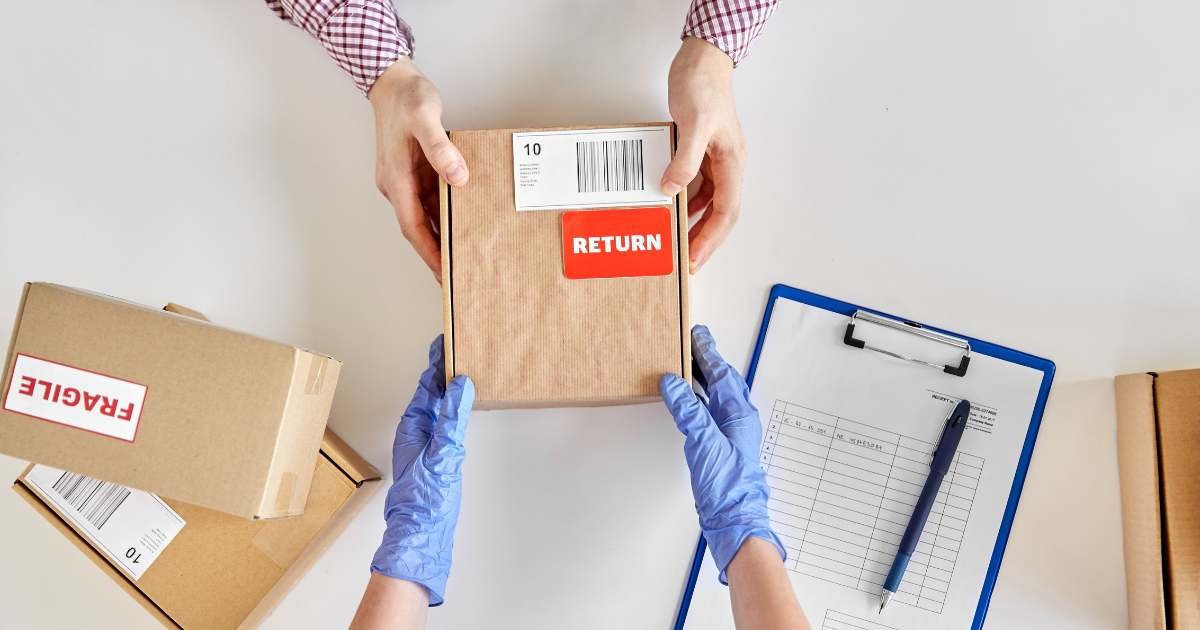
Analyze per-order fees carefully. Calculate profit margin accounting for Amazon referral fees (8-15%), fulfillment costs, shipping, and supplier cost. Target 50%+ profit margins. Watch for hidden costs in MOQs or bulk purchasing requirements.
Technology and Integration
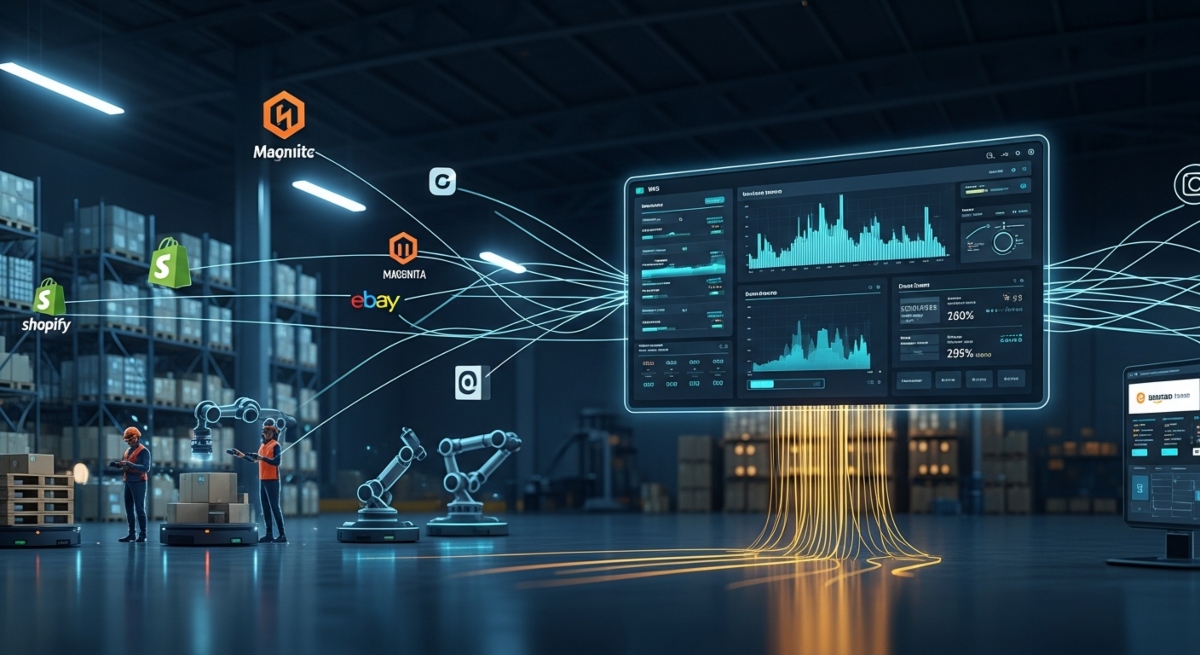
Modern suppliers offer order automation, tracking integration, and real-time inventory syncing. Manual order placement is inefficient and error-prone. Integration capabilities directly impact your ability to scale.
Best Dropshipping Suppliers for Amazon (Curated List)
Global Dropshipping Suppliers
AliExpress offers vast inventory at competitive prices but expects 2-4 week shipping and requires detailed size guides for customers. Works for price-sensitive buyers accepting longer delivery.

Alibaba is suitable for bulk sourcing and private labeling. Best for established sellers with capital to purchase minimum quantities. Manufacturers provide customization capabilities.
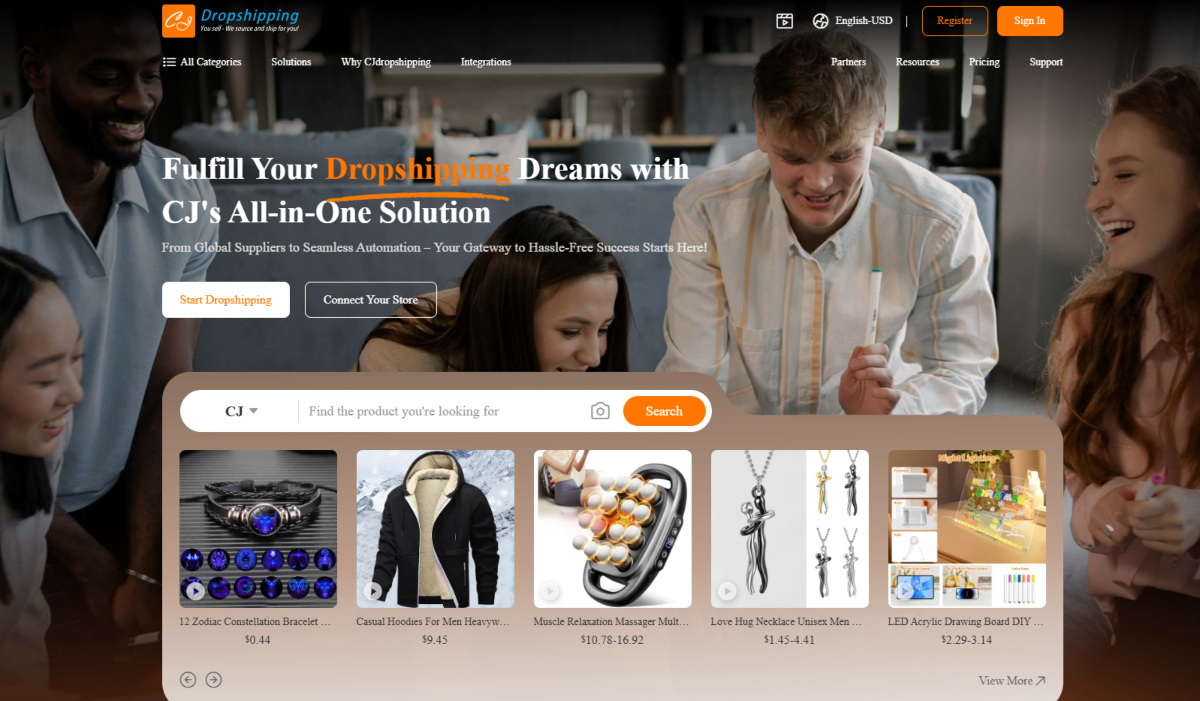
CJ Dropshipping specializes in Amazon dropshipping with some US warehouse options, quality control services, and branding support. More expensive than AliExpress but Amazon-focused.
Banggood provides electronics and gadgets with moderate shipping times. Less suitable for fashion and home goods but solid for tech niches.
Dropshipping Suppliers USA for Amazon
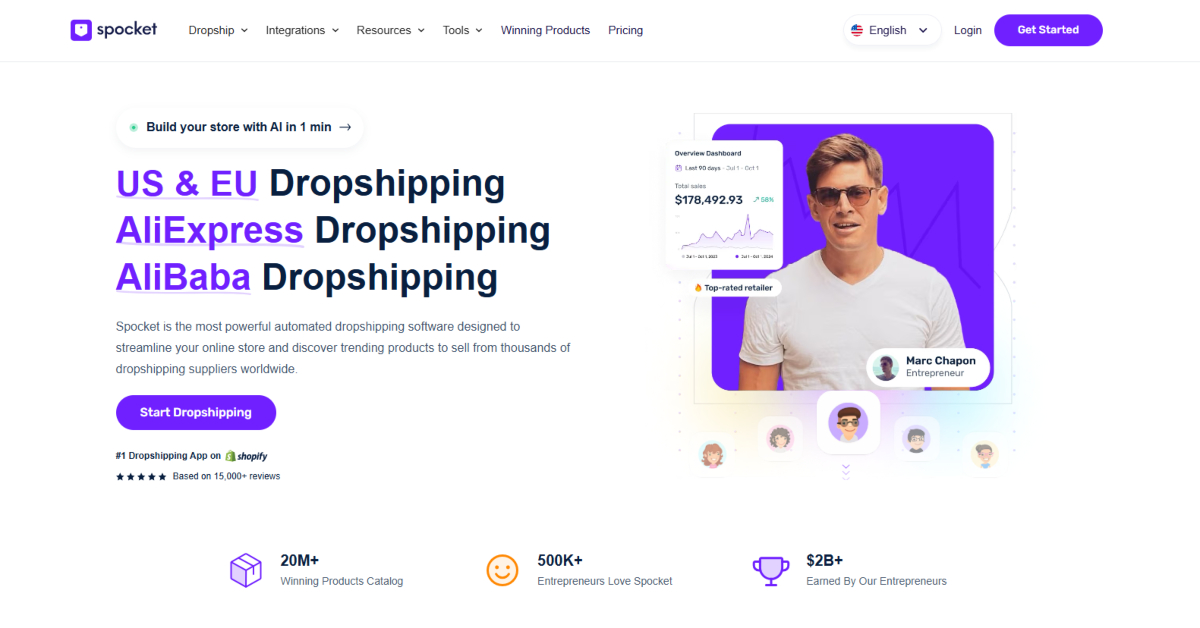
Spocket offers US and EU suppliers with verified quality and faster shipping. Their vetting process reduces unreliable vendors. Pricing is higher but reliability justifies investment.
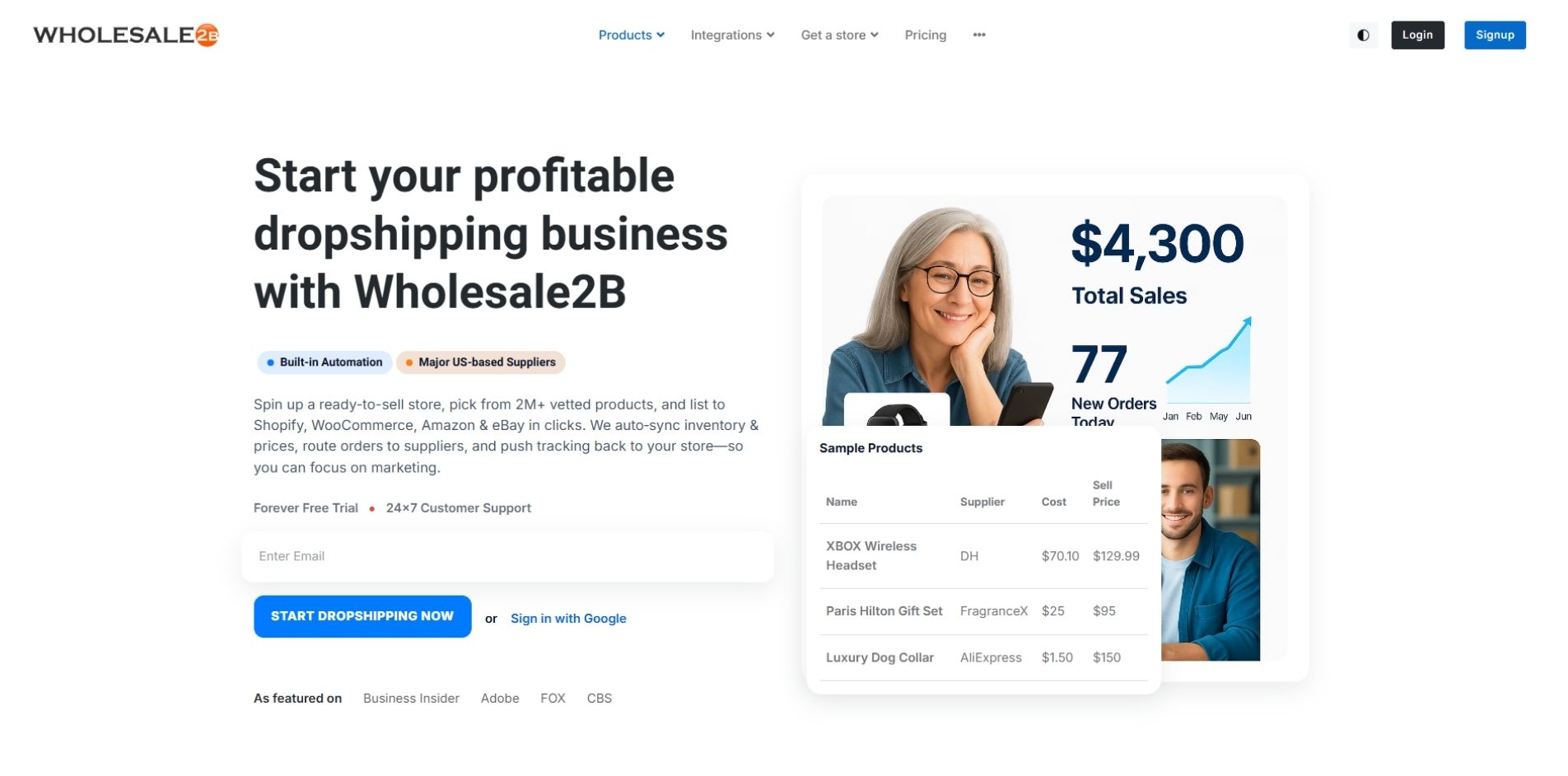
Wholesale2B provides automated dropshipping tools with pre-vetted suppliers understanding Amazon requirements. Excellent for beginners seeking compliance assurance.
Inventory Source connects you with multiple US suppliers through one platform. Good for finding backup suppliers and comparing pricing across vendors.
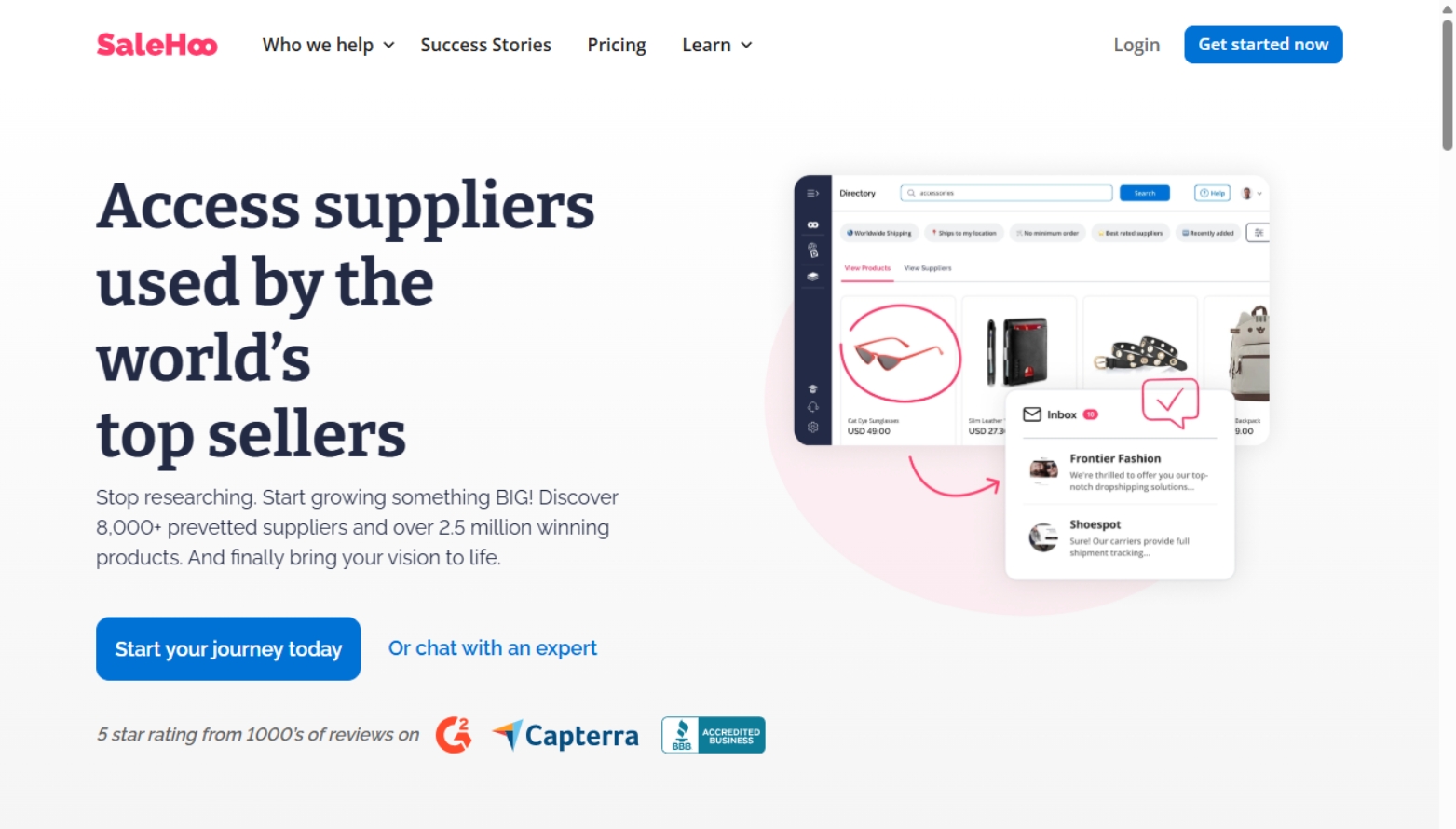
SaleHoo is a directory of verified suppliers with detailed reviews from other sellers. Research tool requiring manual supplier contact but excellent vetting information.
Sunrise Wholesale specializes in US-based bulk suppliers with reasonable minimums, quality products, and Amazon-friendly operations.
Print on Demand Suppliers for Amazon
Printful offers quality custom products with integration to Amazon, reliable shipping, and professional branding options. Higher costs but excellent quality.
Printify connects you with multiple print-on-demand partners providing price competition and product variety. Good for scaling POD businesses.
Free Dropshipping Suppliers for Amazon
AliExpress free accounts require no payment until purchase but offer no support or guarantees. Use only for testing and niche validation.
Direct manufacturer outreach via Google searching or LinkedIn often yields free supplier accounts. Time-intensive but can identify exclusive partnerships.
Marketplace-based suppliers on platforms like Global Sources or TradeKey sometimes offer free trials. Research thoroughly before committing customer orders.
How to Find Suppliers for Dropshipping on Amazon
Method 1: Research Existing Amazon Sellers
Study successful Amazon listings in your niche. Analyze product images, packaging, branding, and descriptions for clues about supplier sourcing. Contact sellers via Amazon messaging asking about suppliers. Many will share information or recommend vendors. Reverse engineering successful listings provides invaluable supplier insights.
Method 2: Contact Suppliers Directly
Search Google for “[product name] wholesale suppliers” or “[product category] manufacturers.” Wholesale directories like Global Sources, Alibaba, and TradeKey provide direct manufacturer contact information. Email cold outreach explaining your Amazon business model and requesting wholesale accounts.

Method 3: Use Supplier Platforms and Tools
Supplier databases like SaleHoo, Doba, and Wholesale2B aggregate vetted vendors. Automation software ecosystems often include supplier networks. These platforms save research time by pre-filtering unreliable vendors.
Method 4: Validate Suppliers Before Selling
Always order samples testing quality, sizing, and shipping speed. Contact suppliers with questions measuring response time and professionalism. Create a policy compliance checklist verifying invoice documentation, branding compliance, and shipping speed commitments before launching.
Common Challenges When Working With Amazon Dropshipping Suppliers
Stock inconsistency causes inventory mismatches between your listings and supplier stock. Order management systems must sync real-time. Overselling out-of-stock items triggers refunds and account issues.
Shipping delays harm your metrics if packages arrive late. International suppliers especially create risk. Establish maximum processing and shipping times with suppliers.

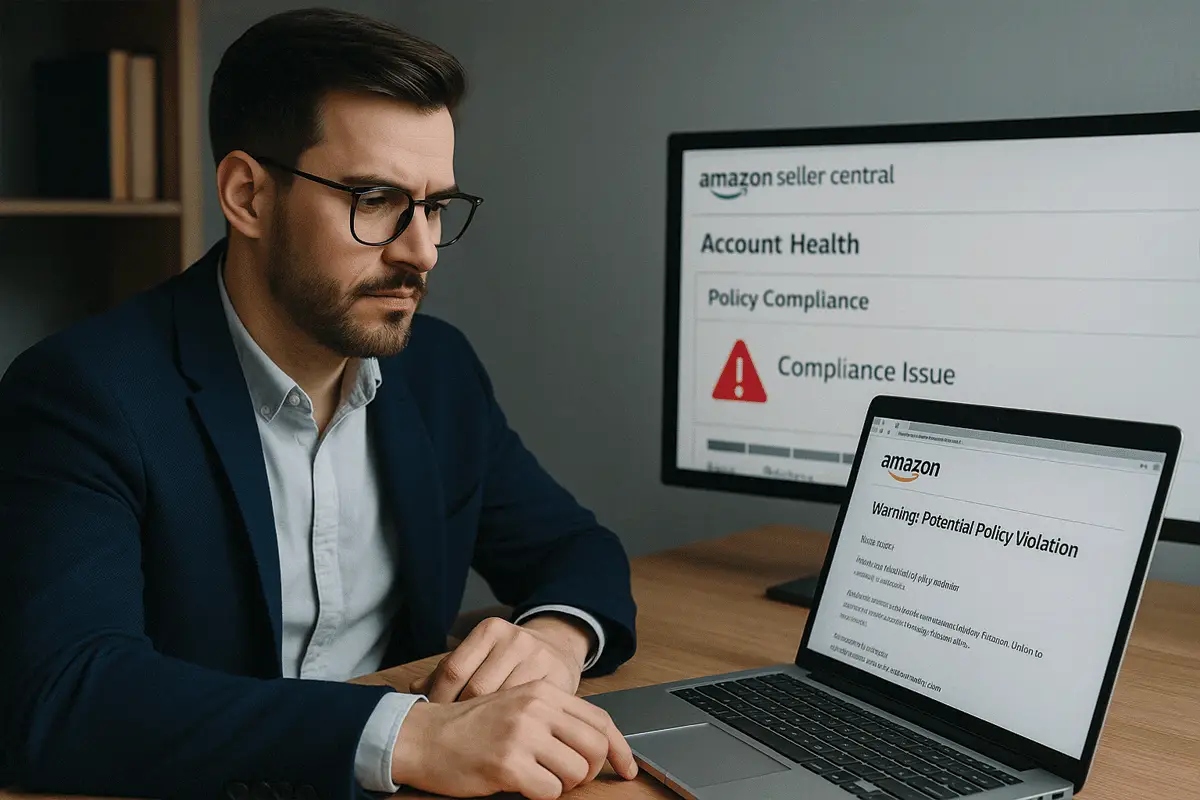
Policy violations happen when suppliers send branded packaging, incomplete invoices, or damaged items. You face account warnings or suspensions despite being uninvolved.
Price fluctuations between your Amazon listing and supplier cost squeeze margins. Lock in pricing agreements or accept volatility.
How to Avoid Amazon Account Suspension When Using Suppliers
Maintain seller of record responsibility by ensuring invoicing accuracy, taking ownership of quality issues, and addressing customer complaints immediately. Never deflect blame to suppliers in customer communications.
Require branding and invoice compliance with no unauthorized brand names on packaging and complete supplier documentation on every order.
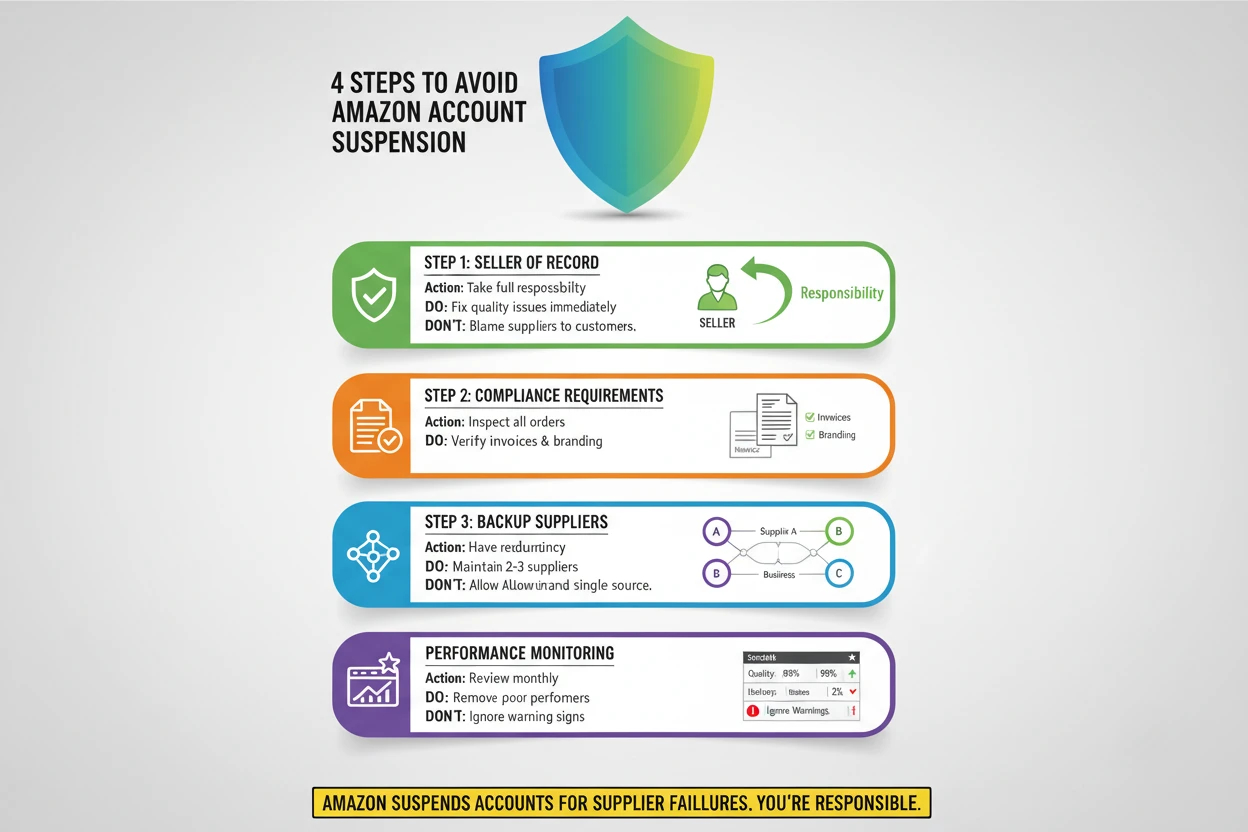
Develop backup supplier strategies maintaining 2-3 suppliers per product category. This prevents account damage if a primary supplier fails.
Monitor supplier performance continuously tracking quality, shipping speed, and compliance. Remove underperforming suppliers immediately.
Free vs Paid Dropshipping Suppliers for Amazon
Free suppliers (AliExpress, direct contacts) cost nothing upfront but provide minimal support, inconsistent quality, slow shipping, and no Amazon compliance guidance. Risk is high but investment is zero.
Paid platforms (Spocket, Wholesale2B, SaleHoo) charge monthly or commission but vet suppliers, provide support, ensure faster shipping, and understand Amazon compliance.
Cost vs risk analysis: Free suppliers suit niche testing with small order volumes. Paid platforms justify costs once you’ve validated products and scaling sales volume. Paying $50/month is cheap insurance against account suspension or quality disasters.
Dropshipping Suppliers for Amazon FAQs
How to find suppliers for dropshipping on Amazon?
Use Google searching for wholesale suppliers in your niche, leverage supplier platforms like Spocket and Wholesale2B, research competitor listings for sourcing clues, contact manufacturers directly via email, and use wholesale directories like Alibaba.
How to find dropshipping suppliers for Amazon as a beginner?
Start with free platforms like AliExpress for initial testing. Use Wholesale2B or Spocket for vetted suppliers. Order samples from multiple vendors before committing. Join Amazon seller communities asking for supplier recommendations. Create a compliance checklist ensuring policy understanding before partnering.
What are the best dropshipping suppliers for Amazon?
Spocket and Wholesale2B excel for US suppliers understanding Amazon requirements. SaleHoo provides excellent research and verification. Printful leads for print-on-demand. Choice depends on your niche and budget.
Are there legit dropshipping suppliers USA for Amazon?
Yes. Spocket, Wholesale2B, Sunrise Wholesale, and Inventory Source offer verified US suppliers. Expect higher pricing than international options but faster shipping and better compliance.
Are free dropshipping suppliers for Amazon safe?
Risky. Free suppliers often don’t understand Amazon policies, have inconsistent quality, and provide no support. Use only for initial testing, not scaled operations.
Can I use multiple suppliers on one Amazon store?
Yes. Multiple suppliers per product provide inventory redundancy and pricing competition. Use inventory management software syncing stock across suppliers.
What happens if my supplier violates Amazon policies?
You face the consequences, not the supplier. Account warnings, suspension risk, or removal of listings. Always vet supplier compliance before launching. Have backup suppliers ready.
Conclusion
Success with Amazon dropshipping depends entirely on supplier selection and management. Prioritize Amazon policy compliance above all else. Verify suppliers thoroughly before launching products. Maintain backup suppliers protecting your account. Start small testing suppliers before scaling. Monitor performance continuously removing underperformers immediately.
The dropshipping suppliers outlined here represent vetted options for 2026. Research those matching your niche, test with samples, and launch with confidence. Amazon dropshipping remains profitable for serious sellers willing to manage supplier relationships professionally and maintain strict policy compliance. Choose suppliers supporting your compliance requirements, and your Amazon business will thrive.