
Choosing between Shopify vs Etsy feels impossible: Etsy has instant traffic but charges high fees and limits your control. Shopify gives you complete ownership but requires you to build your audience from scratch. Which actually works better for YOUR business?
This guide compares both platforms on fees, features, scalability, and ease of use, then reveals which suits handmade sellers, dropshippers, and ambitious brands. You’ll discover whether to pick one platform or use both together to maximize profits and minimize risk.
Shopify vs Etsy A Quick Overview
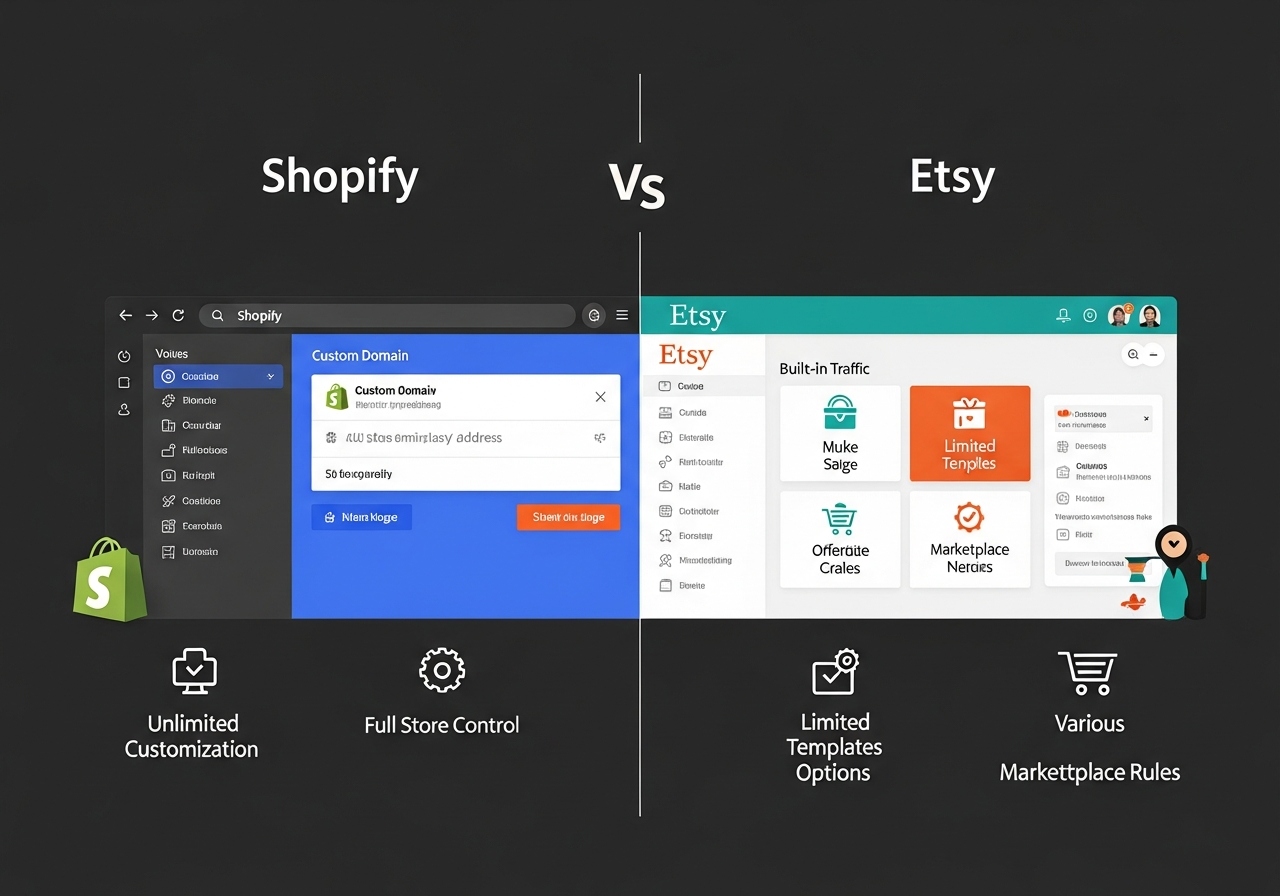
Shopify vs Etsy at a Glance
| Factor | Shopify | Etsy |
|---|---|---|
| Platform Type | Self-hosted e-commerce platform | Marketplace (built-in traffic) |
| Control | Complete control over store, branding, data | Limited customization, marketplace seller rules |
| Target Users | Ambitious brands, scalable businesses | Handmade sellers, vintage items, niche makers |
| Monthly Cost | $29-$2,300+ (subscription) | $0 base + 5-6.5% transaction fees |
| Setup Difficulty | Moderate (requires domain, payment setup) | Very easy (days to launch) |
| Built-in Traffic | None (must drive your own) | Yes (millions of shoppers) |
| Customization | Unlimited | Limited (marketplace rules) |
| Best For | Long-term growth, brand building, scaling | Quick start, handmade goods, discovery |
What Is Shopify?
Shopify is a self-hosted e-commerce platform that empowers entrepreneurs to build their own online stores without technical expertise. Unlike marketplaces, Shopify gives you complete control over your storefront, branding, customer relationships, and business data.
How Shopify Works
You rent digital “space” on Shopify’s servers to build and operate your online store. You choose a domain name (like yourstore.com), select from thousands of customizable themes, add your products, connect payment processors, and launch. Shopify handles the technical infrastructure: hosting, security, payment processing. You handle marketing, product sourcing, and customer service.
When customers purchase, you pay Shopify a monthly subscription fee ($29-$2,300) plus payment processing fees (2.7% + $0.30 per transaction or 2.9% + $0.30 for credit cards). You also pay for shipping, third-party apps, and marketing.
Who Should Use Shopify?
Shopify suits entrepreneurs with scalable business models: digital products, dropshipping, print-on-demand, wholesale brands, subscription services, or existing businesses expanding online. It’s ideal if you’re willing to invest time and money into marketing because you control all customer acquisition channels.
What Is Etsy?
Etsy is a global marketplace connecting millions of sellers with billions of buyers seeking unique, handmade, vintage, and craft supplies. Founded in 2005, Etsy specializes in items you won’t find on Amazon or Walmart: from handmade jewelry to vintage furniture to craft supplies.
How Etsy Works
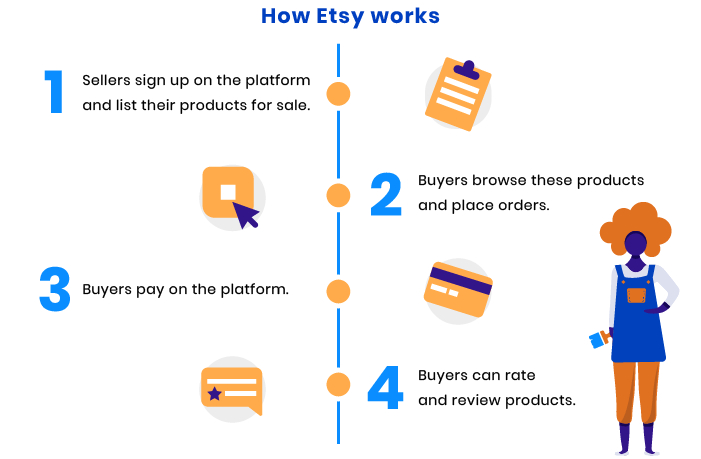
You create a free Etsy shop, list products with photos and descriptions, and Etsy automatically surfaces your items to shoppers browsing the marketplace. When someone purchases, Etsy charges listing fees ($0.20 per listing, 4-month duration), transaction fees (5% of sale price), and payment processing fees (3% + $0.20 for US domestic sales). Etsy handles payment processing and provides built-in traffic. You focus on creating quality products and fulfilling orders.
Who Should Sell on Etsy?
Etsy is perfect for handmade sellers, artists, vintage dealers, craft suppliers, and niche product creators. If your target customers actively browse Etsy searching for your type of product, the marketplace’s traffic advantage dramatically outweighs its fees. You don’t need marketing expertise or a large budget – Etsy does the heavy lifting of customer acquisition.
Shopify vs Etsy Detailed Comparison
Products & Selling Flexibility
Shopify permits virtually any legal product: physical goods, digital downloads, subscriptions, courses, print-on-demand items, dropshipped products, wholesale inventory, services, and more. You define your product policy – no marketplace police tell you what you can’t sell (beyond obvious legal restrictions).
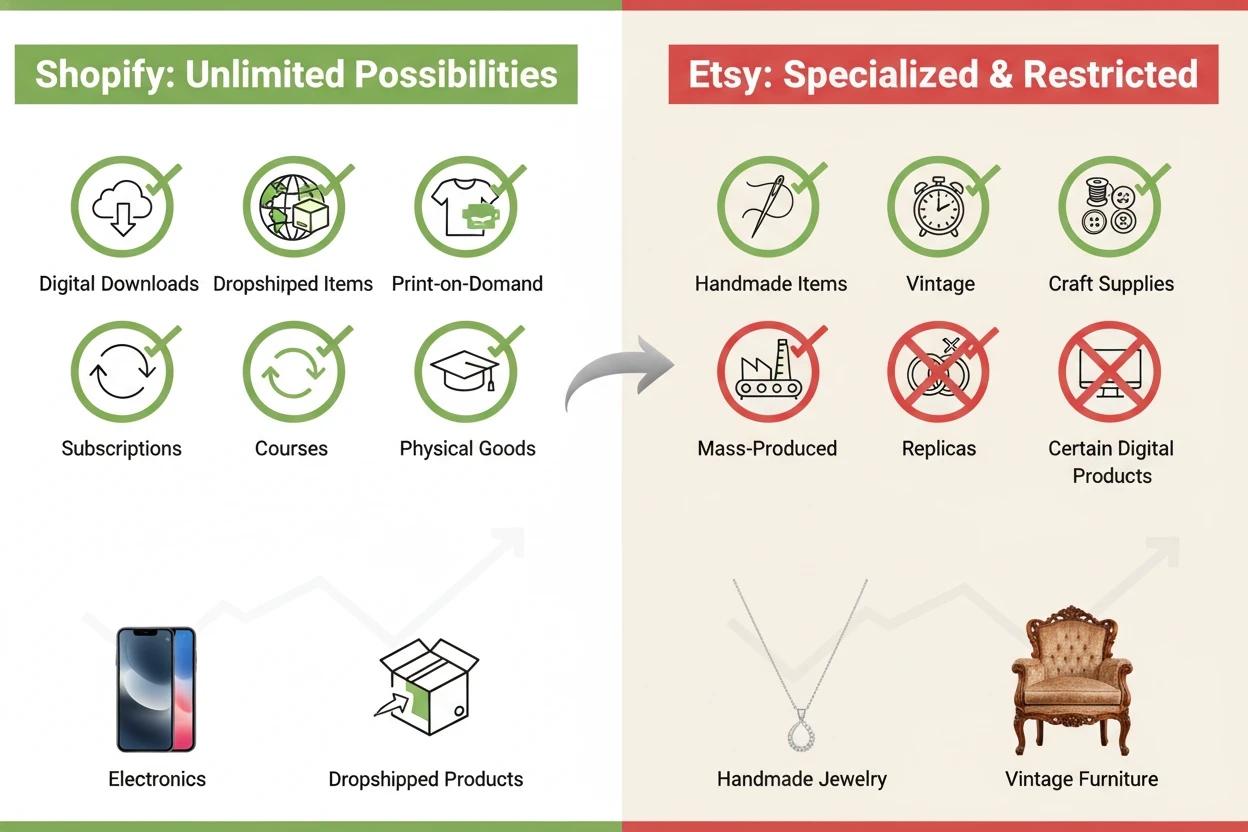
Etsy is highly specialized. Allowed categories include handmade items, vintage products (20+ years old), craft supplies, and certain pre-made items. Prohibited: mass-produced items, replica products, items copied from existing designs, certain digital products, and anything outside Etsy’s defined categories. Violating product policies results in delisting and potential account suspension.
Which platform wins? Shopify wins decisively. If you sell anything beyond Etsy’s strict categories (like dropshipped mass-produced items, digital courses, or services), Shopify is your only option. Even within Etsy categories, Shopify’s flexibility means zero product-related restrictions.
Target Audience & Market Potential
Etsy provides enormous built-in traffic. The platform receives 4+ billion annual site visits with hundreds of millions of active buyers. When you list a product, Etsy automatically surfaces it to relevant searchers. You gain access to this massive audience without spending marketing dollars.
Shopify provides zero built-in traffic. You must actively drive customers through Google ads, social media, content marketing, email, influencer partnerships, or organic search. This requires marketing skills, budget, or time. However, you own 100% of customer relationships – every visitor, email address, and repeat purchase belongs to you.
Which platform wins? Etsy wins initially. Etsy’s built-in traffic acceleration lets beginners make sales immediately. However, Shopify wins long-term. Once you build email lists, achieve organic search visibility, and develop a community, your customer acquisition cost plummets while Etsy’s marketplace dependency never changes.
Pricing & Fees (Shopify Fees vs Etsy Fees)
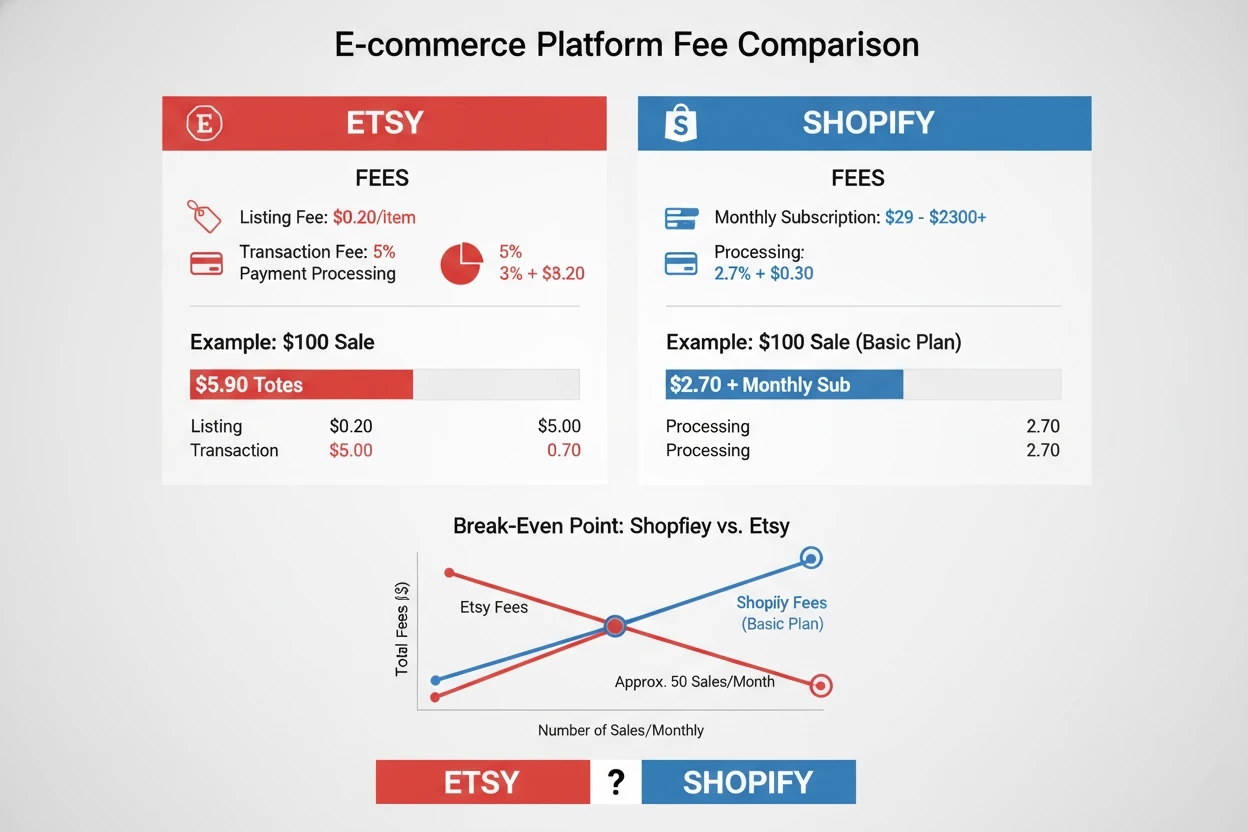
Etsy Fees Structure:
- Listing fee: $0.20 per listing (listings last 4 months)
- Transaction fee: 5% of sale price
- Payment processing fee: 3% + $0.20 per transaction (USA)
- Optional: Etsy Ads (promoted listings starting $1-5 per day)
Example: $100 sale on Etsy = $0.05 listing cost + $5 transaction fee + $3.20 payment fee = $8.25 (8.25% total cost)
Shopify Fees Structure:
- Monthly subscription: $29-$2,300 (Basic-Enterprise plans)
- Payment processing: 2.7% + $0.30 per transaction (credit card)
- Additional costs: Shipping apps, email marketing, accounting software, apps ($0-500+/month)
Example: $100 sale on Shopify (Basic plan) = $29/month subscription (divided among orders) + 2.7% + $0.30 = roughly $3.30-5 per transaction (3.3-5% + subscription portion)
Is Shopify Cheaper than Etsy?
For low-volume sellers (under 10 sales monthly): Etsy is cheaper. You pay only for what you list and sell.
For high-volume sellers (100+ sales monthly): Shopify becomes cheaper. The fixed subscription spreads across more orders, and lower per-transaction fees compound significantly.
For medium-volume sellers (20-100 sales monthly): It’s roughly comparable, but Shopify’s growth scaling becomes advantageous.
Which platform wins? It depends on volume. But Shopify wins for serious businesses targeting 6+ figures annually due to lower per-transaction costs and unlimited growth potential without fee increases.
Ease of Use & Setup
Etsy launches you in hours. Create account, set shop name, add listings, start selling. The onboarding is intentionally simple because Etsy targets non-technical makers. You don’t need domain knowledge, payment processor accounts, or technical skills.
Shopify requires more setup (typically 1-2 days). You choose a domain, select a theme, configure basic settings, integrate payment processors, install apps, and customize your store. However, Shopify’s guides and templates make this manageable for beginners. It’s harder than Etsy but easier than building a website from code.
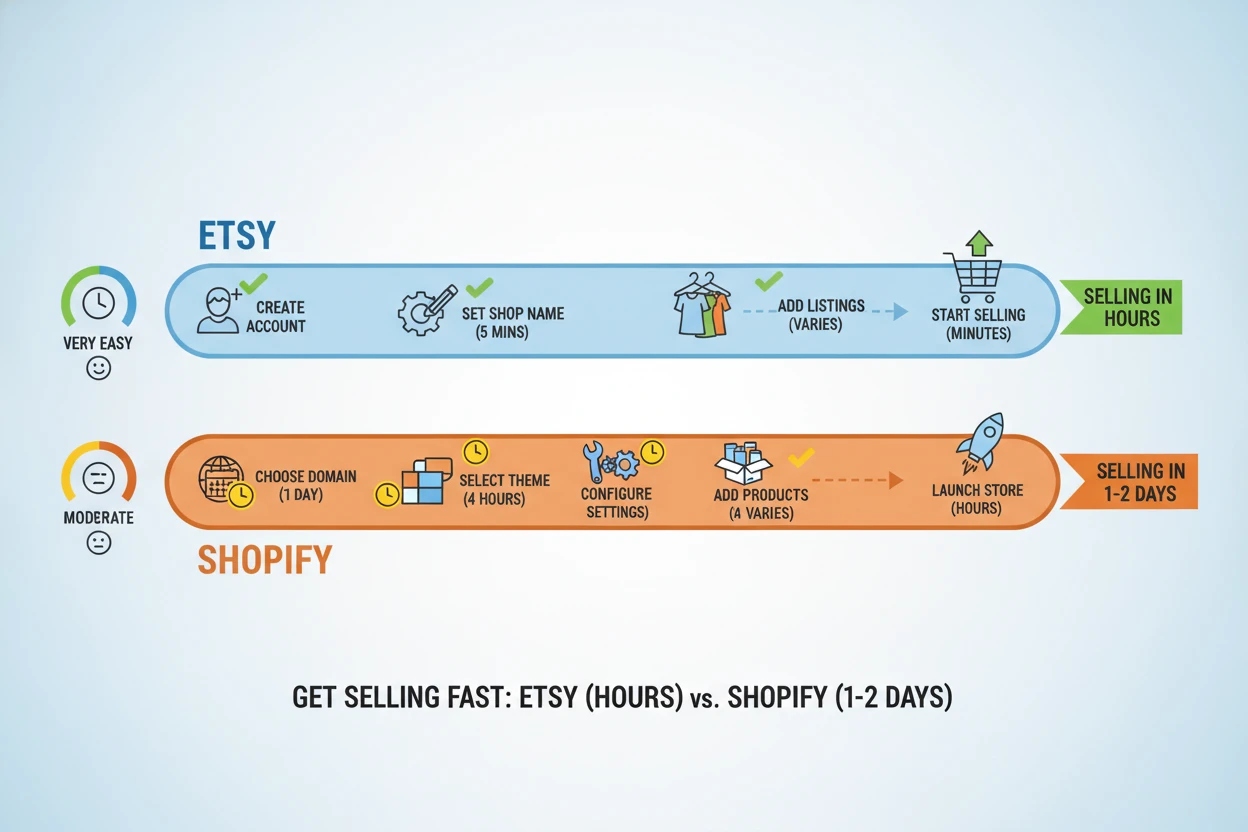
Which platform wins? Etsy wins for speed. If you want selling immediately with minimal setup, Etsy launches you in hours. Shopify wins for those comfortable with slightly more complexity in exchange for long-term control.
Design & Store Customization
Etsy offers minimal customization. You choose from basic shop templates, upload a banner and logo, write a shop announcement, and customize a few appearance settings. However, all Etsy shops feel like Etsy shops – your branding is constrained by the marketplace design.
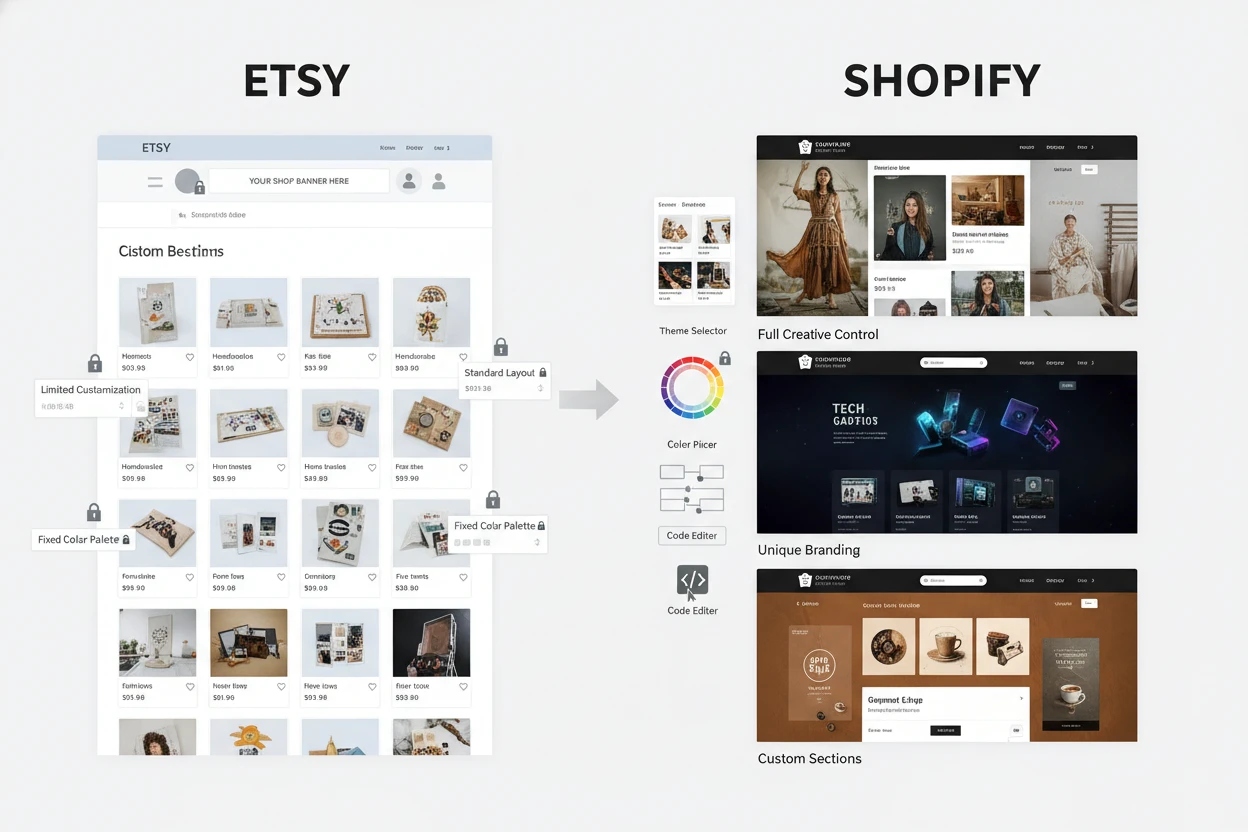
Shopify provides unlimited design control. Choose from thousands of professional themes, customize every detail, add custom CSS/HTML, integrate third-party services, and create a completely unique brand identity. Your store truly reflects YOUR brand.
Which platform wins? Shopify wins decisively. If brand identity and visual differentiation matter (they should for scaling), Shopify’s customization capabilities are vastly superior. Etsy’s constraints, while adequate for marketplace discovery, limit brand building.
Domains, URLs & Brand Ownership
Etsy uses Etsy-branded URLs (yourshop.etsy.com). You don’t own this URL – Etsy owns it. If your account is terminated for any reason (account disputes, policy violations, algorithm changes), you lose access instantly. You own product data but not the platform or customer relationship infrastructure.
Shopify lets you use custom domains (yourstore.com). You own this domain – Shopify can never take it from you. You control your customer data, email lists, purchase history, and brand presence. If Shopify ever shuts down (unlikely), you own everything on your domain.
Which platform wins? Shopify wins significantly. Business asset ownership is non-negotiable for serious entrepreneurs. Etsy’s dependency on their platform creates risk – one policy change or account termination destroys your business. Shopify lets you own your digital assets indefinitely.
Marketing Tools & Promotion
Etsy provides built-in promotion through Etsy Ads (paid listings where you promote directly within Etsy search results). You can run sales, offer coupons, and leverage Etsy’s email notification system. However, external marketing options are limited – you can’t directly email your customer list, run ads linking to your shop, or deploy sophisticated marketing automations.
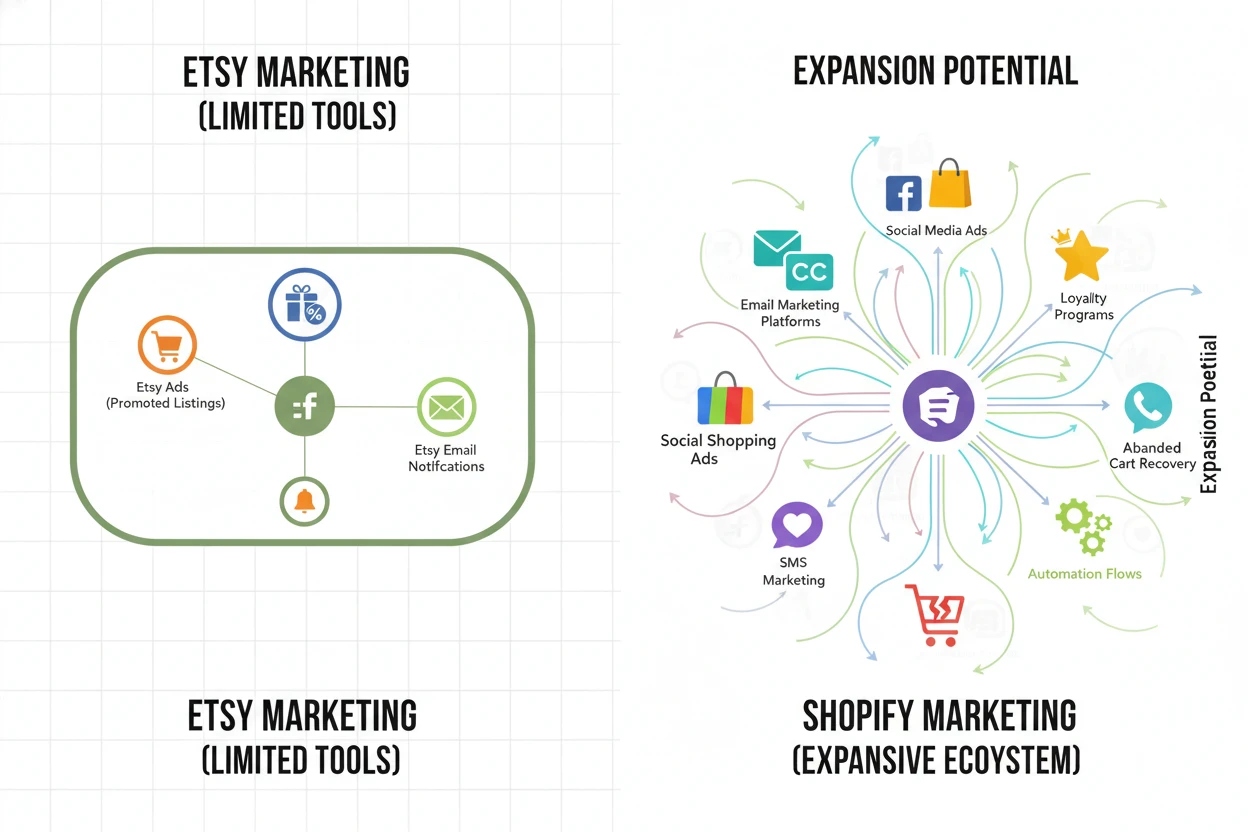
Shopify integrates with professional marketing tools: email marketing platforms (Klaviyo, Constant Contact), Facebook/Instagram Ads, Google Shopping, SMS marketing, loyalty programs, and advanced automation. You control your customer data and can build sophisticated marketing funnels.
Which platform wins? Shopify wins decisively. Modern business requires sophisticated marketing to scale. Etsy’s basic promotional capabilities suffice for marketplace discovery but won’t support serious growth. Shopify integrations enable customer lifetime value maximization.
SEO & Traffic Generation
Etsy SEO means optimizing your titles, tags, and descriptions for Etsy’s internal search algorithm. Good Etsy SEO helps shoppers find you within Etsy’s ecosystem, but you benefit from Etsy’s already massive search volume. Etsy SEO is easier but limited to Etsy’s audience.
Shopify SEO means optimizing for Google Search. You compete with the entire internet, not just Etsy’s marketplace. This is harder but far more valuable. First-page Google ranking for “handmade coffee mugs” or “vintage leather journals” brings unlimited traffic.
Which platform wins? Etsy wins short-term (immediate discoverability), Shopify wins long-term (sustainable, owned traffic). Etsy relies on the marketplace; Shopify can build lasting organic search dominance.
Analytics & Reporting
Etsy provides basic analytics: orders, revenue, traffic sources, and search terms buyers used. However, detailed customer behavior data is limited. You see what sold but not deep purchase patterns or customer lifetime value metrics.
Shopify integrates with advanced analytics platforms (Google Analytics 4, Shopify Analytics). You gain detailed insights: customer behavior, purchase patterns, traffic sources, conversion rates, cart abandonment, repeat purchase rates, and customer lifetime value. Data-driven decisions become possible.
Which platform wins? Shopify wins. Data-driven business optimization requires detailed analytics. Etsy’s basic reporting suffices for simple inventory management but limits growth optimization.
Sales Tools & Checkout
Etsy provides a straightforward checkout: customers browse, add to cart, and pay. Limited upsell options. You can offer quantity discounts and bundle items, but sophisticated conversion tools are absent. One-time transaction model – limited repeat purchase infrastructure.
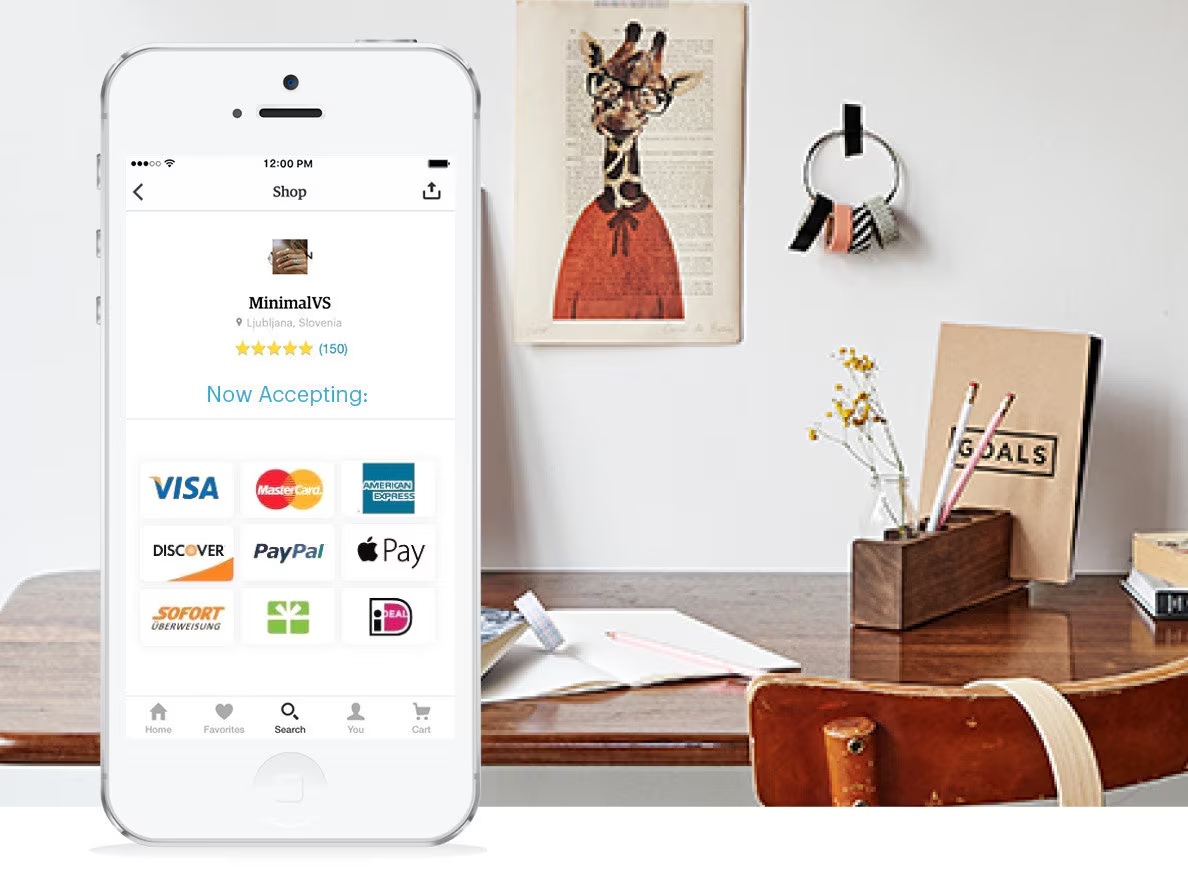
Shopify enables advanced sales optimization: abandoned cart recovery, product recommendations, cross-sell/upsell flows, quantity discounts, subscription products, gift cards, loyalty programs, and post-purchase email sequences. These features compound conversion rate improvements significantly.
Which platform wins? Shopify wins decisively. Average order value and repeat purchase rate improvements through advanced sales tools enable substantially higher profitability. Etsy’s basic checkout works but leaves money on the table.
Shipping & Fulfillment
Etsy integrates shipping label printing, provides discounted shipping rates through major carriers, and handles shipping notifications. Print labels directly from your shop. Good basic integration but limited customization.
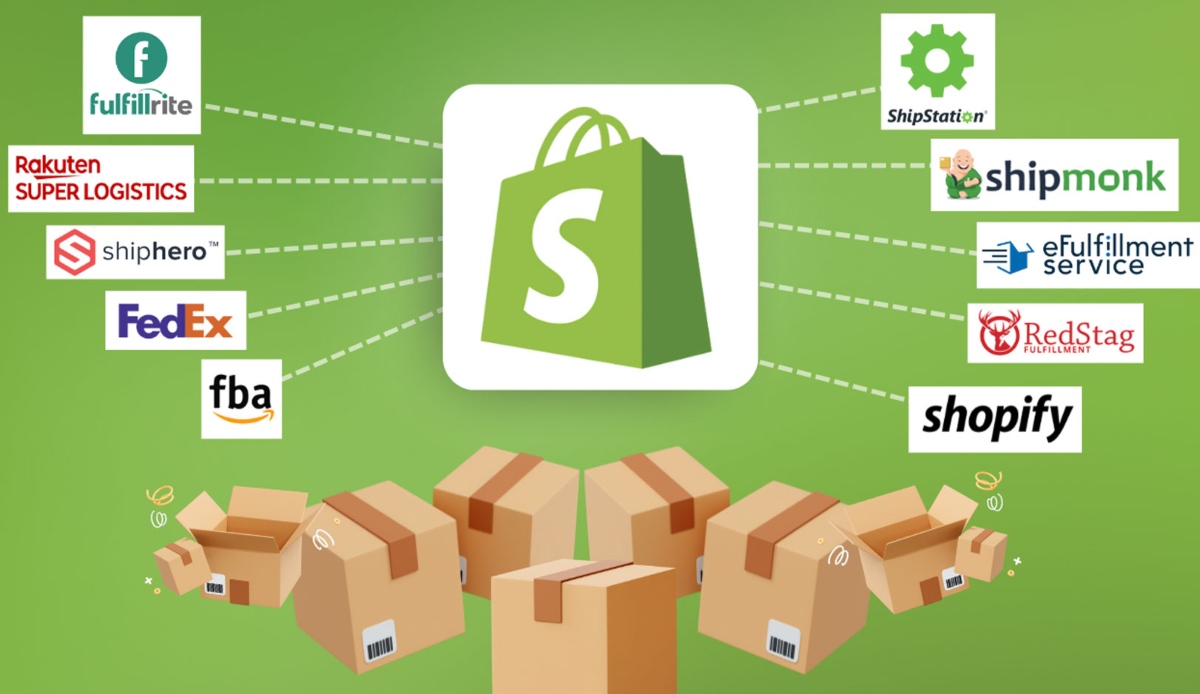
Shopify integrates with fulfillment providers (print-on-demand, dropshipping platforms, 3PLs), provides discounted shipping label printing, and offers multiple fulfillment models: self-fulfillment, dropshipping, print-on-demand, or 3PL warehousing. Sophisticated fulfillment strategies become possible.
Which platform wins? Shopify wins if you use advanced fulfillment (dropshipping, POD, 3PL). Etsy wins if you’re self-fulfilling simple orders. For scalable businesses, Shopify’s integration depth is invaluable.
Payment Processing
Etsy processes all payments through Etsy Payments. You don’t control payment processor relationships – Etsy manages everything. Payouts occur automatically to your connected bank account. Limited payment method options (Etsy controls what’s offered).
Shopify lets you choose payment processors: Shopify Payments, Stripe, PayPal, Square, and 100+ others. You control payment terms, fee structures, and cash flow. Multiple processor options provide redundancy and competitive advantages.
Which platform wins? Shopify wins. Payment processor choice impacts fees, dispute handling, and fund availability. Etsy’s managed approach is simpler but removes control. Serious sellers want processor flexibility.
Customer Support
Etsy provides email support, a comprehensive help center, and active seller forums. Response times average 24-48 hours. Community knowledge is strong. However, escalated issues can take weeks to resolve.
Shopify offers 24/7 live chat and email support for all plans. Response times typically under 1 hour. Dedicated support at higher tiers. Additionally, Shopify’s app ecosystem provides thousands of third-party support resources.
Which platform wins? Shopify wins. 24/7 support matters for businesses where downtime impacts revenue. Etsy’s community support is helpful but slower than Shopify’s dedicated team.
Security & Platform Stability
Etsy handles all security infrastructure. Your shop is protected by Etsy’s systems, but you’re dependent on their security practices. Account suspension can happen suddenly for policy violations, with limited appeal options.
Shopify provides enterprise-grade security (PCI compliance, SSL encryption, DDoS protection). You control security through password strength and app vetting. Account termination is rare but possible for serious violations (fraud, illegal activity). Appeal processes are more transparent.
Which platform wins? Shopify wins for stability. Self-hosted platforms typically offer more transparent policies and appeal processes. Etsy’s opaque suspension policies create ongoing account risk.
Scalability & Long-Term Growth
Etsy has inherent scaling limits. Marketplace fees remain constant regardless of volume, which is good initially. However, you can’t expand beyond Etsy’s product categories, can’t build your own brand identity effectively, and can’t develop wholesale channels. Ceiling is moderate success, not exponential growth.
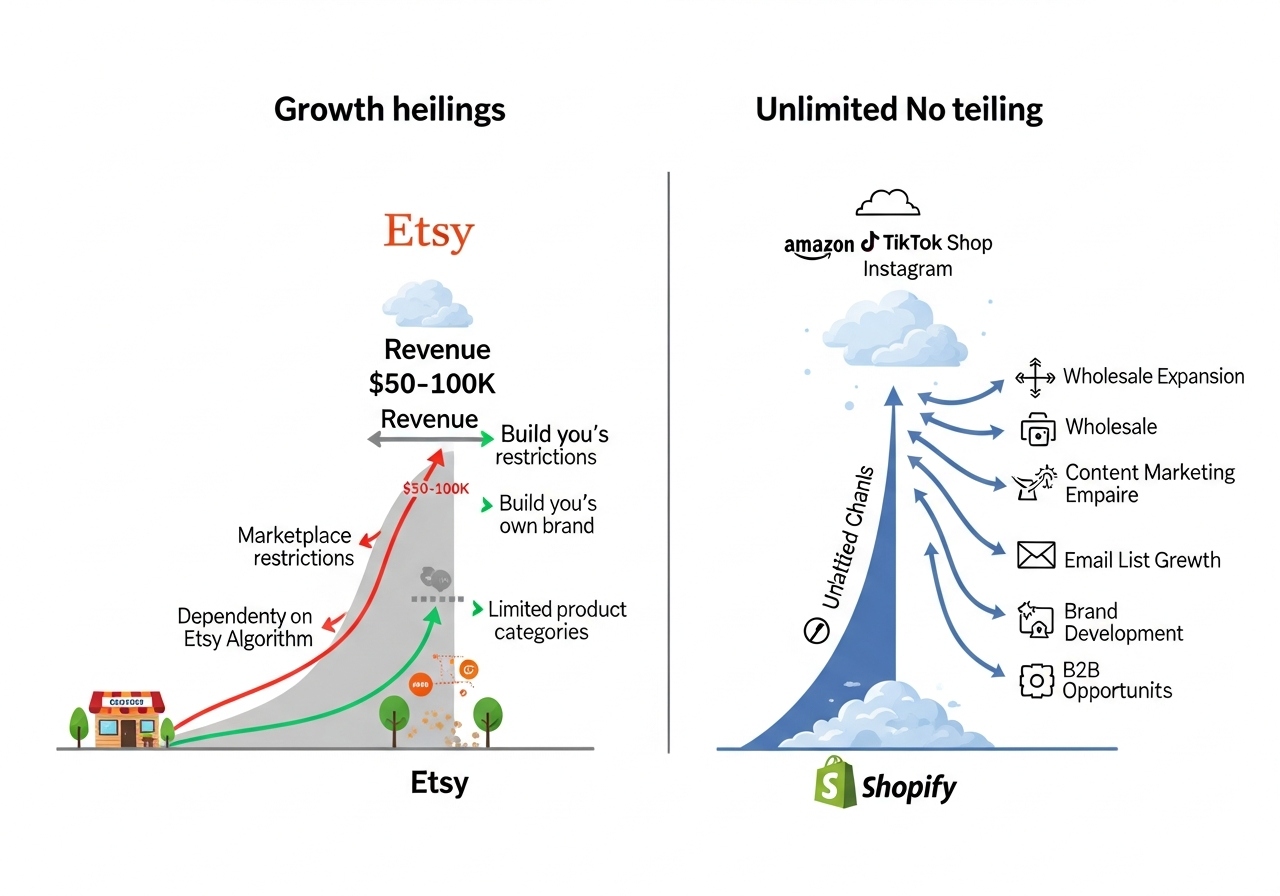
Shopify scales infinitely. As you grow, you can add multiple sales channels (Amazon, TikTok Shop, Instagram, B2B), expand product lines, develop wholesale accounts, build content marketing machines, and maximize customer lifetime value. No ceiling.
Which platform wins? Shopify wins decisively. If you aim for 6-7 figure revenue, Shopify’s scalability is essential. Etsy serves well up to $50-100K annually but limitations emerge at higher scales.
International Selling
Etsy facilitates international sales through its global marketplace. Customers in 200+ countries can purchase from you. Etsy handles some currency conversion and tax complexity. However, international shipping costs are higher, and customs complexity remains seller responsibility.
Shopify enables international selling through advanced features: multi-currency support, international shipping calculator integration, localized storefronts for different countries, and tax compliance tools. More sophisticated but more powerful.
Which platform wins? Etsy wins for simplicity. Etsy’s global built-in audience makes international sales effortless. Shopify wins for optimization. Advanced sellers wanting to maximize international revenue benefit from Shopify’s sophistication.
Shopify vs Etsy vs Other Platforms (Brief Comparison)
Shopify vs Etsy vs Squarespace
Squarespace positions between Etsy and Shopify. It’s easier than Shopify but offers more customization than Etsy. However, Squarespace prioritizes design over e-commerce functionality. It’s ideal for creative portfolios with shop features, not serious e-commerce. For dropshipping or significant sales volume, Shopify or Etsy are superior.
Shopify vs Etsy vs Wix
Wix offers website building with shop integration. Like Squarespace, Wix prioritizes design aesthetics over e-commerce power. Wix works for visual brands with modest sales volume but lacks Shopify’s advanced features and Etsy’s built-in traffic. Choose Wix if design is your primary need; choose Shopify or Etsy for serious selling.
Etsy vs Amazon vs Shopify
Amazon operates like Etsy but dominates physical goods. Both are marketplaces with built-in traffic. However, Amazon’s fees are higher (8-15% referral fees), product restrictions stricter, and account control even more limited. Etsy suits handmade/vintage; Amazon suits resellers. Shopify suits builders of owned brands.
Etsy or Shopify for Beginners: Which Should You Start With?
Start with Etsy if:
- You create handmade, vintage, or craft items
- You want to launch in hours with minimal setup
- You’re unsure about long-term commitment
- You want immediate access to ready-to-buy customers
- You have limited marketing budget/skills
- Your product naturally fits Etsy categories
Start with Shopify if:
- You’re building a personal brand you own
- You sell dropshipped or mass-produced items
- You have marketing skills or budget
- You aim for 6-7 figure revenue
- You want unlimited product flexibility
- You’re willing to invest 2-3 months before profitability
The Hybrid Approach: Many successful sellers start with Etsy for quick validation and revenue, then add Shopify once traffic/brand is established. This is perfectly viable and reduces risk.
Is Shopify Like Etsy? Key Differences Explained
No, they’re fundamentally different:
Marketplace vs Self-Hosted: Etsy is a marketplace where Etsy brings customers to you; Shopify is your own store where you bring customers to them.
Built-in vs Self-Driven Traffic: Etsy provides discoverability within its ecosystem; Shopify requires you to drive traffic through marketing.
Simplicity vs Control: Etsy prioritizes ease; Shopify prioritizes control and customization.
Platform Dependency vs Asset Ownership: On Etsy, your business depends entirely on the platform; on Shopify, you own your domain, customer data, and brand.
Category Constraints vs Freedom: Etsy restricts product types; Shopify permits virtually anything legal.
Think of it this way: Etsy is like renting a stall in an established mall. The mall brings foot traffic, but you can’t customize your stall much, and the mall owner controls your access. Shopify is like owning a standalone store on main street. You control everything, but you’re responsible for bringing customers to your door.
Should You Sell on Both Shopify and Etsy?
Yes, many successful sellers use both simultaneously. Here’s why:
Benefits of dual presence:
- Diversify revenue sources (Etsy traffic + Shopify brand traffic)
- Reach different customer segments (marketplace browsers + intentional brand seekers)
- Reduce platform dependency (if Etsy account is suspended, Shopify sustains you)
- Test marketing strategies on both platforms
- Build email lists on Shopify while leveraging Etsy’s discoverability
How to combine effectively:
- Launch on Etsy first (faster, validates demand)
- Once profitable, launch Shopify alongside
- Cross-promote (mention Shopify in Etsy profile; promote Etsy products on Shopify)
- Use Shopify as brand builder while Etsy drives immediate sales
- Gradually shift focus to Shopify as your email list and reputation grow
Tools that help multi-channel selling:
- Inventory Source, Syncee, or Sellfy (multi-channel management)
- Zapier (automate order syncing between platforms)
- Inventory management software (prevent overselling)
When to transition from Etsy to Shopify:
- When Etsy fees exceed 8-10% of revenue
- When you’ve built an email list of 5,000+
- When you understand your customer demographics
- When marketplace dependency feels risky
- When you’re ready to invest in brand building and marketing
Shopify vs Etsy Which Is Better for Your Business?
The answer depends entirely on your business model. Here’s the breakdown:
For Handmade Sellers
Winner: Etsy dominates. Etsy customers specifically search for handmade items. You’ll find eager buyers, spend almost nothing on setup, and get the fairest fee structure for lower volumes. Start on Etsy. Add Shopify later for brand building.
For POD & Dropshipping
Winner: Shopify decisively. Etsy prohibits most dropshipped items. Shopify permits everything. You’ll need sophisticated inventory management, multi-channel selling, and product testing – all Shopify strengths. Etsy isn’t an option.
For Brands Wanting to Scale
Winner: Shopify decisively. If you’re building a brand aiming for 6-7 figures, Shopify’s customization, marketing tools, and scalability are non-negotiable. Etsy’s constraints will frustrate you at scale.
For New Sellers Testing Ideas
Winner: Etsy initially, then Shopify. Test demand on Etsy with minimal risk. Once validated, launch Shopify to own your customer relationships and build long-term brand value.
Final Recommendation
Etsy is ideal for: Handmade, vintage, craft supplies, niche artisans wanting quick launches and marketplace leverage.
Shopify is ideal for: Ambitious brands, scalable models (dropshipping, POD, digital products), long-term growth, personal brand builders.
Best strategy: Start where your products fit best, validate demand, then expand to the complementary platform as you grow.
Main Takeaways Shopify vs Etsy
Shopify is better for:
- Long-term brand building and scalability
- Dropshipping, print-on-demand, digital products
- Businesses aiming for 6-7 figure revenue
- Entrepreneurs prioritizing control and customization
- Those willing to invest in marketing
Etsy is better for:
- Handmade, vintage, and craft items
- Quick launches with minimal setup
- Sellers leveraging marketplace traffic
- Artists and makers prioritizing discoverability
- Those wanting low upfront costs
Strategic long-term advice: Don’t view this as either/or. Consider Etsy as your initial validation channel and Shopify as your long-term scaling platform. Successful sellers often use both simultaneously, gradually shifting emphasis toward Shopify as their email list and brand awareness grow.
The choice isn’t about which platform is universally “better” – it’s about which aligns with your specific business model, timeline, and ambitions.
FAQs Shopify vs Etsy
Is it cheaper to sell on Etsy or Shopify?
For low-volume sellers (under 10 sales/month), Etsy is cheaper – you pay only for listings and transactions. For high-volume sellers (100+ sales/month), Shopify becomes cheaper due to its fixed subscription spreading across more orders. At 50+ sales monthly, Shopify’s per-transaction costs typically become lower than Etsy’s combined fees.
Is Shopify better than Etsy in 2026?
It depends on your goals. Shopify is better for scaling brands and owned-brand building. Etsy is better for handmade sellers and those wanting immediate marketplace traffic. Neither is universally “better” – they serve different needs. For ambitious sellers targeting significant revenue, Shopify’s capabilities outpace Etsy’s limitations.
Should I sell on both Shopify and Etsy?
Yes, many successful sellers use both simultaneously. Etsy provides built-in traffic and immediate sales; Shopify builds your brand and customer relationships. Dual presence diversifies revenue, reduces platform dependency, and enables testing marketing strategies on both channels. Start with Etsy or Shopify based on your initial focus, then add the complementary platform as you grow.
When should you switch from Etsy to Shopify?
Consider switching when: (1) Etsy fees exceed 8-10% of revenue, (2) You’ve built an email list of 5,000+, (3) Marketplace dependency feels risky, (4) You’re ready to invest in brand building, (5) Your product range exceeds Etsy categories. Many sellers don’t “switch” – they maintain both, gradually emphasizing Shopify.
Do you need a business license to sell on Shopify or Etsy?
Neither platform requires a business license to start. However, legally selling requires a business license in most jurisdictions. Operating without one when required is tax evasion and carries penalties. Check local requirements – most require basic business registration. Having a license also provides liability protection and tax benefits.
Conclusion
Shopify vs Etsy represents a choice between two fundamentally different approaches to e-commerce: marketplace convenience vs owned-brand control.
Etsy wins for immediate launches, discoverability, and handmade products. Its built-in traffic and low initial costs make it ideal for testing ideas and serving niche audiences already shopping the platform.
Shopify wins for ambitious entrepreneurs building scalable brands. Its customization, marketing tools, data ownership, and infinite scaling potential make it the platform of choice for serious businesses aiming high.
The smartest strategy isn’t choosing one – it’s starting with the platform that best fits your immediate needs, validating your business model, then expanding to the complementary platform as you scale. Many of the most successful online sellers use both, leveraging each platform’s unique strengths to build resilient, profitable businesses.
Choose Etsy or Shopify based on your products, timeline, and ambitions. Both can generate serious revenue. But if you’re building a brand you want to own indefinitely, Shopify’s long-term value will become obvious as you grow.