
High ticket dropshipping represents a fundamentally different approach to e-commerce compared to traditional low-ticket dropshipping. Instead of competing on volume with thousands of small sales, high ticket dropshipping focuses on selling expensive products generating substantial profit per order.
This comprehensive guide explains the high ticket dropshipping business model, reveals the best niches and suppliers, and provides actionable strategies to build a profitable, scalable business in 2026.
What Is High Ticket Dropshipping?
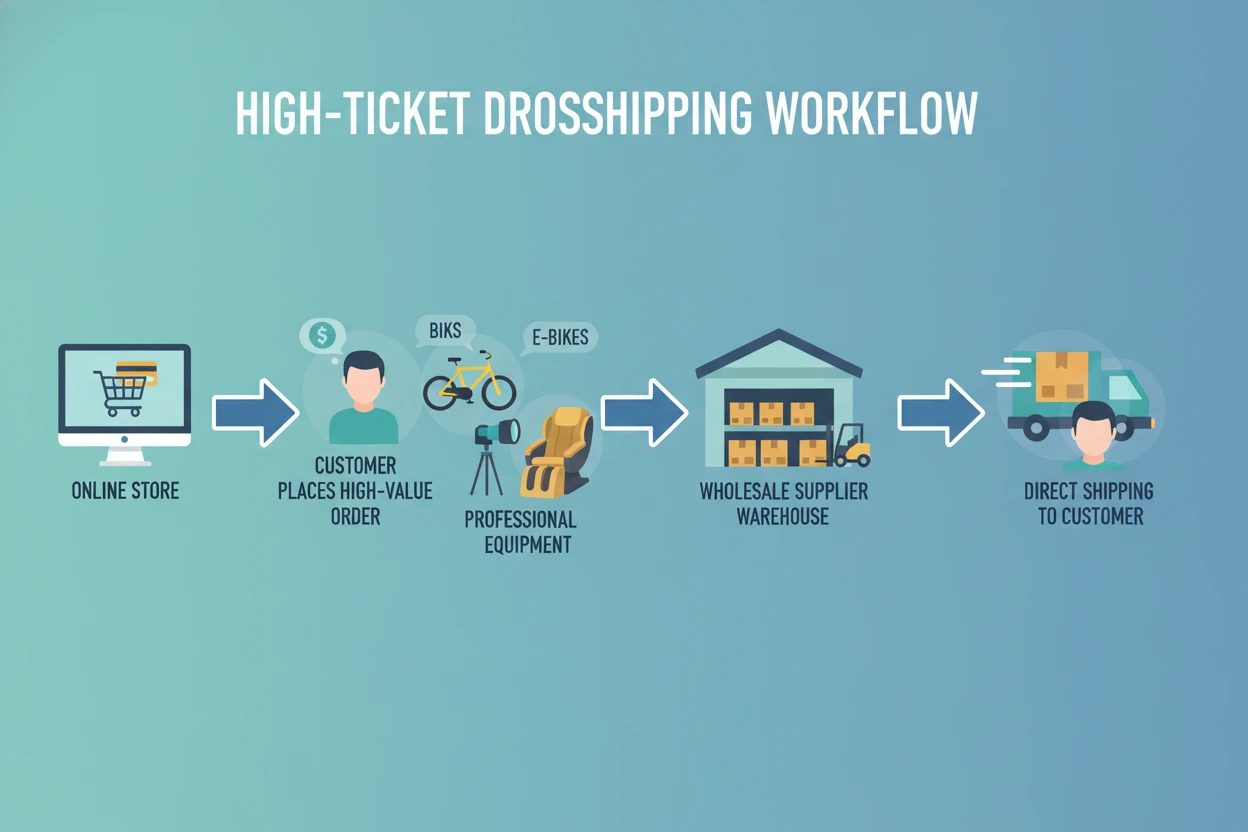
High ticket dropshipping is a business model where you sell expensive products (typically $500-$5,000+) without holding inventory. You partner with wholesale suppliers who warehouse products and ship directly to customers when you make sales.
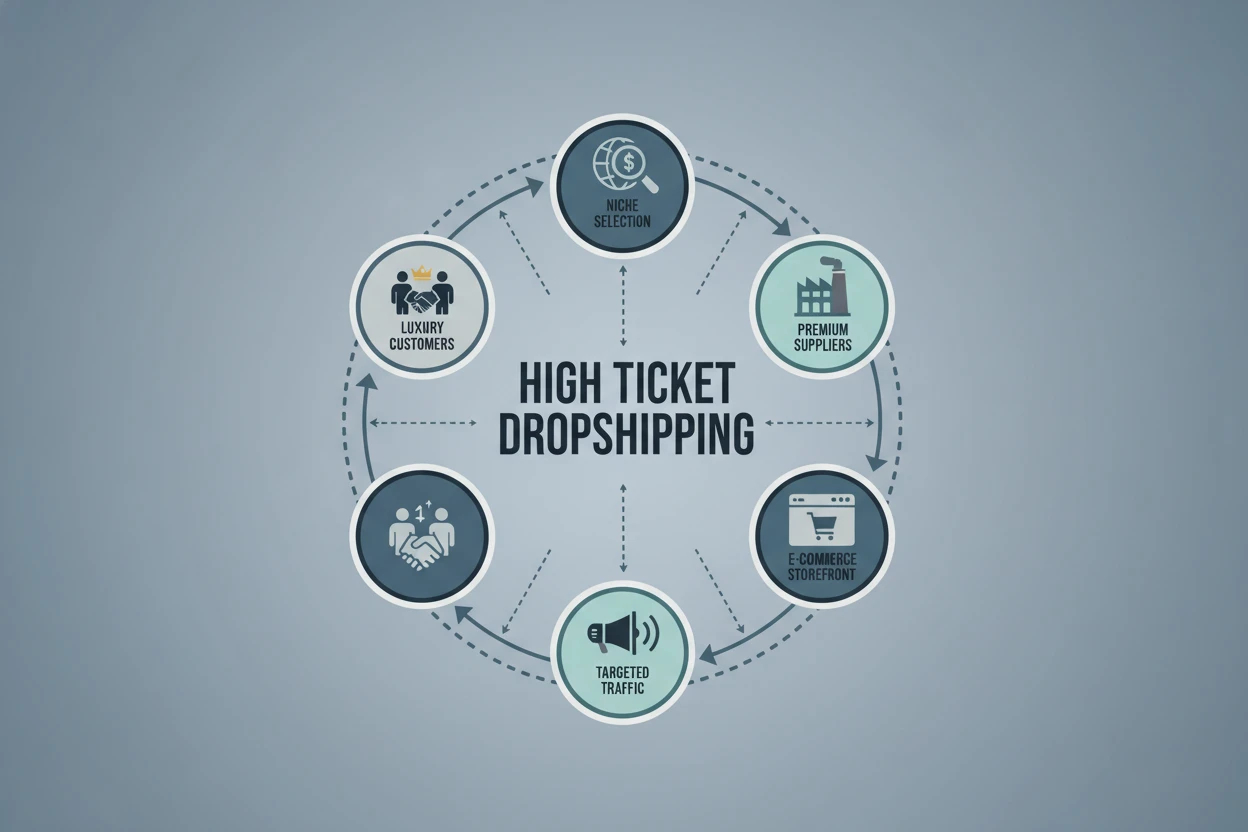
The operational flow is straightforward: You identify profitable product niches, partner with reliable wholesale suppliers, build a professional e-commerce store showcasing these products, drive targeted traffic from customers seeking premium items, make sales at high price points, order products from suppliers at wholesale prices, suppliers ship directly to customers with your branding or information, and you keep the profit margin.
The fundamental difference from low-ticket dropshipping is profit psychology. Low-ticket products have thin margins of $5-20 per order, requiring thousands of orders to generate meaningful profit. High-ticket products generate $500-$2,000+ profit per order, enabling sustainable profitability with far fewer sales and dramatically less operational complexity.
Why Choose High Ticket Dropshipping Over Low Ticket?
The mathematical difference is compelling. Low ticket products require thousands of orders to generate significant profit. A $20 product with $10 profit requires 500 sales to generate $5,000 profit. Each sale requires individual customer service, handling potential refunds, managing customer support inquiries, and coordinating with suppliers.
High ticket products yield larger profits per order. A $2,000 product with $1,000 profit requires just 5 sales to generate $5,000 profit. Each high-ticket customer receives premium service, fewer disputes occur, and your operational workload stays manageable.
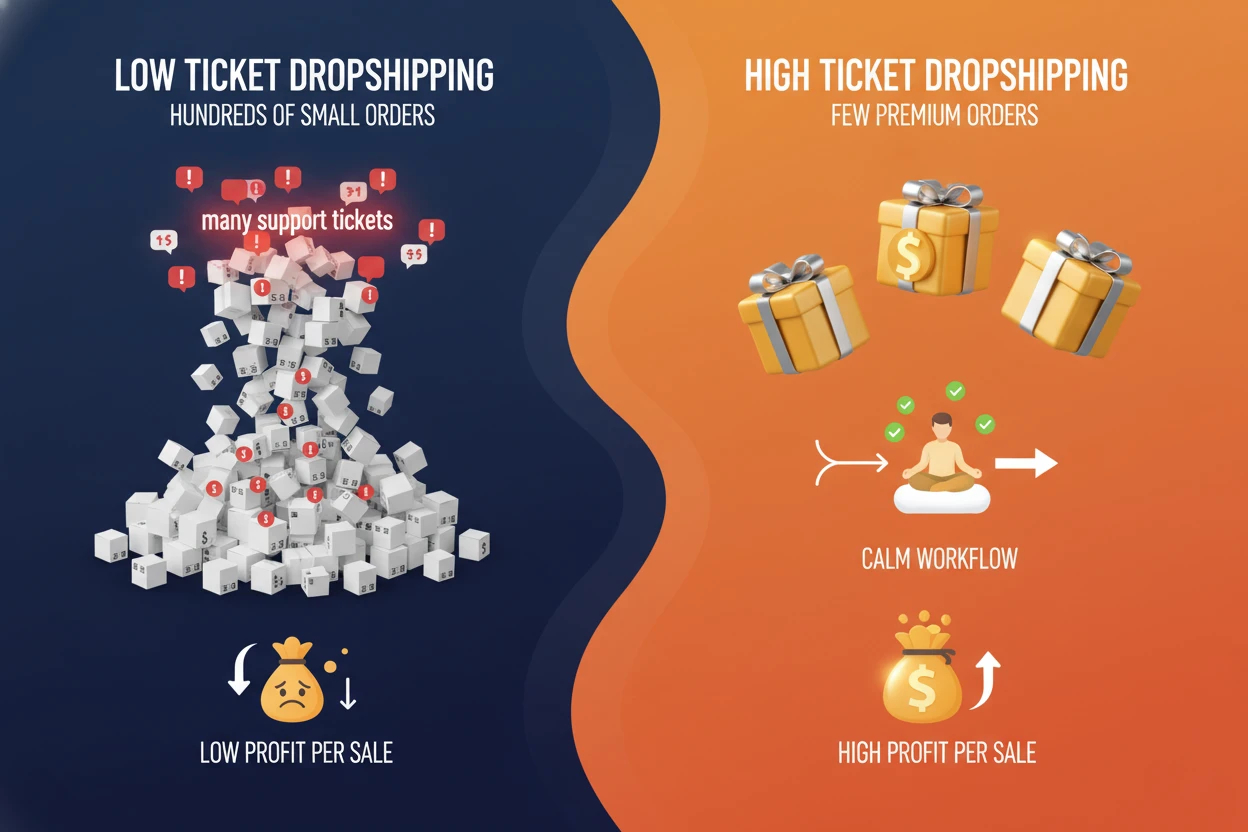
Fewer orders mean:
- Significantly less customer service workload – 5 VIP customers instead of 500 basic customers
- Fewer errors and refunds – high-ticket buyers are serious, motivated, and satisfied when properly served
- Simplified operational complexity – managing 100 orders monthly is vastly easier than managing 10,000
- Better profit margins – suppliers prioritize reliable high-ticket partners with better pricing
- Professional brand positioning – serving premium customers reinforces premium brand identity
Scalability looks different:
- Low-ticket: Grinding through volume, increasing customer service overhead exponentially
- High-ticket: Scaling to dozens or hundreds of orders monthly while maintaining quality, building a sustainable business generating $50,000-$500,000+ annually with reasonable effort
The lifestyle impact is substantial. High-ticket dropshippers report managing their entire business in 10-15 hours weekly once established, compared to low-ticket entrepreneurs working 40+ hours managing operational chaos.
Key Components of High Ticket Dropshipping
Niche Selection
Niche selection is foundational to high ticket dropshipping success. You must focus on consistently in-demand products, not trendy fads that disappear overnight. High-ticket customers buy products they genuinely need and will use for years.
Strong high-ticket niches share characteristics: recurring demand (people consistently buy them), clear customer problems (addressing specific needs), willing-to-pay demographics (target customers have budgets), and defensible positioning (you can differentiate through brand, service, or partnerships).
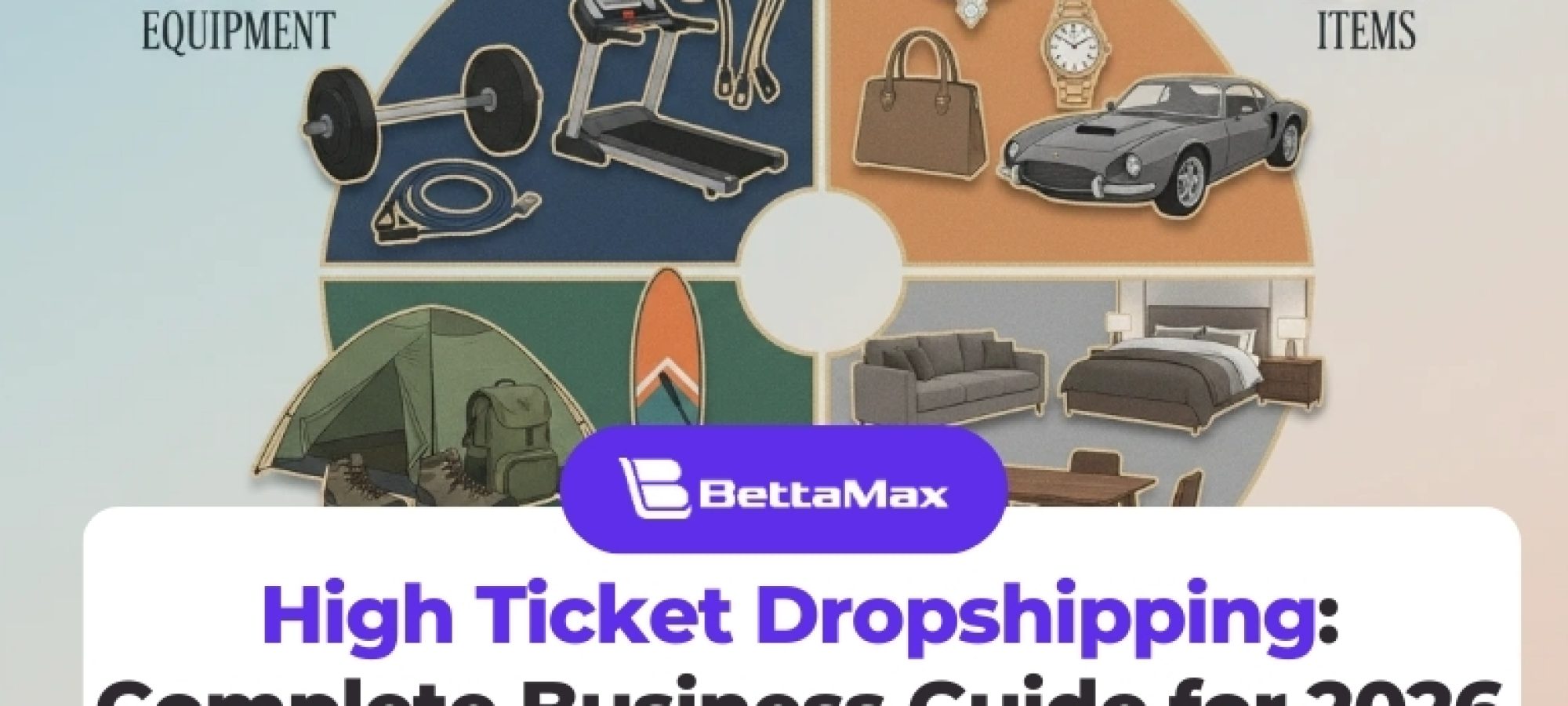
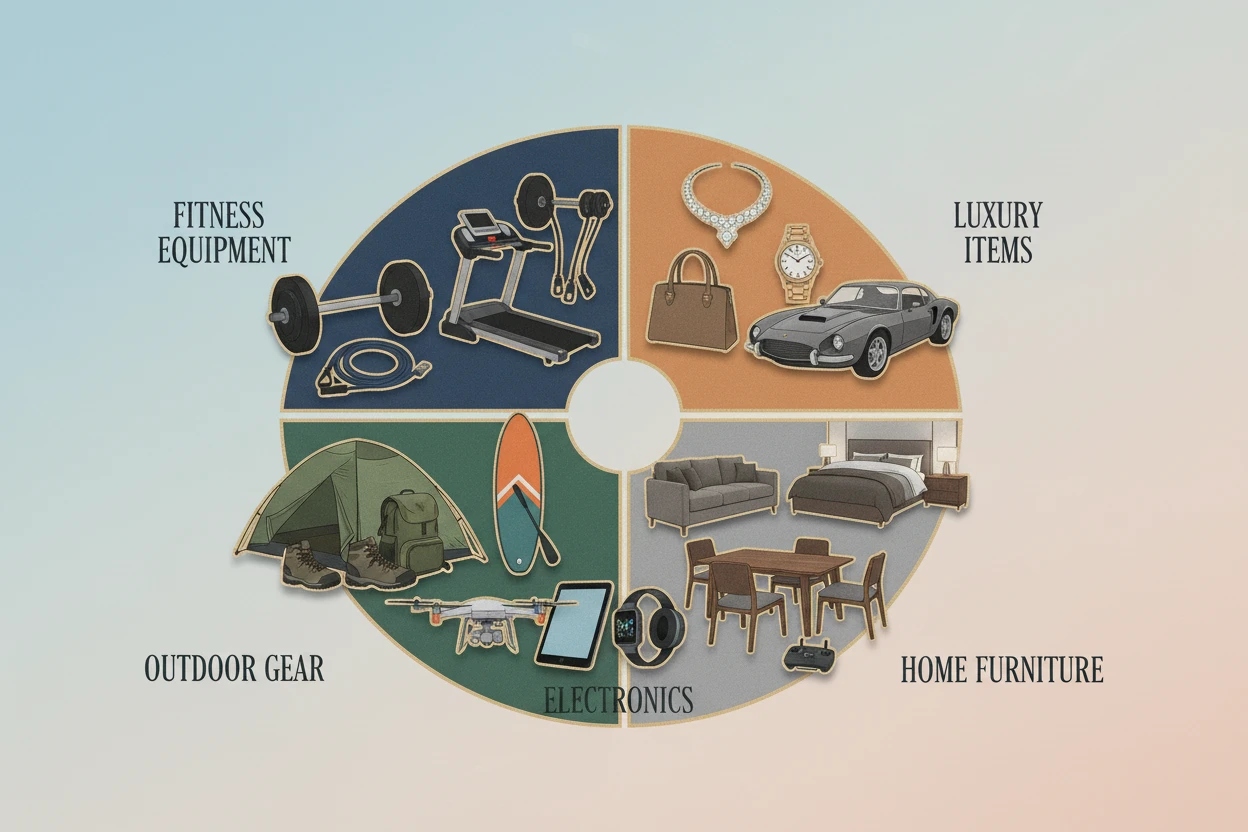
Examples of strong high-ticket niches include fitness equipment (smart gym systems, professional treadmills, massage chairs), outdoor and recreation (e-bikes, premium tents, paddleboards, kayaks), electronics and gadgets (professional drones, audio equipment, smart home systems), home goods (designer furniture, luxury kitchen appliances), and home improvement products (solar panels, power tools, garden sheds).
Suppliers
Suppliers form the backbone of high ticket dropshipping success. The best suppliers are US-based suppliers warehousing and shipping products directly to customers. US-based suppliers offer multiple advantages:
- Faster shipping to customers (3-7 days vs 20-45 days from China)
- Better quality control through established manufacturing standards
- Reliable fulfillment with professional logistics
- Customer trust in domestic sourcing
- Easier communication in English with established businesses
Building strong supplier relationships is critical. The best approach involves identifying 2-4 primary suppliers per niche, maintaining regular communication, discussing product optimization and exclusive items, and treating suppliers as partners in your business rather than transactional vendors.
Storefront
Your storefront is where customers make purchase decisions. Shopify stores are preferred for their professionalism, ease of use, and built-in e-commerce functionality. Store design must inspire trust and simplify purchases because high-ticket buyers scrutinize every detail before committing.
Critical storefront elements include:
- Professional product photography showing multiple angles and lifestyle context
- Detailed product descriptions addressing common questions and concerns
- Customer testimonials and reviews building credibility and social proof
- Clear return and guarantee policies reducing purchase anxiety
- Financing options like Shop Pay installments making high-ticket items accessible
- Live chat support providing immediate assistance for serious buyers
- Trust signals including guarantees, certifications, and awards
Your store represents your brand completely. Invest in professional design, fast page load speeds, mobile optimization, and seamless checkout experience. High-ticket buyers expect luxury experiences reflecting premium positioning.
Traffic Generation
Best traffic sources for high ticket dropshipping are fundamentally different from low-ticket sources. You don’t want volume; you want qualified buyers with strong purchase intent.
Highest-performing traffic sources include:
- Google Shopping ads targeting keywords showing purchase intent like “buy professional drone” or “best massage chair”
- Search engine optimization building organic visibility for high-intent keywords
- Retargeting ads reaching website visitors who showed interest but didn’t purchase
- YouTube ads targeting educational content viewers seeking product information
- TikTok and Pinterest driving traffic from users seeking inspiration and recommendations
- Email marketing nurturing past customers toward repeat purchases
The key is targeting buyers with purchase intent rather than casual browsers. A single qualified high-ticket buyer is worth hundreds of low-intent visitors.
Customers
High ticket buyers expect exceptional experiences. They anticipate:
- Smooth purchasing process without friction or confusion
- Financing options like installment plans making high-ticket items accessible
- Strong guarantees and return policies reducing purchase risk
- Responsive customer service providing support throughout the buying journey
- Premium brand experience reflecting the quality and price of products
- Professional communication demonstrating expertise and trustworthiness
Understanding high-ticket buyer psychology is critical. These customers invest significant money. They research extensively, compare alternatives, and expect professional treatment throughout. Responsive, helpful service becomes your competitive advantage.
The Model’s Relevance in 2026
High ticket dropshipping remains highly relevant and growing in 2026. Several market factors support continued growth:
E-commerce growth continues accelerating as consumers embrace online shopping for premium items. Customer expectations for fast shipping, easy returns, and financing options have become standard, removing barriers to online high-ticket purchases.
Financing options like Shop Pay installments, Affirm, and Klarna dramatically increase purchase accessibility. A customer unable to pay $2,000 upfront can finance it interest-free over 12 months, making high-ticket items suddenly achievable.
Thousands of suppliers provide inventory options and competitive pricing. The supplier ecosystem has matured significantly, with US-based suppliers offering quality products at wholesale prices enabling healthy margins.
Effective advertising channels including Google Shopping, Facebook/Instagram ads, and TikTok enable targeted customer acquisition. These platforms’ sophisticated targeting and retargeting capabilities make finding high-intent buyers increasingly efficient.
The model fits entrepreneurs seeking semi-automated, scalable, location-independent income. High ticket dropshipping requires less daily operational management than low-ticket dropshipping, enabling sustainable business building rather than constant grinding.
How to Start High Ticket Dropshipping
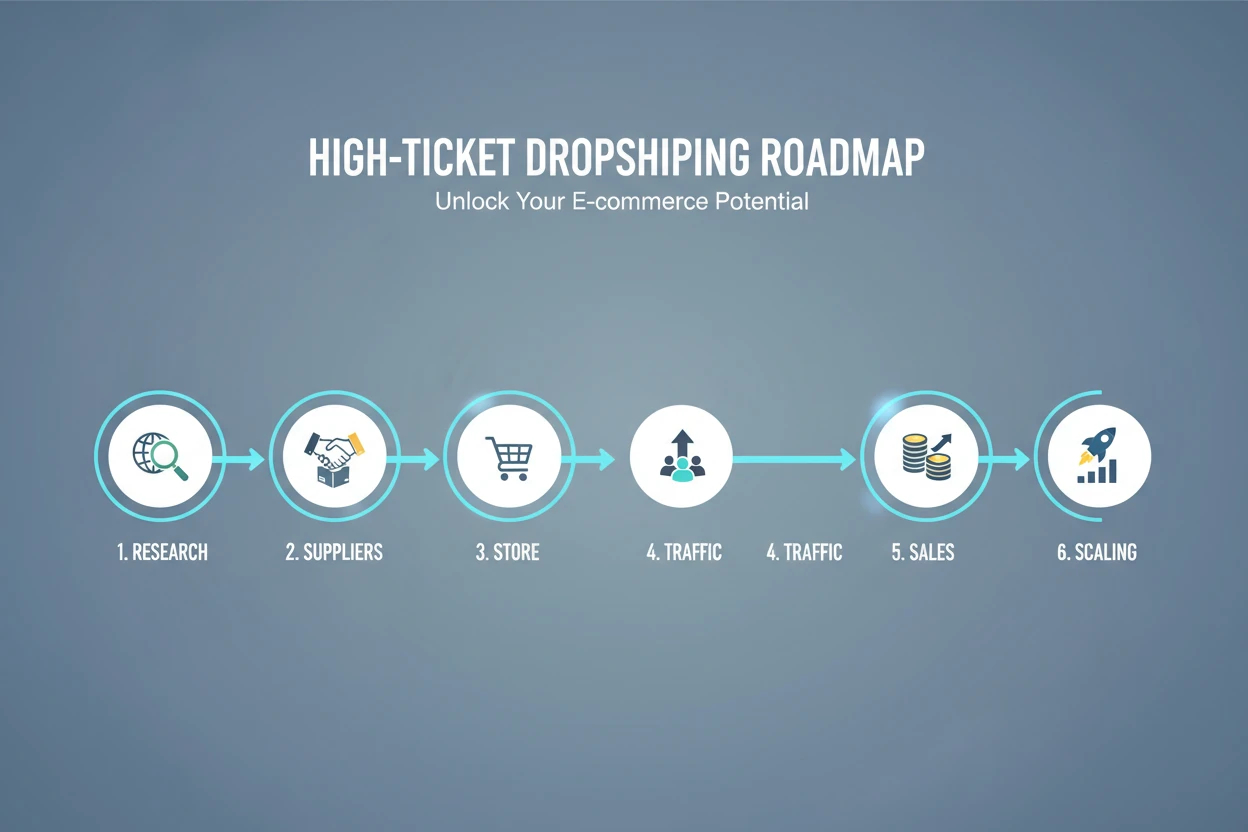
Step 1: Research and Validate Your Niche
Begin by identifying consistently in-demand high-ticket products addressing specific customer problems. Research Google search volume for product keywords, analyze competitors selling similar products, check Amazon and eBay for product popularity and pricing, and validate customer demand through surveys and focus groups.
Validate demand before investing significantly. Spend 1-2 weeks researching your potential niche thoroughly. Interview potential customers about their pain points. Confirm that demand supports sustainable business volume.
Step 2: Find Reliable High-Ticket Suppliers
Identify 2-4 reputable wholesale suppliers serving your niche. Prioritize US-based suppliers offering warehouse fulfillment and direct shipping. Build supplier relationships through professional communication, understand their minimum order policies and pricing, request product samples, verify their capabilities, and establish clear communication channels.
Request sample products before committing to substantial orders. Evaluate sample quality, packaging, shipping speed, and supplier responsiveness. Poor supplier samples predict poor future experiences.
Step 3: Build Your E-Commerce Store
Create a professional Shopify store showcasing your high-ticket products. Invest in high-quality product photography showing multiple angles, lifestyle context, and product details. Write compelling product descriptions addressing customer questions, concerns, and benefits. Add customer testimonials and reviews building credibility.
Implement financing options like Shop Pay installments reducing purchase barriers. Set up live chat support enabling immediate customer assistance. Create clear return and guarantee policies reducing purchase anxiety. Test your store thoroughly before launch.
Step 4: Drive Targeted Traffic
Implement multi-channel traffic strategies focusing on high-intent customers:
- Google Shopping campaigns targeting purchase-intent keywords
- SEO optimization building organic visibility for product keywords
- Retargeting ads reaching previous website visitors
- YouTube ads targeting educational content viewers
- Email marketing building customer lists for repeat sales
- Content marketing establishing authority through valuable information
Start with your highest-performing channels and expand systematically based on results. High-ticket businesses thrive on quality traffic not volume.
Step 5: Close Sales and Manage Fulfillment
When customers order, immediately place supplier orders with correct shipping addresses. Track shipments and proactively communicate with customers providing tracking information and delivery estimates. After delivery, follow up personally ensuring satisfaction and requesting reviews. Manage supplier relationships addressing any issues immediately.
Excellent customer service becomes your differentiator. Responsive, helpful communication builds repeat customers and referrals.
How to Choose High-Ticket Dropshipping Products
Successful high-ticket product selection depends on understanding customer needs and market dynamics.
Identify Customer Problems and Solutions
High-ticket products solve specific, expensive problems. Customers invest significant money because the product addresses real needs they’re willing to pay premium prices to solve. Research what problems your target customers face, what solutions exist, what products solve these problems, and what price points customers accept.
Strong products address genuine customer problems, not artificial wants. A $2,000 massage chair solves back pain and stress relief. A $3,000 e-bike solves transportation and fitness challenges. These real solutions justify premium pricing.
Analyze Competitor Pricing and Margins
Research competitor pricing strategies for your potential products. Identify wholesale suppliers offering products at prices enabling 40-60% margins. Calculate realistic margins accounting for advertising costs, platform fees, and operational expenses.
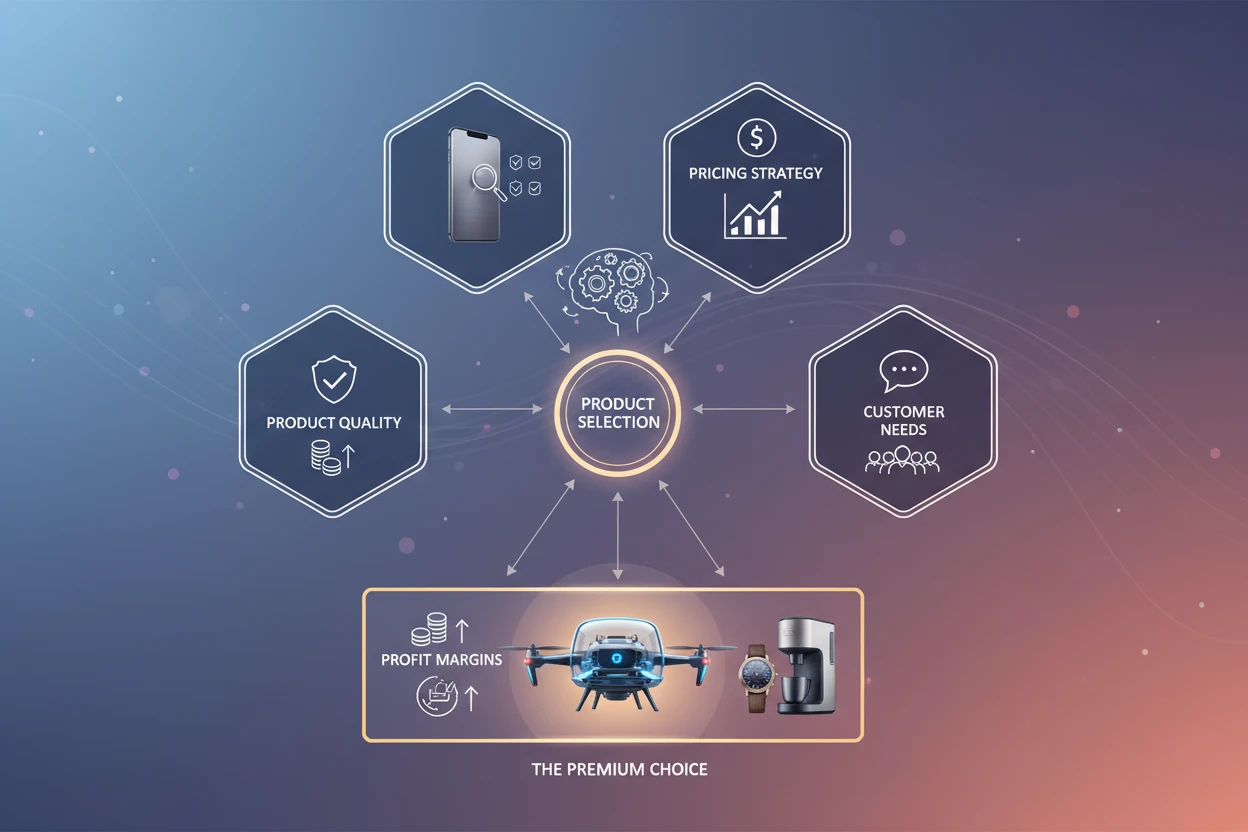
Verify margins support profitability. A $2,000 product purchased at $1,000 wholesale enables $1,000 gross profit. After 20% advertising costs ($400), payment processing fees ($50), and platform fees ($100), net profit is approximately $450 per sale. Five monthly sales generate $2,250 profit. Verify your niche supports this revenue potential.
Evaluate Supply Chain Reliability
Reliable supply chains are non-negotiable. Identify suppliers with consistent inventory, reliable fulfillment, and strong communication. Verify suppliers can maintain stock levels supporting your expected sales volume.
Poor supply chain management destroys businesses. Customers won’t wait 8 weeks for products. Suppliers losing stock or canceling orders damage your brand reputation.
Consider Seasonality and Trends
Avoid trendy products that spike then disappear. High-ticket buyers purchase products they’ll use for years, not temporary fads. Analyze multi-year search trends confirming sustained demand rather than temporary spikes.
Fitness equipment, outdoor gear, and home improvement products show consistent year-round demand with seasonal variations (fitness peaks January, outdoor gear peaks spring/summer). These patterns are predictable and manageable.
5 Common Myths Debunked About High Ticket Dropshipping
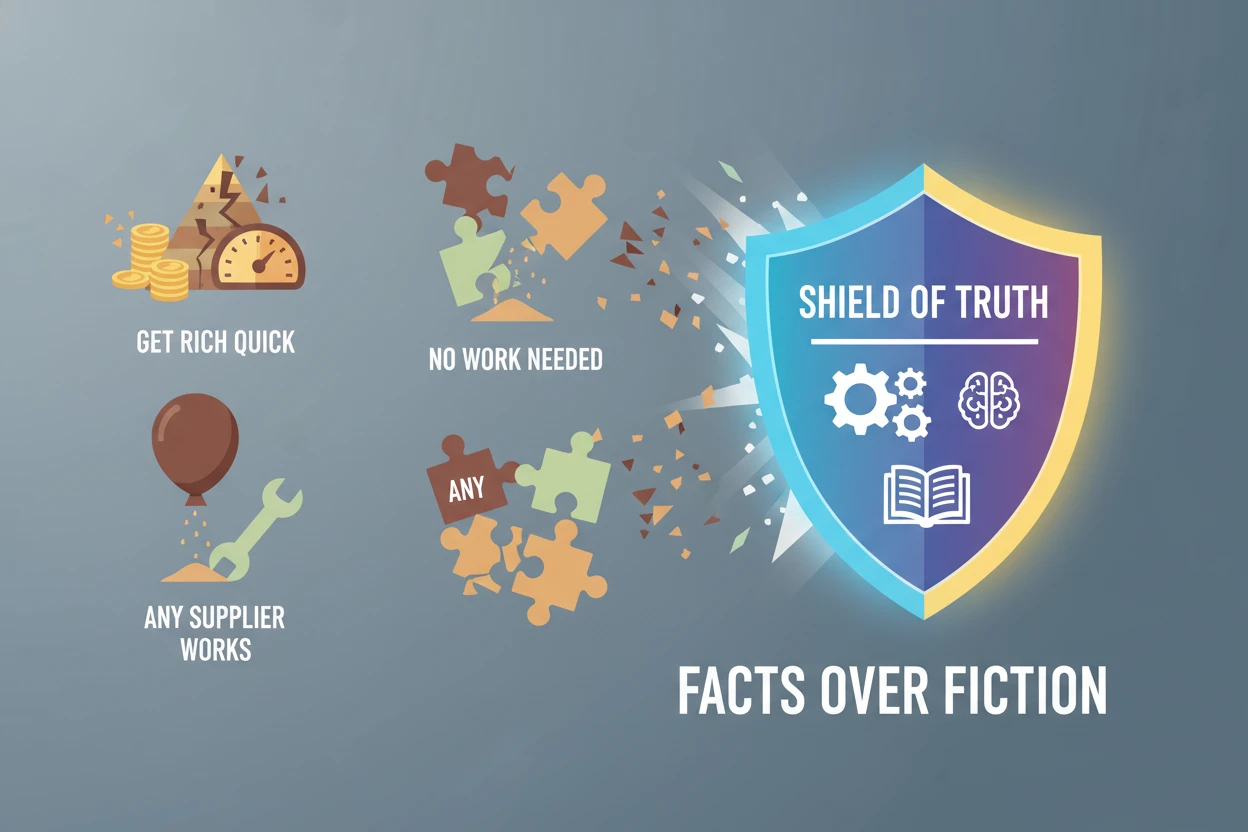
Myth 1: Startup Costs Are Minimal
Reality: High ticket dropshipping requires meaningful startup investment of $2,000-$10,000 covering store setup ($300-500), professional product photography ($500-2,000), initial advertising budget ($500-2,000), supplier samples ($500-1,000), and operational costs ($500-1,000).
This investment is significantly lower than traditional retail but higher than low-ticket dropshipping. However, the investment generates substantially better returns, justifying the capital commitment.
Myth 2: Any Supplier Will Work With You
Reality: Quality suppliers are selective about partner selection. Established US suppliers often require minimum order volumes, business references, proof of retail operation, and professional communication.
New entrepreneurs must approach suppliers professionally, demonstrate legitimate business intent, and prove they can manage orders professionally. Some suppliers require $1,000-5,000 minimum first orders. Building supplier relationships takes time and professionalism.
Myth 3: Small, Casual Traffic Suffices
Reality: High ticket dropshipping requires consistent, targeted traffic generating regular sales. You cannot rely on random website visitors. Successful businesses drive dozens to hundreds of qualified visitors monthly, converting 1-3% into sales.
This requires paid advertising investment, SEO optimization, and sustained marketing effort. High-ticket businesses live or die based on traffic consistency and conversion optimization.
Myth 4: It’s a Get-Rich-Quick Scheme
Reality: High ticket dropshipping is not a get-rich-quick scheme but a sustainable business model requiring time and work to build. Initial months focus on supplier relationship building, store optimization, and traffic generation. Real revenue arrives in months three to six after launching.
Building profitable businesses takes 6-12 months minimum. However, once established, high-ticket businesses generate consistent, substantial income with reasonable ongoing effort.
Myth 5: Anyone Can Succeed Regardless of Work Quality
Reality: High ticket dropshipping rewards execution excellence. Successful entrepreneurs obsess over store design, product descriptions, customer service, supplier management, and marketing optimization. Half-hearted efforts fail.
Competitive advantage comes from superior execution, responsive customer service, and professional brand positioning. Business quality directly correlates with financial results.
Best High Ticket Dropshipping Suppliers
Top Platforms and Marketplaces
Alibaba and AliExpress offer huge variety from general goods to electronics, with growing US warehouses for faster shipping. AutoDS integrates with these platforms enabling automation, though they traditionally focus on lower-ticket items. Use them for specific high-ticket categories offering US warehouse options.

Amazon provides access to millions of products including premium brands. Customer trust in Amazon brands enables credibility-building. However, margins often compress due to competition. Amazon works best for niche high-ticket products with limited competition.
BrandsGateway specializes in luxury fashion and accessories with strong integrations and high-profit potential. They require subscription-based access but offer curated, premium products appealing to high-ticket demographics.
Supplier Directories and Networks
Spocket and Syncee connect you with US, EU, and global suppliers offering curated, quality items with better margins and faster shipping than typical AliExpress sourcing. These platforms specialize in dropshipping-friendly suppliers with professional operations.
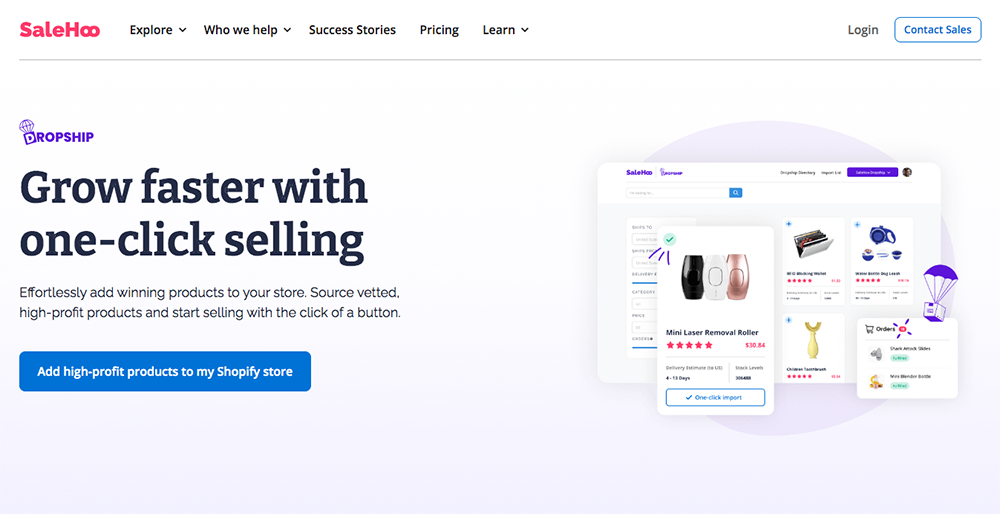
SaleHoo operates as a comprehensive supplier directory helping you find wholesale suppliers across product categories. Quality varies; thorough vetting is required before ordering.
DropCommerce provides curated suppliers with guaranteed minimum 30% retailer margins and fast shipping across North America. Their curation eliminates low-quality suppliers, focusing exclusively on professional operations.
Fulfillment and Automation Focused
EPROLO offers private labeling, AI sourcing, and US warehouses for electronics, fashion, and furniture. Their technology integration and warehouse options make them attractive for scaling operations.
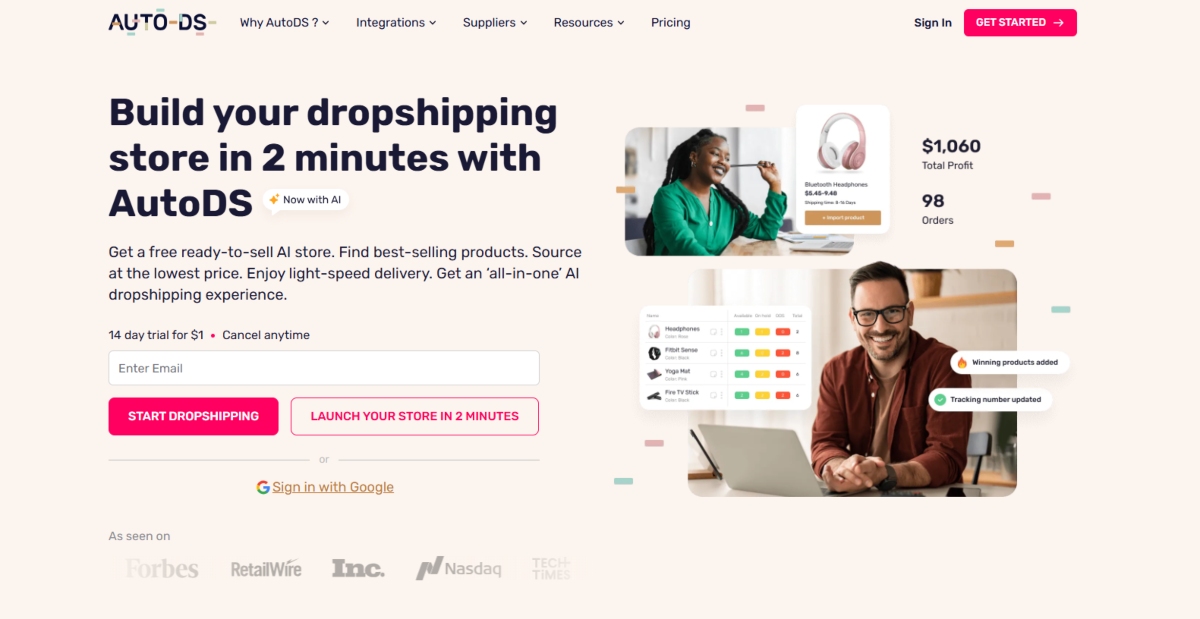
AutoDS functions as an automation platform helping manage and source from multiple suppliers including AliExpress, Alibaba, and others. Automation reduces manual work but requires monitoring for quality consistency.
Top High Ticket Dropshipping Niches and Products
Fitness Equipment
High-ticket fitness equipment commands premium pricing and attracts serious buyers. Smart gym systems including Apple Fitness compatible equipment, high-end treadmills with integrated technology, massage chairs combining comfort and wellness, and rowing machines supporting serious fitness routines all perform well.
Fitness buyers invest heavily in health, making them willing to pay premium prices. The fitness niche benefits from consistent demand driven by New Year’s resolutions, lifestyle changes, and home gym trends accelerating post-2020.
Outdoor and Recreation Equipment
Outdoor enthusiasts willingly invest heavily in quality equipment. E-bikes combining transportation and fitness, premium tents supporting luxury camping, paddleboards and kayaks enabling water sports, camping gear for serious adventurers, and drones for photography and recreation all command $500-5,000 prices.
Outdoor niches attract engaged communities sharing equipment recommendations and reviews. Influencer marketing and community engagement drive significant sales volumes.
Electronics and Gadgets
Cutting-edge technology attracts early adopters willing to pay premium prices. Professional drones for photography and videography, high-end audio equipment for audiophiles, smart home devices enabling home automation, 3D printers for creators, and security systems for home protection all offer high-ticket opportunities.
Electronics appeal to tech-savvy demographics comfortable with online purchasing. Product reviews and technical specifications drive purchase decisions.
Home Goods and Furniture
Home improvement and luxury living drive sustained purchasing. Designer furniture commanding premium pricing for quality and aesthetics, luxury home decor reflecting personal style, high-end kitchen appliances including espresso machines and premium mixers, and smart home integration systems appeal to homeowners investing in living spaces.
Home goods niches benefit from lifestyle marketing, interior design content, and home improvement trends. Instagram and Pinterest drive substantial traffic to home goods businesses.
Luxury and Hobby Products
Luxury items attract customers prioritizing quality and exclusivity. Premium watches combining functionality and status, jewelry appealing to special occasions and personal expression, designer perfumes enabling personal fragrance choices, telescopes for astronomy enthusiasts, and collector items appealing to passionate hobbyists all command premium pricing.
Luxury and hobby niches attract engaged communities and enthusiast networks. Personal recommendations and expert positioning drive sales in these categories.
Home Improvement and Tools
Serious DIY enthusiasts and professionals invest heavily in quality tools. Solar panels enabling energy independence, premium power tools for professional contractors and serious DIYers, garden sheds and outdoor storage, HVAC systems, and water systems all address home improvement needs.
Home improvement niches attract budget-conscious yet quality-conscious customers. Research, comparison shopping, and expert recommendations dominate purchase decisions.
High Ticket Dropshipping FAQ
Is High Ticket Dropshipping Profitable?
Yes. High ticket dropshipping generates $500-1,000+ profit per sale. With 30-60 sales monthly, first-year businesses earn $15,000-60,000+ profit. Established businesses scaling to 100+ monthly sales reach six-figure annual income.
Read more: Dropshipping Startup Costs: How Much Should You Invest?
What Are the Risks of High Ticket Dropshipping?
Main risks: supplier unreliability, high customer service expectations, significant advertising costs, inventory stock-outs, and market competition. Mitigate through supplier vetting, strong relationships, professional customer service, diversified traffic, and ongoing research.
How Do I Choose a High Ticket Dropshipping Niche?
Select niches with consistent year-round demand, clear customer problems, willing buyers, manageable competition, and healthy margins. Validate demand using Google Trends, competitor analysis, customer surveys, and test ads.
How Can I Tell If a High Ticket Supplier Is Actually Good?
Order product samples and evaluate quality, fulfillment speed, communication responsiveness, return policies, inventory reliability, and professional operations. Request customer references. Poor suppliers reveal themselves quickly.
Where Can I Find High Ticket Dropshipping Suppliers in the USA?
Use Alibaba (US warehouses), SaleHoo, Spocket, DropCommerce, ThomasNet, Google searches, industry associations, and trade shows. US suppliers offer better quality and faster shipping than international alternatives.
How Should I Manage My High Ticket Suppliers?
Maintain regular communication, treat them as partners, pay on time, offer feedback, commit to volume, negotiate exclusive arrangements, and solve problems proactively. Professional partnerships create competitive advantages through better pricing and exclusive products.
Conclusion: Your High Ticket Dropshipping Journey
High ticket dropshipping offers a realistic path to substantial income without holding inventory or managing massive customer service operations. The model trades startup capital and professional execution for significantly better profit margins, fewer transactions, and sustainable business building.
Your next steps:
- Identify your high-ticket niche addressing genuine customer problems
- Research and vet potential suppliers ensuring reliability and quality
- Build a professional Shopify store inspiring customer trust
- Drive targeted traffic reaching serious, high-intent buyers
- Close sales professionally managing fulfillment and customer service excellently
- Optimize continuously improving store conversion and supplier relationships
High ticket dropshipping isn’t a get-rich-quick scheme, but it is a legitimate path to building a six-figure business with reasonable effort and professional execution. Start today by identifying your profitable niche and your journey toward sustainable, scalable high-ticket success begins.