
Facebook Marketplace has become a powerful platform for aspiring entrepreneurs to launch e-commerce businesses with minimal investment. With 2.9 billion monthly active users and zero listing fees, it offers an accessible entry point into the dropshipping world.
But how does it really work, and can you actually profit from it in 2026? This comprehensive guide walks you through everything you need to know about starting and scaling a profitable Facebook Marketplace dropshipping business.
What Is Facebook Marketplace Dropshipping?
Definition of Facebook Marketplace Dropshipping
Facebook Marketplace dropshipping involves listing products for sale on Facebook Marketplace without holding inventory.
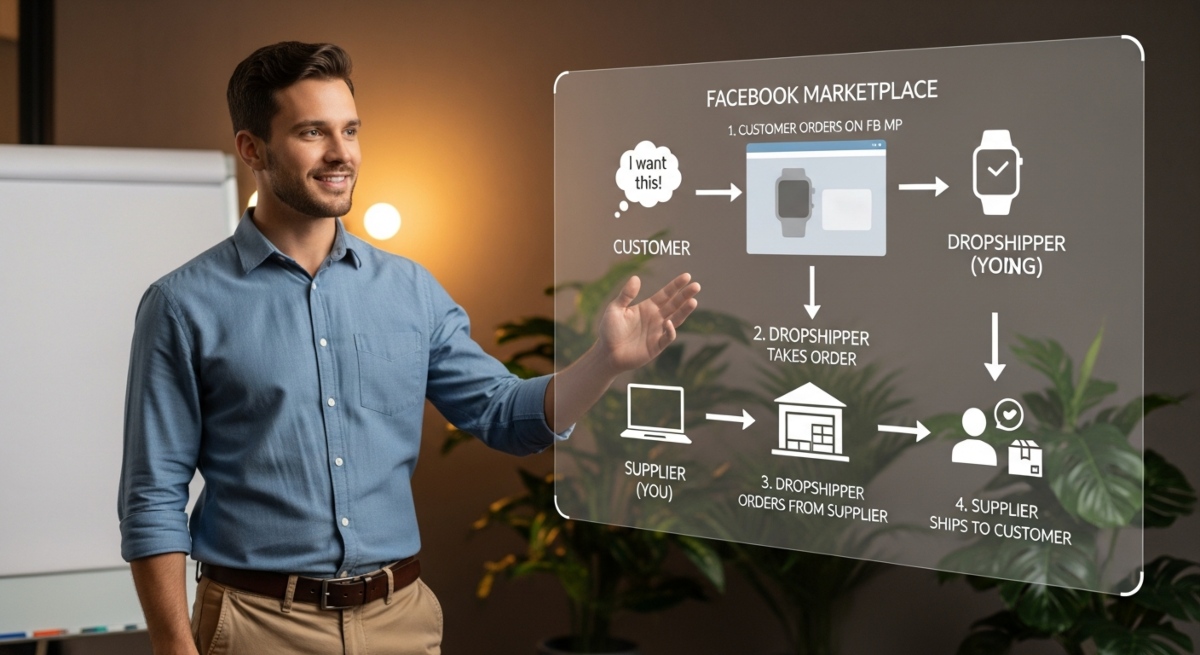
When a customer makes a purchase, the seller buys the product from a supplier, who then ships it directly to the buyer. The seller never handles the physical products.
How It Works: Selling Without Holding Inventory
The process is simple: you create product listings, market them, and when an order comes in, you order the product from a third-party supplier (such as Walmart, Amazon, or wholesale distributors). The supplier handles the shipping directly to the customer.
Difference Between Traditional Dropshipping and Facebook Marketplace Dropshipping
Traditional dropshipping typically involves setting up your own eCommerce store (like Shopify or WooCommerce), while Facebook Marketplace dropshipping leverages Facebook’s platform to tap into an already established audience.
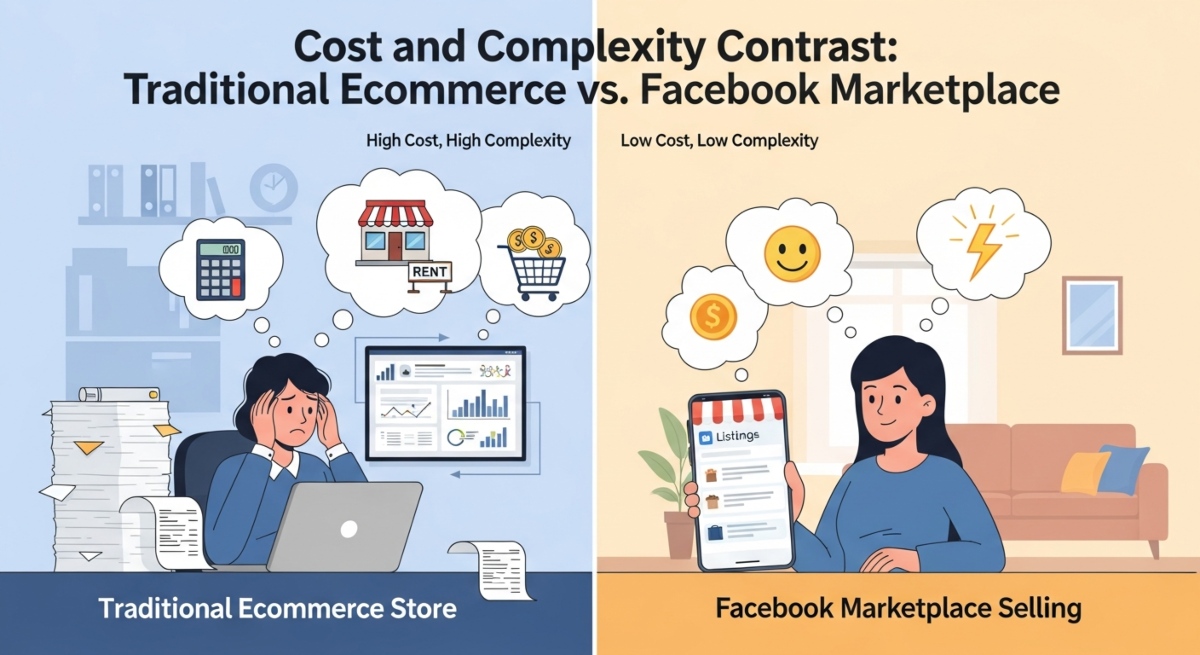
This difference means fewer costs for store creation and ongoing maintenance.
Benefits of Using Facebook Marketplace for Dropshipping
Free Traffic: No need to pay for ads to list your products.
Local Reach: Sellers can cater to local buyers with faster shipping times.
No Store Setup Cost: Facebook Marketplace provides the platform for free, so you can avoid upfront costs typically associated with setting up an online store.
Is Dropshipping Allowed on Facebook Marketplace in 2026?
Overview of Facebook Marketplace’s Policies
Facebook has clear guidelines for sellers on its Marketplace. It prohibits the sale of counterfeit products, illegal goods, or items that violate its terms. Sellers must also adhere to its commerce policies regarding customer service and fulfillment practices.
Is Dropshipping Permitted?
Yes, dropshipping is permitted as long as sellers follow the platform’s rules. However, Facebook requires that you take responsibility for order fulfillment and delivery.
Sellers must not list products they do not have a reliable supply chain for or offer products that cannot be shipped on time.
Compliance and Seller Accountability
Sellers are accountable for ensuring their products are legitimate, meet Facebook’s policies, and are shipped on time. Facebook holds sellers responsible for handling returns, refunds, and maintaining customer satisfaction. If you fail to comply with these standards, your account may be suspended.
Common Violations That Can Lead to Suspension
Common violations that can result in suspension include:
- Selling prohibited or counterfeit products.
- Failing to ship orders within the promised timeframe.
- Misleading product descriptions or images.
- Poor customer service, including unaddressed complaints or disputes.
- Ignoring Facebook’s return and refund policies.
To avoid these violations, ensure that your product listings are accurate, shipping times are clearly communicated, and customer service is responsive.
How to Stay Compliant with Facebook’s Rules
To remain compliant:
- Regularly review Facebook’s commerce policies to ensure you’re up-to-date with any changes.
- Be transparent in your listings about delivery times, availability, and return policies.
- Use reliable suppliers who consistently fulfill orders on time and offer tracking information.
Respond promptly to customer inquiries and resolve issues quickly to maintain positive ratings.
How to Start Dropshipping on Facebook Marketplace (Step-By-Step Guide)
Step 1. Create a Professional Facebook Account
Personal vs Business Accounts
A personal account can’t be used to sell on Facebook Marketplace. You must create a business account, which will provide you access to more features like Facebook Ads and Insights.
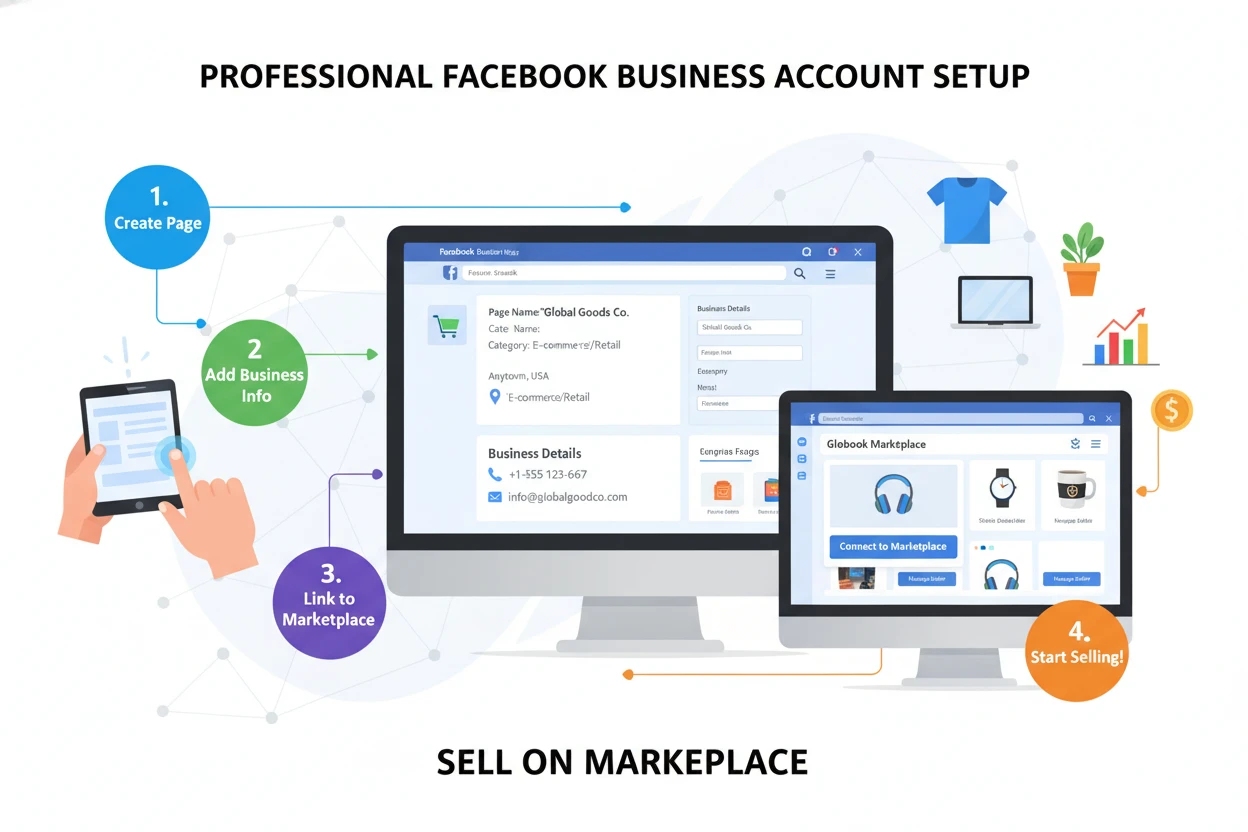
Setting Up Your Business Account
When setting up your business account, use a professional name, profile picture, and business information. Your account should reflect trustworthiness and professionalism to build credibility with potential buyers.
Marketplace Eligibility Requirements
Facebook requires sellers to meet specific eligibility criteria to list products on Marketplace. This includes having a verified Facebook account, adhering to Facebook’s community standards, and not having any past violations or restrictions.
Step 2. Master Facebook Marketplace Rules
Understanding Facebook’s Commerce Policies
Read and understand Facebook’s commerce policies before you begin selling. These policies cover prohibited products, acceptable business practices, and customer service expectations. Make sure to comply with these to avoid account suspension.
Listing Approval System
Not all listings are automatically approved. Facebook may review certain products to ensure they comply with their policies. If a listing is rejected, you’ll be notified with reasons for the rejection and can make necessary adjustments.
Shipping Requirements and Restrictions
Facebook Marketplace has specific shipping guidelines, including requirements for shipping timeframes. Sellers must offer reliable tracking and delivery services, ensuring that products arrive within a reasonable time.
What Products You Can and Cannot Sell
Facebook Marketplace has restrictions on certain product categories, such as alcohol, tobacco, and illegal items. Always check Facebook’s list of prohibited items and avoid listing products in these categories.
Step 3. Product and Niche Research
How to Choose a Profitable Niche
The key to successful dropshipping on Facebook Marketplace is identifying a profitable niche. Focus on trending products, popular categories, or local products that cater to specific customer needs.
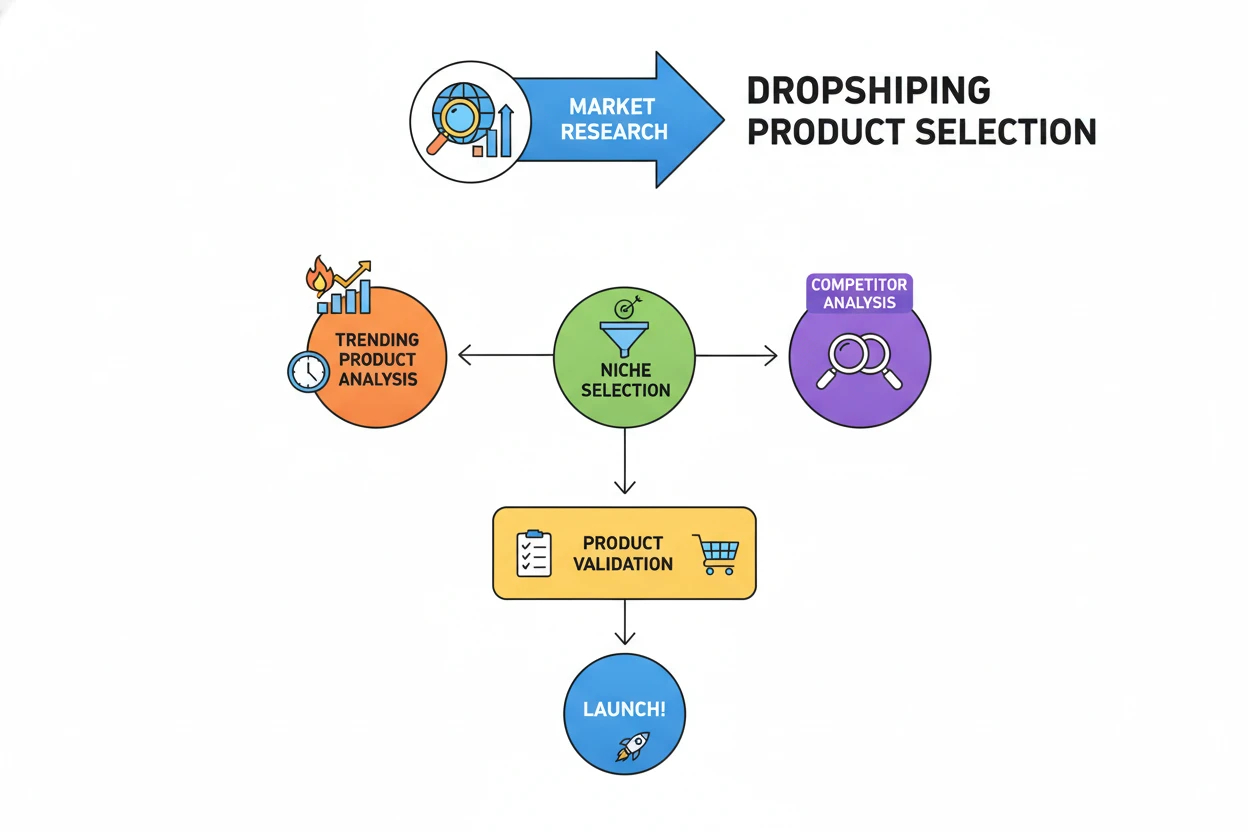
Consider seasonal trends and seasonal sales events when selecting products.
High-Demand Products to Sell in 2026
In 2026, popular niches might include:
- Health and wellness products.
- Home and kitchen gadgets.
- Eco-friendly or sustainable products.
- Tech accessories.
Research competitors and trends to understand what’s selling well in your target market.
Avoiding Prohibited Products
Certain categories, such as weapons, illegal items, or items that infringe intellectual property rights, are prohibited on Facebook Marketplace. Be sure to read Facebook’s full list of prohibited items and avoid listing anything that could lead to penalties or account suspension.
Step 4. Find Reliable Dropshipping Suppliers
Domestic vs International Suppliers
You can choose between domestic suppliers (local) and international suppliers (e.g., AliExpress). Domestic suppliers often offer faster shipping times, which is beneficial for keeping customers satisfied. However, international suppliers can sometimes offer better prices or a broader range of products.
How to Find Trusted Suppliers (Walmart, Amazon, Wholesale Suppliers)
Many dropshippers use major retailers like Walmart or Amazon as suppliers. Alternatively, you can work with dedicated dropshipping suppliers or wholesalers. Look for suppliers that offer reliable shipping times, quality products, and good customer service.
What Makes a Good Supplier for Facebook Marketplace
A reliable supplier is crucial for maintaining a smooth dropshipping operation. Choose suppliers with:
- Fast and accurate order fulfillment.
- Transparent pricing and shipping information.
- Good customer support and a return policy.
- Positive reviews and a history of fulfilling orders.
Step 5. Create Effective Marketplace Listings
Optimizing Product Titles and Descriptions for Facebook Marketplace
Effective product titles should be clear and descriptive, containing keywords that customers may use to search for the product. For example, “Eco-Friendly Stainless Steel Water Bottle – 500ml”. Ensure descriptions provide essential product details, benefits, and features while avoiding any exaggerations.
Image Requirements and Best Practices
Images are critical in driving conversions. Facebook Marketplace requires high-quality images that showcase the product from multiple angles. Avoid using stock images or images with logos or watermarks. Use clean, well-lit photos that accurately represent the product.
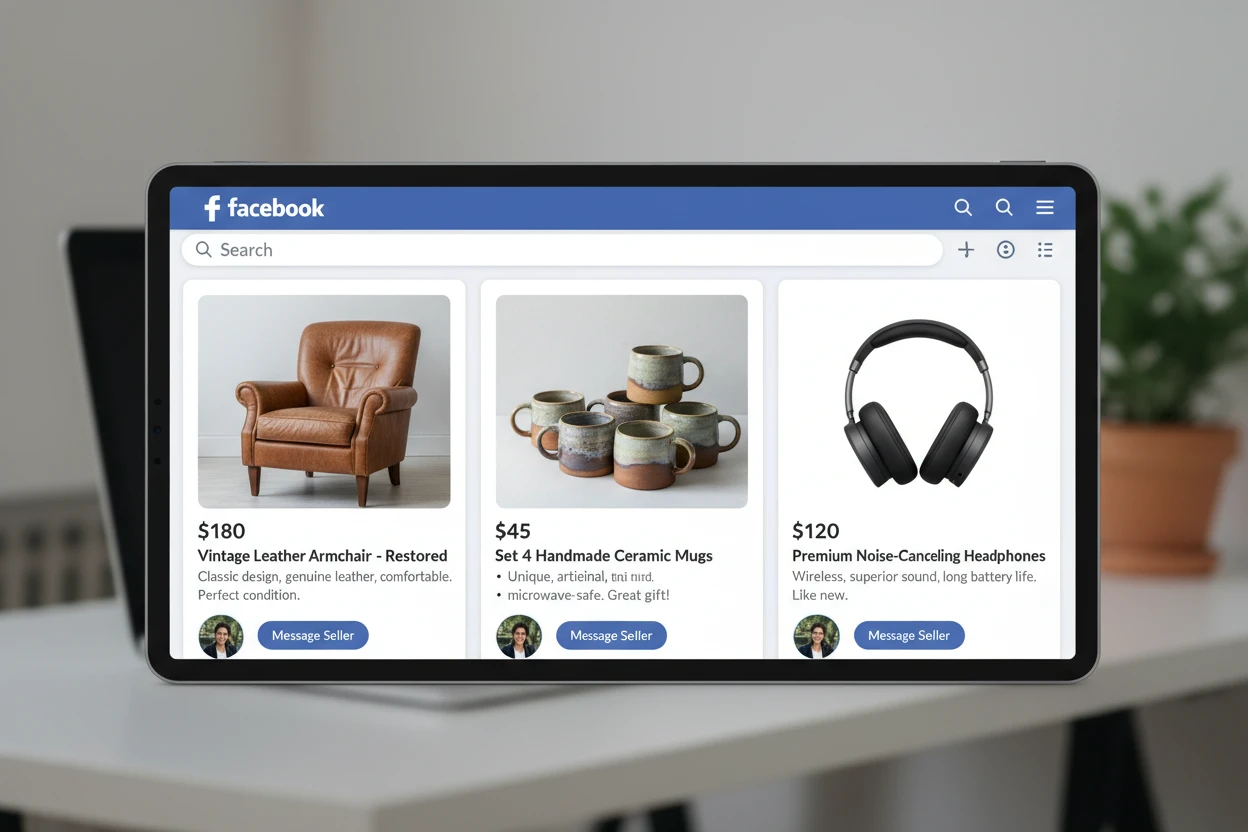
How to Price Your Products for Maximum Profit
Competitive pricing is key on Facebook Marketplace. Research similar products and price your items competitively while accounting for supplier costs, shipping fees, and Facebook’s selling fees. Consider using price-ending strategies, like $19.99 instead of $20, to make the product appear more affordable.
Step 6. Order Processing and Fulfillment
How to Process Orders Manually
When an order comes in, you’ll need to manually place the order with your supplier. Ensure that the supplier has the correct shipping information, and provide the customer with tracking details once the order ships.
Ensuring Accurate Tracking and Shipping Information
Accurate tracking information is vital for keeping your customers informed. Provide the tracking number as soon as the product ships to ensure transparency and avoid disputes.
Best Practices for Timely Delivery
Offer reasonable shipping times and ensure your supplier can meet those expectations. Always overestimate shipping times, and communicate with customers if there’s any delay.
Step 7. Customer Service and Returns
Responding to Customer Inquiries and Issues Promptly
Customer service is key to maintaining a positive seller rating. Respond to all customer messages quickly and professionally, addressing any concerns or complaints promptly.
Handling Returns and Refunds Efficiently
Facebook Marketplace requires sellers to follow specific return and refund guidelines. Make sure you clearly outline your return policy in your listings, and always act in good faith when handling return requests.
How to Build a Trustworthy Reputation as a Seller
Building trust is essential on Facebook Marketplace. Ensure fast response times, accurate product listings, and excellent customer service. Positive reviews and ratings will help establish your reputation as a reliable seller.
Step 8. Analyze and Scale Your Facebook Marketplace Dropshipping Business
Key Metrics to Track for Success
Monitor important metrics like sales volume, customer feedback, product performance, and profit margins. Use this data to identify which products are performing best and which might need adjustments.

How to Safely Scale Your Business
Scaling your dropshipping business involves increasing your product listings, expanding to new markets, and improving your fulfillment process. Ensure you can manage larger orders and customer service demands before scaling up.
Expanding to Other Channels (e.g., Shopify)
Once your Facebook Marketplace store is established, consider expanding to platforms like Shopify or Amazon. This allows you to reach more customers and create additional revenue streams.
Tips for Running a Successful Facebook Marketplace Dropshipping Business in 2026
Optimizing Listings for Better Visibility
Regularly update and optimize your product listings to ensure they are discoverable by the right audience. Use relevant keywords and high-quality images.
Marketing Strategies for Increased Sales
Consider running Facebook Ads to promote your listings and reach a broader audience. You can also engage with local groups or communities to drive organic traffic to your products.
How to Build Customer Trust and Loyalty
Deliver on your promises and provide excellent service to foster long-term customer relationships. This will help increase repeat sales and positive word-of-mouth.
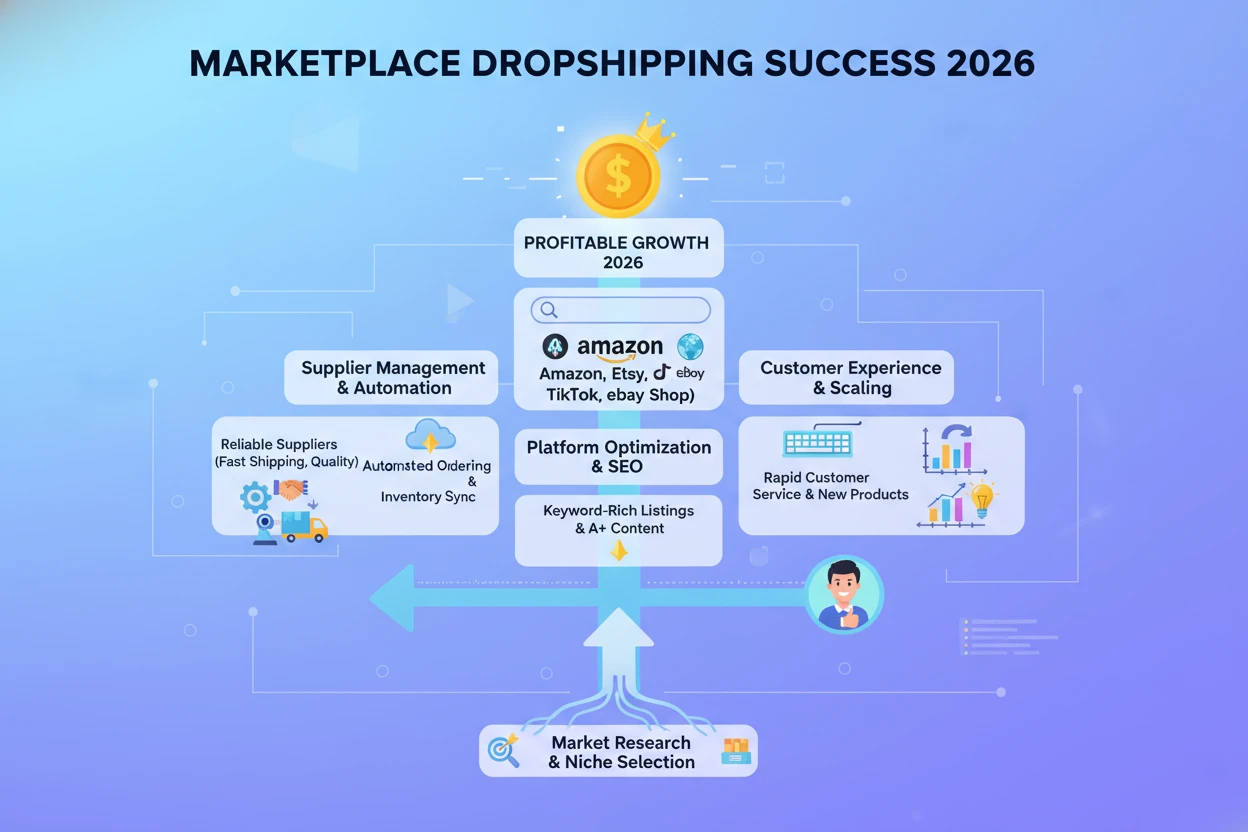
Managing Shipping and Delivery Times Effectively
Ensure reliable shipping partners and communicate realistic delivery times to avoid customer frustration and cancellations.
Handling Customer Feedback and Reviews
Take negative reviews as constructive feedback and respond professionally to resolve issues. Positive reviews will help boost your credibility.
Facebook Marketplace Dropshipping FAQs
Is Dropshipping Allowed on Facebook Marketplace?
Yes, dropshipping is allowed, but you must comply with Facebook’s rules and ensure you provide excellent customer service, product authenticity, and timely delivery.
Can I Dropship Without Holding Inventory?
Yes, that’s the essence of dropshipping. You don’t need to keep products in stock; the supplier ships directly to your customer.
Do I Need a Business Account to Sell on Facebook Marketplace?
Yes, a business account is required to list products for sale on Facebook Marketplace.
How Do I Handle Returns and Refunds?
Follow Facebook’s return policy guidelines. Ensure timely responses and provide clear instructions for returns and refunds to keep your customer base satisfied.
How to Automate Facebook Marketplace Dropshipping?
Automation tools like AutoDS can help streamline order fulfillment and customer communication, but always ensure you stay compliant with Facebook’s policies.
What Products Should I Avoid on Facebook Marketplace?
Avoid prohibited products like counterfeit goods, illegal items, or anything that violates Facebook’s commerce policies.
How Do I Price Competitively on Facebook Marketplace?
Research competitor prices and ensure your pricing reflects the value of the product, factoring in supplier costs, shipping fees, and any platform fees.
How Long Will It Take to Get My First Sale?
The time it takes to get your first sale can vary based on the product, pricing, and competition, but with effective marketing, it can take anywhere from a few days to a few weeks.
Does Facebook Charge Selling Fees?
Facebook charges a transaction fee, but there are no listing fees on Facebook Marketplace. Always account for these fees when setting prices.
Can I Scale Facebook Marketplace Dropshipping to Other Platforms?
Yes, you can expand to other platforms like Shopify or Amazon once you’ve established a successful business on Facebook Marketplace.
Conclusion
Facebook Marketplace dropshipping offers a low-cost entry point for entrepreneurs looking to start a business without upfront inventory costs. With the right strategies, it can be a profitable venture.
Always stay compliant with Facebook’s policies, provide excellent customer service, and focus on building a strong brand reputation.
Start by setting up your professional account, researching profitable products, and optimizing your listings. Focus on providing quality customer service and timely fulfillment, and scale your business gradually.