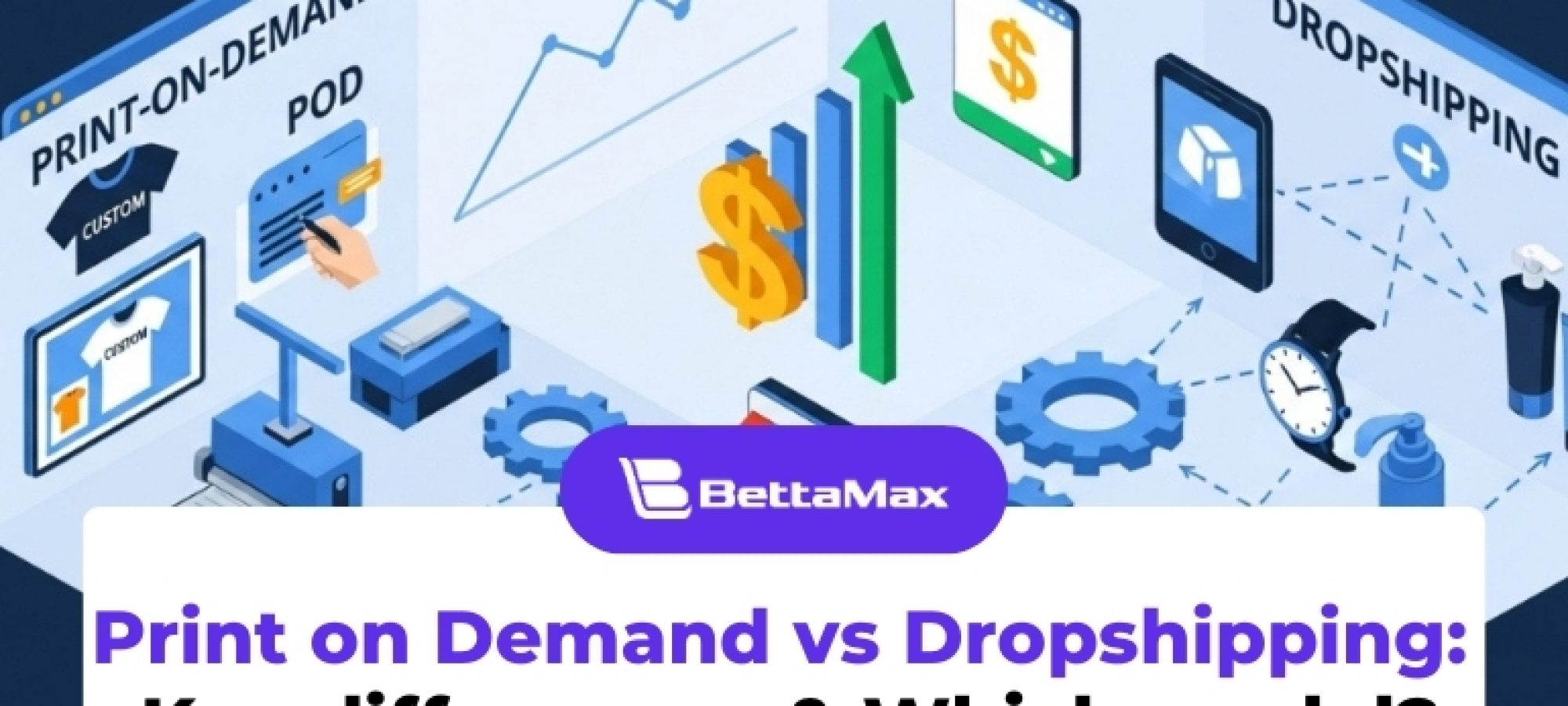

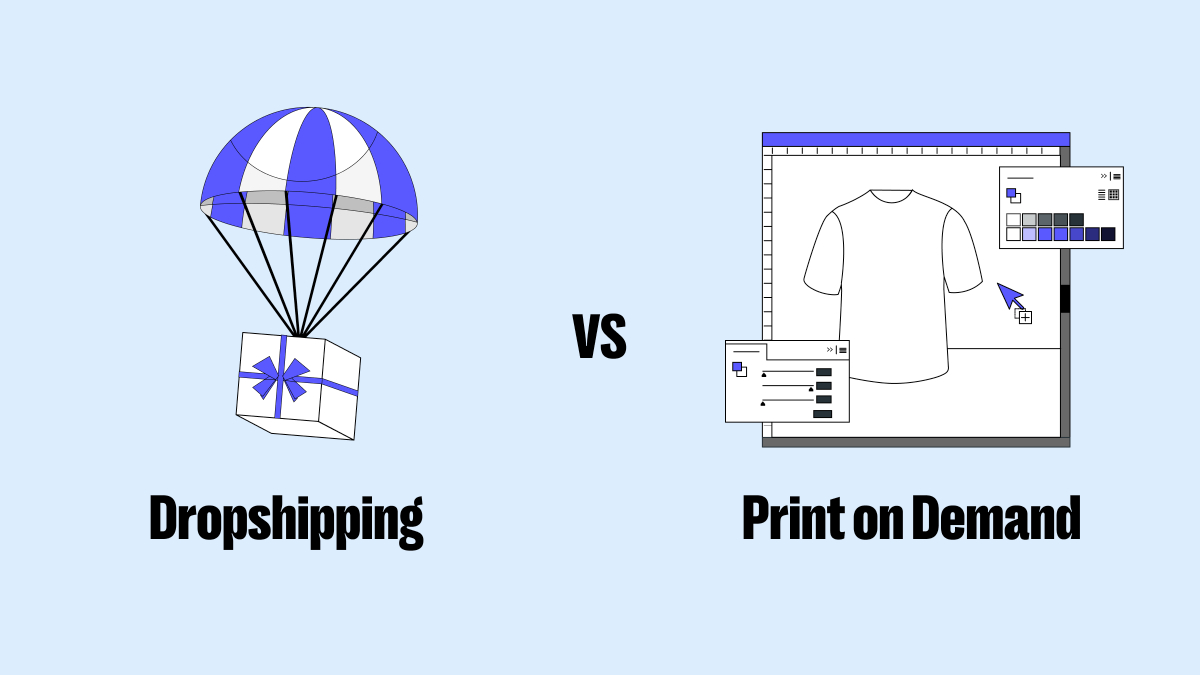
This comprehensive guide compares print on demand and dropshipping, examining their costs, profit potential, operational complexity, and ideal use cases to help you choose the right model for your business vision.
What is Print on Demand?
Print on Demand definition
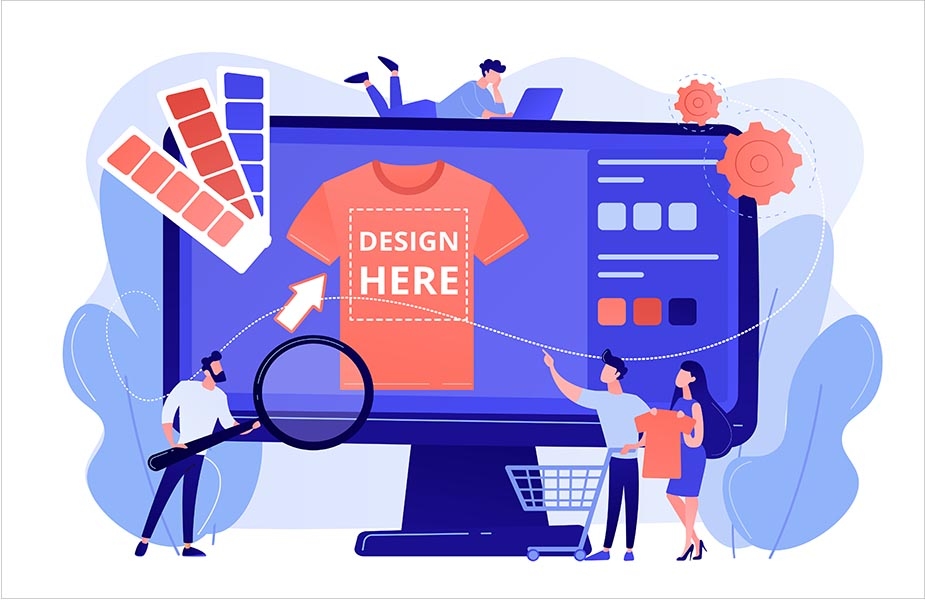
Print on demand (POD) is a fulfillment model that allows you to sell custom products like t-shirts, hoodies, mugs, and tote bags without creating inventory or investing upfront capital. Here’s how it works: you design custom graphics or artwork, upload your designs to a POD platform, and the supplier prints and ships each item only after a customer places an order.
Best for: Artists, designers, brand-focused entrepreneurs, and creators who want to sell personalized products with zero upfront costs and no inventory management.
How Print on Demand Works
The print on demand process is straightforward and requires minimal operational involvement:
- Sign up with a POD provider like Printify, Teespring, or Merch by Amazon, which connect to your store
- Design custom products using the platform’s design tools or upload your own artwork
- Connect to your online store (Shopify, WooCommerce, Etsy, etc.) and list products
- Customers place orders at your retail price through your store
- The supplier prints automatically once the order comes in, then ships directly to the customer
- You earn the difference between the customer price and the supplier’s printing cost
The supplier handles all production, quality control, packing, and shipping while you focus on design and marketing.
What is Dropshipping?
Dropshipping definition
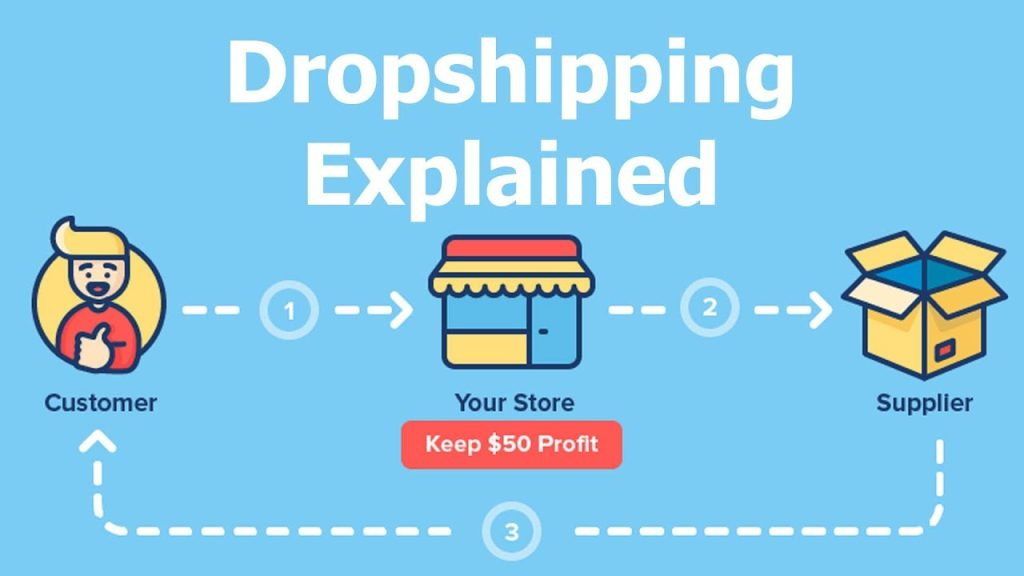
Dropshipping is a supply chain model where you sell ready-made products from a supplier without holding inventory. When customers purchase from your store, you forward their order to a dropshipping supplier who ships the product directly to them. You keep the difference between the retail price and your wholesale cost.
Best for: Sales-focused entrepreneurs, marketers skilled at product research, and business owners who want to test ideas quickly without the constraints of custom design work.
How Dropshipping Works
The dropshipping fulfillment process involves several key steps:
- Choose dropshipping suppliers like AliExpress, CJ Dropshipping, or Spocket and add their products to your store
- List products in your online store with your chosen pricing and product information
- Customer purchases a product at your retail price from your store
- Forward the order to the dropshipping supplier with customer details
- Pay the wholesale price for that specific unit to the supplier
- Supplier ships directly to the customer from their fulfillment center
- You keep the profit margin between retail and wholesale prices
Unlike POD, dropshipping products are already manufactured and ready to ship, but you have no control over product customization.
Print on Demand vs. Dropshipping: Similarities
While these models differ in important ways, they share several fundamental characteristics that make both attractive to aspiring entrepreneurs.
No Physical Store or Warehouse Required
Both models eliminate the need for physical retail locations or warehouse space. You operate entirely online, managing your business from anywhere with internet access. This geographical flexibility means lower overhead costs and the ability to scale without physical expansion constraints.
Limited Inventory Management Responsibilities
Neither model requires you to purchase inventory, manage stock levels, or handle warehouse operations. Products are manufactured or shipped on demand, eliminating the risk of unsold inventory tying up capital. You avoid the headaches of managing storage space, tracking stock, and predicting demand.
Supplier Reliability is Critical
Both business models depend entirely on supplier performance. Your supplier’s quality standards, shipping times, and reliability directly impact your customers and business reputation. Choosing trustworthy suppliers is non-negotiable in both cases. A poor supplier can damage your brand despite your limited control over their operations.
Low Startup Costs
Both models require minimal upfront investment compared to traditional retail or manufacturing. You don’t purchase inventory in bulk, rent warehouse space, or invest in production equipment. Startup costs primarily involve store setup, domain registration, and basic platform fees, typically $300-1,000 total.
Key Differences Between Dropshipping and Print on Demand
Understanding how these models differ helps you choose the approach aligning with your skills, interests, and business goals.
Product Customization
Print on Demand: Customization is the defining advantage. You create unique designs on products, making your offerings differentiated and brand-specific. Your designs become your competitive advantage and selling point. This appeals to creative entrepreneurs and designers.
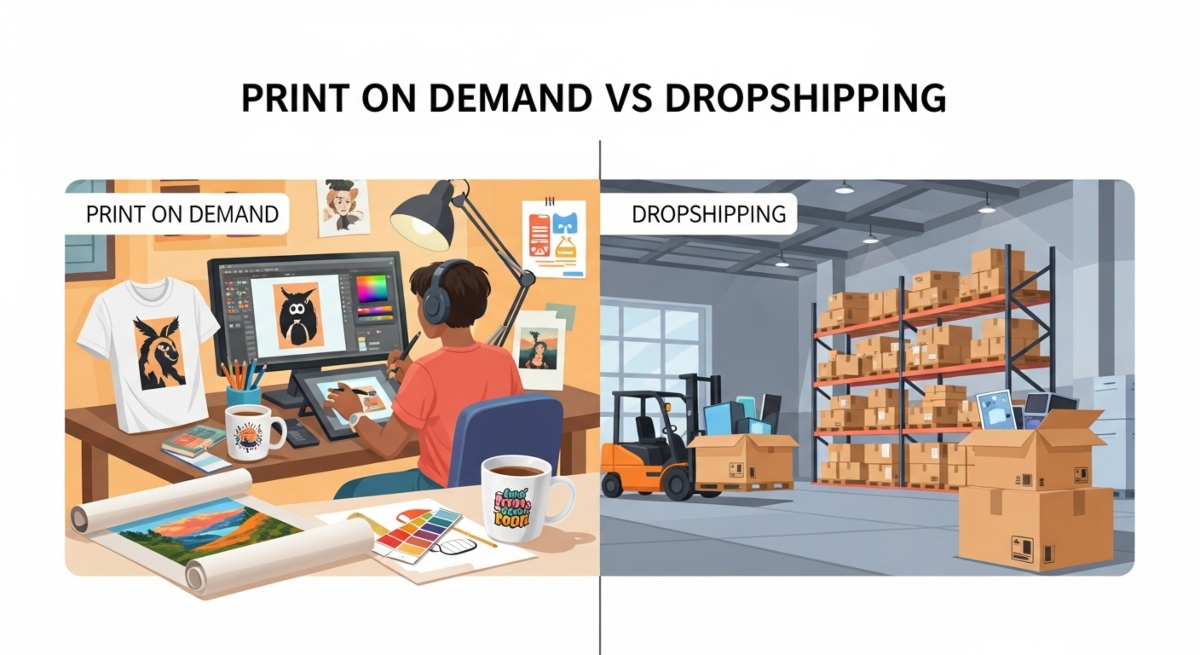
Dropshipping: Products come pre-made and cannot be customized unless you work with white-label suppliers (which adds complexity and cost). You sell existing products as-is, competing primarily on product selection, pricing, and marketing rather than unique designs.
Competition and Pricing
Print on Demand: Lower competition because your custom designs make each product unique. You don’t compete directly with other sellers offering identical items. This allows premium pricing based on design quality and appeal. Price competition is reduced when your designs are original and well-targeted to a specific niche.
Dropshipping: Higher competition because many dropshippers sell the same products from the same suppliers. Multiple sellers offer identical items, forcing competition primarily on price. Without differentiation through customization, standing out requires exceptional marketing or lower prices, both challenging strategies.
Profit Margins
Print on Demand: Potentially higher margins (35-60%+) if designs are original and appeal to a specific audience. A $8-10 t-shirt produced can sell for $20-25, generating healthy margins. However, generic designs struggle to justify premium pricing. Example: A $8.47 high-quality t-shirt with a unique design can sell for $20, yielding a 57.6% profit margin.
Dropshipping: Lower average margins (15-20%) due to price competition and generic items. Suppliers sell single units at relatively high wholesale prices, limiting margin potential. Example: A sisters-themed women’s t-shirt available for $3 wholesale might sell for $12, generating $9 margin but facing intense competition from other dropshippers selling the identical item.
Shipping Speed and Reliability
Print on Demand: Variable shipping times (2-14 business days) depending on supplier location and printing workload. POD adds extra time since production happens after order placement. However, platforms like Printify route orders through nearest providers to optimize delivery times. Quality POD suppliers offer order routing that improves speed automatically.
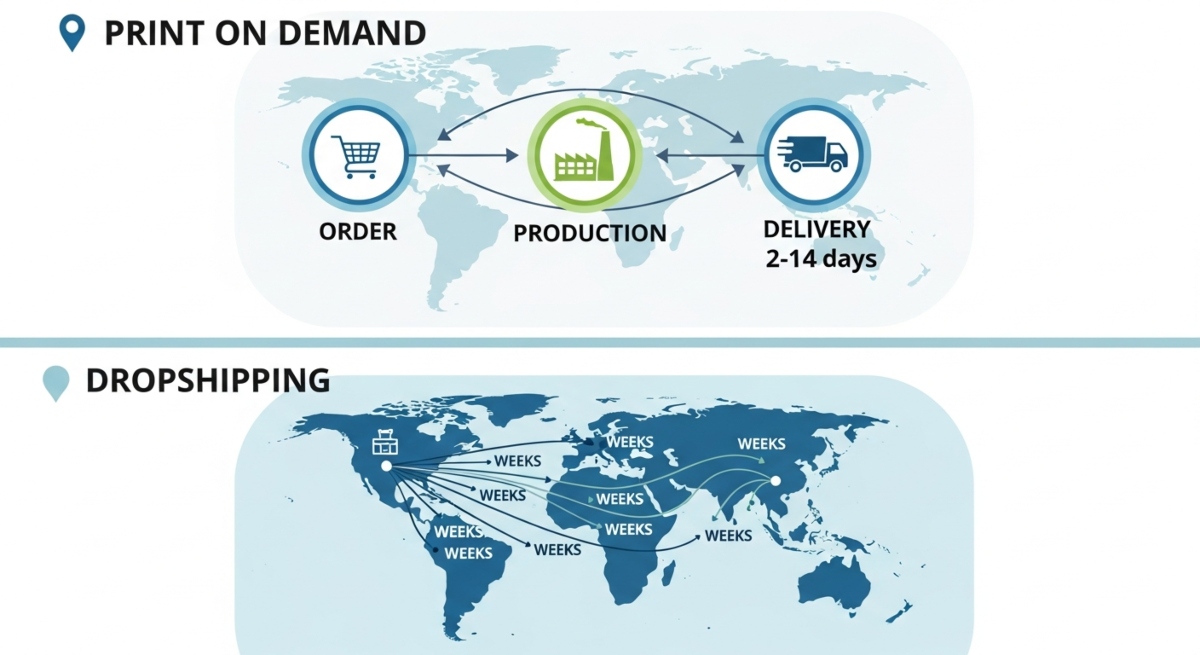
Dropshipping: Also variable (2 weeks to 2+ months) depending on supplier location. Overseas suppliers often create lengthy delivery times. Some suppliers offer faster options, but longer shipping times frustrate customers and increase return rates, damaging your brand perception.
Quality Control
Print on Demand: Easier quality control since products are customized specifically and you can order sample products before launching designs. You control design quality directly. However, final product quality depends on the POD supplier’s printing standards and materials.
Dropshipping: More difficult quality control since you never inspect products before customers receive them. Quality varies by supplier and manufacturer, and you rely on customer complaints to identify issues. This creates risk of damaging your reputation for quality issues beyond your control.
Brand Building Potential
Print on Demand: Excellent brand building potential through unique designs and custom products. Every product reinforces your brand identity and design aesthetic. Custom packaging options and branded elements create professional brand experiences. Customers remember brands built on distinct design styles.
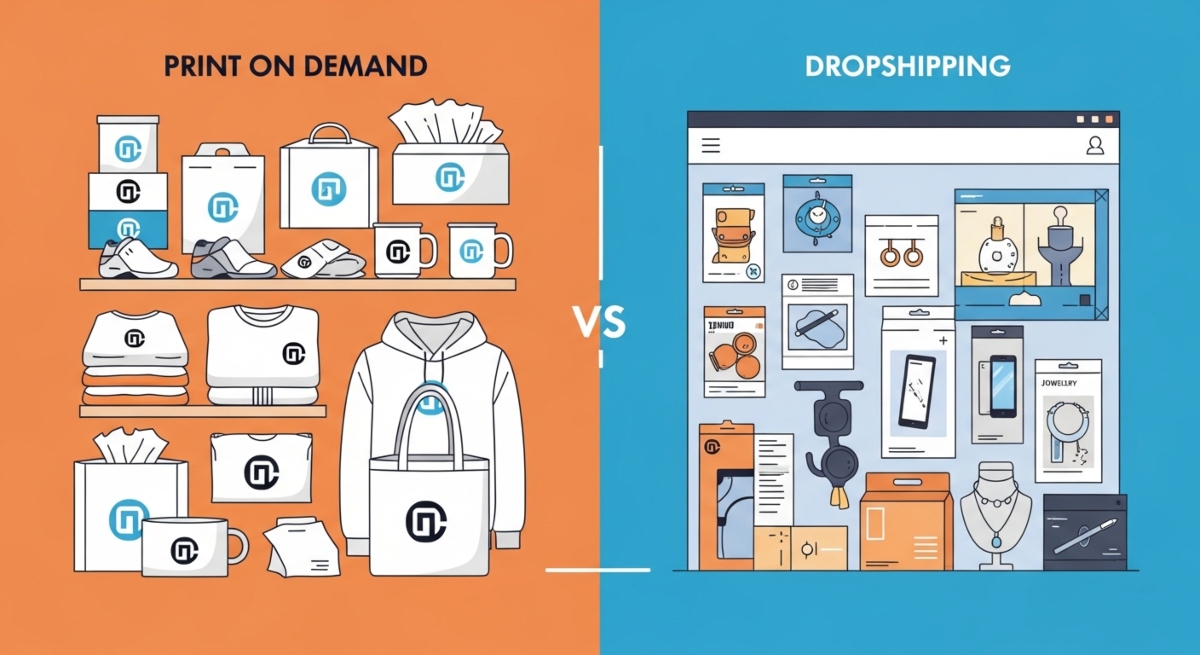
Dropshipping: Limited brand building unless you use white-label suppliers. You’re selling generic products similar to what competitors offer, making brand differentiation challenging. Brand building focuses on website design, customer service, and niche selection rather than product uniqueness.
Business Involvement Required
Print on Demand: Moderate involvement focused on design creation and marketing. Time investment includes design work, content creation, and customer communication. However, once designs are created and listed, they generate passive sales with minimal daily management.
Dropshipping: Higher involvement in product research, store optimization, and customer management. You constantly research trending products, monitor competition, and handle customer service. The business requires more active ongoing management.
Inventory Risk
Print on Demand: Zero inventory risk. Products are made only after orders arrive, so no capital ties up in unsold stock. You can test designs with minimal risk and remove underperforming designs instantly.
Dropshipping: Minimal inventory risk since you pay per-order, but inventory availability risk exists. Suppliers run out of stock, discontinue items, or change prices suddenly without notice. While you don’t hold inventory personally, supply disruptions can hurt your business.
Print on Demand vs Dropshipping: Comprehensive Comparison Table
| Aspect | Print on Demand | Dropshipping |
|---|---|---|
| Startup Cost | Low ($300-800) | Low ($300-1,000+) |
| Customization | Full custom designs | No customization (unless white-label) |
| Profit Margins | Higher (35-60%+ possible) | Lower (15-20% average) |
| Shipping Speed | 2-14 business days | 2 weeks to 2+ months |
| Product Quality | Moderate-high with good suppliers | Variable by supplier |
| Competition | Low (unique designs) | High (same products) |
| Brand Control | High (design-focused) | Limited (generic products) |
| Ease of Setup | Easy (simple design upload) | Easy to moderate (supplier research) |
| Business Involvement | Moderate (design + marketing) | High (research + optimization) |
| Inventory Risk | None | Minimal but supply disruptions possible |
| Passive Income Potential | Moderate-high | Low (continuous optimization needed) |
| Design Skills Required | Yes (or hire designers) | No |
| Marketing Challenge | Design appeal and niche targeting | Price competition and differentiation |
| Scaling Complexity | Easy (add designs) | More complex (inventory management) |
| Best for Beginners | Yes (creative types) | Yes (sales/marketing focused) |
Which Model Should You Choose?
Your best choice depends on your skills, interests, available capital, and business vision. Here are scenarios where each model excels:
Choose Print on Demand If You:
- Have design skills or enjoy creating visual content
- Want to build a brand around original designs and aesthetics
- Prefer working with a specific niche or customer demographic
- Value creative expression in your business
- Want higher profit margins on each sale
- Prefer design uniqueness over extensive product variety
- Are willing to invest time in quality design work
- Want lower competition and easier brand differentiation
Choose Dropshipping If You:
- Prefer product research and market analysis over design
- Want access to thousands of products across multiple categories
- Prefer a faster path to launching (minimal setup complexity)
- Don’t have design skills or interest in learning design
- Want to test market ideas quickly without design investment
- Prefer broader product variety in your store
- Value business simplicity and straightforward operations
- Have strong marketing and sales skills
The Hybrid Approach: Combining Both Models
Many successful ecommerce entrepreneurs use both models simultaneously, leveraging the strengths of each:
Testing Products: Start with dropshipping to identify best-selling products and design styles that resonate with customers. Once you identify winners, create custom POD versions with original designs to increase margins and reduce competition.
Complementary Products: Run a POD store for custom designs while dropshipping complementary items not available from POD suppliers. A custom home decor business might dropship LED lamps and shelves while offering POD custom pillows and mugs.
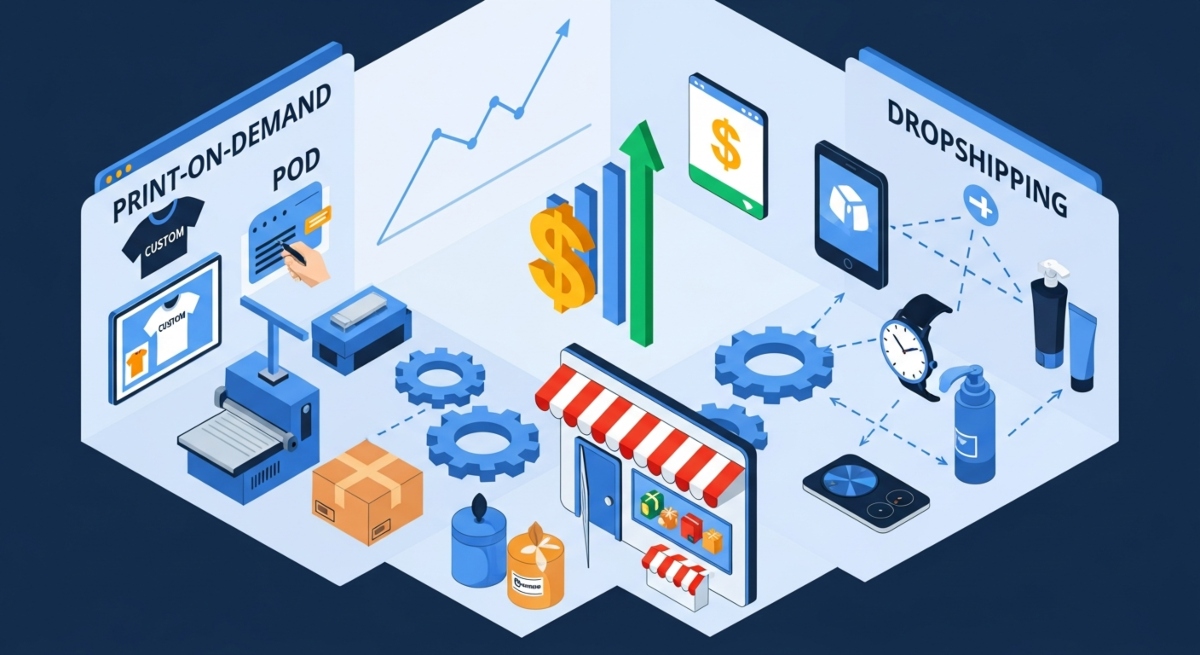
Niche Expansion: Use dropshipping for trending items in your niche while using POD for signature branded products that define your brand identity. This diversification improves resilience and appeals to broader customer bases.
Profit Optimization: Dropship lower-margin items to drive traffic, then upsell higher-margin POD products with unique designs, maximizing overall profitability.
Dropshipping vs Print on Demand FAQs
Is Print on Demand More Profitable Than Dropshipping?
Print on demand can be more profitable per sale when you have unique, well-designed products appealing to specific niches. Margins of 40-60%+ are achievable with original designs. However, dropshipping can also be profitable with aggressive marketing and product selection. The determining factors are design quality for POD and marketing effectiveness for dropshipping. Neither is inherently more profitable—success depends on execution.
Is Print on Demand Considered Dropshipping?
Yes, print on demand is a specialized type of dropshipping. Dropshipping encompasses any arrangement where suppliers handle production and shipping as individual orders come in from your store. POD is dropshipping with the added element of product customization. All POD businesses are dropshipping businesses, but not all dropshipping is print on demand.
Is Print on Demand Risky?
Print on demand is low-risk because you have minimal upfront costs and zero inventory investment. However, risks exist: supplier quality inconsistencies, shipping delays, design copyright issues, and poor design performance are possible. Starting with sample orders to test quality before launching designs reduces risk significantly. Choosing reputable POD suppliers like Printify with quality vetting minimizes these risks.
Is Print on Demand Good for Beginners?
Yes, print on demand is excellent for beginners, especially those with design skills or interest in learning design. The model requires minimal technical knowledge, no inventory management, and low startup costs. Platforms like Printify offer user-friendly design tools including AI image generators and templates. However, if you lack design skills, you’ll need to either learn design or hire designers, which adds complexity.
Which Ecommerce Business Model is Easier to Start for Beginners?
Dropshipping is slightly easier to start because it requires no design skills and offers instant access to thousands of pre-made products. Simply research suppliers, upload products, and start selling. However, dropshipping requires stronger marketing skills to overcome competition. POD is easier if you have design skills but harder if you don’t. For complete beginners without design background, dropshipping’s lower technical barrier is appealing. For creative beginners, POD’s design focus aligns better.
Can You Combine Print on Demand and Dropshipping?
Absolutely. Many successful entrepreneurs run both simultaneously in the same store or separate stores. The combination leverages dropshipping’s product variety with POD’s profit margins and brand control. Automation platforms like AutoDS now support both models in a single interface, simplifying management. This hybrid approach is increasingly popular among experienced ecommerce sellers.
Is Print on Demand or Dropshipping Better?
Neither is universally better, it depends entirely on your situation. Print on demand is better if you’re creative, design-focused, and want to build a strong brand with custom products. Dropshipping is better if you prefer product research, want broader product variety, and need a faster launch. Many successful entrepreneurs discover that combining both leverages unique advantages of each model, creating a powerful business combination.
Is Print on Demand the Same as Dropshipping?
Not exactly. While POD is a type of dropshipping, they have important differences. The key distinction is customization: POD involves printing custom designs on products, while traditional dropshipping sells pre-made items without customization. This customization difference drives changes in competition levels, profit potential, shipping times, and the skills required for success.
How Long Does It Take to Become Profitable with Print on Demand or Dropshipping?
Both models can generate revenue within weeks if you execute well. Profitability timelines vary: POD typically achieves profitability in 2-4 months with good designs and marketing. Dropshipping can be profitable within 1-3 months with strong product selection and marketing. However, some sellers struggle for months while others achieve profitability quickly. Success depends primarily on marketing effectiveness and market fit rather than the model itself.
What Happens If a POD or Dropshipping Supplier Fails?
Supplier failures create immediate problems: unfulfilled orders, dissatisfied customers, and brand damage. For POD, you can reroute to alternative providers if using platforms with automatic routing (like Printify’s Order Routing feature). For dropshipping, you must find replacement suppliers quickly. This risk highlights the importance of researching suppliers thoroughly and maintaining relationships with backup providers. Building supplier redundancy protects your business.
Conclusion: Which Business Model is Best for You?
Print on demand and dropshipping are both legitimate, profitable, beginner-friendly ecommerce models. The choice depends on answering these questions honestly:
Do you enjoy design and creative work? If yes, POD aligns with your interests and provides natural advantage. If no, dropshipping’s focus on product research and marketing is more suitable.
Do you have limited capital and want zero inventory risk? Both excel here, but POD has slightly lower upfront costs with zero inventory risk.
Do you want passive income potential? POD offers stronger passive income once designs are created and marketed. Dropshipping requires more continuous optimization.
Do you prefer niche focus or broad product variety? POD naturally drives niche focus through design, while dropshipping enables broad product categories.
What’s your marketing strength? POD requires design appeal and niche targeting. Dropshipping requires aggressive marketing and product research to overcome competition.
Do you want to build a strong brand? POD excels at brand building through unique designs. Dropshipping requires deliberate brand-building efforts beyond products.
Many successful entrepreneurs find that starting with one model, validating your business, then adding the other model creates optimal results. You might dropship initially to test products with minimal risk, then add custom POD designs for proven winners. Alternatively, start with POD in a niche you’re passionate about, then add complementary dropshipped products.
Both models enable location-independent businesses without inventory headaches or significant upfront investment. Success ultimately depends not on which model you choose, but on how effectively you execute, optimize based on customer feedback, and market your products to the right audience. Choose the model aligning with your strengths, commit fully to execution, and scale systematically as you prove your concept in the market.