
Understanding the difference between a fulfillment center vs distribution center helps businesses design a supply chain that supports customer expectations, controls costs, and scales effectively. This guide breaks down definitions, core functions, key differences, and practical tips to help you choose the right facility for your business model.
What is a fulfillment center?
Fulfillment center definition
A fulfillment center is a logistics facility designed to process individual customer orders. Its primary purpose is to pick, pack, label, and ship products directly to end customers once an order is placed online.
In ecommerce operations, a fulfillment center acts as the final operational step between checkout and delivery. When a customer places an order, warehouse associates or automated systems retrieve items from storage locations, package them securely, generate shipping labels, and hand the order off to a carrier for last-mile delivery.
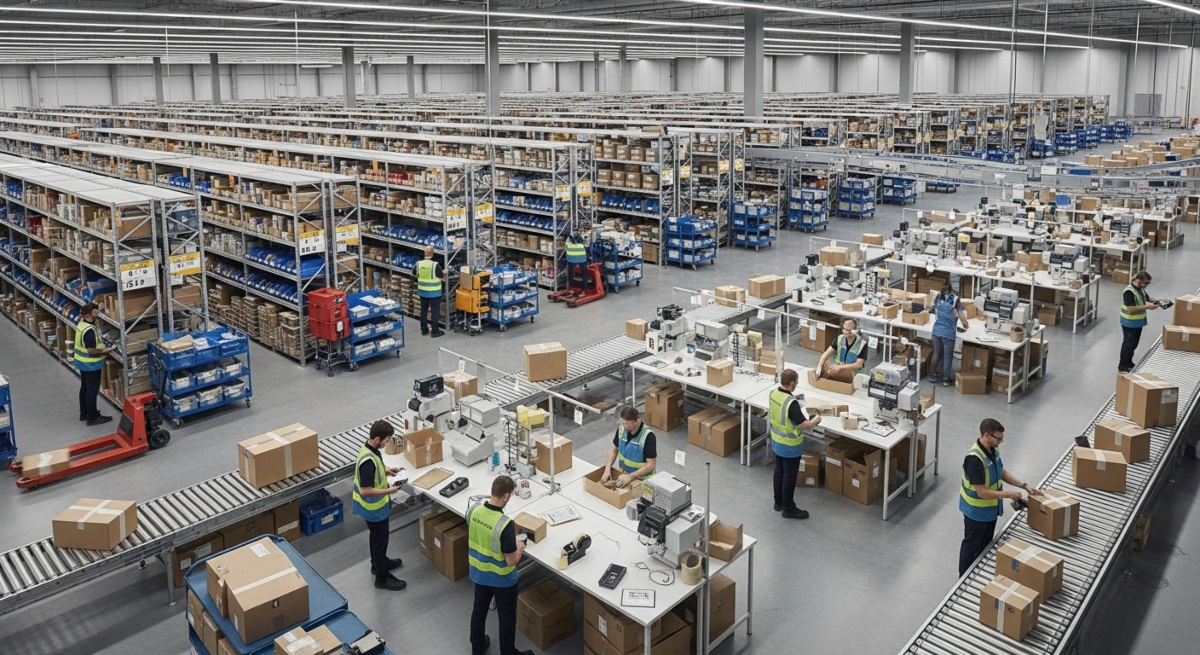
In many modern supply chains, fulfillment centers are operated by third-party logistics providers (3PLs) and integrated with ecommerce platforms through a warehouse management system (WMS).
Key features of a fulfillment center
A fulfillment center is optimized for speed, accuracy, and order volume variability. It typically supports high SKU counts, frequent order turnover, and rapid shipping expectations such as same-day or next-day dispatch. The facility layout emphasizes picking routes, packing stations, and carrier handoff points rather than long-term bulk storage.
What is a distribution center?
Distribution center definition
A distribution center is a large logistics facility focused on storing inventory in bulk and redistributing it to other locations rather than shipping directly to end customers. These locations may include retail stores, wholesalers, regional warehouses or fulfillment centers.
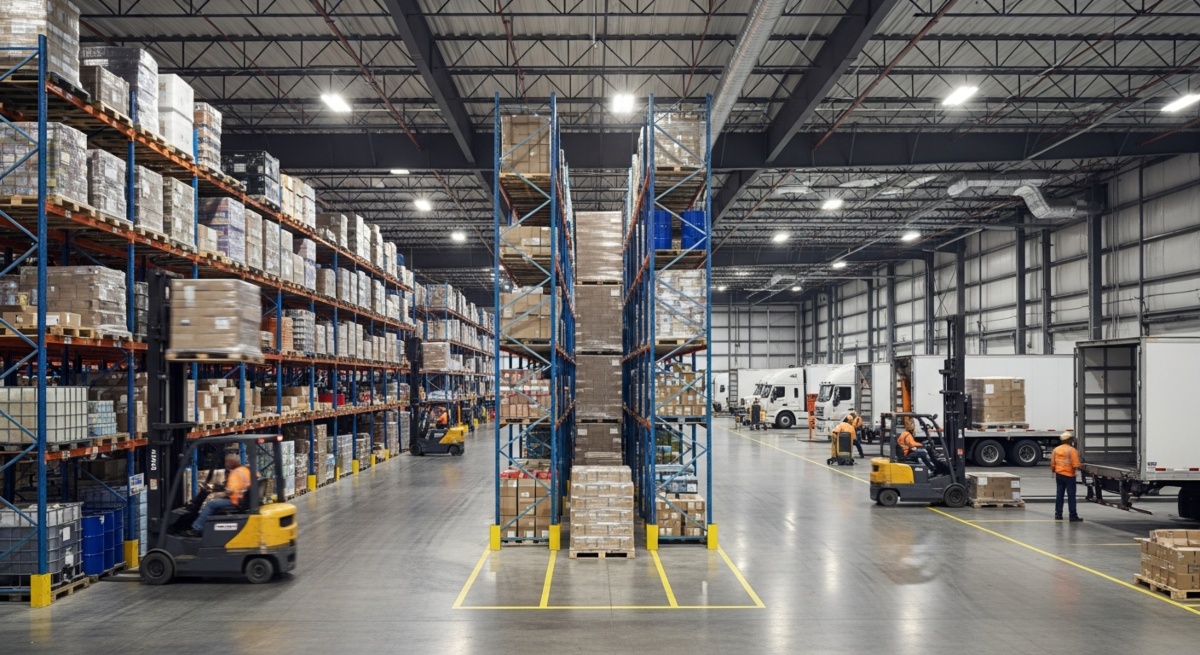
Distribution centers play a central role in upstream supply chain optimization. They help manufacturers and large retailers consolidate inventory, manage palletized goods, and move products efficiently across a broader logistics network.
Key features of a distribution center
Distribution centers are designed for large-scale inventory movement. They emphasize pallet storage, freight handling, cross-docking, and outbound shipments in bulk quantities. Rather than processing thousands of small orders, they focus on fewer but larger shipments.
Fulfillment center vs distribution center: 8 key differences
Although both facility types manage inventory, the difference between a fulfillment center vs distribution center becomes clear when examining their purpose, structure, and operational workflows.
Historical differences
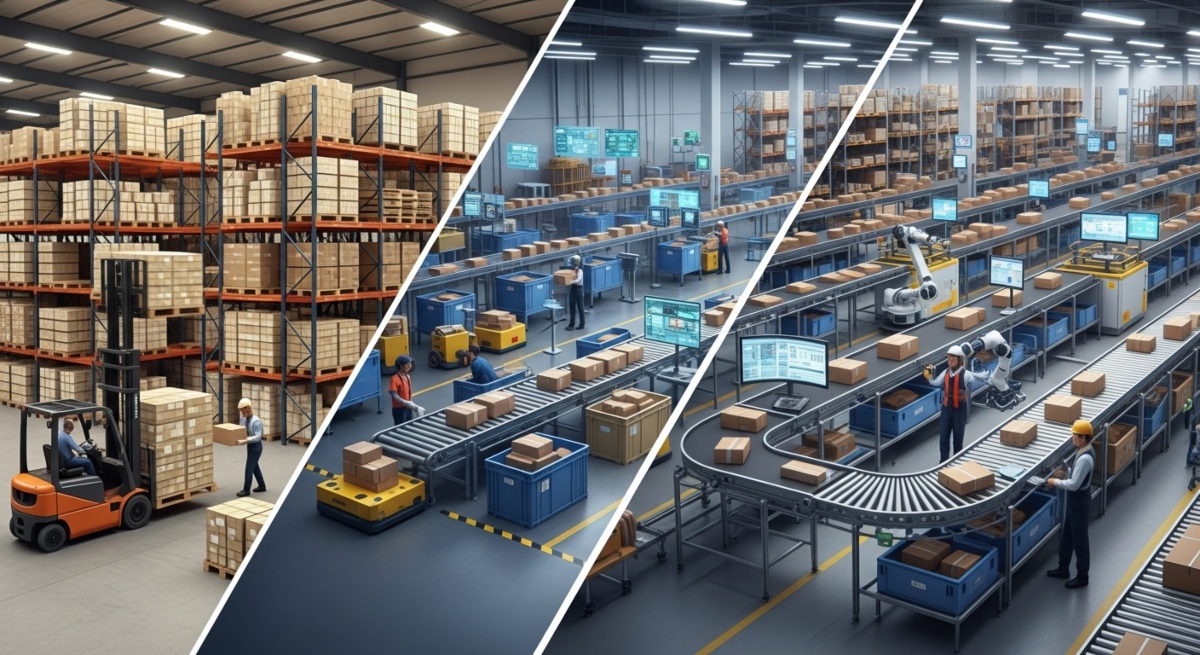
Distribution centers emerged first, supporting traditional retail and wholesale supply chains. Their role was to move products from manufacturers to physical stores efficiently. Fulfillment centers developed later in response to ecommerce growth, where individual customer orders replaced bulk retail shipments.
Primary functions
A fulfillment center fulfills customer orders. It supports pick and pack operations, labeling, shipping, returns handling, and often value-added services like kitting or branded packaging.
A distribution center redistributes inventory. It receives products in bulk and ships them to downstream locations, not directly to consumers.
Structural and operational differences
Size and layout
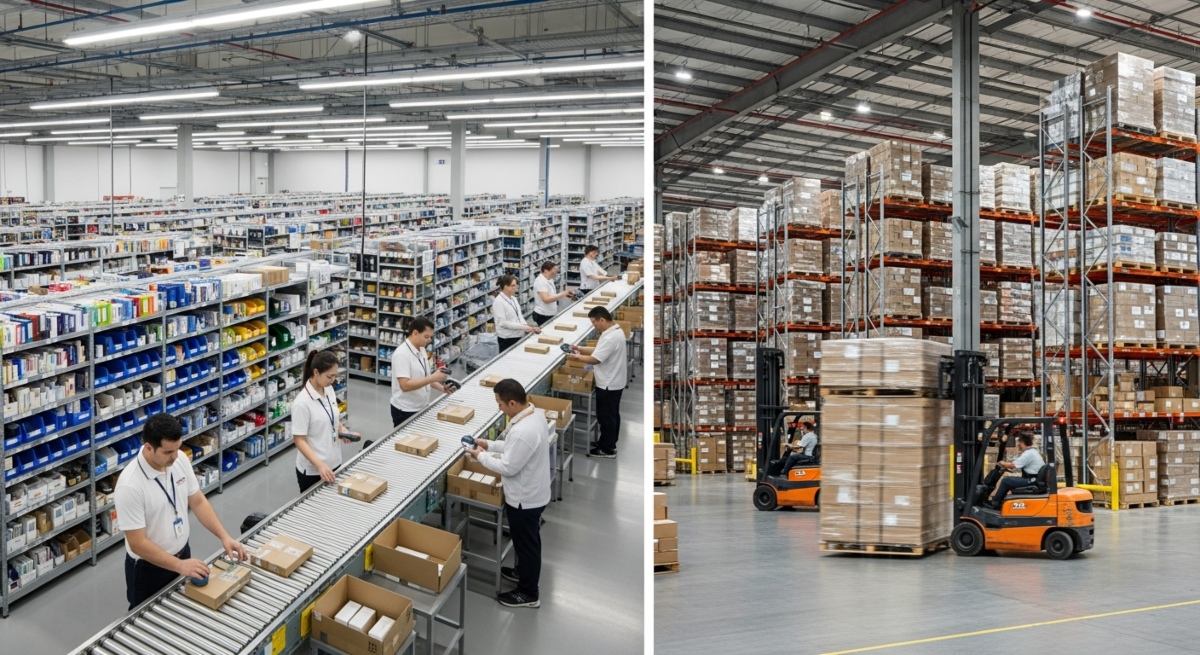
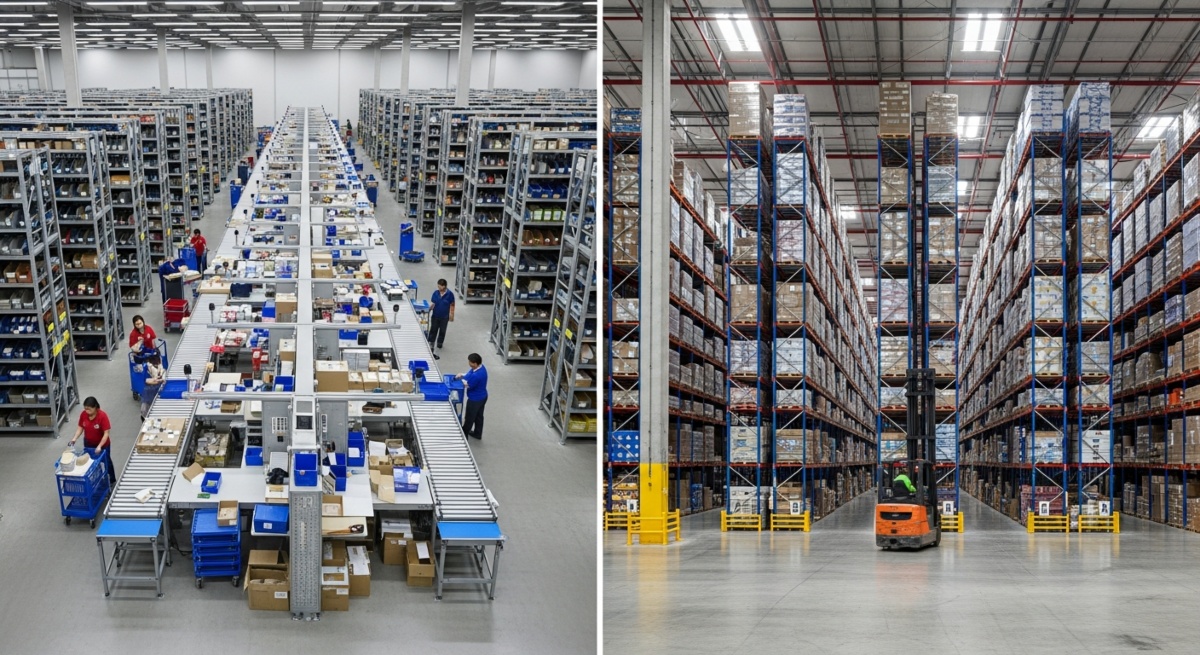
Distribution centers are typically larger, with wide aisles for forklifts, pallet racks, and freight staging areas. Fulfillment centers can vary in size but are usually more compact and optimized for dense SKU storage and fast picking.
Technology and automation
Fulfillment centers rely heavily on WMS technology, barcode scanning, and sometimes robotics to ensure accuracy and speed. Distribution centers often use warehouse control systems focused on pallet movement, cross-docking, and freight optimization.
Inventory management
Inventory in a fulfillment center turns over quickly and is tracked at the unit level. In a distribution center, inventory is managed in bulk quantities and palletized units.
Purpose and customer reach
A fulfillment center serves ecommerce businesses by shipping orders directly to customers. A distribution center supports manufacturers and retailers by optimizing inventory flow across multiple facilities.
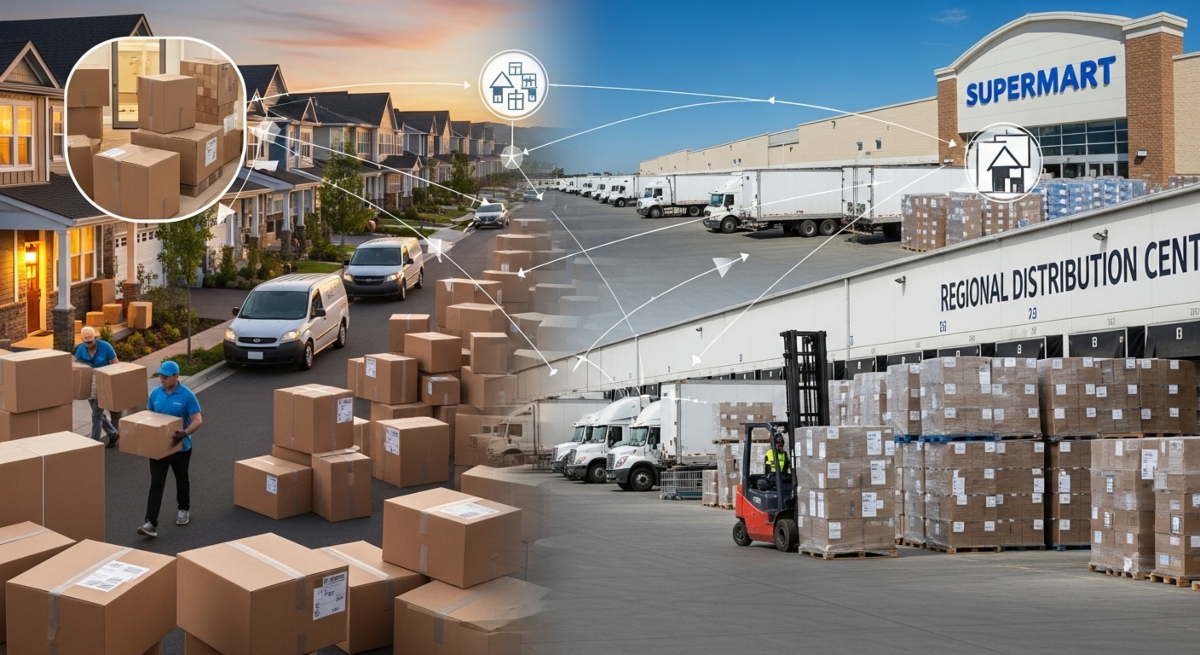
For example, an ecommerce beauty brand may use a fulfillment center to ship skincare products directly to consumers. A national beauty retailer may use a distribution center to send bulk inventory to hundreds of physical stores.
Capabilities and services
Fulfillment centers are equipped with packing stations, labeling machines, handheld scanners and materials for individual shipments. Distribution centers use forklifts, pallet jacks, and freight docks designed for large shipments and high throughput.
Geographic placement and reach
Fulfillment centers are often placed close to end customers to reduce delivery times. Distribution centers are usually centralized to serve regional or national supply chains efficiently.

Advantages and limitations
Fulfillment centers excel at speed, flexibility and customer experience but may have higher per-unit costs. Distribution centers offer scale and cost efficiency for bulk inventory but lack the agility required for direct-to-consumer fulfillment.
The future of fulfillment and distribution
As omnichannel retail expands, many supply chains now use both facilities together. Distribution centers feed inventory into regional fulfillment centers, combining scale with speed to meet modern customer expectations.

Fulfillment center vs distribution center comparison table
| Criteria | Fulfillment center | Distribution center |
| Core purpose | Process and ship individual customer orders quickly and accurately | Store inventory in bulk and redistribute to downstream locations |
| Primary users | Ecommerce brands, DTC sellers, omnichannel retailers | Manufacturers, wholesalers, large retailers |
| End customer | Direct-to-consumer (B2C) | Retail stores, regional warehouses, fulfillment centers |
| Order type | High-volume, low-unit orders | Low-volume, high-unit (pallet or case) shipments |
| Typical shipment size | Single-item or multi-item parcels | Pallets, cartons, truckloads |
| Inventory turnover | Very high, frequent replenishment | Moderate to low, longer storage cycles |
| SKU complexity | High SKU count, frequent item picking | Lower SKU variety, larger quantities per SKU |
| Storage style | Bin, shelf, or tote-based storage | Pallet racking and bulk floor storage |
| Picking method | Piece picking, batch picking, zone picking, wave picking | Case picking, pallet picking, cross-docking |
| Packing activities | Core function (boxing, labeling, inserts, branded packaging) | Minimal or none |
| Value-added services | Kitting, bundling, returns processing, custom packaging | Limited value-added services |
| Returns handling | Often included and optimized | Rarely handled |
| Technology focus | Warehouse Management System (WMS), barcode scanning, order automation | Warehouse Control Systems (WCS), freight and pallet management |
| Automation level | Medium to high, focused on speed and accuracy | Medium, focused on throughput and load optimization |
| Labor intensity | High, labor-driven operations | Lower labor per order, equipment-driven |
| Shipping carriers | Parcel carriers (UPS, FedEx, USPS, DHL) | Freight carriers (LTL, FTL) |
| Delivery speed | Same-day or next-day dispatch | Slower, scheduled distribution |
| Geographic placement | Located near end customers | Centrally located to serve regions |
| Cost structure | Higher cost per unit, flexible and scalable | Lower cost per unit, higher fixed infrastructure cost |
| Scalability | Highly scalable for seasonal demand | Less flexible, optimized for stable volumes |
| Role in omnichannel | Final step before customer delivery | Upstream inventory hub |
| Best for | Businesses prioritizing fast delivery and customer experience | Businesses prioritizing cost efficiency at scale |
| Limitations | Can be expensive at low volumes | Not suitable for direct ecommerce fulfillment |
4 tips to choosing the right facility
Align with your business model
If your revenue depends on direct-to-consumer ecommerce, a fulfillment center is essential. If your focus is wholesale or retail distribution, a distribution center may be more suitable.
Consider scalability and flexibility
Fulfillment centers are designed to handle fluctuating order volumes, especially during peak seasons. Distribution centers prioritize stable, predictable inventory flows.
For small businesses focused on ecommerce growth, choosing the right fulfillment model is a strategic decision. If you want a deeper breakdown of how fulfillment centers work for smaller operations, including cost structures, partner selection criteria, and scalability considerations, you can explore our in-depth guide: Fulfillment center for small business: Expert guide to choosing the right partner in 2026.

Evaluate value-added services
Fulfillment centers often provide kitting, labeling, and customized packaging that improve customer experience. Distribution centers typically focus on storage and redistribution efficiency.
Get custom solutions
Many 3PL providers offer hybrid models that combine fulfillment and distribution capabilities. Custom solutions can help businesses evolve as sales channels expand.
Fulfillment center vs distribution center FAQs
What are the cons of using a fulfillment center?
Using a fulfillment center reduces direct control over daily operations, and costs can increase for small merchants if order volume is low. Businesses must balance convenience with pricing transparency.
What differentiates a distribution center and a fulfillment center?
A distribution center redistributes bulk inventory to other facilities, while a fulfillment center picks, packs, and ships individual orders to customers.
Is a fulfillment center a warehouse?
Yes, a fulfillment center is a specialized type of warehouse designed specifically for ecommerce order fulfillment rather than bulk storage.
Conclusion
Understanding the difference between a fulfillment center vs distribution center is critical for building an efficient logistics strategy. Fulfillment centers focus on speed, accuracy, and customer delivery, while distribution centers support large-scale inventory redistribution across supply chains.
Choosing the right facility or combining both depends on your business model, sales channels and growth plans. By aligning logistics infrastructure with operational needs, businesses can reduce costs, improve delivery performance, and scale sustainably.