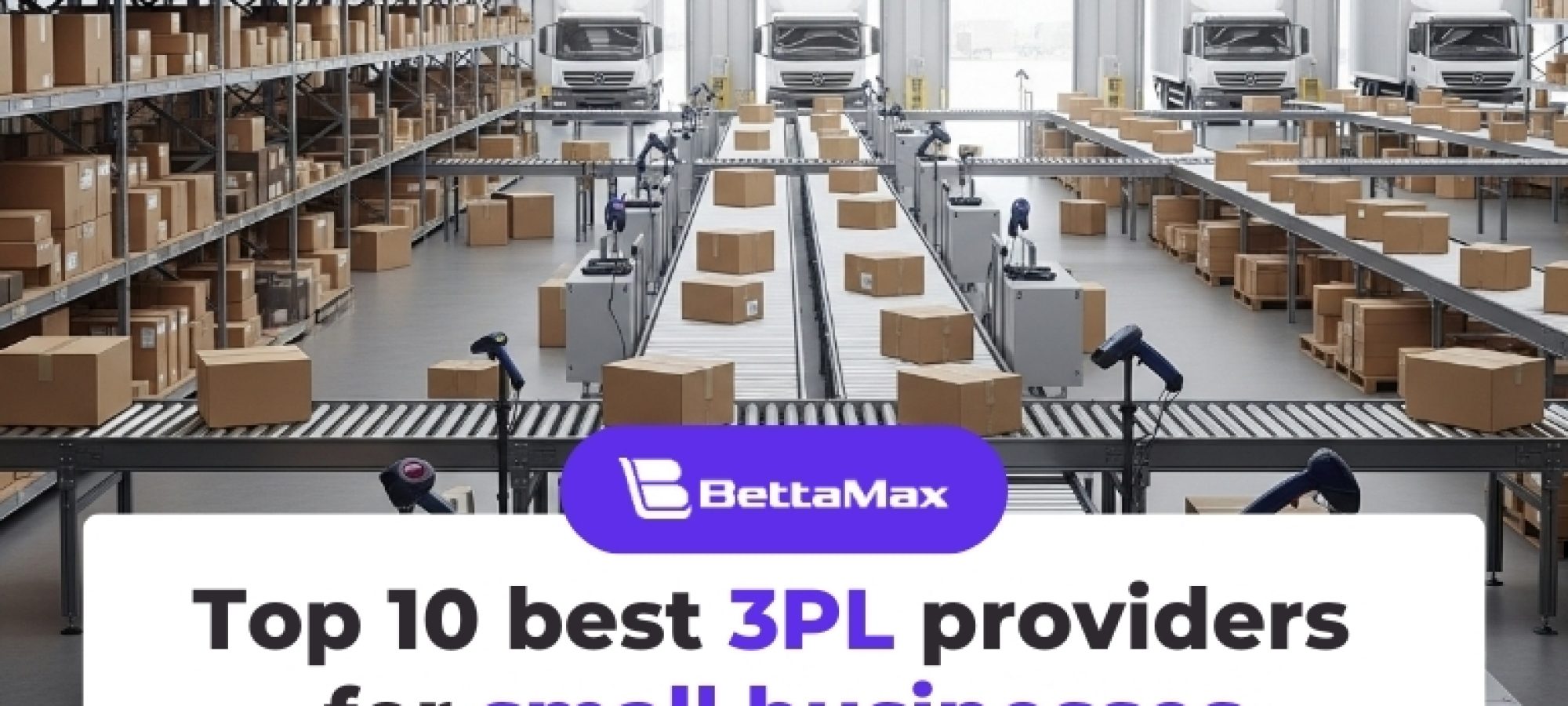

As ecommerce and omnichannel retail continue to grow, logistics has become a major operational challenge for small businesses. Managing warehousing, order fulfillment, inventory, and shipping in-house often requires high fixed costs and complex systems. This is why more brands are turning to 3PL for small business as a scalable and cost-efficient solution.
This guide explores what third-party logistics providers do, why they are valuable for growing brands, and which providers are considered the best options today.
Introduction to third-party logistics
What is 3PL?
Third-party logistics, commonly referred to as 3PL, is the outsourcing of logistics operations to an external provider. A 3PL company manages key supply chain functions such as warehousing, order fulfillment, inventory management, transportation, and returns on behalf of a business.
For entrepreneurs and growing brands, 3PL for small business enables access to professional logistics infrastructure without the burden of owning warehouses or managing fulfillment staff.
What do 3PL providers do?
3PL providers handle the operational backbone of order fulfillment. They store products, pick and pack orders, ship them to customers, update inventory in real time, and manage returns. Many providers also support kitting, branded packaging, and international shipping.
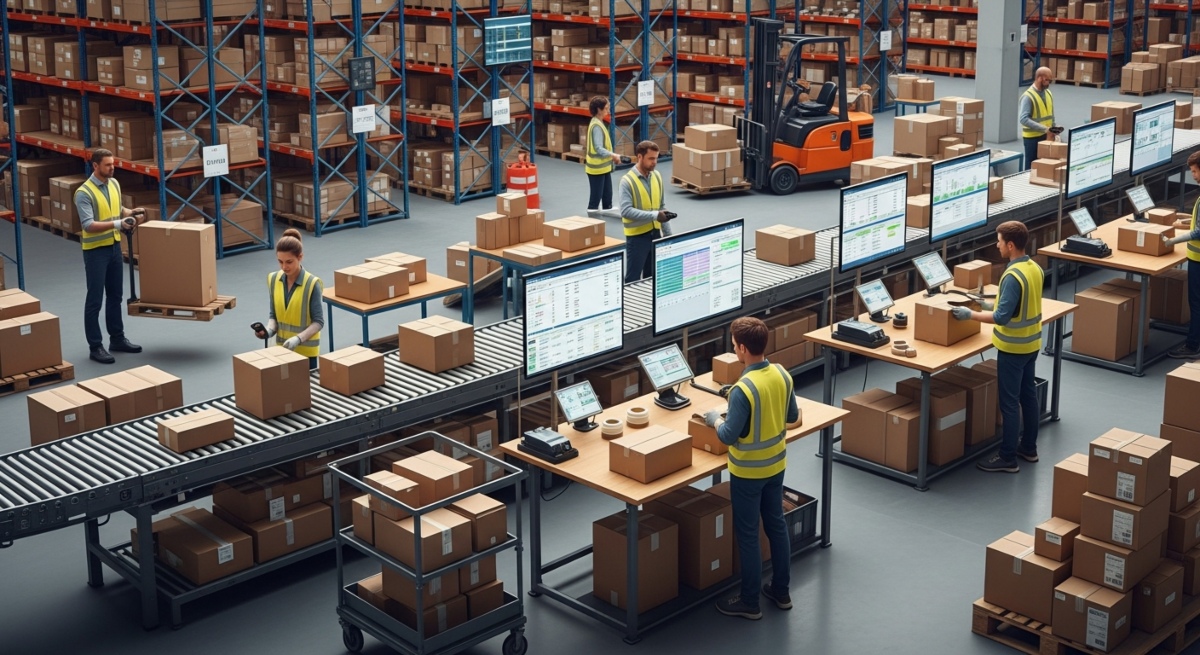
By using 3PL for small business, companies can scale faster while maintaining consistent delivery performance.
Top 10 best 3PL companies for small businesses
Selecting the right partner is critical, as not all providers are designed to support growing brands. Below are ten widely used 3PL companies known for working effectively with small and mid-sized businesses.
ShipBob
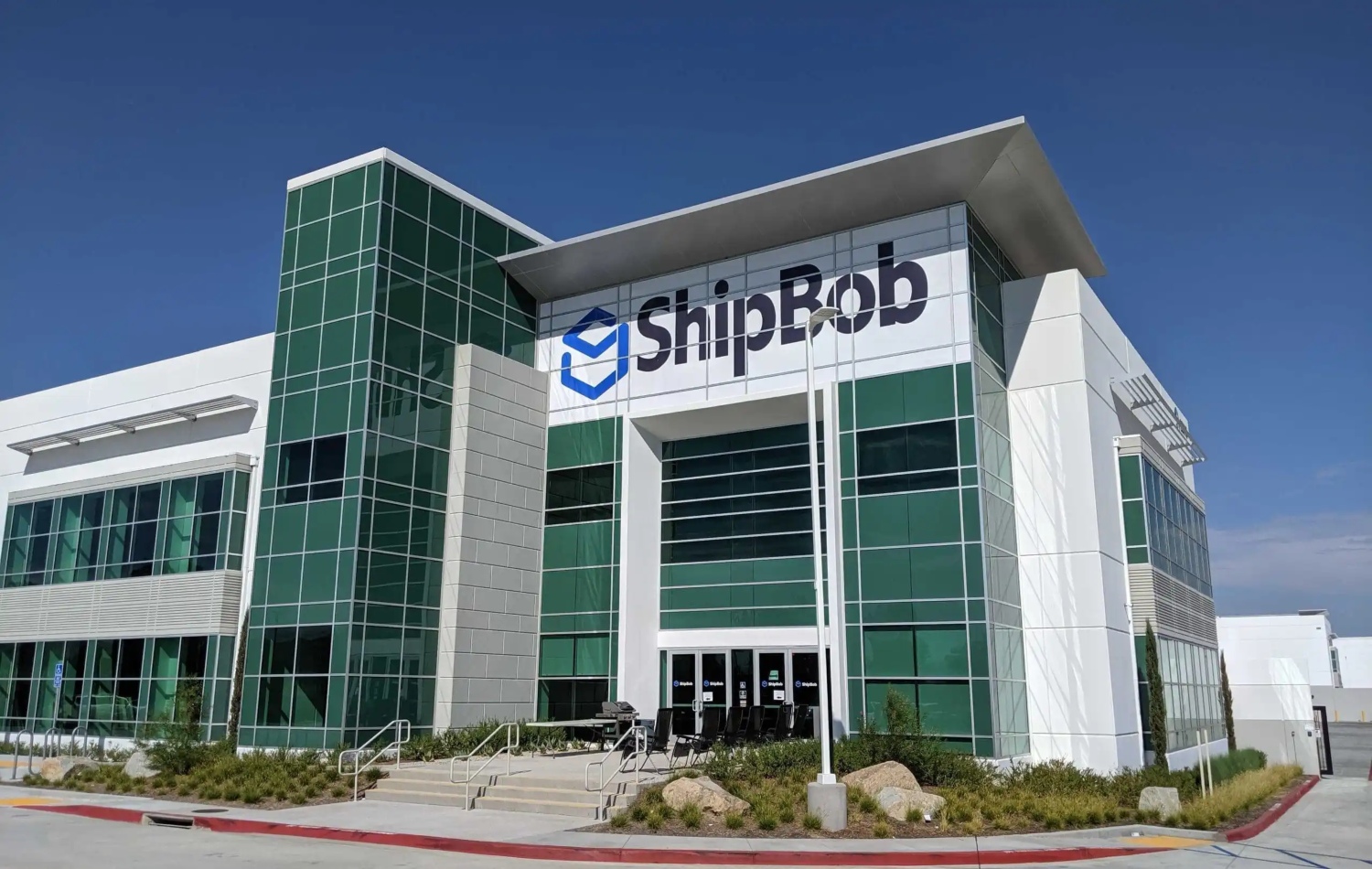
ShipBob is a global omnifulfillment platform designed for fast-growing ecommerce brands. Beyond picking, packing, and shipping, ShipBob enables merchants to manage inventory, forecast demand, and optimize delivery times through a centralized dashboard.
Warehouses
ShipBob operates a large global network of fulfillment centers across the United States, Canada, Europe, the UK, and Australia. This distributed network allows small businesses to position inventory closer to customers and reduce transit times as they scale.
Software
ShipBob’s proprietary software provides real-time visibility into inventory levels, order status, fulfillment speed, and shipping costs. Advanced analytics support demand planning and performance tracking, which is especially useful for data-driven ecommerce brands.
Integrations
ShipBob integrates with major ecommerce platforms and marketplaces such as Shopify, BigCommerce, Amazon, and TikTok Shop. Custom integrations are supported through an API.
Customer support
ShipBob provides structured onboarding, ongoing support via chat and email, and dedicated account management for larger or scaling merchants.
Best for
ShipBob works best for ecommerce brands seeking a scalable, all-in-one fulfillment solution that supports multichannel growth.
Red Stag Fulfillment
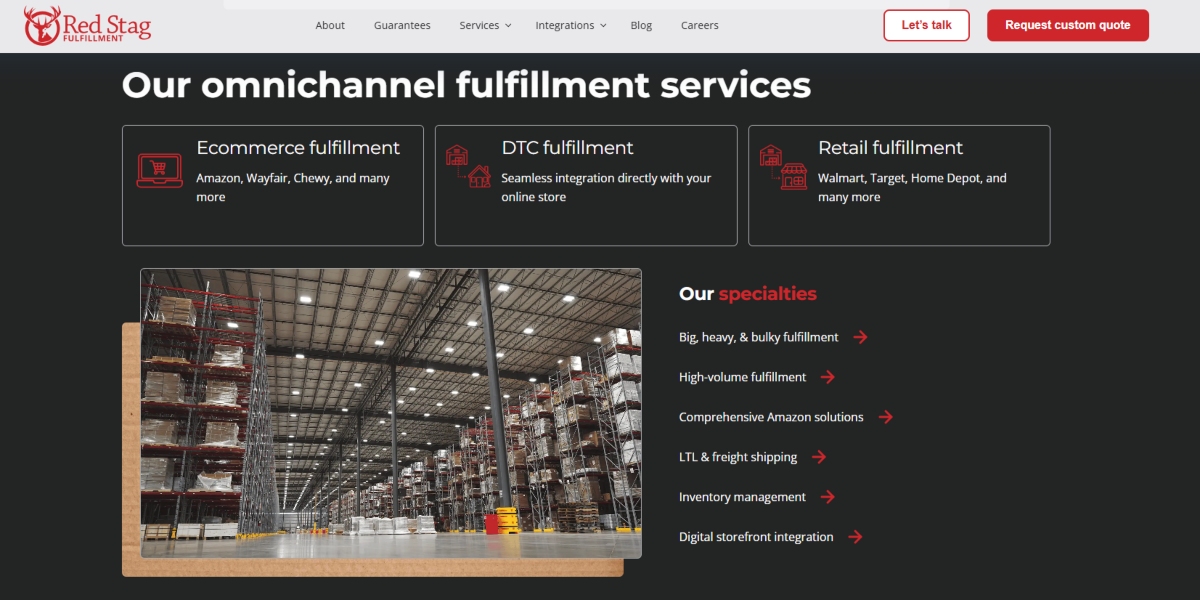
Red Stag Fulfillment is a US-based 3PL specializing in heavy, oversized, and high-value products that require careful handling.
Warehouses
Red Stag operates a limited number of strategically located warehouses in the central United States, optimized for nationwide distribution.
Software
Its cloud-based fulfillment system provides access to inventory data, order tracking, and performance reporting from any device.
Integrations
Red Stag integrates with leading ecommerce platforms such as Shopify, Amazon, and eBay, with API options available for custom setups.
Customer support
Support is primarily phone-based, with limited email assistance.
Best for
Red Stag is best suited for small businesses shipping heavy, bulky, or fragile products where accuracy and damage prevention are critical.
ShipMonk
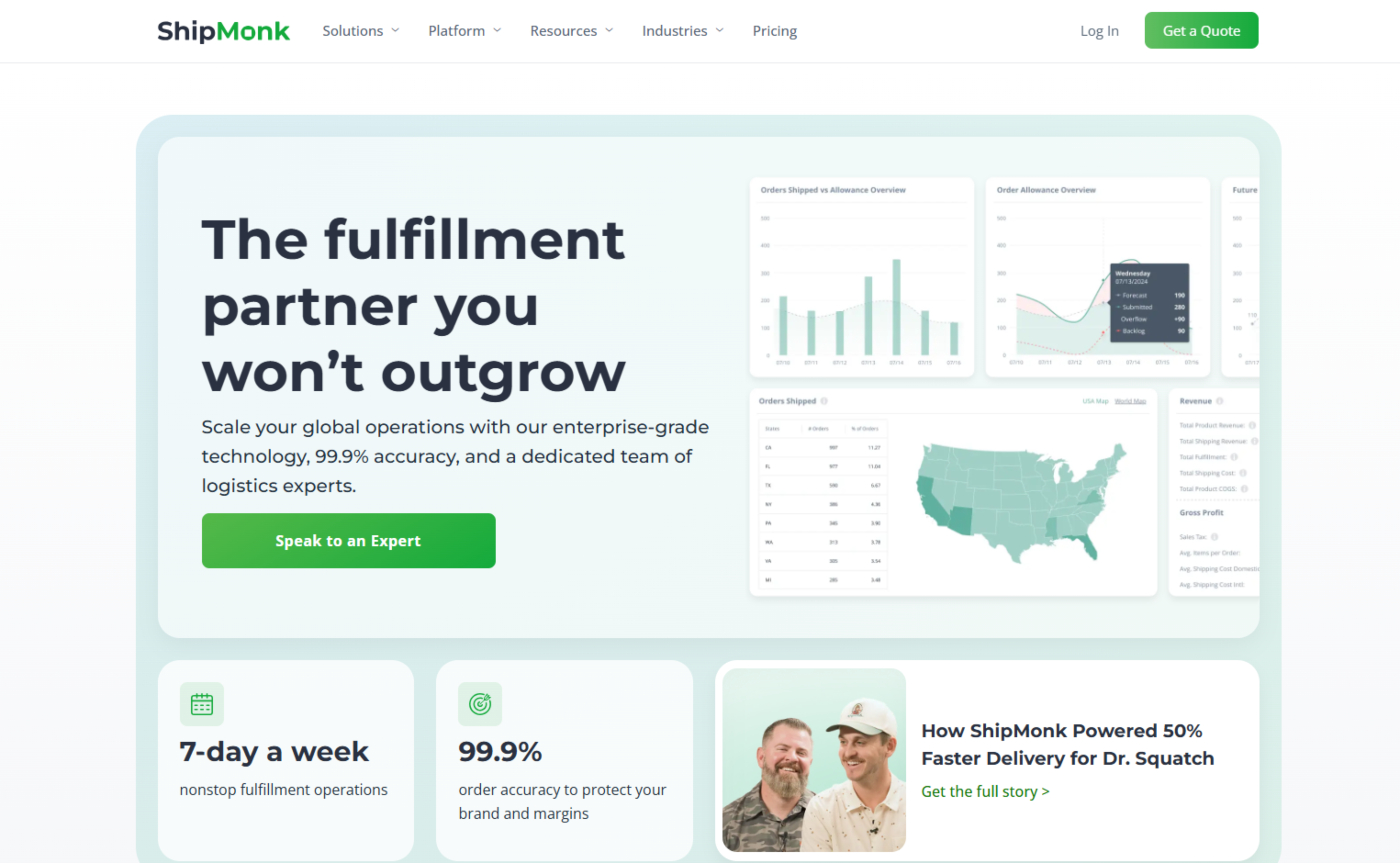
ShipMonk is a technology-focused fulfillment provider supporting direct-to-consumer and subscription-based businesses.
Warehouses
ShipMonk operates multiple fulfillment centers across the United States and Europe, allowing for regional inventory distribution.
Software
Its platform emphasizes automation, inventory tracking, and order management, making fulfillment processes easier to manage for small teams.
Integrations
ShipMonk integrates with popular ecommerce platforms, marketplaces, and shopping carts, supporting multichannel fulfillment.
Customer support
ShipMonk offers onboarding assistance and ongoing support, with account managers available for higher-volume clients.
Best for
ShipMonk is well-suited for growing DTC brands that need automation and clear cost visibility.
Fulfillment by Amazon (FBA)
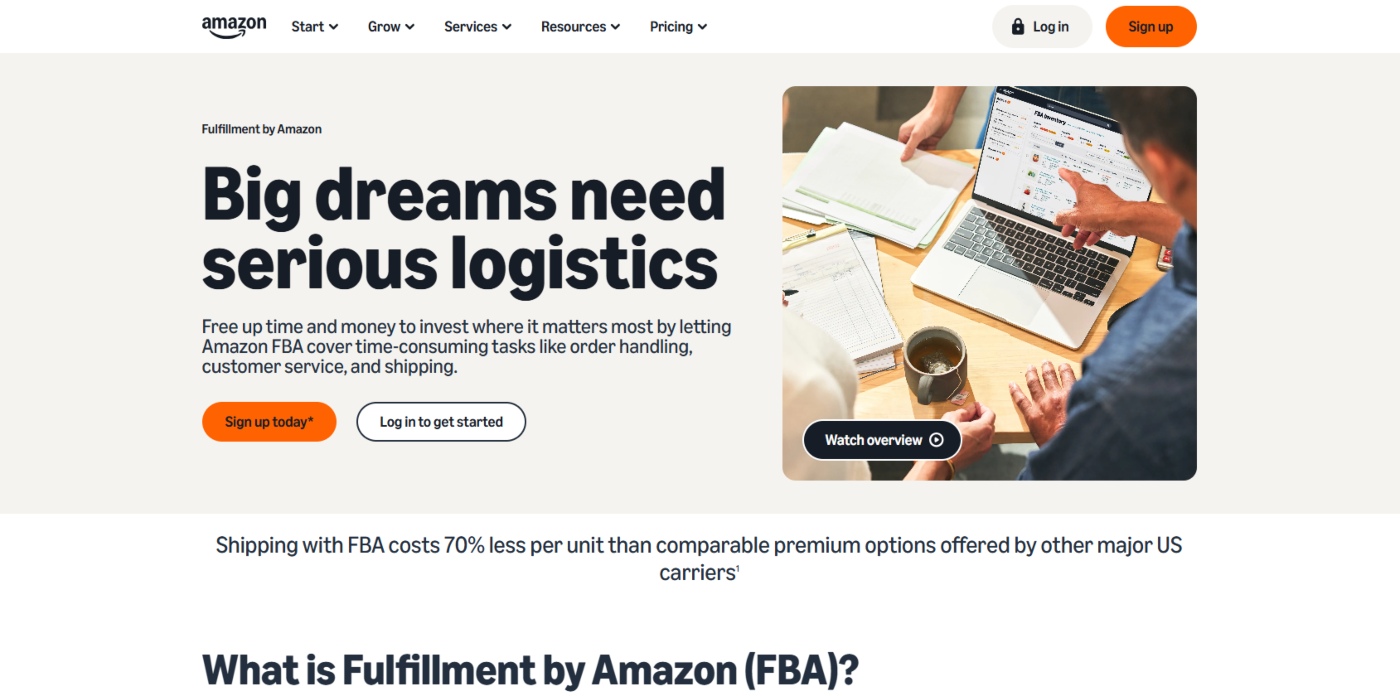
Fulfillment by Amazon allows sellers to store inventory in Amazon’s warehouses while Amazon handles picking, packing, shipping, and customer service for marketplace orders.
Warehouses
Amazon operates one of the largest fulfillment networks globally, with extensive coverage across the United States and international markets.
Software
FBA is managed through Amazon Seller Central, providing inventory tracking and order management tools.
Integrations
FBA integrates naturally with Amazon’s marketplace and can be connected to external platforms through third-party tools.
Customer support
Amazon provides support via phone, email, and live chat.
Best for
FBA works best for businesses that primarily sell on Amazon and want access to Prime eligibility.
ShipHero
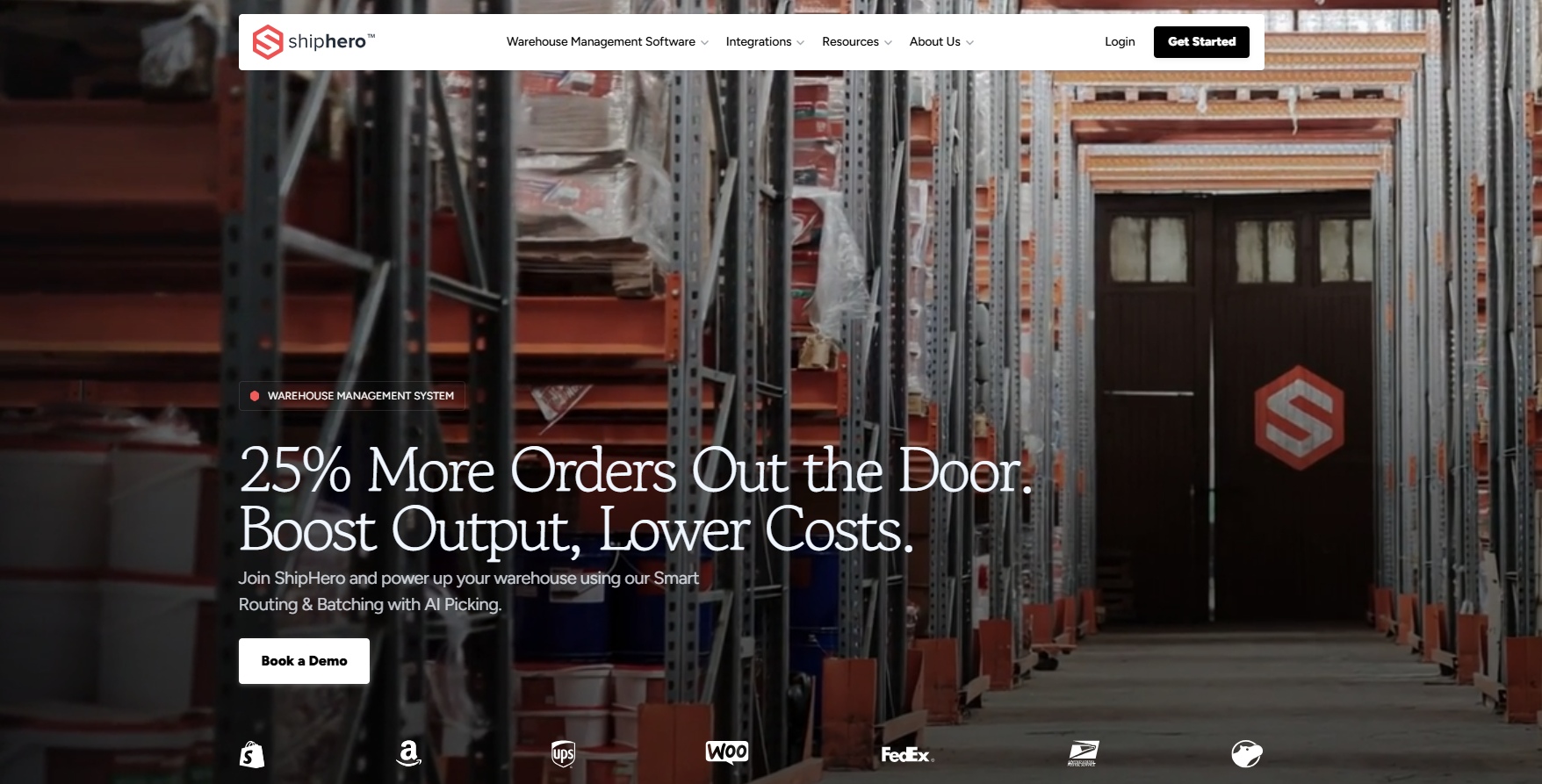
ShipHero combines 3PL fulfillment services with powerful warehouse management software.
Warehouses
ShipHero operates fulfillment centers in the United States and supports distributed inventory models.
Software
Its WMS is one of ShipHero’s strongest offerings, providing automation, inventory accuracy tools, and advanced reporting.
Integrations
ShipHero integrates with Shopify, Amazon, and other ecommerce platforms, supporting multichannel operations.
Customer support
Support includes onboarding assistance and technical support, particularly around software usage.
Best for
ShipHero is ideal for brands that want both outsourced fulfillment and advanced logistics software capabilities.
Fulfillrite
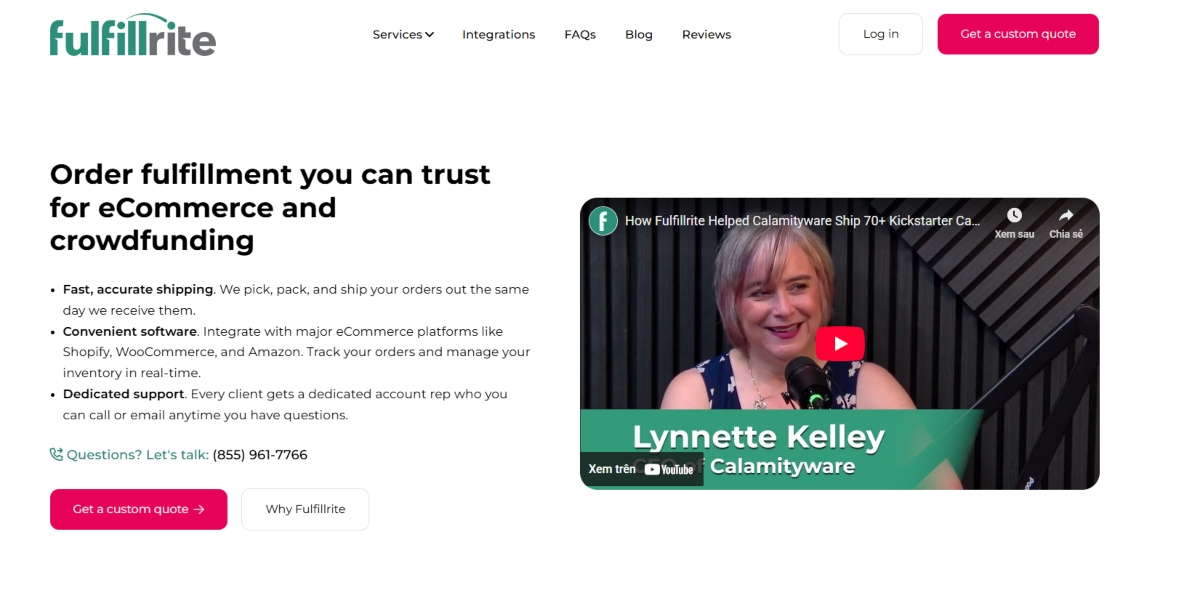
Fulfillrite focuses on personalized fulfillment services for small to mid-sized ecommerce businesses.
Warehouses
Fulfillrite operates fulfillment facilities in the United States, primarily serving domestic orders.
Software
Its system supports order tracking, inventory visibility, and basic reporting.
Integrations
Fulfillrite integrates with major ecommerce platforms and marketplaces.
Customer support
Customer service is a key strength, with responsive support tailored to smaller businesses.
Best for
Fulfillrite works best for small brands that value hands-on support and customized fulfillment solutions.
eFulfillment service
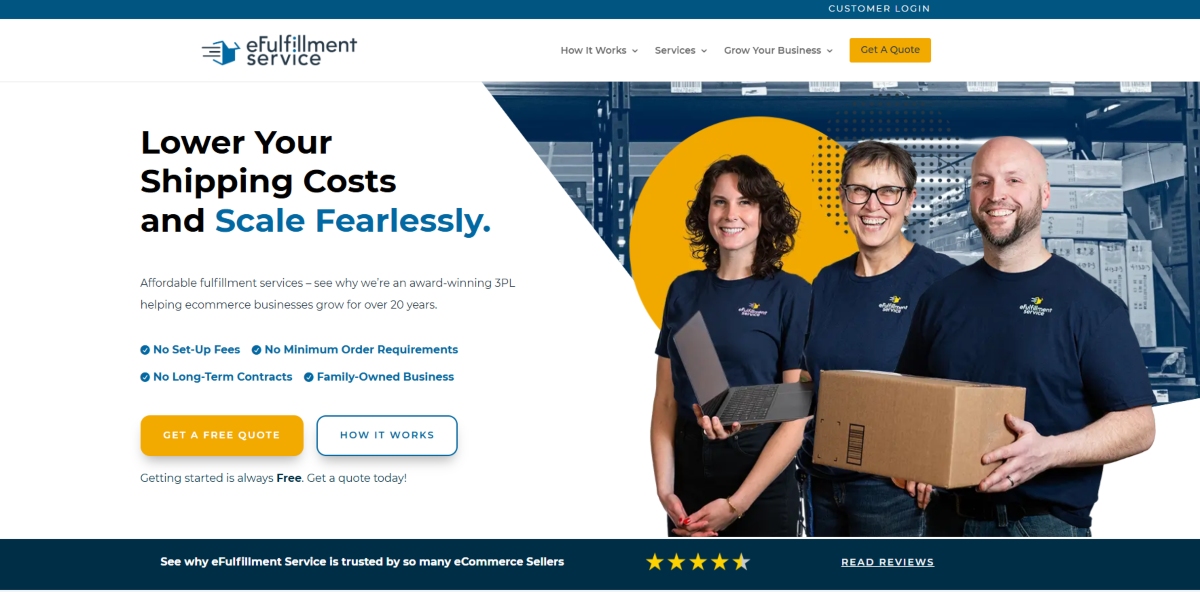
eFulfillment Service is a long-established 3PL provider offering scalable ecommerce fulfillment.
Warehouses
It operates multiple US-based fulfillment centers with nationwide shipping coverage.
Software
he platform supports order management, inventory tracking, and multichannel fulfillment.
Integrations
eFulfillment Service integrates with leading ecommerce platforms and marketplaces.
Customer support
Support includes onboarding assistance and ongoing operational support.
Best for
This provider is suitable for growing ecommerce businesses seeking stable, long-term fulfillment partnerships.
Saltbox
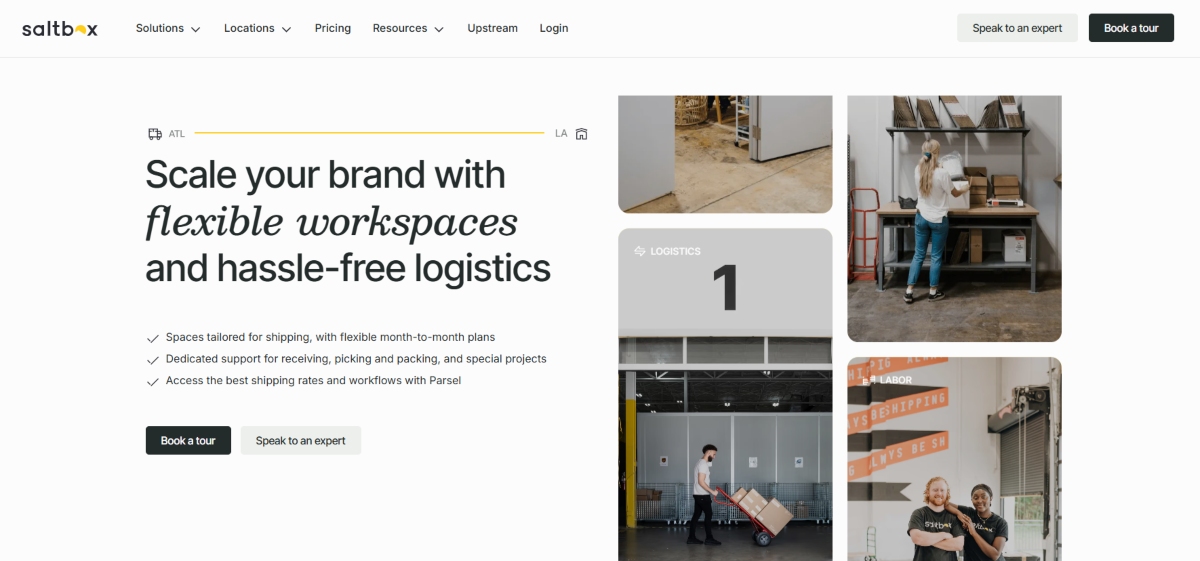
Saltbox offers a hybrid fulfillment model that combines flexible warehouse space with fulfillment services.
Warehouses
Saltbox operates locations in major US metro areas, providing regional fulfillment advantages.
Software
Its technology focuses on inventory visibility and order tracking, designed for simplicity.
Integrations
Saltbox supports integrations with common ecommerce platforms.
Customer support
Support is designed to be hands-on, particularly during onboarding.
Best for
Saltbox is ideal for small businesses transitioning from self-fulfillment to outsourced logistics.
ShipHype
Fulfyld provides ecommerce fulfillment services with a focus on cost efficiency and regional coverage.

Warehouses
Fulfyld operates multiple fulfillment centers, primarily in the southeastern United States.
Software
Its system integrates with ecommerce platforms and supports real-time order and inventory management.
Integrations
Fulfyld connects with Shopify, BigCommerce, Magento, and other major platforms.
Customer support
Support is primarily phone-based, with additional assistance during onboarding.
Best for
Fulfyld is a good fit for small businesses seeking affordable fulfillment with room to scale regionally.
Fulfyld
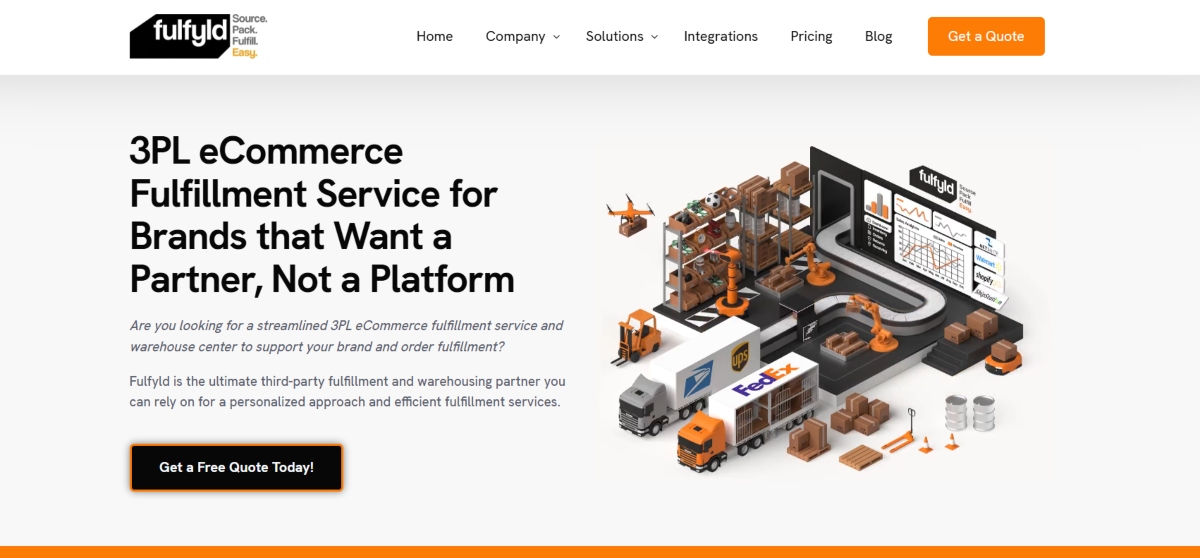
Fulfyld provides ecommerce fulfillment services with a focus on cost efficiency and regional coverage.
Warehouses
Fulfyld operates multiple fulfillment centers, primarily in the southeastern United States.
Software
Its system integrates with ecommerce platforms and supports real-time order and inventory management.
Integrations
Fulfyld connects with Shopify, BigCommerce, Magento, and other major platforms.
Customer support
Support is primarily phone-based, with additional assistance during onboarding.
Best for
Fulfyld is a good fit for small businesses seeking affordable fulfillment with room to scale regionally.
4 key advantages of outsourcing logistics to a 3PL provider
Reduce operational and infrastructure costs
Outsourcing logistics eliminates the need for small businesses to invest in warehouses, labor, and equipment. Instead of fixed overhead, companies shift to variable costs that scale with order volume, improving cash flow and financial flexibility.
Improve fulfillment speed and order accuracy
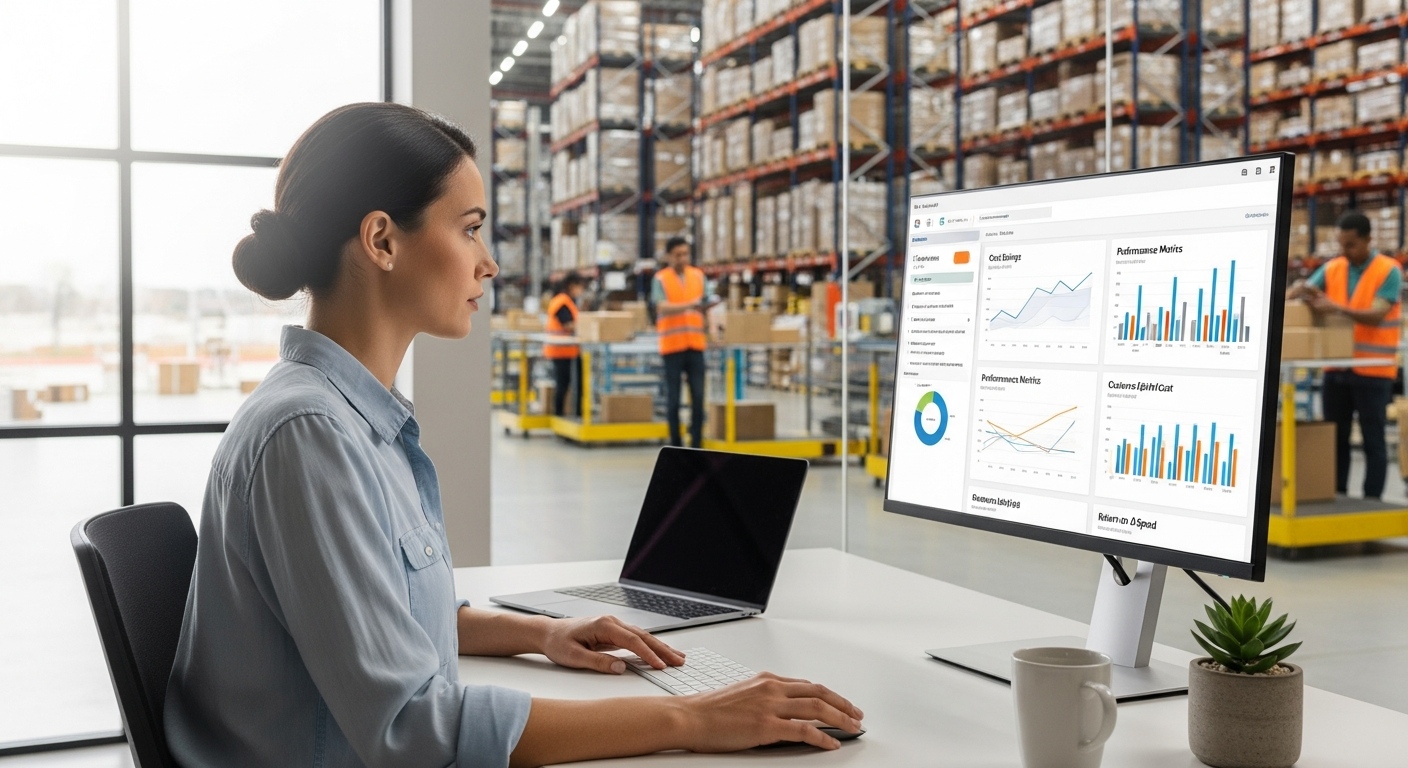
Professional 3PL providers operate optimized warehouses designed for high-volume picking, packing, and shipping. This results in faster order processing times and fewer fulfillment errors, which directly improves customer satisfaction.
Enable business scalability and seasonal flexibility
As sales fluctuate throughout the year, a 3PL partner can absorb sudden increases in order volume without disrupting operations. This flexibility allows small businesses to grow without worrying about capacity constraints.
Allow focus on core business activities
By outsourcing fulfillment operations, business owners and internal teams can focus on marketing, sales, product development, and customer experience rather than daily logistics management.
Business types that commonly use 3PL services
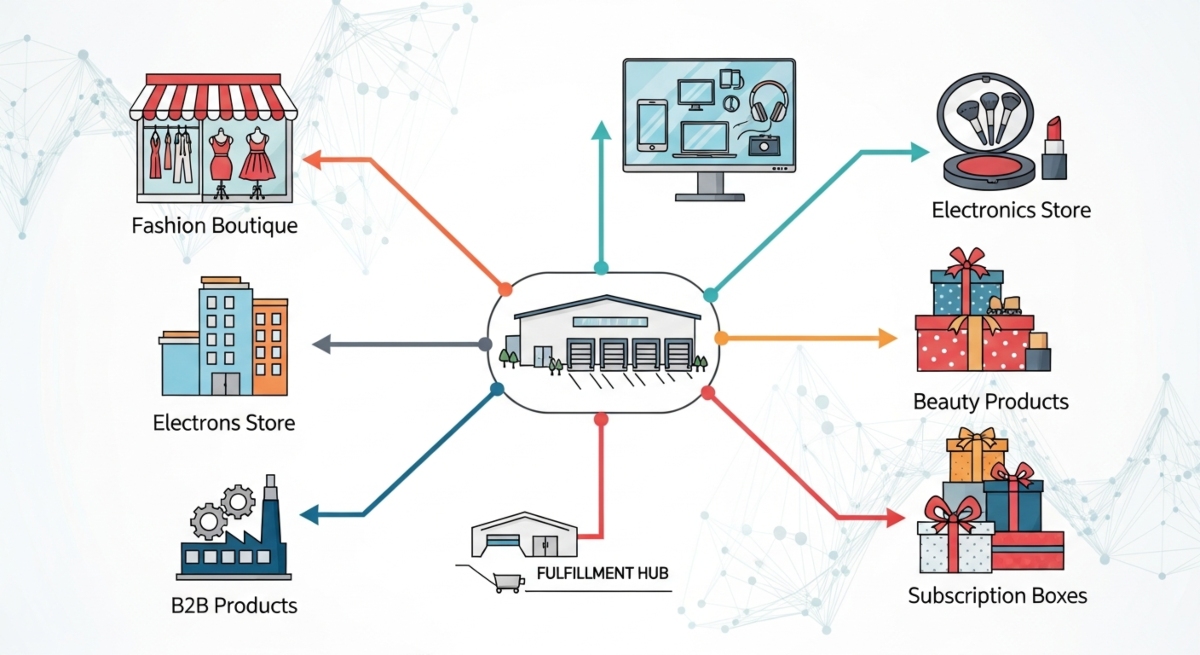
Ecommerce and direct-to-consumer brands
Online sellers rely on 3PL providers to manage fast, accurate fulfillment across multiple sales channels. This is the most common business model using 3PL for small business solutions.
Subscription-based businesses
Subscription box companies benefit from kitting, recurring order fulfillment, and predictable shipping cycles that 3PL providers are well-equipped to manage.
B2B wholesalers and distributors
Wholesale businesses use 3PL services to handle bulk orders, regional distribution, and inventory storage, especially when serving multiple markets.
Cross-border and international sellers
Businesses expanding into new regions often use 3PL providers with regional fulfillment centers to reduce delivery times and manage customs or compliance requirements.
4 types of 3PL software for small business
Warehouse management systems (WMS)
WMS platforms manage inventory storage, picking, packing, and stock visibility in real time. They form the operational core of most 3PL operations.
Order management systems (OMS)
OMS software coordinates orders across multiple sales channels, ensuring accurate routing, fulfillment prioritization, and order tracking.
Inventory and analytics platforms
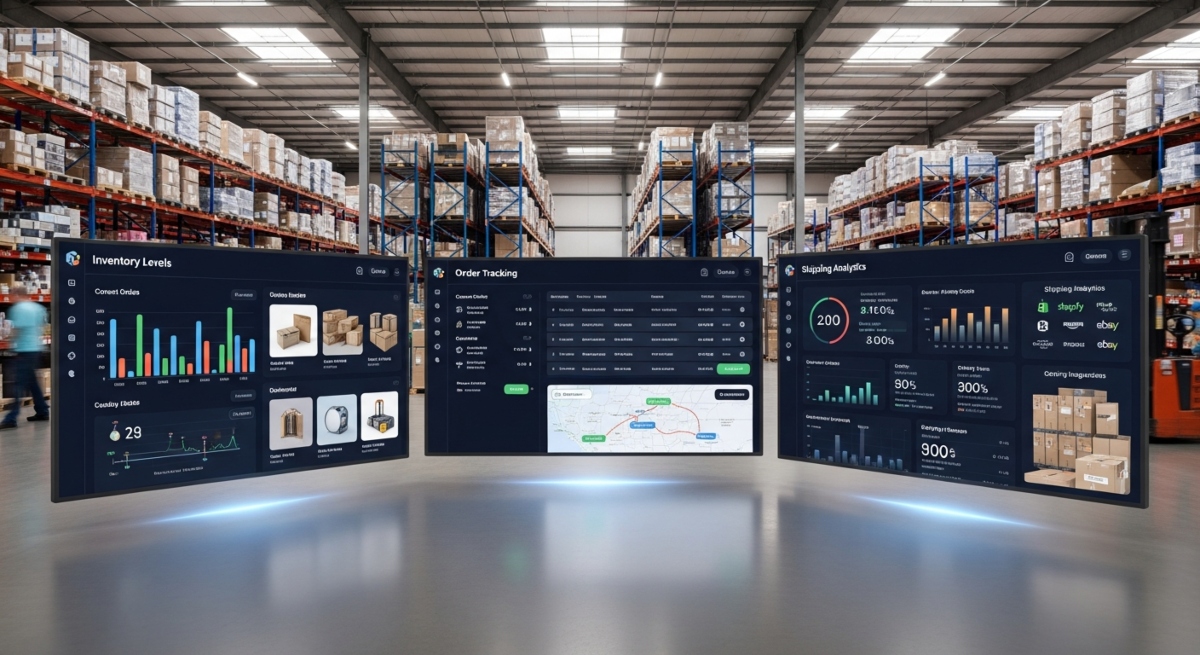
These tools provide demand forecasting, performance reporting, and inventory optimization insights that help small businesses reduce stockouts and overstocking.
Integration and automation tools
API-based integrations and automation software connect ecommerce platforms, marketplaces, and accounting systems to streamline data flow and reduce manual work.
5 tips to choose the right 3PL for your small business
Choosing the right logistics partner requires more than comparing prices. A reliable 3PL provider should align with your product characteristics, operational needs, and long-term growth strategy.
Evaluate product compatibility and order complexity
The first step is assessing whether the 3PL provider can handle your specific product type. Factors such as product size, weight, fragility, shelf life, and SKU variety directly affect fulfillment efficiency. A provider experienced with similar products is more likely to deliver consistent accuracy and fewer handling issues.
Check sales channel and platform integration
Your 3PL should integrate seamlessly with your ecommerce platforms, marketplaces, and order management systems. Strong technology integration ensures real-time order flow, accurate inventory synchronization, and reduced manual work. This is especially important when managing multichannel sales.

Review pricing flexibility and cost transparency
Pricing models should align with your current order volume while allowing room for growth. Look for clear breakdowns of storage fees, pick and pack costs, packaging charges, and shipping rates. Transparent pricing helps small businesses forecast fulfillment costs and avoid unexpected expenses.
Assess geographic coverage and scalability
Geographic reach impacts delivery speed and shipping costs. A 3PL with strategically located fulfillment centers can help reduce transit times and support regional or international expansion. Scalability is equally important, as your provider should be able to handle seasonal spikes without compromising service quality.
Evaluate customer support and service-level agreements
Reliable customer support is critical when fulfillment issues arise. Clear service-level agreements defining order accuracy, processing times, and response standards help ensure consistent performance. Strong communication and accountability are essential when working with 3PL for small business partners.
Frequently asked questions
What is the role of a 3PL provider?
A 3PL provider manages warehousing, order fulfillment, inventory, shipping, and returns on behalf of a business.
How much do 3PL services cost?
Costs depend on order volume, storage requirements, and service complexity. Many providers use usage-based pricing models suitable for small businesses.
Can small businesses benefit from using 3PL providers?
Yes. 3PL for small business helps reduce operational overhead, improve delivery speed, and support long-term growth.
Is 3PL suitable for international shipping?
Many providers support cross-border fulfillment and regional warehousing for global expansion.
How do 3PLs integrate with ecommerce platforms?
Most modern providers offer direct integrations with popular ecommerce platforms and marketplaces for real-time data synchronization.
Why choose BettaMax as your best 3PL for small businesses provider?
BettaMax is built to support growing brands with flexible, technology-driven fulfillment solutions. As a trusted best 3PL for small business, BettaMax provides scalable logistics services, transparent pricing, and seamless integrations.
By partnering with BettaMax, small businesses can simplify fulfillment operations, control costs, and scale confidently in competitive markets.